
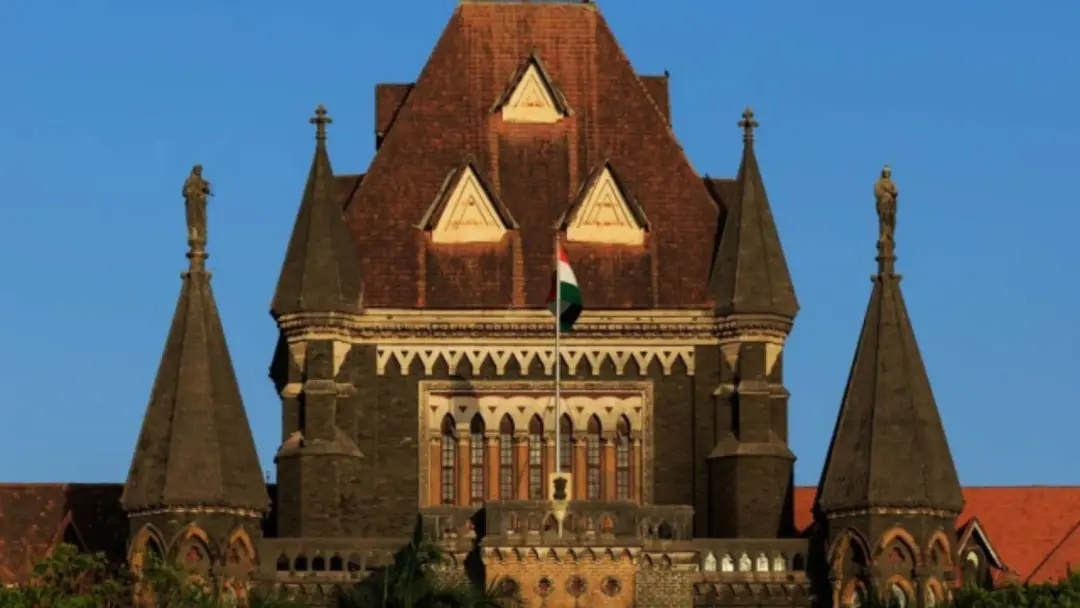
Bombay HC declines bail to 17-year-old in Ghatkopar crash case
The Bombay High Court has upheld a Sessions Court order cancelling bail granted by the Juvenile Justice Board to a then 17-year-old boy in the Ghatkopar crash case. Justice Shivkumar G Dige, rejecting the revision application on September 9, said the applicant had attained majority and may again indulge in a stunt act with friends, endangering others. The boy allegedly drove an SUV into a bike on February 5, killing businessman Dhrumil Patel, 33, and injuring his wife.
Source
Indian Express — Cities · read the original report ↗
Desk check · compared with the source
What the desk checked (5)
- Bombay HC, on September 9, rejected the juvenile's criminal revision application and upheld the Sessions Court order cancelling JJB bail. — Attributed in source to a single-judge bench of Justice Shivkumar G Dige, with date given.
- The boy, then 17 years and eight months old, was allegedly driving an SUV that hit a bike on February 5, killing businessman Dhrumil Patel, 33, and injuring his wife. — Allegation stage as reported; names, age and date appear in source.
- The applicant habitually performed stunts on public roads and deleted uploaded videos, amounting to destruction of evidence. — Attributed to prosecution and victim's counsel; contested claim, not a court finding.
- Police could not find him at the Navi Mumbai residence specified in his earlier bail conditions. — Cited in the court's observation as reported; figure/detail appears in source.
- He had spent 10 days in an observation home and the chargesheet was filed. — Attributed to the applicant's plea in the source.
Analysts’ view opinion
This order highlights the central tension in the Juvenile Justice framework: bail is the norm for a child in conflict with the law, yet it can be refused where release would expose the child to moral, physical or psychological danger, or defeat the ends of justice. On the court's own reasoning, what tipped the balance was not merely the gravity of the crash but the finding that he was not found at the residence fixed under his earlier bail conditions, coupled with an absence of parental control. Framed this way, the ruling rests on a protective-and-reformative logic rather than a punitive one.
- Under the juvenile framework, denial of bail requires specific recorded grounds, and the court anchored itself in the statutory exceptions of moral/physical/psychological danger and defeating the ends of justice.
- Breach of bail conditions — not being found at the designated residence — is an independent and legally strong basis for cancellation, distinct from the seriousness of the offence itself.
- The allegation that stunt videos were uploaded and later deleted raises a destruction-of-evidence argument, but it remains an allegation at this stage, not a proven fact.
- The applicant's grounds — age, completed investigation, filed chargesheet, and time already spent in an observation home — are ordinarily bail-friendly factors, but the court weighed them against the alleged non-compliance.
- Invoking "confidence of society" in a juvenile matter is contestable, since the statute is designed primarily around reformation and rehabilitation rather than deterrent messaging.
What to watch — With the revisional stage exhausted, watch for a possible approach to the Supreme Court or a fresh bail plea before the Juvenile Justice Board on changed circumstances, and equally for how quickly the inquiry before the Board proceeds.
This is an order at the bail stage only; the story does not establish guilt, nor does it establish any determination on whether he is to be tried as an adult.
Deep dive
Research brief · 8 facts · 4 dates · exam-readyThe brief
Context
On February 5 this year, a 17-year-old boy allegedly driving an SUV rammed into a motorcycle in Ghatkopar, Mumbai, killing 33-year-old businessman Dhrumil Patel and injuring his wife. The Juvenile Justice Board granted the boy bail, but a Sessions Court cancelled it; the boy then filed a criminal revision application in the Bombay High Court. On September 9, a single-judge bench of Justice Shivkumar G Dige rejected the revision, upholding the cancellation of bail on the ground that he had attained majority and might again indulge in stunts endangering others.
Key facts
- The Ghatkopar crash occurred on February 5, when an SUV allegedly driven by the boy rammed into a bike.
- The crash killed 33-year-old Ghatkopar businessman Dhrumil Patel and injured his wife.
- The accused was 17 years and eight months old at the time of the incident and a Class 12 student.
- Bail was originally granted by the Juvenile Justice Board (JJB) and later cancelled by the Sessions Court.
- The Bombay High Court, through Justice Shivkumar G Dige, rejected the criminal revision application on September 9.
- The applicant had spent 10 days in an observation home and argued that further detention would serve no purpose.
- Prosecution said he habitually performed stunts on public roads and uploaded videos on social media, later deleting them, amounting to destruction of evidence.
- Police could not find him at the Navi Mumbai residence where he was to reside under his earlier bail conditions, which the HC called 'scant respect' for court orders.
Timeline
- February 5 (this year)SUV allegedly driven by the 17-year-old rams a bike in Ghatkopar; Dhrumil Patel, 33, killed and his wife injured.
- After the incident (date not stated in the source)Juvenile Justice Board grants bail to the boy; he spends 10 days in an observation home.
- Date not stated in the sourceInvestigation completed and chargesheet filed; Sessions Court cancels the bail granted by the JJB.
- September 9Bombay High Court rejects the juvenile's criminal revision application and upholds the Sessions Court order.
Who has a stake
- The accused (then 17-year-old, now a major) — Liberty and education; remains in a reformative/observation home after bail cancellation was upheld.
- Family of Dhrumil Patel — Justice for the death of the 33-year-old businessman and injuries to his wife; represented by advocates opposing bail.
- Juvenile Justice Board — Its bail order was cancelled by the Sessions Court and the cancellation upheld by the High Court.
- Bombay High Court (Justice Shivkumar G Dige) — Balancing juvenile reformation with public safety; found 'no infirmity' in the Sessions Court order.
- Mumbai Police / prosecution — Represented by Additional Public Prosecutor Balraj B Kulkarni; alleged habitual stunts and deletion of videos as destruction of evidence.
- Public road users — Safety from stunt driving on public roads, cited by the courts as a reason to curb such activities.
Why it matters
The order shows how courts weigh the reformative philosophy of juvenile justice against public safety and societal confidence when a minor is accused of a fatal road crash. It also flags how conduct after bail — absconding from the designated residence and deleting social media stunt videos — can weigh against a juvenile applicant. With stunt driving by affluent teenagers a recurring urban concern, the ruling signals judicial willingness to keep such accused in a reformative home to make them "understand gravity" of their acts.
UPSC angle
Prelims pointers
- Juvenile Justice Board (JJB) is the body that grants bail and adjudicates cases involving children in conflict with law.
- Ghatkopar crash case: February 5 incident; victim Dhrumil Patel, 33, killed; accused aged 17 years 8 months.
- Bombay High Court order dated September 9 by single-judge bench of Justice Shivkumar G Dige.
- A criminal revision application is the route used to challenge the Sessions Court's bail cancellation before the High Court.
- Juveniles in conflict with law are kept in observation homes/reformative homes rather than prisons.
- Additional Public Prosecutor Balraj B Kulkarni appeared for the police; advocates Atharva Dandekar, Ruben Mascarenhas and Tejas Gupta for the victim.
Mains framing
The Ghatkopar crash bail order highlights the tension at the heart of India's juvenile justice framework: the statutory presumption in favour of reformation and release of children in conflict with law versus the courts' duty to protect society and preserve confidence in the justice system. The accused, 17 years and eight months old at the time of the February 5 crash that killed Dhrumil Patel, sought relief on grounds of age, completed investigation, filed chargesheet and 10 days already spent in an observation home. The State and the victim's counsel countered that he habitually performed vehicle stunts on public roads, uploaded and then deleted videos — alleged destruction of evidence — and could not be traced at the Navi Mumbai address fixed as a bail condition. The Sessions Court's reasoning, upheld by the High Court, rested on his being in the "company of spoilt and affluent children" performing stunts and on the risk that quick release "would undermine the confidence of society"; the High Court added that lack of parental control exposed him to moral, physical and psychological danger. The way forward, as the courts frame it, lies not in punishment but in effective institutional reformation, strict enforcement of bail conditions, and curbing stunt driving on public roads before it turns fatal.
Key terms
- Juvenile Justice Board (JJB)
- The statutory body that hears cases of children in conflict with law and, in this case, first granted the boy bail.
- Observation home
- A facility where a child in conflict with law is temporarily kept during inquiry; the applicant had spent 10 days there.
- Reformative home
- An institution for correction and rehabilitation of juveniles; the HC said keeping him there would make him understand the gravity of his act.
- Criminal revision application
- A plea before a higher court to examine the legality or correctness of a lower court's order, here the bail cancellation.
- Attained majority
- Turning 18; the HC noted the applicant is now an adult, a factor in refusing him relief.
- Destruction of evidence
- Alleged deletion of his social media stunt videos, argued by the prosecution as tampering with evidence.
Practice questions
- Examine how courts balance the reformative objective of juvenile justice law with concerns of public safety and societal confidence, using the Bombay High Court's Ghatkopar crash order as an illustration.
- What legal and administrative measures can curb stunt driving on public roads by minors, and how effective are bail conditions in ensuring compliance?
- Discuss the role of the Juvenile Justice Board and appellate courts in deciding bail for children in conflict with law where the offence causes death.
Grounded only in the source report — figures and dates are the source's, not inferred.