
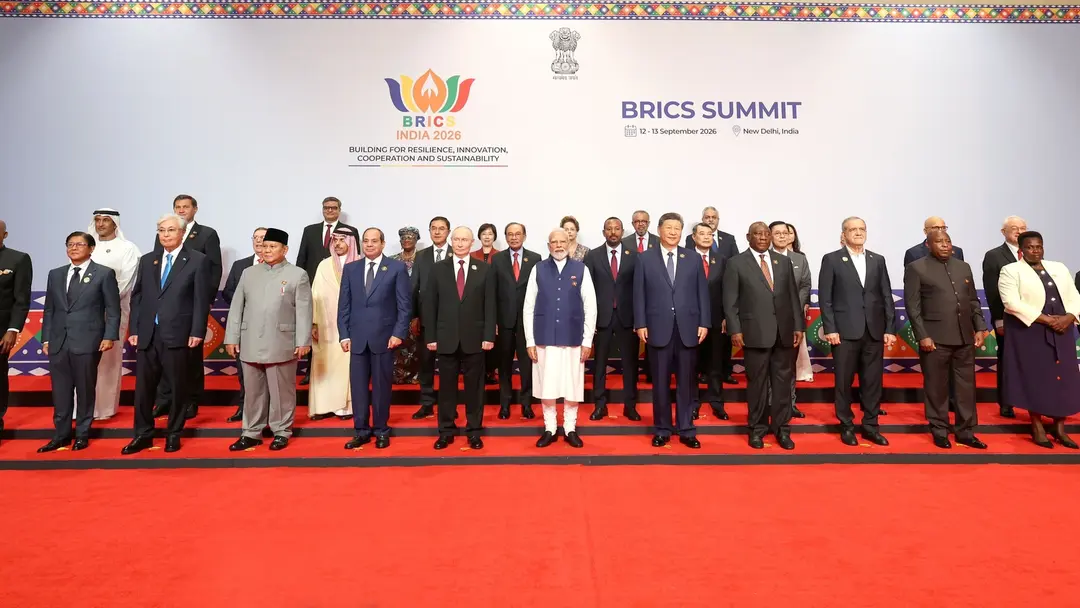
BRICS summit showed India's convening power, says Shishir Gupta
The expanded BRICS summit in New Delhi demonstrated India's ability to bring rival powers to one table, Hindustan Times Executive Editor Shishir Gupta said in a Point Blank conversation. He said representatives from Russia, China, Iran, the UAE, Saudi Arabia, Egypt, Ethiopia, Malaysia and Indonesia attended and agreed to a joint declaration. Gupta called Chinese President Xi Jinping's visit after a seven-year gap and his meeting with Prime Minister Narendra Modi significant, adding India's position is that progress requires peace along the border.
Source
Hindustan Times — India · read the original report ↗
Desk check · compared with the source
What the desk checked (5)
- India hosted the expanded BRICS summit in New Delhi with participants including Russia, China, Iran, the UAE, Saudi Arabia, Egypt, Ethiopia, Malaysia and Indonesia. — Attributed to Shishir Gupta in the source; list appears in source text.
- Chinese President Xi Jinping visited India after a seven-year gap and held a bilateral meeting with PM Narendra Modi. — Stated in source; the characterisation of the meeting as substantive is Gupta's assessment.
- Iran and the UAE both agreed to a joint declaration at the summit. — Appears in source as an outcome described by Gupta; declaration text not quoted.
- Russian President Vladimir Putin expressed openness to India and China supporting efforts to end the Ukraine war. — Reported second-hand by Gupta; no direct quote or date given.
- India's defence engagement with GE Aerospace covers F404 engines for Tejas and technology transfer linked to the F414 engine. — Figures and designations appear in source; no independent sourcing provided.
Analysts’ view opinion
బ్రిక్స్ శిఖరాగ్ర సదస్సును ఢిల్లీలో నిర్వహించడం మోదీ ప్రభుత్వానికి దౌత్య రంగంలో రాజకీయంగా ఉపయోగపడే ఒక 'ఆప్టిక్స్ ప్లస్ సబ్స్టాన్స్' అవకాశంగా మారింది — పరస్పర విరుద్ధ ప్రయోజనాలున్న రష్యా, చైనా, ఇరాన్, సౌదీ, యూఏఈ వంటి దేశాలను ఒకే వేదికపైకి తెచ్చి ఉమ్మడి ప్రకటన సాధించడం అంతర్జాతీయ వేదికపై భారత్కు 'కన్వీనర్' హోదాను బలపరుస్తుంది. ఏడేళ్ల తర్వాత షీ జిన్పింగ్ రాక దేశీయ రాజకీయాల్లో రెండంచుల కత్తి: దౌత్య విజయంగా చూపించుకోవచ్చు, అదే సమయంలో సరిహద్దు అంశంపై విపక్షాల ప్రశ్నలకు ఆస్కారం ఇస్తుంది. అందుకే 'సరిహద్దులో శాంతి ఉంటేనే పురోగతి' అనే స్పష్టమైన షరతును ప్రభుత్వం ముందుపెట్టడం రాజకీయంగా కూడా అవసరమైన రక్షణ కవచం.
- బహుళ-సమన్వయ (multi-alignment) విధానాన్ని ఆచరణలో చూపడం ద్వారా ప్రభుత్వం 'వ్యూహాత్మక స్వతంత్రత' అనే దేశీయంగా ప్రజాదరణ ఉన్న కథనాన్ని బలోపేతం చేసుకుంటుంది.
- బ్రిక్స్ను జీ7కు సమాంతర వేదికగా చూపడం 'గ్లోబల్ సౌత్ నాయకత్వం' అనే భారత రాజకీయ సందేశానికి బలం చేకూరుస్తుంది, అదే సమయంలో అమెరికాతో రక్షణ-సాంకేతిక భాగస్వామ్యానికి ఇది అడ్డంకి కాదని ప్రభుత్వం స్పష్టం చేయాల్సి ఉంటుంది.
- 2014 చుమార్, డోక్లాం, 2020 తూర్పు లదాఖ్ ఉదంతాల చరిత్రే భారత జాగ్రత్తకు కారణం — ఉన్నతస్థాయి భేటీల తర్వాత సరిహద్దులో ఘటన జరిగితే అది తక్షణమే రాజకీయ వివాదంగా మారే ప్రమాదం ఉంది.
- చైనాతో సంబంధాల సాధారణీకరణపై ప్రభుత్వం మితమైన భాషను ఎంచుకుంది; 'పోటీదారు కానీ అనివార్య శత్రువు కాదు' అనే చట్రం దౌత్యానికి వెసులుబాటు ఇస్తూనే విమర్శకులకు సమాధానంగానూ పనిచేస్తుంది.
- శాకాహార మెనూపై విమర్శ వంటి చిన్న అంశాలు కూడా చర్చనీయాంశంగా మారడం, దౌత్య కార్యక్రమాలు సైతం దేశీయ ధ్రువీకరణ రాజకీయాల నుంచి తప్పించుకోలేవని సూచిస్తుంది.
What to watch — సదస్సు తర్వాత వాస్తవాధీన రేఖ వద్ద సంయమనం, సైనిక సంప్రదింపు వ్యవస్థల బలోపేతం కొనసాగుతాయా — దీనిపైనే ఈ దౌత్య క్షణం రాజకీయ లాభంగా నిలుస్తుందా లేదా విపక్షాల ఆయుధంగా మారుతుందా అనేది తేలుతుంది.
ఇది ఒక సీనియర్ ఎడిటర్ విశ్లేషణాత్మక అభిప్రాయం మాత్రమే; ఉమ్మడి ప్రకటనలోని అంశాలు, మోదీ-షీ భేటీలో కుదిరిన నిర్దిష్ట ఒప్పందాలు, ఉక్రెయిన్ లేదా పశ్చిమాసియా వివాదాల్లో బ్రిక్స్ పాత్ర ఏమిటన్నది ఈ కథనం నిర్ధారించలేదు, దేశీయ రాజకీయ ప్రతిస్పందనలపై కూడా ఇందులో సమాచారం లేదు.
Deep dive
Research brief · 8 facts · 5 dates · exam-readyThe brief
Context
India hosted an expanded BRICS summit in New Delhi at a time of continuing wars in Ukraine and West Asia. In a Point Blank conversation with anchor Aayesha Varma, Hindustan Times Executive Editor Shishir Gupta argued that the summit's main achievement was India's convening power — bringing mutually hostile powers to one table and getting them to agree to a joint declaration. The most watched element was Chinese President Xi Jinping's visit to India after a seven-year gap and his bilateral meeting with Prime Minister Narendra Modi. Gupta framed the summit as a demonstration of India's strategic multi-alignment rather than of any anti-Western bloc.
Key facts
- Representatives from Russia, China, Iran, the UAE, Saudi Arabia, Egypt, Ethiopia, Malaysia and Indonesia attended the New Delhi expanded BRICS summit, per Shishir Gupta.
- All participating countries, including Iran and the UAE, agreed to a joint declaration despite sharply divergent interests.
- Chinese President Xi Jinping visited India after a seven-year gap and held a bilateral meeting with PM Narendra Modi.
- Gupta said India's position is that the unresolved boundary must not damage the wider relationship, but peace and tranquillity along the Line of Actual Control are essential for progress.
- Past episodes cited: the 2014 Chumar incident during Xi's India visit, the Doklam standoff, and the 2020 transgressions in eastern Ladakh.
- Gupta said Russian President Vladimir Putin expressed openness to India and China supporting efforts to end the Ukraine war.
- India's defence ties with the US were cited via GE Aerospace: F404 engines for Tejas fighter aircraft and technology-transfer progress on the F414 engine.
- Gupta compared BRICS' role in the non-Western world to that of the G7 among Western powers, without calling it a military or ideological alliance.
Timeline
- 2014Chumar incident on the India-China border during Xi Jinping's visit to India.
- Not dated in the sourceDoklam standoff between India and China.
- 2020Chinese transgressions in eastern Ladakh.
- Seven years after Xi's previous visitXi Jinping travels to New Delhi for the expanded BRICS summit and meets PM Modi.
- During the summitParticipating countries, including Iran and the UAE, agree to a joint declaration in New Delhi.
Who has a stake
- India (host) — Demonstrating convening power, protecting strategic autonomy and pressing for a more representative international order.
- China — Xi's return visit after seven years; interested in improving ties, but border stability remains India's precondition.
- Russia — Seeks BRICS backing; Putin signalled openness to India and China supporting efforts to end the Ukraine war.
- Iran and Gulf states (UAE, Saudi Arabia) — Rivals sharing a forum and a declaration; escalation would hit energy security, trade and shipping.
- United States and partners — India deepens defence and technology ties (GE Aerospace F404/F414) even while engaging BRICS.
- Global South members (Egypt, Ethiopia, Indonesia, Malaysia) — Greater voice in global governance, finance, technology and security debates.
Why it matters
With the Ukraine war, West Asian conflict and disruptions in the Strait of Hormuz, Red Sea and Suez route straining the existing order, a forum that keeps rivals talking has value in itself. For India — heavily dependent on seaborne trade and imported energy — stability in these waterways is a direct economic and strategic interest. The summit also tested whether India can engage Russia and China through BRICS while deepening defence and technology ties with Washington.
UPSC angle
Prelims pointers
- Expanded BRICS summit was hosted by India in New Delhi; participants included Russia, China, Iran, UAE, Saudi Arabia, Egypt, Ethiopia, Malaysia, Indonesia.
- Xi Jinping's visit came after a seven-year gap; he held a bilateral meeting with PM Modi.
- Line of Actual Control (LAC) is the India-China frontier where India insists on peace and tranquillity as a precondition for broader progress.
- India-China border flashpoints: Chumar (2014), Doklam standoff, eastern Ladakh (2020).
- GE Aerospace supplies F404 engines for the Tejas fighter; technology transfer linked to the F414 engine is progressing.
- Maritime chokepoints in focus: Strait of Hormuz, Red Sea and the Suez Canal route.
Mains framing
The New Delhi BRICS summit illustrates a shift in the sources of diplomatic influence: not blocs and alliances but the ability to convene. Gupta's argument is that India assembled states with sharply divergent interests — Iran alongside the UAE and Saudi Arabia, Russia alongside China — and secured a joint declaration, at a moment when the Ukraine war, West Asian escalation and disruption of the Hormuz–Red Sea–Suez routes are eroding the credibility of the existing order. The causes lie in the demand from emerging economies and regional powers for greater say in global governance, finance and technology, which makes BRICS to the non-Western world roughly what the G7 is to the West, without being a military or ideological alliance. The implications are two-fold. First, India's multi-alignment is validated: engagement with Moscow and Beijing did not preclude deepening defence-technology ties with the United States, as the GE Aerospace F404/F414 arrangements for the Tejas show. Second, the limits are real — a summit declaration cannot settle territorial claims, NATO-Russia tensions or Gulf security competition. The way forward, on Gupta's reading, is to treat India and China as competitors manageable through diplomacy, communication and rules rather than as inevitable adversaries: sustained restraint on the LAC, stronger military communication mechanisms and fewer incidents will decide whether summit signals become durable outcomes.
Key terms
- BRICS (expanded)
- Grouping of major emerging economies and regional powers, now enlarged, described as a forum for the non-Western world's influence on global governance.
- Strategic multi-alignment
- India's approach of maintaining ties across competing power centres — Russia and China via BRICS, the US and partners on defence and technology.
- Line of Actual Control (LAC)
- The de facto India-China frontier; New Delhi holds that peace and tranquillity there is essential for progress in other areas.
- Joint declaration
- The common summit document that all participants, including rivals Iran and the UAE, agreed to in New Delhi.
- F404 / F414 engines
- GE Aerospace jet engines — F404 supplied for the Tejas fighter, with technology-transfer arrangements progressing on the F414.
- Point Blank
- Hindustan Times conversation programme, where Executive Editor Shishir Gupta spoke with anchor Aayesha Varma.
Practice questions
- "Convening power is becoming as important as hard power in contemporary diplomacy." Examine this statement in the light of India's hosting of the expanded BRICS summit.
- How does India reconcile its participation in BRICS with deepening defence and technology cooperation with the United States? Discuss with reference to strategic multi-alignment.
- Peace and tranquillity along the LAC has been India's stated precondition for normalising ties with China. Evaluate this position against the record of Chumar (2014), Doklam and eastern Ladakh (2020).
Grounded only in the source report — figures and dates are the source's, not inferred.