
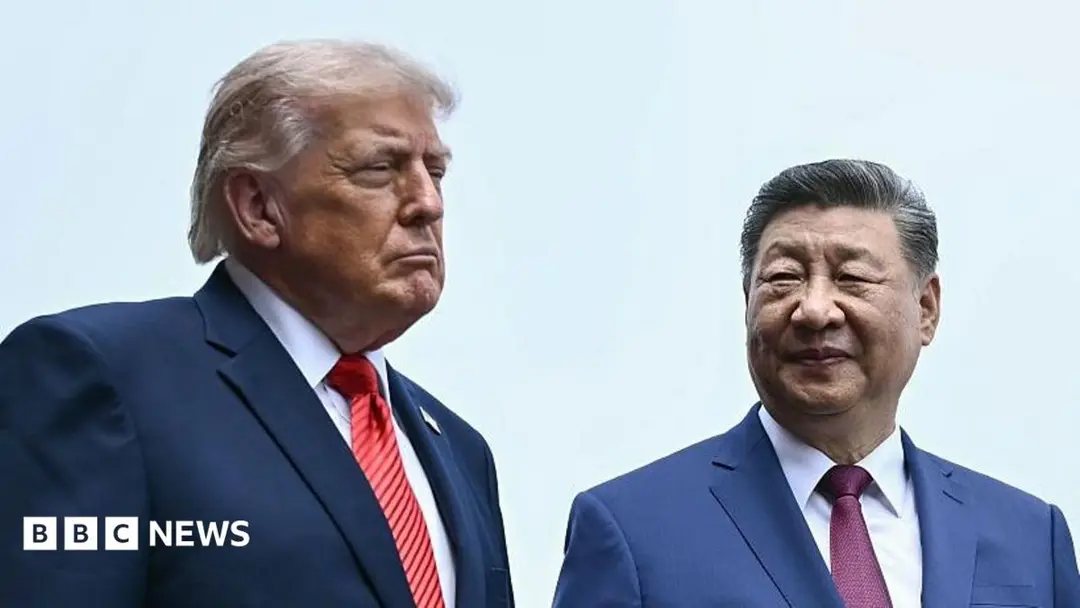
Wife asks Trump to raise US scholar's China jailing at Xi summit
Sylvia Zin, wife of US scholar U Min Zin, who is imprisoned in China on charges of spying and endangering national security, has asked President Donald Trump to seek his release when he meets Chinese President Xi Jinping next week. Min Zin, director of the think tank ISP-Myanmar, was arrested on 3 June after travelling to Kunming for an academic conference. The State Department last month designated him and seismologist Chen Youlin as wrongfully detained.
Source
BBC — World · read the original report ↗
Desk check · compared with the source
What the desk checked (5)
- U Min Zin, director of ISP-Myanmar, was arrested in China on 3 June after travelling to Kunming for an academic conference. — Stated in source as reported fact; no separate document or Chinese official statement cited.
- Sylvia Zin asked Trump to raise her husband's case with Xi at next week's summit. — Attributed to her testimony before a House Foreign Affairs subcommittee on Wednesday, with direct quotes.
- The US State Department last month designated U Min Zin and seismologist Chen Youlin as 'wrongfully detained' in China. — Attributed to the US State Department in the source.
- Beijing detained Zin to send a message to researchers ahead of the Trump-Xi summit. — Opinion attributed to subcommittee chairwoman Young Kim, not independently established.
- Church leader Jin Mingri was freed two months after Trump raised his case at the previous Trump-Xi meeting. — Appears in source without named official attribution; presented as background.
Analysts’ view opinion
What looks like a personal humanitarian appeal is in fact a window into how the detention of citizens has become a bargaining chip in US-China dealings. It is notable that both Americans designated as wrongfully detained work in strategically sensitive areas — U Min Zin heads a think tank studying China's role in Myanmar, and Chen Youlin is a seismologist who tracks nuclear tests — though the story does not establish that this is why they were arrested. The timing, days before a summit, turns these cases into both a diplomatic test and a potential win for Trump.
- Detentions of researchers and academics, whatever their basis, can have a chilling effect on foreign scholars' travel to China and on field research about the region.
- The State Department's 'wrongfully detained' designation moves the cases to the Special Envoy for Hostage Affairs, raising their profile and unlocking more government resources.
- The release of Jin Mingri after the last Trump-Xi meeting gives families reason to believe leader-level intervention can work; Trump's account that Xi called the Jimmy Lai case 'a tough one' shows the limits.
- From Beijing's side these are matters of domestic law and national security, and there is a genuine argument that quiet diplomacy outperforms public pressure in securing releases.
- With trade and technology dominating the summit agenda, where individual detention cases rank on Washington's priority list remains a recurring dilemma.
What to watch — Watch whether Trump raises the cases publicly at the summit, and whether the following weeks bring any movement on consular access or release.
The story does not establish Beijing's motive for the arrest, the evidence behind the espionage charges, or whether the cases will in fact be raised at the summit — the strategic framing here comes largely from congressional testimony and the family's hopes.
Deep dive
Research brief · 8 facts · 8 dates · exam-readyThe brief
Context
U Min Zin, a US scholar who directs the Myanmar Institute for Strategic and Policy Studies (ISP-Myanmar), was arrested in Kunming, China, on 3 June on charges of spying and endangering national security. His wife, Sylvia Zin, testified before a US House Foreign Affairs subcommittee asking President Donald Trump to raise his case when Chinese President Xi Jinping arrives in Washington DC for a state visit next Wednesday. Last month the US State Department designated Min Zin and US seismologist Chen Youlin as "wrongfully detained" in China, a label that routes their cases to the Special Envoy for Hostage Affairs. Families of Americans and others held in China, including the son of Hong Kong media mogul Jimmy Lai, have gathered in the US capital to press for releases ahead of the summit.
Key facts
- U Min Zin, director of ISP-Myanmar, was arrested on 3 June after travelling to Kunming for an academic conference; he is charged with spying and endangering national security.
- His wife Sylvia Zin testified on Wednesday before the House Foreign Affairs Committee's East Asia and Pacific Subcommittee at a hearing titled 'Lives, Not Leverage: The Long Arm of China and North Korea's Repression'.
- Xi Jinping is due to arrive in Washington DC for a state visit on Wednesday; Xi had hosted Trump in Beijing in May.
- Last month the US State Department said two Americans - U Min Zin and Chen Youlin - were being 'wrongfully detained' in China.
- Chen Youlin is a US seismologist who tracks nuclear tests and has been held in prison in China for two years.
- Sylvia Zin, who lives in Thailand, said she has not been able to speak to her husband and awaits monthly consular visits as proof he is alive.
- US officials told her Min Zin faced up to six hours of interrogation each day when he first arrived in jail.
- Underground church leader Jin Mingri was freed two months after Trump raised his case at the last formal Trump-Xi meeting.
Timeline
- 1988Min Zin was a student activist in Myanmar's pro-democracy movement.
- About two years agoUS seismologist Chen Youlin was imprisoned in China.
- 3 JuneU Min Zin arrested after travelling to Kunming for an academic conference.
- MayXi Jinping hosted Trump for a visit to Beijing.
- Last monthUS State Department designated Min Zin and Chen Youlin as wrongfully detained in China.
- Wednesday (of the story week)Sylvia Zin testified to the House subcommittee; Jimmy Lai's son also appeared on Capitol Hill.
- ThursdayA senior White House official told the BBC that resolving wrongful detentions is 'always a top priority for the President'.
- Next WednesdayXi due to arrive in Washington DC for a state visit and summit with Trump.
Who has a stake
- U Min Zin — Imprisoned US scholar facing spying and national security charges; his freedom depends on diplomatic intervention.
- Sylvia Zin — Wife living in Thailand, unable to speak to him, publicly appealing to Trump for his release.
- President Donald Trump — Cited for a record of bringing detained Americans home; expected to raise cases at the summit.
- President Xi Jinping — Host of the earlier Beijing meeting and now state visitor; decisions on releases rest with Beijing.
- US State Department / Special Envoy for Hostage Affairs — Wrongful-detention designation transfers cases to the envoy's office, raising their profile and resources.
- Congresswoman Young Kim — Subcommittee chairwoman warning Americans that Beijing may take travellers hostage as diplomatic leverage.
- Chen Youlin and Jimmy Lai's family — Other detainees whose relatives are lobbying in Washington for release ahead of the summit.
- ISP-Myanmar — Think tank studying China's role, interests and influence in Myanmar; its director's detention chills such research.
Why it matters
The case shows how individual detentions can become bargaining chips in great-power diplomacy, with the summit calendar shaping both arrests and appeals for release. It also raises the risk to scholars and researchers whose work examines Chinese influence abroad, a concern directly relevant to Myanmar-watchers in the region.
UPSC angle
Prelims pointers
- U Min Zin directs the Myanmar Institute for Strategic and Policy Studies (ISP-Myanmar), which studies China's role in Myanmar.
- He was arrested on 3 June in Kunming, China, on charges of spying and endangering national security.
- The US 'wrongfully detained' designation transfers cases to the Special Envoy for Hostage Affairs.
- Chen Youlin is a US seismologist tracking nuclear tests, jailed in China for two years.
- The congressional hearing was held by the House Foreign Affairs Committee's East Asia and Pacific Subcommittee, chaired by Young Kim.
- Underground church leader Jin Mingri was released two months after Trump raised his case with Xi.
Mains framing
The detention of US scholar U Min Zin in China illustrates the intersection of academic freedom, consular protection and summit diplomacy. Beijing's charges of spying and endangering national security against the head of a think tank that studies Chinese interests and influence in Myanmar has been read by US lawmakers as a signal to researchers whose work is inconvenient, with the subcommittee chair warning that travellers to China may be taken 'hostage as leverage in diplomatic negotiation'. Washington's institutional response is the 'wrongfully detained' designation, which moves cases to the Special Envoy for Hostage Affairs, raising their profile and resource allocation, while political intervention at the leaders' level has precedent: church leader Jin Mingri was freed two months after Trump raised his case, whereas Xi reportedly called Jimmy Lai's case 'a tough one'. The way forward, on the evidence in the source, rests on high-level engagement at the state visit, sustained consular access such as the monthly visits that reassure Min Zin's family that he is alive, and congressional oversight through hearings that keep individual cases visible rather than allowing them to be traded quietly.
Key terms
- ISP-Myanmar
- Myanmar Institute for Strategic and Policy Studies, a think tank studying China's role, interests and regional influence in Myanmar.
- Wrongfully detained designation
- A US State Department label that transfers a case to the Special Envoy for Hostage Affairs, raising its profile and resources.
- Special Envoy for Hostage Affairs
- US office handling cases of Americans deemed wrongfully detained abroad and working to secure their release.
- House Foreign Affairs Committee East Asia and Pacific Subcommittee
- US congressional panel, chaired by Young Kim, that held the hearing 'Lives, Not Leverage'.
- Consular visits
- Periodic official visits to a detained national; Min Zin's family relies on monthly visits for proof he is alive.
- State visit
- Formal high-level visit; Xi is due in Washington DC on Wednesday for talks with Trump.
Practice questions
- How does the use of individual detentions as diplomatic leverage complicate consular protection and academic research on great powers? Discuss with reference to recent cases.
- Examine the utility and limits of designating citizens as 'wrongfully detained' as a tool of foreign policy.
- Detentions of scholars studying Chinese influence in neighbouring states have implications for research on Myanmar and the region. Critically analyse.
Grounded only in the source report — figures and dates are the source's, not inferred.