
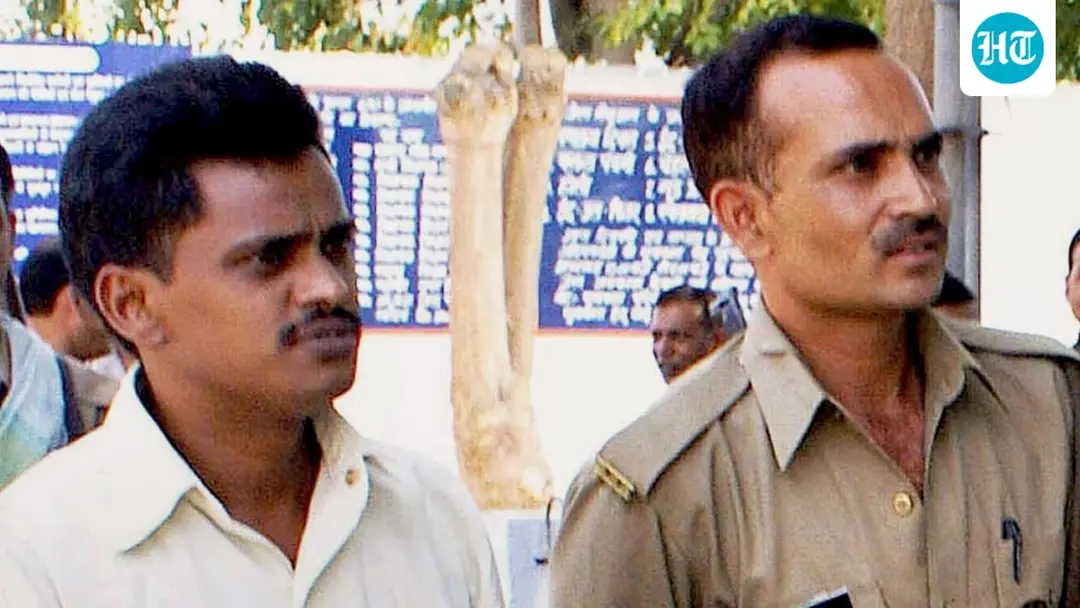
Nithari case's Surendra Koli cremated in Haridwar; reports awaited
The last rites of Surendra Koli, 50, acquitted last year in all 13 Nithari killings cases, were performed on Saturday at a Ganga ghat, at Haridwar's Khadkhadi crematorium. He was found dead at his tea stall in Haridwar on Friday. The rites followed a postmortem by a panel of doctors. City police station in-charge KS Rana said police were awaiting postmortem and forensic reports and all angles were being examined. His son Shivam Koli, 20, conducted the rites.
Source
Hindustan Times — India · read the original report ↗
Desk check · compared with the source
What the desk checked (5)
- Surendra Koli, 50, was found dead at his tea stall in Haridwar on Friday. — Stated as fact in source; no investigating agency quoted on cause of death.
- Last rites were performed at Khadkhadi crematorium in Haridwar after a panel of doctors conducted the postmortem. — Appears in source as reported detail, consistent with police statement.
- Police are awaiting postmortem and forensic reports; 'All angles are being looked into.' — Directly attributed to City police station in-charge KS Rana.
- The Supreme Court allowed Koli's curative petition on November 11, 2025, set aside his conviction and ordered his release. — Specific date appears in source; not independently verified here.
- Koli was living in Bhoopatwala area without revealing his real identity, per contractor Jay Kashyap. — Attributed to a named individual who met Koli last month.
Analysts’ view opinion
This story braids together two distinct legal tracks: a criminal prosecution that has already ended, and a death inquiry that has only just begun. Because the Supreme Court allowed Surendra Koli's curative petition on November 11, 2025, set aside his conviction and ordered his release, he died as a man fully acquitted in law — so his death must be treated procedurally as the unnatural death of an ordinary citizen, not of a convict. The panel postmortem and the police statement that further action depends on the reports are consistent with the standard route in unnatural-death cases.
- A curative petition is the rarest, last-resort remedy in Indian practice; with acquittal in all 13 cases, no criminal liability against him survived.
- In unnatural or unexplained deaths, keeping the inquiry open and deciding on registering a case only after postmortem and forensic reports is normal procedure.
- Using a panel of doctors rather than a single examiner is the kind of precaution typically taken in sensitive, high-public-interest deaths to strengthen transparency.
- The call by friends for a "fair probe" is a request, not a legal trigger; seeking an independent or higher-level investigation would require the family to pursue formal legal remedies.
- That an acquitted man was reportedly living without disclosing his identity raises broader questions of rehabilitation, privacy and safety after acquittal, though the story records no legal outcome on that front.
What to watch — Watch the substance of the postmortem and forensic findings, and whether police close the matter as a natural death or register an FIR and convert it into a criminal investigation.
The story does not establish the cause of death — homicide, suicide and natural causes are all still open, no one has been named or suspected, and the description of the death as "mysterious" is a friend's view, not an official finding.
Deep dive
Research brief · 8 facts · 5 dates · exam-readyThe brief
Context
Surendra Koli, the domestic help at the centre of the 2006 Nithari killings case in Noida, was acquitted of all 13 cases connected to the killings last year and had been living quietly in Haridwar, running a tea stall under an assumed identity. He was found dead at that tea stall on Friday, and his last rites were performed on Saturday at a Ganga ghat at Haridwar's Khadkhadi crematorium after a panel of doctors carried out his postmortem. Police say further action awaits postmortem and forensic reports, and that all angles are being examined. Friends of Koli have called the death "mysterious" and demanded a fair probe.
Key facts
- Surendra Koli, 50, was found dead at his tea stall in Haridwar on Friday; last rites were performed on Saturday at a Ganga ghat.
- The cremation took place at Khadkhadi crematorium in Haridwar after a panel of doctors conducted the postmortem.
- Koli spent nearly two decades in jail before being acquitted in all 13 Nithari killings cases last year.
- On November 11, 2025, the Supreme Court allowed Koli's curative petition in the last remaining case, set aside his conviction and ordered his release forthwith if not wanted elsewhere.
- City police station in-charge KS Rana said police action will depend on the postmortem and forensic reports and that all angles are being looked into.
- Koli's son Shivam Koli, 20, conducted the last rites; he reached Haridwar from Almora in the early hours of Saturday with uncles Harish Koli, Chandan and Anand.
- The Nithari killings came to light in 2006 when skeletal remains of several children were found in a drain behind businessman Moninder Singh Pandher's Noida residence, where Koli worked as domestic help; both were arrested.
- Contractor Jay Kashyap, who met Koli last month, said Koli did not reveal his real identity and lived a simple life in Haridwar's Bhoopatwala area.
Timeline
- 2006Nithari killings come to light after skeletal remains of several children are found in a drain behind Moninder Singh Pandher's Noida residence; Koli and Pandher arrested.
- November 11, 2025Supreme Court allows Koli's curative petition in the last remaining case, sets aside his conviction and orders his release forthwith if not wanted in any other case.
- Months after releaseKoli visits several cities looking for work and settles in Haridwar's Bhoopatwala area, renting a tea stall while concealing his identity.
- FridayKoli, 50, is found dead at his tea stall in Haridwar.
- SaturdayPostmortem by a panel of doctors; last rites performed at a Ganga ghat, Khadkhadi crematorium, Haridwar.
Who has a stake
- Koli family (son Shivam, 20; uncles Harish Koli, Chandan, Anand) — Lost their sole earning member months after his acquittal; family friend says two decades of hardship have returned.
- Haridwar police (City police station in-charge KS Rana) — Must establish the cause of death; action depends on postmortem and forensic reports, with all angles under examination.
- Supreme Court / judiciary — Its November 11, 2025 curative petition ruling set aside Koli's conviction, raising questions of wrongful incarceration and remedy.
- Friends and associates (Narayan Singh Rawat, Jay Kashyap) — Rawat demands a fair probe calling the death mysterious; Kashyap's account shows Koli lived under a concealed identity.
- Moninder Singh Pandher — Co-accused arrested in the 2006 Nithari case in whose Noida house Koli worked as domestic help.
Why it matters
The death of a man acquitted in one of India's most notorious serial killings case, months after nearly two decades in prison, raises questions about the fate and rehabilitation of those released after long wrongful incarceration. The circumstances of the death remain unestablished pending postmortem and forensic reports, and friends have demanded a fair probe.
UPSC angle
Prelims pointers
- Nithari killings surfaced in 2006 with skeletal remains found in a drain behind Moninder Singh Pandher's Noida house; Koli was his domestic help.
- Supreme Court allowed Surendra Koli's curative petition on November 11, 2025, setting aside his conviction in the last remaining case.
- A curative petition is the final judicial remedy available after dismissal of a review petition in the Supreme Court.
- Koli was acquitted in all 13 Nithari-related cases after nearly 20 years in jail.
- Koli's last rites were performed at Khadkhadi crematorium, Haridwar, on a Ganga ghat.
- Police said action would follow the postmortem and forensic reports; a panel of doctors conducted the postmortem.
Mains framing
The death of Surendra Koli, acquitted in all 13 Nithari killings cases after nearly two decades in prison, spotlights two intertwined issues: the reliability of investigation and prosecution in sensational crimes, and the near-absence of any support structure for persons released after prolonged incarceration. The Supreme Court's decision of November 11, 2025 to allow his curative petition and set aside his conviction indicates that even the last-resort judicial remedy was needed to correct the record, after years during which he faced capital punishment. Yet acquittal did not restore a normal life: according to those who knew him, he moved between cities seeking work, concealed his real identity and ran a rented tea stall in Haridwar until he was found dead. The immediate institutional task is a credible, transparent probe grounded in the postmortem and forensic reports, as police have indicated all angles are being examined. The larger question for policy is whether the criminal justice system provides for rehabilitation, livelihood, identity protection and compensation for those whose convictions are ultimately set aside, and whether investigative failures in high-profile cases are audited rather than forgotten once a court delivers an acquittal.
Key terms
- Nithari killings
- Case that came to light in 2006 when skeletal remains of several children were found in a drain behind a Noida house in Nithari.
- Curative petition
- Last judicial remedy in the Supreme Court; Koli's was allowed on November 11, 2025, setting aside his conviction in the remaining case.
- Postmortem
- Medical examination of a body to determine cause of death; conducted on Koli by a panel of doctors before cremation.
- Forensic report
- Scientific examination findings that police said would guide further action in Koli's death.
- Moninder Singh Pandher
- Noida businessman in whose residence Koli worked as domestic help; both were arrested in the 2006 Nithari case.
- Khadkhadi crematorium
- Cremation ground on a Ganga ghat in Haridwar where Koli's last rites were performed on Saturday.
Practice questions
- Discuss the gaps in India's criminal justice system revealed by cases where convictions are set aside after prolonged incarceration, with reference to the Nithari case.
- What is a curative petition, and how does it differ from a review petition in the Supreme Court? Explain its significance as a final remedy.
- Should the State be obliged to provide compensation and rehabilitation to persons acquitted after years in prison? Examine with arguments on both sides.
Grounded only in the source report — figures and dates are the source's, not inferred.