
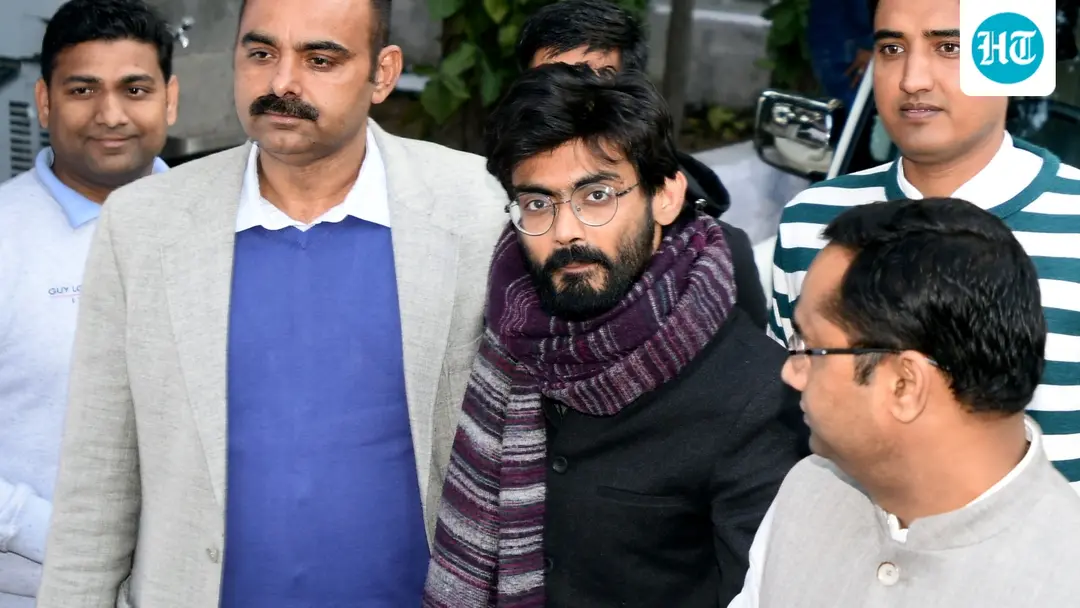
Sharjeel Imam granted seven-day interim bail by Delhi court
A Delhi court on Tuesday granted student activist Sharjeel Imam interim bail from October 4 to October 10 in the 2020 North-East Delhi riots larger conspiracy case to let him attend his cousin's wedding. Additional sessions judge Sameer Bajpai of the Karkardooma Courts ordered the temporary release; the written order has not yet been released. Imam, arrested on January 28, 2020, and booked under UAPA, has been in jail nearly six years. The February 2020 riots left 53 dead.
Source
Hindustan Times — India · read the original report ↗
Desk check · compared with the source
What the desk checked (5)
- A Delhi court granted Sharjeel Imam interim bail from October 4 to October 10 to attend his cousin's wedding. — Attributed in source to additional sessions judge Sameer Bajpai of Karkardooma Courts; source states the written order has not yet been released.
- Imam was arrested on January 28, 2020, and booked under UAPA as an alleged key intellectual architect of the conspiracy. — Dates and charge appear in the source as police allegations; not adjudicated.
- The February 2020 Delhi riots left 53 dead and hundreds injured, with violence erupting on February 23, 2020. — Figures appear in the source without a named attribution; widely used official toll.
- Delhi Police called Imam and Umar Khalid 'masterminds' and cited a Supreme Court 'command authority' categorisation in an affidavit. — Attributed to a police affidavit described in the source; quotes reproduced as given.
- ASJ Bajpai rejected fresh bail pleas on July 5 citing the Supreme Court's January 5 order and a pending reference to a larger bench. — Internally consistent with the source's account of the May 18 Andrabi ruling and the divergence of opinion.
Analysts’ view opinion
A week-long interim bail is legally a narrow, humanitarian concession — but its symbolic political weight is far larger. After nearly six years in custody, any temporary release of an anti-CAA protest figure strengthens the opposition and civil-liberties argument that process itself has become the punishment. At the same time, with Delhi Police continuing to describe Imam and Umar Khalid as "masterminds" and strongly opposing regular bail, the prosecution's narrative remains unchanged.
- Interim bail is not a verdict on the merits, so any attempt to frame it as a political win can be easily countered by the government side.
- The plain fact of nearly six years of pre-trial custody remains a potent political argument for opposition parties and rights groups debating UAPA and bail jurisprudence.
- The divergence within the Supreme Court itself — the January 5 order versus the May 18 reasoning — leaves the case politically and legally suspended until a larger bench settles it.
- With 53 dead in the 2020 riots, there is clear space for a counter-reaction that invokes victims' families to question even short releases.
- The timing, days before the High Court takes up regular bail on September 30, gives both camps a fresh platform to restate their positions.
What to watch — Watch the September 30 High Court hearing on the regular bail pleas, and the conditions attached in the written order once released — both will shape the next round of political argument.
The story establishes nothing about guilt or innocence; the written order is not yet out, regular bail remains undecided, and no party reactions are recorded here.
Deep dive
Research brief · 8 facts · 8 dates · exam-readyThe brief
Context
Student activist Sharjeel Imam is an accused in the "larger conspiracy" case arising from the February 2020 North-East Delhi riots, which broke out amid protests over the then-proposed Citizenship Amendment Act. He was arrested by Delhi Police on January 28, 2020 and booked under the Unlawful Activities (Prevention) Act (UAPA), with police alleging he was one of the key intellectual architects of the conspiracy. He has been in jail for nearly six years. On Tuesday, a Karkardooma court granted him a short interim bail to attend a family wedding, while his regular bail plea remains pending before the Delhi High Court.
Key facts
- Additional sessions judge Sameer Bajpai of Karkardooma Courts granted Sharjeel Imam interim bail from October 4 to October 10, 2025, to attend his cousin's wedding.
- A copy of the written interim bail order has not yet been released.
- Imam was arrested by Delhi Police on January 28, 2020 and booked under the UAPA; he has been in jail for nearly six years.
- The North-East Delhi riots erupted on February 23, 2020 after clashes between Hindus and Muslims over the then-proposed Citizenship Amendment Act, leaving 53 dead and hundreds injured.
- The Delhi High Court adjourned the regular bail petitions of Imam and co-accused Umar Khalid to September 30, a day before the interim bail was granted.
- Delhi Police has opposed bail in the High Court, calling Imam and Khalid the "masterminds" of the violence, and cited the Supreme Court's categorisation of their roles as part of a "command authority".
- ASJ Bajpai rejected fresh bail applications of Imam and Khalid on July 5, citing the Supreme Court's January 5 order refusing bail and laying down conditions for reviving pleas.
- The accused relied on a May 18 Supreme Court judgment by justices BV Nagarathna and Ujjal Bhuyan granting bail to Syed Iftikhar Andrabi in an NIA narco-terror case, which expressed "serious reservations" about the January 5 reasoning.
Timeline
- January 28, 2020Sharjeel Imam arrested by Delhi Police and booked under the UAPA.
- February 23, 2020Violence erupts in North-East Delhi over the then-proposed CAA; 53 killed and hundreds injured.
- January 5Supreme Court refuses bail to Imam and Umar Khalid, laying down specific conditions for reviving their pleas.
- May 18Supreme Court bench of justices BV Nagarathna and Ujjal Bhuyan grants bail to Syed Iftikhar Andrabi and expresses "serious reservations" about the January 5 reasoning.
- July 5ASJ Sameer Bajpai rejects fresh bail applications of Imam and Khalid, noting the issue is before a larger Supreme Court bench.
- Last month (per source)Delhi Police files affidavit in High Court calling the bail pleas legally untenable.
- Monday (day before the order)Delhi High Court adjourns regular bail pleas of Imam and Khalid to September 30.
- TuesdayKarkardooma court grants Imam interim bail for October 4-10 to attend his cousin's wedding.
Who has a stake
- Sharjeel Imam — Undertrial UAPA accused jailed nearly six years; gets seven days' liberty while his regular bail plea remains undecided.
- Umar Khalid — Co-accused in the larger conspiracy case whose regular bail plea is also pending in the Delhi High Court.
- Delhi Police — Prosecuting agency opposing bail, describing the accused as "masterminds" and part of a "command authority".
- Karkardooma Courts (ASJ Sameer Bajpai) — Trial court deciding bail applications, constrained by conflicting Supreme Court rulings.
- Delhi High Court — Hearing the regular bail petitions, listed for September 30.
- Supreme Court — Its January 5 and May 18 rulings conflict; a larger bench must settle the question governing such bail pleas.
- Victims and families of the 2020 riots — 53 dead and hundreds injured; outcome of the conspiracy trial determines accountability.
Why it matters
The case shows how prolonged pre-trial detention under the UAPA can stretch to nearly six years, with relief reduced to short, purpose-specific interim bail. It also highlights a live legal problem: two Supreme Court benches have taken divergent views on bail reasoning, leaving trial courts unable to decide fresh pleas until a larger bench settles the question.
UPSC angle
Prelims pointers
- Sharjeel Imam was arrested on January 28, 2020 and booked under the Unlawful Activities (Prevention) Act (UAPA).
- The February 2020 North-East Delhi riots began on February 23, 2020 and left 53 dead and hundreds injured.
- The Delhi riots larger conspiracy case is being tried at the Karkardooma Courts; ASJ Sameer Bajpai granted the interim bail.
- Interim bail granted for October 4-10 to attend a cousin's wedding; written order not yet released.
- Supreme Court's May 18 order granting bail to Syed Iftikhar Andrabi (NIA narco-terror case) was by justices BV Nagarathna and Ujjal Bhuyan.
- Delhi Police cited the Supreme Court's "command authority" categorisation to distinguish Imam and Khalid from other co-accused.
Mains framing
The grant of a seven-day interim bail to an accused jailed for nearly six years underlines the structural tension between anti-terror law and the presumption of innocence. Under the UAPA, stringent bail thresholds mean that undertrials can remain incarcerated for years while conspiracy trials proceed; here, Delhi Police has resisted regular bail by describing Imam and Umar Khalid as "masterminds" and invoking the Supreme Court's categorisation of their roles as part of a "command authority". Compounding the delay is judicial uncertainty: the apex court's January 5 order refused bail and prescribed conditions for reviving pleas, while a May 18 bench of justices BV Nagarathna and Ujjal Bhuyan, granting bail in an NIA narco-terror case, voiced "serious reservations" about that reasoning, prompting a reference to a larger bench. The trial court on July 5 therefore held it could not entertain fresh applications until the conflict is settled, leaving liberty suspended between forums. The way forward, on the source's own terms, lies in early resolution of the reference by the larger bench and expeditious hearing of the regular bail pleas, now listed before the Delhi High Court on September 30, so that bail jurisprudence under special statutes is applied consistently rather than case by case.
Key terms
- UAPA (Unlawful Activities (Prevention) Act)
- Stringent anti-terror law under which Sharjeel Imam was booked in the Delhi riots conspiracy case.
- Interim bail
- Temporary release for a limited period and specific purpose; here October 4-10 to attend a family wedding.
- Larger conspiracy case
- The umbrella case alleging a planned conspiracy behind the February 2020 North-East Delhi communal violence.
- Citizenship Amendment Act (CAA)
- The then-proposed law whose protests preceded the clashes that erupted into riots on February 23, 2020.
- "Command authority"
- Category the Supreme Court earlier used for the roles of Imam and Khalid, distinguishing them from other co-accused.
- Karkardooma Courts
- Delhi district court complex where the riots conspiracy case is being heard by ASJ Sameer Bajpai.
Practice questions
- Prolonged pre-trial detention under special statutes like the UAPA raises constitutional concerns about personal liberty. Discuss with reference to the Delhi riots conspiracy case.
- How do conflicting judgments of coordinate Supreme Court benches affect trial courts' ability to decide bail applications? Examine the role of larger bench references.
- Examine the balance courts must strike between the State's case on public order in communal violence cases and an undertrial's right to a speedy trial and bail.
Grounded only in the source report — figures and dates are the source's, not inferred.