
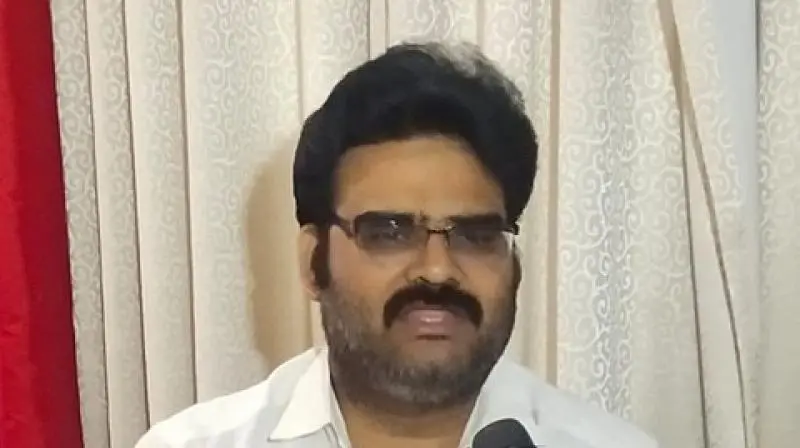
Lanka Dinakar reviews Cyclone Montha relief work in Prakasam
Lanka Dinakar, chairman of Andhra Pradesh's Twenty Point Programme Implementation Committee, visited Prakasam district on Thursday to assess Cyclone Montha damage and review relief and rehabilitation measures. With SN Padu MLA B.N. Vijay Kumar, he served meals to over 250 affected people at the Gundlapalli rehabilitation centre and inspected the Gundlakamma reservoir. Preliminary estimates put damage at around 11,000 hectares of crops and about 300 houses in the district. He directed the health department to prevent post-flood diseases.
Source
Prakasam — politics · read the original report ↗
Desk check · compared with the source
What the desk checked (5)
- Lanka Dinakar, chairman of the Twenty Point Programme Implementation Committee, visited Prakasam district on Thursday to review Cyclone Montha relief work. — Attributed in source to the official's visit; no independent documentation cited.
- He served meals to over 250 affected people at the rehabilitation centre in Gundlapalli village. — Figure appears in source; no source attribution given for the count.
- Around 11,000 hectares of crops and about 300 houses were damaged in the district. — Source explicitly labels these as preliminary estimates; issuing agency not named.
- Precautionary steps under Chief Minister N. Chandrababu Naidu's direction helped minimise damage and prevent loss of life and livestock. — Quoted assessment attributed to Dinakar; an official claim, not independently verified.
- Gundlakamma reservoir is witnessing heavy inflows. — Stated in source following inspection with executive engineer Venkateswara Rao; no data figures provided.
Analysts’ view opinion
A disaster review tour is rarely only administrative — it is also a visibility exercise, and this one is built that way. Lanka Dinakar's visit, framed around praise for precautionary steps taken "under the direction of" Chief Minister N. Chandrababu Naidu, converts relief work into a governance credential for the ruling side, while the presence of the SN Padu MLA anchors that credit locally. With crop damage put at around 11,000 hectares and roughly 300 houses hit, the political test now shifts from optics to the speed and adequacy of compensation.
- Sending the Twenty Point Programme Implementation Committee chairman signals that the government wants a political face, not just bureaucrats, attached to the relief effort.
- The explicit crediting of the Chief Minister's pre-cyclone precautions is standard incumbent messaging: claim minimised damage as proof of preparedness.
- Pairing the visit with the local MLA channels goodwill to the constituency level, where farm and housing losses translate most directly into votes.
- Praise for the district collector and administration keeps officials aligned and pre-empts a blame narrative if gaps later surface.
- With 11,000 hectares of crops affected, farm relief and input subsidies become the pressure point where opposition parties are most likely to contest the government's claims.
What to watch — Watch whether enumeration of crop and house damage is followed quickly by announced compensation figures and disbursal timelines — and whether opposition parties counter with claims of undercounted losses or delayed aid.
The story does not establish the final extent of damage, any compensation package or amount, or any opposition response; the estimates cited are explicitly preliminary.
Deep dive
Research brief · 8 facts · 3 dates · exam-readyThe brief
Context
Cyclone Montha caused damage across parts of coastal Andhra Pradesh, including Prakasam district, prompting state-level review of relief and rehabilitation. Lanka Dinakar, chairman of the state's Twenty Point Programme Implementation Committee, visited the district on Thursday to assess damage and check the functioning of relief machinery. His visit covered a rehabilitation centre at Gundlapalli village and the Gundlakamma reservoir, which is receiving heavy inflows, and included a departmental review meeting at Prakasam Bhavan.
Key facts
- Lanka Dinakar, chairman of the Twenty Point Programme Implementation Committee, Government of Andhra Pradesh, visited Prakasam district on Thursday to assess Cyclone Montha damage.
- He was accompanied by SN Padu MLA B.N. Vijay Kumar.
- At the Gundlapalli village rehabilitation centre, Dinakar served meals to over 250 affected people.
- He inspected the Gundlakamma reservoir, which is witnessing heavy inflows, along with executive engineer Venkateswara Rao.
- A review meeting was held at Prakasam Bhavan with revenue, municipal, health, irrigation, RTC and civil supplies department officials.
- Preliminary estimates: around 11,000 hectares of crops damaged in the district due to the cyclone.
- Preliminary estimates: about 300 houses damaged in Prakasam district.
- Dinakar instructed the health department to take preventive measures against post-flood diseases and ensure continuous medical support in affected areas.
Timeline
- Before the visit (date not stated in the source)Cyclone Montha damages crops and houses in Prakasam district; precautionary steps taken under CM N. Chandrababu Naidu's direction.
- Thursday (earlier in the day)Dinakar chairs review meeting at Prakasam Bhavan with revenue, municipal, health, irrigation, RTC and civil supplies officials.
- ThursdayDinakar visits Gundlapalli rehabilitation centre, serves meals to over 250 affected people, and inspects the Gundlakamma reservoir.
Who has a stake
- Lanka Dinakar, chairman, Twenty Point Programme Implementation Committee, AP — Oversees and reviews relief and rehabilitation measures and public assistance in the cyclone-hit district.
- Affected residents of Prakasam district — Loss of crops (around 11,000 hectares) and about 300 houses; dependent on relief centres, meals and medical support.
- B.N. Vijay Kumar, SN Padu MLA — Local representative accompanying the review and relaying constituency needs.
- District collector and local administration — Executing relief operations; commended by Dinakar for timely precautionary steps.
- Health department — Directed to prevent post-flood diseases and provide continuous medical support in affected areas.
- Irrigation department / executive engineer Venkateswara Rao — Managing the Gundlakamma reservoir amid heavy inflows.
Why it matters
Cyclone relief is a test of state disaster machinery: the damage estimate of about 11,000 hectares of crops and 300 houses in one district signals significant livelihood loss for farmers and rural households. The follow-up focus on post-flood disease prevention and reservoir monitoring shows that the risks continue after the cyclone has passed, making sustained administrative coordination essential.
UPSC angle
Prelims pointers
- Cyclone Montha affected Prakasam district in Andhra Pradesh; preliminary damage: ~11,000 hectares of crops, ~300 houses.
- Lanka Dinakar is chairman of the Twenty Point Programme Implementation Committee, Government of Andhra Pradesh.
- Gundlakamma reservoir, in Prakasam district, was witnessing heavy inflows after the cyclone.
- Review meeting venue: Prakasam Bhavan; departments involved: revenue, municipal, health, irrigation, RTC, civil supplies.
- N. Chandrababu Naidu is the Chief Minister of Andhra Pradesh as per the source.
- B.N. Vijay Kumar is the MLA of SN Padu constituency.
Mains framing
Cyclone Montha's impact on Prakasam district illustrates both the vulnerability of India's eastern coastal districts and the value of pre-emptive administrative action. The source records damage to roughly 11,000 hectares of crops and about 300 houses, yet loss of life and livestock was reportedly prevented through timely precautionary steps directed by the Chief Minister — underscoring that early warning, evacuation and rehabilitation centres (such as at Gundlapalli, where over 250 people were served meals) are decisive in cyclone management. The review at Prakasam Bhavan, spanning revenue, municipal, health, irrigation, RTC and civil supplies departments, shows that disaster response is inherently multi-departmental: food and transport logistics, reservoir and inflow management at structures like Gundlakamma, and epidemiological surveillance must run in parallel. The way forward suggested by the story lies in the post-disaster phase — quick and accurate enumeration of crop and housing losses for compensation, continuous medical support and preventive action against post-flood diseases, and monitoring of water bodies receiving heavy inflows to avert secondary flooding.
Key terms
- Cyclone Montha
- The cyclone that damaged crops and houses in Prakasam district, Andhra Pradesh, prompting relief and rehabilitation operations.
- Twenty Point Programme Implementation Committee
- A government committee, chaired in Andhra Pradesh by Lanka Dinakar, which here reviewed cyclone relief and public assistance measures.
- Rehabilitation centre
- Temporary facility, as at Gundlapalli village, where displaced or affected people are sheltered and fed during disasters.
- Gundlakamma reservoir
- Reservoir in Prakasam district inspected during the visit as it was witnessing heavy inflows after the cyclone.
- Post-flood diseases
- Illnesses that spread after flooding; the health department was directed to take preventive measures and provide continuous medical support.
- RTC
- Road transport corporation department, one of the agencies involved in the district-level relief review meeting.
Practice questions
- Examine how multi-departmental coordination at the district level determines the effectiveness of cyclone relief and rehabilitation, using the Prakasam district response to Cyclone Montha as an example.
- Post-disaster health risks often cause more harm than the disaster itself. Discuss with reference to preventive measures against post-flood diseases.
- How should crop and housing damage assessment be strengthened to ensure timely compensation to cyclone-affected households?
Grounded only in the source report — figures and dates are the source's, not inferred.