
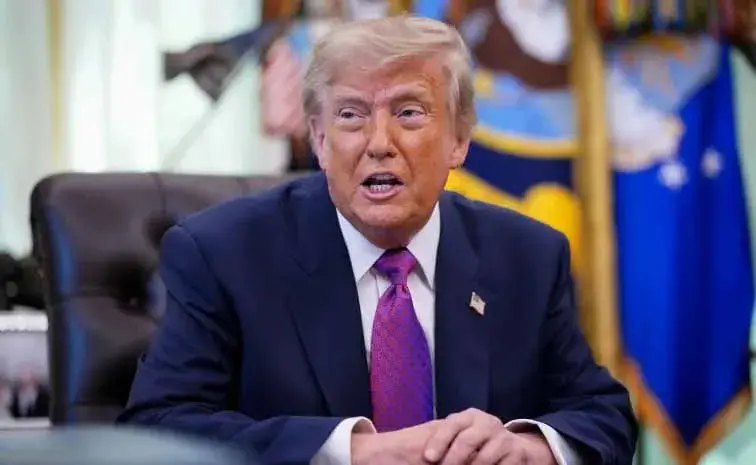
Trump dismisses AI risk warnings, says his oversight is enough
US President Donald Trump dismissed warnings about artificial intelligence risks in social media posts on Monday, setting aside industry demands for more government regulation of AI firms. He said his own oversight was sufficient to keep AI systems in check and that Washington already had regulatory and legal powers to act against companies, calling AI a valuable opportunity. Some White House officials are reportedly uneasy. Vice President JD Vance acknowledged AI carries both benefits and risks.
Source
Sakshi (సాక్షి) · read the original report ↗
Desk check · some claims need care
What the desk checked (5)
- Trump dismissed warnings about AI risks in social media posts on Monday — Attributed to Trump's own posts; date given as Monday, no direct quote reproduced in source.
- Trump said his own oversight is sufficient to keep AI systems in check and the US already has regulatory and legal powers to act against AI firms — Attributed to Trump; paraphrased in source without verbatim quote.
- Some White House officials are concerned about Trump's stance — Unnamed sourcing ('reportedly'); no official named — flag as unverified.
- Vice President JD Vance questioned why AI firms themselves seek regulation and called for the administration and Congress to work together on safeguards — Attributed to Vance; no direct quote or venue specified.
- China announced government-level US-China talks on AI, with scope for wider discussion during Xi Jinping's US visit — Attributed to a Chinese announcement; no date or official cited in source.
Deep dive
Research brief · 8 facts · 4 dates · exam-readyThe brief
Context
US President Donald Trump used social media posts on Monday to reject growing warnings about the dangers of artificial intelligence, brushing aside demands from industry figures for stricter government regulation of AI companies. He argued that his own oversight, plus existing US regulatory and legal powers, is enough to keep AI systems in check, and framed AI as a valuable opportunity with huge benefits, stressing that pushing China back in the AI race is vital for America. The stance comes amid rising public anxiety over job losses, the local impact of large data centres and security threats, and reported unease among some White House officials. Vice President JD Vance, while sceptical of AI firms themselves asking to be regulated, conceded AI carries both benefits and risks.
Key facts
- Trump dismissed warnings about AI risks in social media posts on Monday, setting aside industry leaders' demands for more government regulation of AI firms.
- He said his own oversight is sufficient to ensure AI systems do not go out of control.
- Trump said the US already has enough regulatory and legal powers to act against AI companies.
- He described AI as a valuable opportunity offering huge benefits, and said pushing China back in AI is very important for the US.
- Public concerns cited in the source: potential job losses, the impact of large data centres on local areas, and security threats.
- Some officials inside the White House are reported to be uneasy about Trump's position.
- Vice President JD Vance questioned why AI companies themselves are asking the government to impose rules, suspecting firms may seek favourable advantages under the guise of new regulations.
- Vance acknowledged AI has risks alongside benefits and said the administration and Congress should work together on appropriate safety measures.
Timeline
- Earlier (date not stated in the source)Trump and Chinese President Xi Jinping discussed AI safety, but little progress was seen.
- MondayTrump posts on social media dismissing AI risk warnings and calls for more regulation of AI firms.
- This weekMeetings with government experts on AI and cyber security likely; US Congress meetings planned on AI companies' responsibility and the government's role.
- Upcoming (date not stated in the source)Xi Jinping's US visit, during which US-China talks on AI may widen; China has announced government-level AI talks.
Who has a stake
- US President Donald Trump — Argues his own oversight and existing legal powers suffice; wants AI treated as an opportunity and China pushed back in the AI race.
- Vice President JD Vance — Sceptical of AI firms seeking regulation, but accepts AI's risks and wants the administration and Congress to craft safety measures.
- AI industry leaders and companies — Have demanded more government regulation; face suspicion that new rules could be shaped to their own advantage.
- White House officials — Some reported to be uneasy about the President's dismissal of AI risk warnings.
- US Congress — Set to hold meetings on the responsibility of AI companies and the role of government.
- American public and local communities — Concerned about job losses, effects of large data centres on their areas, and security threats.
- China and President Xi Jinping — Rival in the AI race; has announced government-level AI talks with the US, with wider discussion possible during Xi's US visit.
Why it matters
The world's largest AI economy is signalling that it will rely on presidential oversight and existing law rather than new AI-specific rules, which shapes the global regulatory template that other countries, including India, must respond to. It also ties AI governance to great-power competition, since Washington's reluctance to regulate is justified partly by the need to stay ahead of China, even as US-China talks on AI are being arranged.
UPSC angle
Prelims pointers
- Trump dismissed AI risk warnings in social media posts on Monday, saying his own oversight is enough.
- He claimed the US already possesses sufficient regulatory and legal powers to act against AI companies.
- US Vice President JD Vance suggested AI firms may seek self-serving benefits through new rules, but accepted AI's risks.
- Public concerns flagged: job losses, impact of large data centres on local areas, security threats.
- China announced government-level US-China talks on AI; earlier Trump-Xi talks on AI safety made little progress.
- US Congress meetings planned on the responsibility of AI companies and the government's role.
Mains framing
The story frames a core dilemma of AI governance: whether risk should be managed through executive discretion and existing legal powers, as Trump asserts, or through new, AI-specific statutory safeguards that industry leaders themselves have demanded. Trump's position is driven by two arguments visible in the source — that AI is a valuable opportunity with large benefits, and that geopolitical competition, especially staying ahead of China, makes restraint costly. Against this stand documented public anxieties over employment displacement, the local footprint of large data centres and security threats, plus reported unease among White House officials; Vance adds a regulatory-capture caution, that firms asking to be regulated may be seeking rules that entrench their own advantage, while still conceding risks exist. The way forward suggested within the source is institutional rather than unilateral: expert consultations on AI and cyber security, congressional deliberation on the responsibility of AI firms and the state's role, and government-level US-China engagement on AI safety, which had earlier yielded little progress. The episode illustrates that credible AI oversight requires legislative anchoring, independent capacity and international coordination, since neither personal assurance nor an unregulated race is a durable safeguard.
Key terms
- Artificial Intelligence (AI)
- Computer systems performing tasks associated with human intelligence; here the subject of debate over risks, oversight and regulation.
- Data centres
- Large computing facilities powering AI, whose local impact on surrounding areas is a stated public concern.
- Regulatory and legal powers
- Existing statutory authority Trump says the US already has to act against AI companies without new rules.
- US Congress
- The American legislature, set to hold meetings on AI companies' responsibility and the government's role.
- JD Vance
- US Vice President; sceptical of AI firms' calls for regulation but wants the executive and Congress to agree safety measures.
- Government-level US-China AI talks
- Official bilateral discussions on AI announced by China, possibly widened during Xi Jinping's US visit.
Practice questions
- Is executive oversight backed by existing law sufficient to govern artificial intelligence, or is AI-specific legislation necessary? Discuss with reference to the recent US debate.
- Examine how great-power competition between the United States and China shapes global artificial intelligence governance and what it implies for countries like India.
- 'When industry asks to be regulated, the risk is regulatory capture.' Critically analyse this argument in the context of AI companies' demand for government rules.
Grounded only in the source report — figures and dates are the source's, not inferred.