
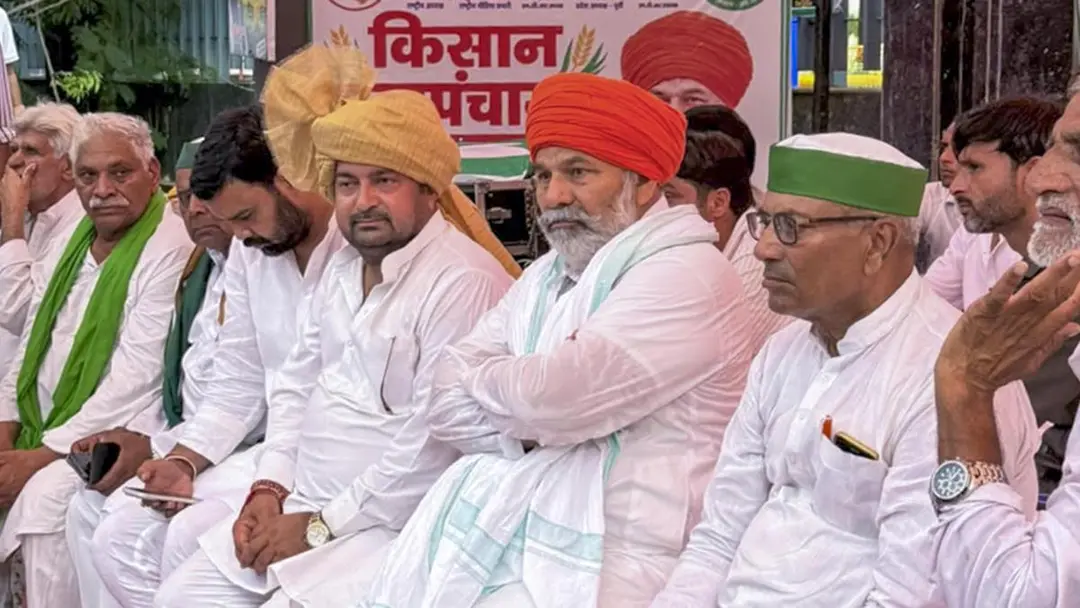
Tikait urges Noida farmers to continue land acquisition protest
Bharatiya Kisan Union leader Rakesh Tikait on Monday (September 14, 2026) asked farmers protesting in Gautam Buddh Nagar to continue their agitation, saying "struggle is the only option" left. He addressed farmers at the YEIDA, GNIDA and Noida Authority offices. Their demands include 10% developed 'abadi' plots in lieu of acquired land and an additional 64% compensation. Tikait alleged the administration was preventing farmers from protesting and meeting officials.
Source
The Hindu — National · read the original report ↗
Desk check · compared with the source
What the desk checked (5)
- Rakesh Tikait urged farmers in Gautam Buddh Nagar on September 14, 2026 to continue their agitation, saying 'struggle is the only option'. — Directly quoted and attributed to Tikait in the source.
- Farmers are demanding 10% developed 'abadi' plots in lieu of acquired land and an additional 64% compensation. — Figures appear in the source; not attributed to a specific official document.
- The administration was preventing farmers from protesting and meeting officials. — Allegation by Tikait; no administration response included in the source.
- Tikait addressed farmers at YEIDA, GNIDA and Noida Authority offices. — Stated in the source with photo credit to PTI; no independent confirmation available.
- BKU national general secretary Pawan Khatan said village-to-village outreach preceded the September 14 Kisan Mahapanchayat. — Attributed to a named BKU office-bearer.
Analysts’ view opinion
నోయిడా–గ్రేటర్ నోయిడా–యీడా ప్రాంతంలో భూసేకరణ పరిహారం అంశాన్ని రాకేశ్ టికాయత్ తిరిగి జాతీయ స్థాయి రైతు ఉద్యమ చట్రంలోకి తీసుకురావడానికి ప్రయత్నిస్తున్నారు — 2020-21 సాగు చట్టాల ఆందోళన తర్వాత కొంత వెనుకబడిన బీకేయూకు ఇది రాజకీయ ఔచిత్యాన్ని (relevance) పునరుద్ధరించే అవకాశం. 'చర్చల ద్వారా పరిష్కారం సాధ్యమైన పరిస్థితి ఇప్పుడు లేదు' అనే ఆయన వ్యాఖ్య, ప్రభుత్వంతో సంప్రదింపుల మార్గం మూసుకుపోయిందని చెప్పి వీధి పోరాటాన్ని సమర్థించుకునే వ్యూహాత్మక ఫ్రేమింగ్. అదే సమయంలో ఇది స్థానిక, ఆర్థిక డిమాండ్లతో కూడిన ఉద్యమం కాబట్టి — 10 శాతం అభివృద్ధి చేసిన ఆబాదీ స్థలాలు, అదనంగా 64 శాతం పరిహారం — దీన్ని రాజకీయ ఉద్యమంగా విస్తరించడం సులభం కాదు.
- ఢిల్లీ సరిహద్దుకు అత్యంత సమీపంలో, పెద్ద పెట్టుబడులు–మౌలిక ప్రాజెక్టులు కేంద్రీకృతమైన గౌతమ్ బుద్ధ్ నగర్ను ఆందోళన వేదికగా ఎంచుకోవడం వల్ల ఉద్యమానికి సహజంగానే ఎక్కువ మీడియా, రాజకీయ దృష్టి లభిస్తుంది.
- మూడు అథారిటీ కార్యాలయాల వద్ద ఏకకాలంలో నిరసనలు జరపడం, గ్రామ స్థాయి ప్రచారం తర్వాత మహాపంచాయత్ నిర్వహించడం — ఇది సంస్థాగత సామర్థ్యాన్ని ప్రదర్శించే ప్రయత్నంగా చదవవచ్చు.
- డిమాండ్లు రాజకీయ నినాదాలు కాకుండా పరిహారం, ఆబాదీ స్థలాల వంటి నిర్దిష్ట పరిపాలనా అంశాలు కావడం రైతులకు బలం; అదే సమయంలో అథారిటీ స్థాయిలో పరిష్కారానికి అవకాశం ఉన్నందున ఉద్యమ ఉధృతి తగ్గే ప్రమాదమూ ఉంది.
- 'రైతులు అధికారులను కలవలేకపోతున్నారు' అనే ఆరోపణ ద్వారా అంశాన్ని పరిహారం నుంచి ప్రజాస్వామ్య హక్కుల చర్చకు మార్చే ప్రయత్నం కనిపిస్తుంది — ఇది సానుభూతిని విస్తృతం చేసే ఎత్తుగడ.
- అధికార యంత్రాంగం వైపు వాదన ఏమిటో ఈ కథనంలో లేదు; అభివృద్ధి ప్రాజెక్టుల వ్యయం, న్యాయపరమైన పరిమితులు వంటి ప్రతివాదనలు ముందుకు వస్తే రాజకీయ సమతుల్యత మారవచ్చు.
What to watch — అథారిటీలు లేదా రాష్ట్ర ప్రభుత్వం చర్చలకు ఆహ్వానిస్తాయా, లేక నిరసనలపై ఆంక్షలు కొనసాగుతాయా — ఇదే ఉద్యమం స్థానిక పరిష్కారంతో ముగుస్తుందా, విస్తృత రైతు రాజకీయ ఉద్యమంగా మారుతుందా అనేది నిర్ణయిస్తుంది.
ఈ కథనం ఆందోళనలో పాల్గొన్న రైతుల సంఖ్య, అథారిటీల లేదా ప్రభుత్వ స్పందన, ఏదైనా చర్చల ప్రక్రియ ఉందా లేదా అనే విషయాలను స్థాపించలేదు; రాజకీయ పార్టీల మద్దతు లేదా ఎన్నికల ప్రభావం గురించి కూడా ఇక్కడ ఎలాంటి ఆధారం లేదు.
Deep dive
Research brief · 8 facts · 4 dates · exam-readyThe brief
Context
Farmers and villagers in Gautam Buddh Nagar district of Uttar Pradesh have been protesting over pending demands linked to land acquired by three development authorities — the Noida Authority, the Greater Noida Industrial Development Authority (GNIDA) and the Yamuna Expressway Industrial Development Authority (YEIDA) — for development projects. Their core demands are 10% developed 'abadi' (residential/habitation) plots in lieu of acquired land and an additional 64% compensation. On September 14, 2026, Bharatiya Kisan Union (BKU) national spokesperson Rakesh Tikait addressed a Kisan Mahapanchayat and separate protest groups at all three authority offices, telling farmers that "struggle is the only option" left. Tikait, a prominent face of the 2020-21 anti-farm laws agitation, alleged the administration was blocking farmers from protesting or meeting officials.
Key facts
- Rakesh Tikait, BKU national spokesperson, addressed protesting farmers in Gautam Buddh Nagar on Monday, September 14, 2026.
- A mahapanchayat was held outside the Noida Authority office in Sector 96, Noida, Gautam Buddha Nagar district, Uttar Pradesh.
- Tikait addressed farmers at the offices of three bodies: YEIDA, GNIDA and the Noida Authority.
- Farmers' demands include 10% developed 'abadi' plots in lieu of acquired land and an additional 64% compensation.
- Other demands: greater flexibility in using residential plots and more 'abadi' land in villages.
- Tikait alleged the administration was preventing farmers from holding protests and meeting officials.
- Tikait said: "If farmers cannot meet their own officials, struggle is the only option left before them."
- BKU national general secretary Pawan Khatan said farmers held meetings and village-to-village outreach ahead of the September 14 Kisan Mahapanchayat.
Timeline
- 2020-21Rakesh Tikait emerges as a prominent face of the anti-farm laws agitation.
- Before September 14, 2026Farmers hold meetings and village-to-village outreach ahead of the Kisan Mahapanchayat, per BKU general secretary Pawan Khatan.
- September 14, 2026 (Monday)Kisan Mahapanchayat held outside Noida Authority office, Sector 96; Tikait addresses farmers at YEIDA, GNIDA and Noida Authority offices and urges them to continue the agitation.
- September 15, 2026, 02:42 am ISTReport published.
Who has a stake
- Farmers and villagers of Gautam Buddh Nagar — Seek 10% developed 'abadi' plots in lieu of acquired land, 64% additional compensation, flexible use of residential plots and more village 'abadi' land.
- Bharatiya Kisan Union (BKU) — Backing the agitation; Tikait pledged organisational support and asked farmers to stay at protest sites.
- Rakesh Tikait, BKU national spokesperson — Leading the mobilisation; argues dialogue no longer works and 'struggle' is the only path.
- Noida Authority, GNIDA and YEIDA — The three development bodies that acquired land for projects and whose offices are the protest sites.
- District administration, Gautam Buddh Nagar — Accused by Tikait of preventing farmers from protesting and meeting officials; responsible for law and order.
- Pawan Khatan, BKU national general secretary — Coordinated pre-mahapanchayat meetings and village-to-village outreach.
Why it matters
Land acquisition for the Noida-Greater Noida-Yamuna Expressway growth corridor has created a long-running compensation and rehabilitation dispute that now spans three development authorities at once. Tikait's claim that dialogue with government has broken down, and his call to treat protest as the only remaining option, signals a possible escalation in one of India's fastest-urbanising districts. How authorities respond will shape both the credibility of negotiated settlement in land disputes and the space available for farmer protest.
UPSC angle
Prelims pointers
- Rakesh Tikait is the national spokesperson of the Bharatiya Kisan Union (BKU); Pawan Khatan is its national general secretary.
- Three authorities involved: Noida Authority, Greater Noida Industrial Development Authority (GNIDA) and Yamuna Expressway Industrial Development Authority (YEIDA).
- Key farmer demands: 10% developed 'abadi' plots in lieu of acquired land and 64% additional compensation.
- Gautam Buddh Nagar is a district of Uttar Pradesh; the mahapanchayat was held outside the Noida Authority office, Sector 96.
- Tikait was a prominent face of the anti-farm laws agitation of 2020-21.
- Date of the Kisan Mahapanchayat: September 14, 2026.
Mains framing
The Gautam Buddh Nagar agitation illustrates how large-scale land acquisition for urban and industrial development generates a second-order grievance long after the land changes hands: the adequacy of compensation and of rehabilitation entitlements. Here the demands are specific and quantified — 10% developed 'abadi' plots in lieu of acquired land, an additional 64% compensation, freer use of allotted residential plots and more habitation land in villages — pointing to disputes over both the price of land and the residual living space of displaced village communities. The immediate trigger, as alleged by BKU leader Rakesh Tikait, is procedural rather than substantive: farmers say they are being kept from entering authority offices and meeting officials, which converts a negotiable claim into a confrontation. Tikait's contrast between earlier protests that "could often be resolved through dialogue" and the present situation frames the core question — whether institutional grievance-redress channels between development authorities and land-losing farmers are functioning. A way forward suggested by the story's own logic lies in restoring access and structured dialogue between the three authorities (Noida, GNIDA, YEIDA) and farmer representatives, and in resolving the entitlement questions transparently; the source does not state any government or authority response.
Key terms
- Bharatiya Kisan Union (BKU)
- Farmers' organisation whose national spokesperson Rakesh Tikait is backing the Gautam Buddh Nagar protest.
- 'Abadi' plot
- Habitation/residential land; farmers demand 10% developed abadi plots in lieu of land acquired from them.
- YEIDA
- Yamuna Expressway Industrial Development Authority, one of the three bodies outside whose office farmers protested.
- GNIDA
- Greater Noida Industrial Development Authority, a development body that acquired farmers' land for projects.
- Kisan Mahapanchayat
- Large farmers' assembly; one was held on September 14, 2026 under Tikait's leadership outside the Noida Authority office.
- 64% additional compensation
- Farmers' demand for an enhanced payout over and above the compensation already given for acquired land.
Practice questions
- Land acquisition for urban and industrial development often produces prolonged disputes over compensation and rehabilitation. Examine this with reference to the ongoing farmers' agitation in Gautam Buddh Nagar.
- "Struggle is the only option" — critically assess the argument that breakdown of institutional dialogue pushes farmers' movements towards agitation. Suggest measures to strengthen grievance redress in land acquisition.
- Discuss the role of development authorities such as Noida Authority, GNIDA and YEIDA in balancing infrastructure growth with the entitlements of land-losing rural communities.
Grounded only in the source report — figures and dates are the source's, not inferred.