
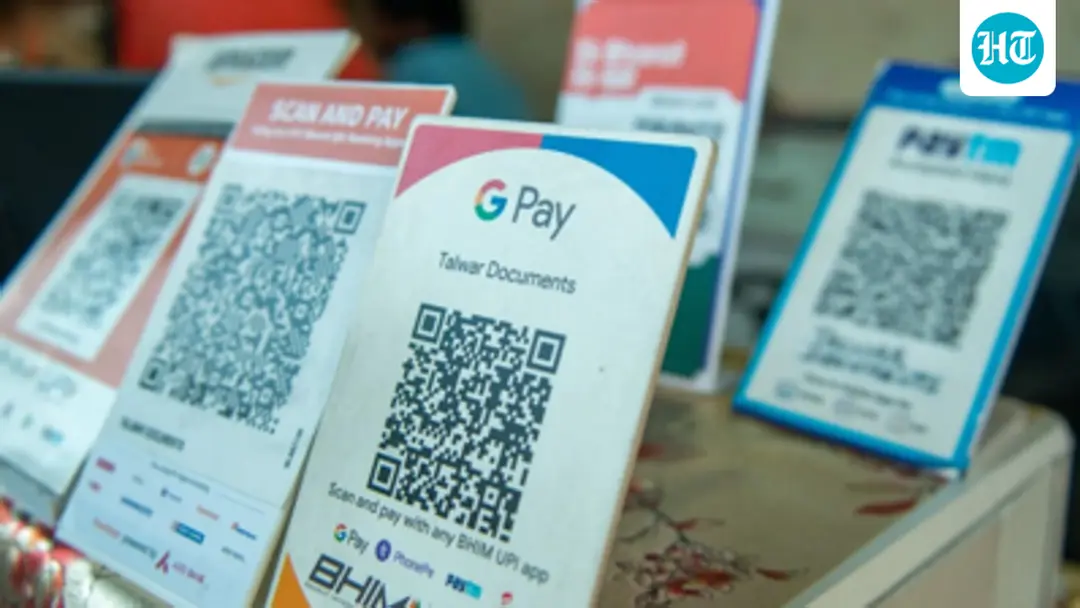
Supreme Court petition challenges new UPI merchant fee framework
Advocate Anjan Datta filed a petition in the Supreme Court on Wednesday challenging the Centre's framework allowing Merchant Discount Rate on specified high-value commercial UPI transactions, seeking quashing of the finance ministry notifications of September 14 and 15. The plea said merchants could pass the cost to customers. From October 15, a 0.4% MDR applies to P2M transactions above ₹2,000, capped at ₹300 for payments of ₹75,000 and above. The Centre, RBI and NPCI are respondents.
Source
Hindustan Times — India · read the original report ↗
Desk check · compared with the source
What the desk checked (5)
- Advocate Anjan Datta filed a Supreme Court petition on Wednesday seeking quashing of the finance ministry notifications of September 14 and 15. — Attributed in source to the petition; petitioner named and dates given.
- A 0.4% MDR applies from October 15 to specified P2M UPI transactions above ₹2,000, with MDR capped at ₹300 for transactions of ₹75,000 and above. — Figures appear in source, attributed to the government and NPCI framework.
- Flat ₹5 MDR for railways, telecom, insurance, fuel and agricultural inputs; 0.02% capped at ₹300 for capital-market transactions. — Figures stated in source as part of the notified framework.
- About 96% of P2M transactions will be unaffected; MDR to apply to about 4%. — Attributed to the finance ministry in the source.
- Merchants could recover the additional cost from customers. — Presented as the petitioner's contention, not as an established fact.
Analysts’ view opinion
The idea that UPI is free has become a load-bearing pillar of the Centre's digital-economy narrative, which is why even a narrow, merchant-side MDR — one the finance ministry says leaves about 96% of P2M transactions untouched — carries outsized political risk. By moving the dispute to the Supreme Court, the petition forces the government to defend the design of the framework in a public forum rather than settle it through notifications alone. The legal question is technical; the political question is simply who ends up paying.
- The Centre's political armour is its carve-outs: P2P free regardless of amount, merchant payments up to ₹2,000 free, and zero MDR for small merchants receiving up to ₹1 lakh a month.
- The petition's real force is rhetorical rather than fiscal — the claim that merchants could pass the cost to customers is an easily communicated message.
- Placing MDR liability on merchants protects the small trader but opens a flank with mid-sized and larger businesses; the reported threat by petrol pump dealers to go cash-only is an early sign of that pressure.
- The flat ₹5 treatment for railways, telecom, insurance, fuel and agricultural inputs looks like pre-emptive softening of the sectors most likely to push back loudly.
- With the Centre, RBI and NPCI all named as respondents, the case could widen from a policy dispute into a question of who holds authority over pricing the payments rail.
What to watch — Watch whether the court entertains the plea and grants any interim relief before October 15, and whether trade bodies and opposition parties frame the levy as a charge on ordinary users entering through the back door.
The story establishes only that a petition has been filed — it does not establish that the court has admitted it, how any political party has responded, or whether merchants will in fact pass the cost on to consumers.
Deep dive
Research brief · 8 facts · 4 dates · exam-readyThe brief
Context
The Centre and NPCI have notified a framework reintroducing Merchant Discount Rate (MDR) on specified high-value person-to-merchant (P2M) UPI transactions, ending the blanket zero-charge regime for larger merchant payments while keeping small-value and P2P transfers free. From October 15, a 0.4% MDR applies to eligible P2M transactions above ₹2,000, with concessional rates for essential and thin-margin sectors. Advocate Anjan Datta has moved the Supreme Court seeking quashing of the finance ministry notifications of September 14 and 15, arguing merchants may pass the cost on to consumers. The Union government, RBI, NPCI and the UPI & Services Steering Committee are respondents.
Key facts
- Petition filed in the Supreme Court on Wednesday by advocate Anjan Datta seeking quashing of the Union finance ministry notifications of September 14 and 15.
- Respondents: Union government, Reserve Bank of India, National Payments Corporation of India and the UPI & Services Steering Committee.
- From October 15, a 0.4% MDR applies to specified person-to-merchant (P2M) UPI transactions above ₹2,000; a ₹10,000 eligible transaction attracts ₹40.
- For transactions of ₹75,000 and above, the maximum MDR is capped at ₹300.
- The September 14 notification was issued under Section 10A of the Payment and Settlement Systems Act, 2007, barring charges on specified electronic modes including UPI payments up to ₹2,000.
- Flat MDR of ₹5 for UPI transactions above ₹2,000 involving railways, telecommunications, insurance, fuel and agricultural inputs; capital-market transactions attract 0.02% capped at ₹300.
- Small merchants receiving up to ₹1 lakh a month through UPI QR codes under the P2PM category continue at zero MDR.
- Finance ministry says about 96% of P2M transactions remain unaffected; MDR is expected to apply to about 4% of merchant transactions.
Timeline
- September 14Finance ministry notification under Section 10A of the Payment and Settlement Systems Act, 2007 bars charges on specified electronic modes, including UPI payments up to ₹2,000.
- September 15Second finance ministry notification; government and NPCI announce the new MDR framework for transactions above the ₹2,000 threshold.
- Wednesday (a day after the announcement)Advocate Anjan Datta files a Supreme Court petition challenging the framework and seeking quashing of both notifications.
- October 15The 0.4% MDR on specified P2M UPI transactions above ₹2,000 is to take effect.
Who has a stake
- Union finance ministry — Issued the September 14 and 15 notifications; must defend the framework and its claim that 96% of P2M transactions are unaffected.
- Reserve Bank of India — Respondent in the petition; regulator of payment and settlement systems under which the notifications operate.
- NPCI and the UPI & Services Steering Committee — Respondents; NPCI notified the MDR structure for transactions outside the protected ₹2,000 threshold.
- Merchants receiving UPI payments above ₹2,000 — Bear MDR liability of 0.4% (or ₹5 flat / 0.02% in specified sectors), with banks advised to ensure the cost is not passed to customers.
- Small merchants under P2PM — Exempt from MDR if UPI QR receipts are up to ₹1 lakh a month.
- Consumers and UPI users — Petition argues costs could be recovered from them; UPI app providers barred from platform fees or hidden charges.
- Petitioner Anjan Datta — Seeks quashing of the notifications on the ground that free UPI for ordinary users is defeated.
Why it matters
UPI's growth has rested on the promise of zero cost to users and merchants, and the reintroduction of MDR on high-value merchant payments tests that promise. The litigation will determine whether the Centre can levy such charges under Section 10A of the Payment and Settlement Systems Act while claiming users remain protected, and whether the bar on passing costs to customers is enforceable in practice.
UPSC angle
Prelims pointers
- MDR = Merchant Discount Rate, the fee a merchant pays on a digital payment transaction.
- September 14 notification issued under Section 10A of the Payment and Settlement Systems Act, 2007.
- From October 15: 0.4% MDR on specified P2M UPI transactions above ₹2,000; cap of ₹300 for transactions of ₹75,000 and above.
- Flat ₹5 MDR for railways, telecom, insurance, fuel and agricultural inputs; 0.02% (capped at ₹300) for capital-market transactions.
- P2PM small merchants with UPI QR receipts up to ₹1 lakh a month: zero MDR; all P2P transfers free irrespective of amount.
- Respondents in the Supreme Court petition: Union government, RBI, NPCI and the UPI & Services Steering Committee.
Mains framing
The reintroduction of MDR on high-value UPI merchant payments reflects the tension between the fiscal and commercial sustainability of a zero-cost digital payments rail and the policy commitment that UPI remains free for ordinary users. The Centre's design attempts to balance both: charges are confined to P2M transactions above ₹2,000, with a 0.4% rate capped at ₹300 for payments of ₹75,000 and above, concessional flat ₹5 rates for essential and thin-margin sectors such as railways, telecom, insurance, fuel and agricultural inputs, 0.02% for capital-market payments, and complete exemption for P2P transfers and small merchants receiving up to ₹1 lakh a month under P2PM; the ministry estimates only about 4% of merchant transactions will attract MDR. The petition's core argument is one of incidence rather than legality of rates: even if the statutory liability rests on merchants and banks have been advised not to allow pass-through while apps are barred from platform or hidden fees, businesses may recover the cost through prices, defeating the stated objective. The way forward, as the source indicates, lies in enforcement of the no-pass-through advisory and the exemption architecture, with the Supreme Court now to test the notifications issued under Section 10A of the Payment and Settlement Systems Act, 2007.
Key terms
- Merchant Discount Rate (MDR)
- The charge levied on a merchant for accepting a digital payment; now applied to specified high-value UPI P2M transactions.
- P2M and P2P transactions
- Person-to-merchant payments (now liable to MDR above ₹2,000) versus person-to-person transfers, which remain completely free.
- P2PM category
- Person-to-person-to-merchant classification for small merchants; zero MDR for UPI QR receipts up to ₹1 lakh a month.
- Section 10A, Payment and Settlement Systems Act, 2007
- Provision under which the September 14 notification bars banks and system providers from charging users on specified electronic modes.
- NPCI
- National Payments Corporation of India, which operates UPI and notified the MDR structure; a respondent in the petition.
- UPI & Services Steering Committee
- Body named as a respondent in the Supreme Court petition alongside the Centre, RBI and NPCI.
Practice questions
- Examine the legal and policy issues raised by the reintroduction of MDR on high-value UPI merchant transactions, with reference to Section 10A of the Payment and Settlement Systems Act, 2007.
- "A charge imposed on merchants inevitably reaches the consumer." Critically evaluate this proposition in the context of the new UPI MDR framework and its exemptions.
- Discuss how the design of the new UPI MDR framework attempts to protect small merchants and essential sectors, and assess whether such carve-outs are adequate.
Grounded only in the source report — figures and dates are the source's, not inferred.