
Egypt urges Israeli withdrawal from Lebanon, Resolution 1701 implementation
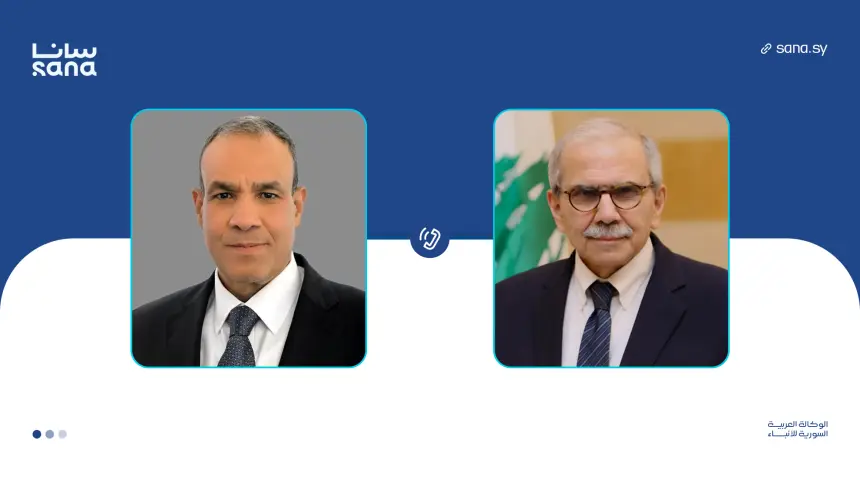
Egypt has called for a full Israeli withdrawal from Lebanese territory and the implementation of UN Security Council Resolution 1701. According to the Egyptian Foreign Ministry, Foreign Minister Badr Abdelatty spoke by phone on Wednesday with Lebanese Prime Minister Nawaf Salam, reaffirming support for Lebanon's sovereignty, unity and territorial integrity and rejecting Israeli attacks. He also backed Lebanese state institutions, particularly the army, in extending state authority nationwide. The two discussed Red Sea developments and their impact on maritime security, international trade and energy supplies.
Source
UN Security Council · read the original report ↗
Desk check · compared with the source
What the desk checked (4)
- Egypt called for a full Israeli withdrawal from Lebanese territory and implementation of UN Security Council Resolution 1701. — Attributed to the Egyptian Foreign Ministry via SANA; appears in source.
- The call took place Wednesday between Foreign Minister Badr Abdelatty and Lebanese Prime Minister Nawaf Salam. — Stated in source with datelined Cairo, Sept. 16; names and format as given, not independently checked.
- Abdelatty reaffirmed support for Lebanon's sovereignty, unity and territorial integrity and rejected Israeli attacks. — Attributed to the Egyptian Foreign Ministry in the source.
- The two discussed Red Sea developments and their impact on maritime security, international trade and energy supplies. — Figure-free claim present in source; no further detail or third-party sourcing given.
Analysts’ view opinion
Egypt's call is about more than Lebanon — it is also an effort to reassert Cairo's place in regional diplomacy. By anchoring its message in Resolution 1701, Egypt bundles the demand for an Israeli withdrawal with the demand that Lebanese state authority, meaning the army rather than armed groups, extend across the country. Notably, the same call touched on the Red Sea, maritime security and energy supplies — a sign Cairo reads Levant tensions through the prism of its own trade and revenue security.
- Invoking Resolution 1701 lets Egypt stand on an internationally agreed framework that places obligations on both sides — diplomatically safer ground and more palatable to Western capitals.
- Backing the Lebanese army and state institutions carries an implicit message about reducing the weight of non-state armed actors.
- Already a mediator in Gaza diplomacy, Egypt appears keen to stay visible on the Lebanon file to preserve regional relevance.
- The Red Sea reference is a direct economic concern for Cairo, since instability on shipping lanes affects Suez-linked revenues and global energy flows — though the story offers no figures.
- As a bilateral statement without any Israeli response or Security Council movement, its capacity to change facts on the ground is limited.
What to watch — Watch whether this bilateral appeal is escalated into collective action at the Arab League or Security Council, and what concrete form support for the Lebanese army takes.
The story establishes no Israeli agreement to withdraw, no reciprocal Lebanese commitments and no detail on the shape of Egyptian support — it rests on an Egyptian Foreign Ministry account of one phone call.
Deep dive
Research brief · 8 facts · 2 dates · exam-readyThe brief
Context
Egypt has publicly pressed for a complete Israeli withdrawal from Lebanese territory and for the implementation of UN Security Council Resolution 1701, the framework that governs the cessation of hostilities along the Israel-Lebanon frontier. The call came in a phone conversation between Egyptian Foreign Minister Badr Abdelatty and Lebanese Prime Minister Nawaf Salam, reported by the Egyptian Foreign Ministry. Cairo framed its position around Lebanese sovereignty, unity and territorial integrity, and backing for Lebanese state institutions, especially the army, to extend state authority across the country. The two sides also reviewed Red Sea developments and their effects on maritime security, trade and energy supplies.
Key facts
- Egypt called for a full Israeli withdrawal from Lebanese territory and implementation of UN Security Council Resolution 1701.
- The call was made during talks on Wednesday between Egyptian Foreign Minister Badr Abdelatty and Lebanese Prime Minister Nawaf Salam.
- The report is datelined Cairo, Sept. 16, and carried by SANA.
- Abdelatty reaffirmed Egypt's support for Lebanon's sovereignty, unity and territorial integrity, according to the Egyptian Foreign Ministry.
- Egypt rejected Israeli attacks and violations of Lebanese sovereignty.
- Egypt reiterated support for Lebanese state institutions, particularly the army, to extend state authority across the country.
- The two officials discussed regional developments and efforts to de-escalate tensions.
- Talks covered developments in the Red Sea and their impact on maritime security, international trade and energy supplies.
Timeline
- Wednesday (as reported)Phone call between Egyptian FM Badr Abdelatty and Lebanese PM Nawaf Salam; Egypt calls for Israeli withdrawal from Lebanese territory and implementation of Resolution 1701.
- Sept. 16SANA report from Cairo carries the Egyptian Foreign Ministry's account of the call.
Who has a stake
- Egypt (Foreign Minister Badr Abdelatty) — Positioning itself as a regional mediator pressing for de-escalation, Israeli withdrawal and implementation of Resolution 1701.
- Lebanon (Prime Minister Nawaf Salam) — Seeks international backing for its sovereignty, territorial integrity and the state's authority over all its territory.
- Lebanese Armed Forces — Named by Egypt as the institution to be supported in extending state authority nationwide.
- Israel — Accused of attacks and violations of Lebanese sovereignty; subject of the withdrawal demand.
- UN Security Council — Author of Resolution 1701, whose implementation is the reference point for both governments.
- Shipping, trade and energy interests — Red Sea developments discussed for their impact on maritime security, international trade and energy supplies.
Why it matters
Egypt's intervention signals that Arab diplomacy is trying to anchor the Israel-Lebanon file back in the UN framework of Resolution 1701 rather than open-ended military presence. Linking Lebanon to Red Sea maritime security also shows how a localised conflict feeds into global trade and energy routes that matter directly to import-dependent economies such as India's.
UPSC angle
Prelims pointers
- UN Security Council Resolution 1701 is the reference framework cited for Israel-Lebanon de-escalation.
- Badr Abdelatty is Egypt's Foreign Minister; Nawaf Salam is Lebanon's Prime Minister (as per the source).
- SANA carried the report, datelined Cairo, Sept. 16.
- Egypt backed Lebanese state institutions, particularly the army, in extending state authority nationwide.
- Red Sea developments were discussed for their impact on maritime security, international trade and energy supplies.
Mains framing
The Egypt-Lebanon phone diplomacy illustrates how West Asian conflicts are increasingly managed through third-party Arab states invoking existing UN instruments. Cairo's twin demands - full Israeli withdrawal from Lebanese territory and implementation of Security Council Resolution 1701 - reflect a view that the crisis stems from contested sovereignty and the weak reach of the Lebanese state, which is why Egypt explicitly backs Lebanese institutions, especially the army, in extending authority across the country. The simultaneous discussion of Red Sea developments underlines that de-escalation is not only a humanitarian or territorial question but a maritime security, trade and energy question, with spillovers for shipping routes and energy supply chains. A way forward consistent with the source lies in restoring the Resolution 1701 framework, verified withdrawal, and strengthening the capacity of the Lebanese state and army so that authority is not exercised by non-state actors - alongside sustained regional dialogue on de-escalation. For India, the analytical takeaway is the exposure of energy imports and trade to instability in these corridors, though the source itself does not address Indian interests.
Key terms
- UN Security Council Resolution 1701
- The Security Council resolution whose implementation Egypt and Lebanon cited as the basis for ending hostilities and restoring Lebanese sovereignty.
- Territorial integrity
- The principle that a state's borders and territory must not be violated by force, invoked by Egypt in support of Lebanon.
- Extending state authority
- Ensuring the Lebanese government and army, rather than other actors, exercise control across all Lebanese territory.
- SANA
- The news agency that carried the Cairo-datelined report of the Abdelatty-Salam call.
- Red Sea maritime security
- Safety of shipping in the Red Sea, discussed by the two officials for its bearing on international trade and energy supplies.
Practice questions
- Discuss the role of UN Security Council Resolution 1701 in managing the Israel-Lebanon conflict and the challenges to its implementation.
- How does instability in the Red Sea corridor affect maritime security, international trade and energy supplies? Examine with reference to recent regional diplomacy.
- Examine the significance of Arab states such as Egypt acting as diplomatic intermediaries in West Asian conflicts.
Grounded only in the source report — figures and dates are the source's, not inferred.