
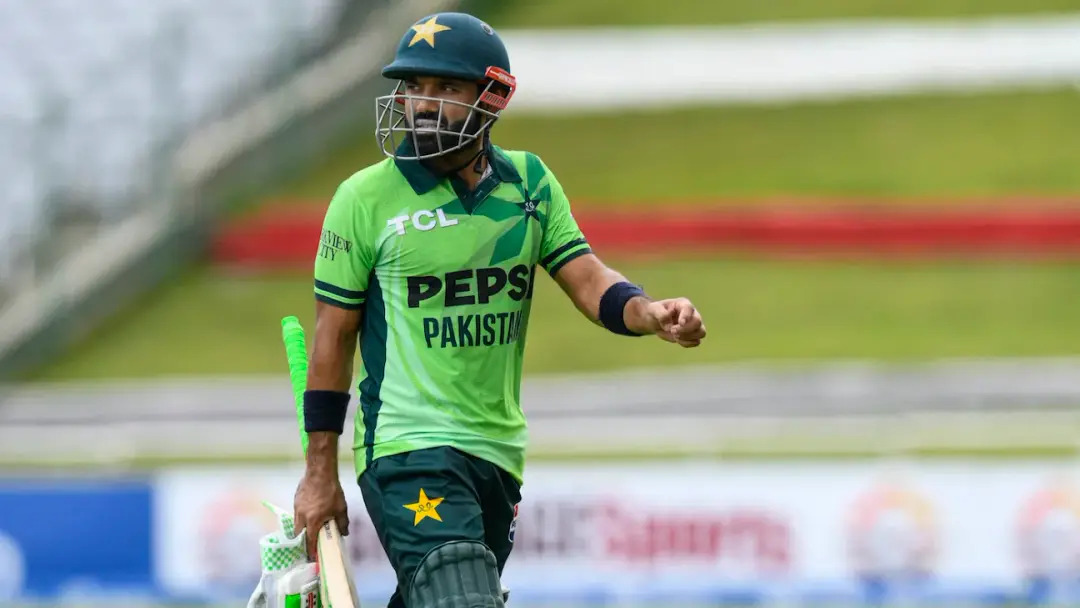
Lahore High Court dismisses Mohammad Rizwan's petition against cybercrime agency
The Lahore High Court has dismissed Pakistan wicketkeeper-batter Mohammad Rizwan's petition against the National Cyber Crimes Investigation Agency after a short hearing on Thursday, directing him to respond to the agency's queries. Rizwan, summoned for questioning over alleged online betting in Pakistan cricket, argued the agency lacked jurisdiction and that the ICC's anti-corruption unit was the mandated body. His petition also alleged his mobile phone was confiscated after the Lord's Test and not returned.
Source
The News International (Pakistan) · read the original report ↗
Desk check · some claims need care
What the desk checked (5)
- The Lahore High Court dismissed Mohammad Rizwan's petition after a short hearing on Thursday. — Reported as fact in the source; court proceeding, no document cited.
- Rizwan argued the NCCIA lacked jurisdiction, saying the ICC's anti-corruption unit is the mandated body. — Attributed to the petition with direct quotes from it.
- Rizwan's mobile phone was confiscated at 1am in the team hotel lobby after the Lord's Test and has not been returned. — Allegation from Rizwan's petition only; no independent confirmation in source.
- Imam-ul-Haq responded to an NCCIA questionnaire instead of going to court. — Stated in source without named source.
- PCB began an internal disciplinary inquiry after the England tour; Pakistan lost the Lord's Test by 194 runs. — PCB statement quoted; margin figure appears in source, link to Rizwan case explicitly unclear.
Analysts’ view opinion
The Lahore High Court's dismissal is more than a legal setback for Mohammad Rizwan — it confirms that the crisis triggered by the Lord's defeat has now moved off the field and into courtrooms and investigative agencies. Rizwan's jurisdictional argument, that the ICC's anti-corruption unit is the body mandated to handle such allegations, is a serious point in cricket-governance terms, but the court set it aside after only a short hearing. With Imam-ul-Haq having simply filled in and returned the questionnaire, Rizwan's choice to litigate leaves him with a narrower set of options: appeal, or comply.
- Sending home Rizwan, Imam and five other players along with head coach Sarfaraz Ahmed and bowling coach Umar Gul after the 194-run defeat at Lord's was not routine rotation — it signalled a full-scale reset.
- The PCB's notice demanding a written explanation of the selection process within 24 hours, followed by selector Misbah-ul-Haq's resignation, shows how deep the internal pressure runs in the selection system itself.
- Two parallel processes are running — the NCCIA questioning and the PCB's own post-tour disciplinary inquiry — and the story does not establish whether they are connected.
- Imam responding via questionnaire while Rizwan went to court shows two senior players choosing very different routes out of the same situation, and the ruling has now narrowed Rizwan's.
- As long as an investigation hangs over him, planning around a first-choice wicketkeeper-batter becomes uncertain regardless of his form.
What to watch — Watch whether Rizwan appeals or answers the agency's queries, and how the PCB's internal inquiry feeds into upcoming squad selections.
The story establishes no wrongdoing by Rizwan — the substance of the allegations, whether the ICC ACU is involved, whether the PCB inquiry is linked, and any impact on his playing availability all remain unestablished.
Deep dive
Research brief · 8 facts · 6 dates · exam-readyThe brief
Context
Pakistan wicketkeeper-batter Mohammad Rizwan was summoned by Pakistan's National Cyber Crimes Investigation Agency (NCCIA) for questioning in a matter the summons linked to alleged online betting/gambling in Pakistan cricket. Instead of responding, Rizwan filed a writ petition in the Lahore High Court challenging the agency's jurisdiction, arguing the ICC's Anti-Corruption Unit is the mandated body for betting and spot-fixing allegations against international players. The court dismissed the petition after a short hearing and directed him to respond to the agency's queries. The episode follows Pakistan's 194-run defeat in the Lord's Test, after which the PCB sent home Rizwan, Imam-ul-Haq, five other players and two coaches, and launched an internal disciplinary inquiry.
Key facts
- The Lahore High Court dismissed Mohammad Rizwan's writ petition against the NCCIA after a short hearing on Thursday, directing him to respond to the agency's queries.
- Rizwan filed the writ petition on Wednesday through his lawyers, a week after being summoned by the NCCIA for questioning.
- The petition described the matter as "purportedly in respect of online betting/gambling in the sports of Pakistan cricket".
- The petition argued the ICC Anti-Corruption Unit (ACU) is the body "specifically constituted and mandated" to investigate betting and spot-fixing allegations against international players, and that no reference had been made to the ACU.
- Imam-ul-Haq was called by the NCCIA on the same day as Rizwan; he filled out the questionnaire given to him and sent it back to the agency earlier this week.
- The petition alleged Rizwan was summoned to his team hotel lobby at 01:00 AM shortly after the Lord's Test, interrogated without notice, and his mobile phone confiscated without any stated reason or order.
- Rizwan was assured the phone would be checked and returned within 3 hours, but the petition says it has not been returned to date.
- Pakistan's 194-run defeat in the Lord's Test prompted the PCB to send home Rizwan, Imam and five other players, plus head coach Sarfaraz Ahmed and bowling coach Umar Gul.
Timeline
- Shortly after the Lord's Test (England tour)Rizwan allegedly summoned to the team hotel lobby at 1 AM, interrogated by an officer and his mobile phone confiscated; phone not returned.
- After the Lord's TestPCB sends home Rizwan, Imam and five other players, plus head coach Sarfaraz Ahmed and bowling coach Umar Gul; PCB notice to selectors seeks written explanation within 24 hours on Rizwan and Imam's selection; selector Misbah-ul-Haq resigns.
- Last weekNCCIA calls Rizwan and Imam-ul-Haq for questioning on the same day; PCB separately announces a post-England tour internal disciplinary inquiry.
- Earlier this weekImam-ul-Haq completes and returns the NCCIA questionnaire.
- WednesdayRizwan files a writ petition in the Lahore High Court challenging the NCCIA's jurisdiction and the vagueness of its notice.
- ThursdayLahore High Court dismisses the petition after a short hearing and directs Rizwan to respond to the NCCIA.
Who has a stake
- Mohammad Rizwan — Faces NCCIA questioning over alleged online betting in Pakistan cricket; his reputation, his confiscated mobile phone and his legal options (appeal or comply) are at stake.
- National Cyber Crimes Investigation Agency (NCCIA) — Its jurisdiction over a cricket betting matter was challenged in court; the dismissal lets its questioning proceed.
- Lahore High Court — Adjudicated the jurisdictional challenge; dismissed the petition after a short hearing.
- ICC Anti-Corruption Unit (ACU) — Cited in the petition as the mandated body for betting and spot-fixing allegations; the source says no reference of the alleged conduct was made to it.
- Pakistan Cricket Board (PCB) — Running a separate internal disciplinary inquiry under PCB regulations after the England tour; also questioned selectors over Rizwan and Imam's selection.
- Imam-ul-Haq — Also called by the NCCIA; chose to answer the questionnaire rather than litigate.
- Misbah-ul-Haq and the selection panel — Asked by the PCB for a written explanation within 24 hours on the selections; Misbah resigned as selector after the squad changes.
Why it matters
The case tests who has authority to investigate betting allegations against international cricketers — a national cybercrime agency, the national board under its own regulations, or the ICC's Anti-Corruption Unit. The court's dismissal means a state investigative agency can proceed against a serving international player, raising questions about players' procedural rights, such as notice before interrogation and the seizure of personal devices. It also matters for the credibility of Pakistan cricket, already under scrutiny after the heavy Lord's Test defeat and mass squad changes.
UPSC angle
Prelims pointers
- National Cyber Crimes Investigation Agency (NCCIA) is Pakistan's national cybercrimes agency; it summoned Rizwan and Imam-ul-Haq for questioning.
- The ICC's Anti-Corruption Unit (ACU) is the body cited in the petition as mandated to investigate corruption, betting and spot-fixing in international cricket.
- A writ petition was filed in the Lahore High Court on Wednesday and dismissed after a short hearing on Thursday.
- Pakistan lost the Lord's Test by 194 runs, after which seven players and two coaches (Sarfaraz Ahmed, head coach; Umar Gul, bowling coach) were sent home.
- The PCB announced an internal disciplinary inquiry conducted under PCB regulations, following media reports on discipline and conduct.
- Misbah-ul-Haq resigned as selector after the squad changes following the Lord's Test.
Mains framing
The Rizwan case illustrates the overlapping jurisdictions that arise when alleged sporting corruption also constitutes a possible criminal offence. Rizwan's petition rested on two grounds: that the NCCIA's notice failed to identify which specific offence or statutory provision he was alleged to have contravened, and that the ICC's Anti-Corruption Unit — not a domestic cybercrime agency — is the body constituted and mandated to receive and act upon betting and spot-fixing allegations against players in international cricket. Against this, the state's interest is that betting and gambling offences may be independently punishable under national law regardless of sport-specific codes; the Lahore High Court's dismissal effectively allowed the agency's inquiry to proceed. The petition's procedural allegations — interrogation at 1 AM in a hotel lobby without notice and the confiscation of a mobile phone that was not returned despite an assurance of three hours — highlight due-process concerns about notice, authorisation and custody of seized devices. A way forward suggested by the facts is clarity of sequencing: sport-governing bodies and national agencies should specify in the notice the exact offence alleged, coordinate referrals with the ICC ACU, and follow documented procedures for device seizure, while the PCB's parallel disciplinary inquiry under its own regulations remains distinct from any criminal process.
Key terms
- Writ petition
- A petition asking a high court to check unlawful action by a public authority; Rizwan used it to challenge the NCCIA's notice and jurisdiction.
- NCCIA
- Pakistan's National Cyber Crimes Investigation Agency, which summoned Rizwan for questioning over alleged online betting in cricket.
- ICC Anti-Corruption Unit (ACU)
- The ICC body the petition says is mandated to receive, investigate and act on corruption, betting and spot-fixing allegations against international players.
- Spot-fixing
- Manipulating a specific passage or incident in a match, rather than the result, usually for betting gain; listed among corruption offences the ACU handles.
- Abuse of process
- Using a legal or investigative power for a purpose it was not meant for; the petition said NCCIA's assumption of jurisdiction amounted to this.
- PCB internal disciplinary inquiry
- A board-run process under PCB regulations, begun after media reports on discipline and conduct on the England tour, naming no players.
Practice questions
- When alleged corruption in international sport also amounts to a criminal offence, how should jurisdiction be divided between national investigative agencies, national boards and international federations? Discuss with reference to the Rizwan case.
- Examine the due-process safeguards a summoned individual can expect — specificity of notice, authorisation for interrogation, and custody of seized electronic devices — as raised in Rizwan's petition.
- Do parallel inquiries by a cricket board and a state cybercrime agency strengthen or weaken accountability in sport? Argue with evidence from the source.
Grounded only in the source report — figures and dates are the source's, not inferred.