
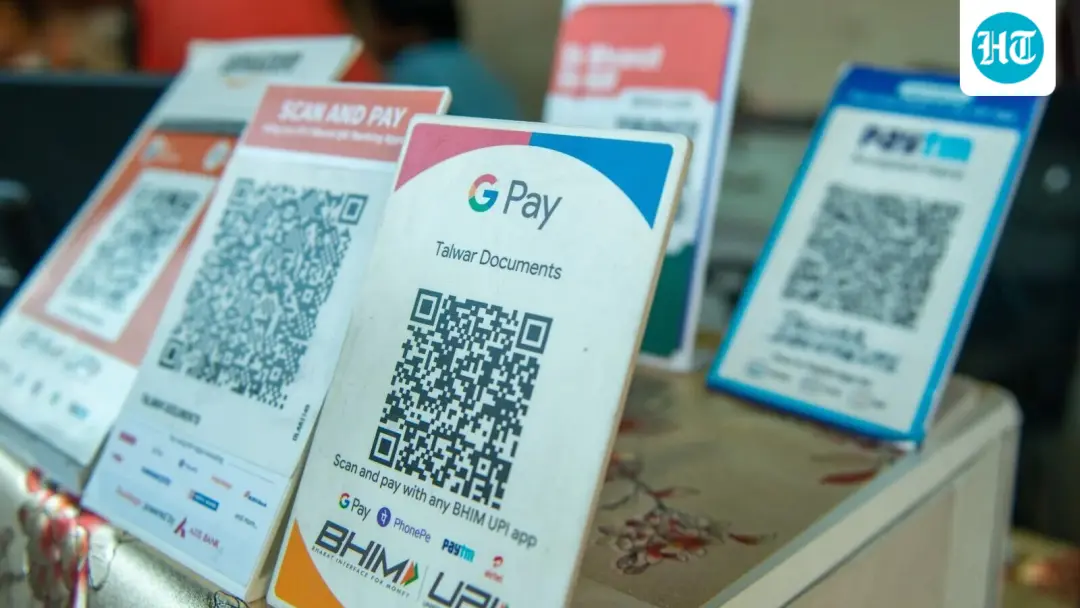
Centre rejects claim that foreign pressure drove UPI charges
The government on Wednesday rejected claims that its decision to levy Merchant Discount Rate on some merchant UPI payments was influenced by foreign pressure. The finance ministry said on X that UPI policy decisions are made independently, with the goal of building a self-sustaining, inclusive and affordable digital payments ecosystem. Person-to-person transfers and payments below ₹2,000 stay free, while merchants bear a 0.4% MDR above ₹2,000. Congress leader Rahul Gandhi called it a 'UPI tax'.
Source
Hindustan Times — India · read the original report ↗
Desk check · compared with the source
What the desk checked (4)
- Finance Ministry says UPI policy decisions are made independently and claims of foreign influence are false. — Directly attributed and quoted from a Ministry of Finance post on X in the source.
- Rahul Gandhi accused the government of burdening every Indian with a 'UPI tax' and of 'lying down' before Donald Trump. — Attributed to Rahul Gandhi in the source; wording appears in partial quotes.
- Merchant transactions above ₹2,000 will attract a 0.4% MDR borne by merchants; essential services a flat ₹5 above ₹2,000; mutual funds and securities 0.02% capped at ₹300. — Figures appear in the source as facts presented by the Finance Ministry; not independently verified.
- More than 95% of merchant payments are below ₹2,000 and remain free; merchants earning up to ₹1 lakh a month via UPI QR face zero charges. — Attributed to the Finance Ministry; no underlying data source cited.
Analysts’ view opinion
This has stopped being a payments-policy debate and become a contest over two of the most potent themes in Indian politics — national pride and the ordinary citizen's wallet. By branding the move a 'UPI tax' and framing it as yielding to foreign pressure, Rahul Gandhi is trying to convert a technical fiscal decision into a nationalist one. The speed with which the Finance Ministry pushed back on X, armed with numbers on exemptions and the 95% figure, suggests the charge landed somewhere politically sensitive.
- UPI sits at the heart of the government's Digital India brand, so any levy on it risks turning one of its strongest assets into a vulnerability.
- The 'foreign influence' line lets Congress fuse economic grievance with national self-respect in a single, easily repeated slogan.
- The style of the rebuttal is telling — a fact-heavy clarification from the ministry rather than a political counterattack, an attempt to keep the fight on policy ground.
- Pushback from merchants and dealer groups could hurt the government more than opposition rhetoric, because it is lived experience rather than campaign messaging.
- Even though the ₹2,000 threshold and 0.4% rate are modest, the political damage lies in the shift from 'free' to 'charged'.
What to watch — Watch whether the resistance spreads through small-trader and dealer associations, and whether the government responds by widening thresholds or exemptions.
The story does not establish the actual reasoning behind the decision or how the burden will finally fall — it records competing claims, and offers no evidence for the foreign-pressure allegation.
Deep dive
Research brief · 8 facts · 4 dates · exam-readyThe brief
Context
The government has decided to levy a Merchant Discount Rate (MDR) on certain higher-value merchant UPI payments, ending the blanket zero-charge regime for merchants. Critics, including the Congress, alleged the move was made to favour the United States and please US President Donald Trump. On Wednesday the Ministry of Finance, in a post on X, rejected the foreign-influence claim, saying UPI policy decisions are made independently to build a self-sustaining, inclusive and affordable digital payments ecosystem. It also detailed exemptions: person-to-person transfers and merchant payments below ₹2,000 remain free, while a 0.4% MDR applies above ₹2,000, borne by merchants.
Key facts
- The Ministry of Finance said on X that claims the UPI change is due to foreign influence are "false" and that India's UPI policy decisions are made independently.
- Person-to-person (P2P) UPI transfers will remain free, regardless of the amount.
- Merchants earning up to ₹1 lakh per month through UPI QR codes will continue to face zero charges.
- The government said more than 95% of merchant payments are below ₹2,000 and these will remain free.
- Merchant transactions above ₹2,000 will attract a 0.4% MDR, to be borne by merchants — described by the government as significantly lower than credit-card charges.
- Essential services — railways, fuel, telecom, bill payments and insurance — will attract a flat fee of ₹5 per transaction above ₹2,000.
- Mutual fund and securities payments will attract an MDR of 0.02%, capped at ₹300.
- Rahul Gandhi accused the government of 'lying down in front of US President Donald Trump' and burdening 'every single Indian person' with a 'UPI tax'.
Timeline
- After the announcement of the UPI charge (date not stated in the source)Critics, including the Congress, accuse the government of introducing the fee to favour the United States and please US President Donald Trump.
- Wednesday (exact date not stated in the source)Rahul Gandhi accuses the government of imposing a 'UPI tax' by 'lying down in front of' Donald Trump.
- Wednesday (exact date not stated in the source)Ministry of Finance posts on X rejecting foreign-influence claims and reiterating exemptions under the new UPI framework.
- Reported alongside (date not stated in the source)Petrol pump dealers threaten cash-only payments over the ₹5 UPI charge on transactions above ₹2,000.
Who has a stake
- Ministry of Finance / Union government — Must defend the MDR decision as independent policy aimed at a self-sustaining, secure and innovative UPI system.
- Congress and Rahul Gandhi — Politically framing the levy as a 'UPI tax' imposed under US pressure and a burden on every Indian.
- Large merchants (above ₹1 lakh/month UPI turnover) — Bear the 0.4% MDR on transactions above ₹2,000.
- Small merchants and vendors — Exempt if UPI QR earnings are up to ₹1 lakh per month; government says resources from larger transactions will be reinvested to support them.
- Consumers — P2P transfers and payments below ₹2,000 remain free; critics argue costs will ultimately be passed on.
- Petrol pump dealers — Threatening cash-only payments over the ₹5 flat charge on fuel transactions above ₹2,000.
- Mutual fund and securities platforms — Face a low MDR of 0.02% capped at ₹300 per transaction.
Why it matters
UPI's zero-cost design underpinned India's mass shift to digital payments, so any charge — however narrow — raises questions about who funds the system's upkeep and whether costs reach consumers. The dispute has also become a sovereignty debate, with the opposition alleging external pressure and the government insisting the decision was taken independently. How the exemptions work in practice will shape trust among merchants, consumers and payment providers.
UPSC angle
Prelims pointers
- MDR (Merchant Discount Rate) is the fee borne by merchants on digital payments; new UPI MDR is 0.4% on merchant transactions above ₹2,000.
- UPI P2P (person-to-person) transfers remain free irrespective of amount.
- Merchants with UPI QR earnings up to ₹1 lakh per month face zero charges.
- Essential services (railways, fuel, telecom, bill payments, insurance) attract a flat ₹5 per transaction above ₹2,000.
- Mutual fund and securities payments: MDR of 0.02%, capped at ₹300.
- Government says over 95% of merchant UPI payments are below ₹2,000 and stay free.
Mains framing
The reintroduction of MDR on higher-value merchant UPI transactions reflects the tension between keeping a public digital payments utility free at the point of use and making it financially self-sustaining. The government's stated rationale is that resources from larger merchant transactions will be reinvested to support small businesses and strengthen digital payments, with layered exemptions — free P2P, zero charges for merchants earning up to ₹1 lakh a month via QR codes, and free transactions below ₹2,000, which it says cover over 95% of merchant payments. Critics, led by the Congress, contest both the substance and the motive: they call it a 'UPI tax' that will ultimately be passed on to consumers, and allege it was designed to please the United States — a claim the Ministry of Finance has called false, asserting policy autonomy. Early friction is visible in petrol pump dealers threatening cash-only payments over the ₹5 flat fee above ₹2,000, showing that even capped charges can trigger acceptance resistance. The way forward, on the source's own logic, lies in transparent disclosure of how MDR revenue is reinvested, safeguards against merchants passing costs to consumers, and clear communication so that exemptions are understood and the digital payments habit is not reversed.
Key terms
- UPI (Unified Payments Interface)
- India's real-time digital payments system used for person-to-person and merchant transactions.
- MDR (Merchant Discount Rate)
- A fee charged to merchants on a digital transaction; set at 0.4% for UPI merchant payments above ₹2,000.
- P2P transfer
- Person-to-person UPI payment, which the government says remains free regardless of amount.
- Ministry of Finance
- The Union ministry that issued the clarification on X rejecting claims of foreign influence over UPI policy.
- 'UPI tax'
- The opposition's label, used by Rahul Gandhi, for the new merchant charge on UPI transactions.
Practice questions
- Should a public digital payments utility like UPI be funded by user or merchant charges, or by the exchequer? Discuss with reference to the new 0.4% MDR framework.
- Examine the government's claim that the new UPI charge framework protects small merchants and consumers. What are the risks of costs being passed on?
- Critically assess how allegations of foreign influence over domestic economic policy affect public trust in digital public infrastructure.
Grounded only in the source report — figures and dates are the source's, not inferred.