
Bengal CM promises withdrawal of cases against Kurmis
West Bengal Chief Minister Suvendu Adhikari said on Sunday that all cases registered against Kurmis by the previous Trinamool Congress government during their stir would be withdrawn. Speaking at a Karam festival programme in Purulia district, he said his government would ensure inclusion of Kurmali and Rajbanshi languages in the Eighth Schedule of the Constitution. He said Rs 50 crore had been allocated for the community's development in this year's budget, with more to follow, and the Kurmi Development Board would be made operational soon. He alleged the previous government created divisions among Kurmis.
Source
West Bengal — CM & govt · read the original report ↗
Desk check · compared with the source
What the desk checked (5)
- CM Suvendu Adhikari said all cases filed against Kurmis by the previous TMC government during their stir will be withdrawn. — Attributed to Adhikari, speaking on Sunday at a Karam festival programme in Purulia; appears in source.
- The government will ensure inclusion of Kurmali and Rajbanshi languages in the Eighth Schedule of the Constitution. — Stated as a pledge by Adhikari; source presents it as a promise, not an accomplished action.
- Rs 50 crore has been allocated for Kurmi community development in this year's budget. — Figure quoted directly by Adhikari in the source; budget document not cited.
- The Kurmi Development Board will be made operational again soon. — Attributed to Adhikari; no timeline given in source.
- Kurmis staged road and railway blockades during TMC rule seeking ST status and Eighth Schedule inclusion. — Stated as background by the source without specific dates or an official source.
Analysts’ view opinion
This is a clear attempt by the new government to convert Kurmi support in the Jangalmahal belt into a durable base of its own. Withdrawing agitation-era cases is a low-cost, high-emotion move: it lifts the "accused" tag off protesters while simultaneously framing the previous dispensation as having been heavy-handed. Bundling Rajbanshi along with Kurmali in the Eighth Schedule pitch widens the appeal from the western districts to north Bengal in a single promise.
- Case withdrawal costs the exchequer little but delivers a strong political signal, and doubles as a critique of the earlier government's handling of the stir.
- The explicit reference to the 'Sankalp Patra' suggests an early effort to build a narrative of election promises being kept.
- The Rs 50 crore allocation and the revival of the Kurmi Development Board follow a familiar template of institutional recognition that draws community leadership closer.
- Eighth Schedule inclusion is a Union-level decision, so a state can push for it but cannot deliver it alone — a gap that could become an accountability question later.
- The statement as reported does not offer a firm commitment on Scheduled Tribe status, the community's headline demand, and any move there could invite differing views from other tribal groups.
What to watch — Watch for formal orders actually withdrawing the cases, the shape of any state proposal to the Centre on the Eighth Schedule, and how the Trinamool Congress counters the outreach.
The story does not establish how many cases exist, their stage, any timeline for withdrawal, or the Trinamool Congress's response — these remain announcements, not executed decisions.
Deep dive
Research brief · 8 facts · 5 dates · exam-readyThe brief
Context
West Bengal's Kurmi community, concentrated in the state's western districts, has for years demanded Scheduled Tribe status and the inclusion of the Kurmali language in the Eighth Schedule of the Constitution, pressing these demands through road and railway blockades during Trinamool Congress rule. Chief Minister Suvendu Adhikari, whose government came to power after this year's assembly elections, has now promised to withdraw the cases filed against Kurmis during that agitation. Speaking at a Karam festival programme in Purulia, he also pledged Eighth Schedule inclusion for Kurmali and Rajbanshi, budget funds and the revival of the Kurmi Development Board.
Key facts
- West Bengal CM Suvendu Adhikari said on Sunday that all cases filed against Kurmis by the previous Trinamool Congress government during their stir will be withdrawn.
- He promised his government would ensure inclusion of Kurmali and Rajbanshi languages in the Eighth Schedule of the Constitution.
- Rs 50 crore has been allocated for development of the Kurmi community in this year's state budget, with the amount to be enhanced later.
- The Kurmi Development Board will be made operational again soon, the CM said.
- The announcements were made at a Karam festival programme in Purulia district.
- Kurmali is spoken by the Kurmi community in the western districts of West Bengal; Rajbanshi is spoken by the Rajbanshi community in north Bengal.
- During TMC rule, Kurmis staged road and railway blockades in western West Bengal seeking Scheduled Tribe status and Eighth Schedule inclusion for Kurmali.
- Adhikari said the promises were part of the 'Sankalp Patra' issued before this year's assembly elections.
Timeline
- During Trinamool Congress ruleKurmis stage road and railway blockades in western districts of West Bengal demanding Scheduled Tribe status and Eighth Schedule inclusion of Kurmali; cases are filed against protesters.
- Before this year's assembly electionsPromises to the Kurmi community are made in the ruling party's 'Sankalp Patra'.
- This year's budgetRs 50 crore allocated for development of the Kurmi community.
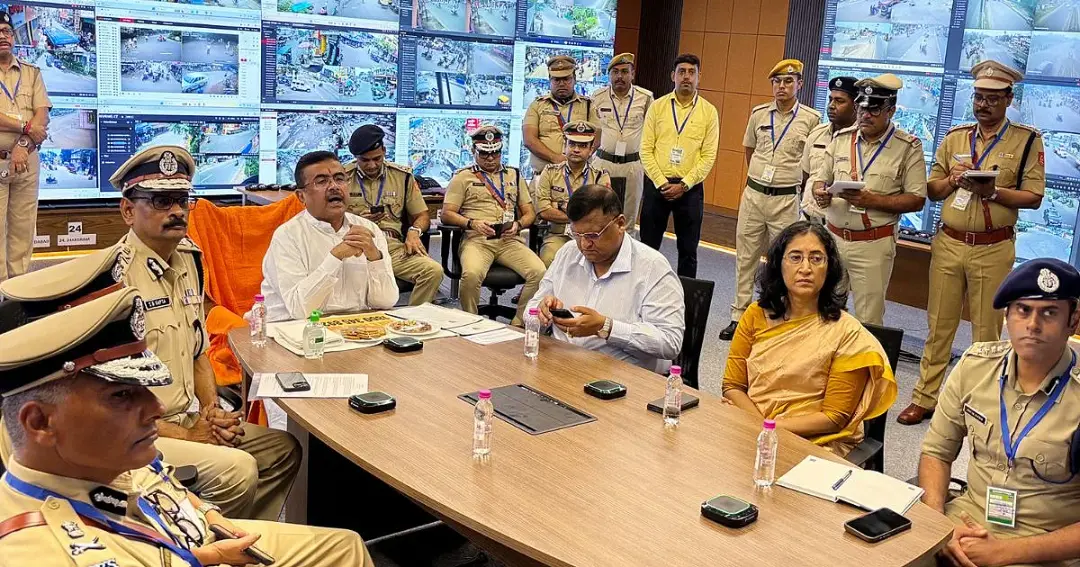
- September 18, 2026CM Suvendu Adhikari inaugurates a technology-enabled Traffic Control Room at Araksha Bhavan, Kolkata (image caption).
- Sunday (date not stated in the source)At a Karam festival programme in Purulia, Adhikari announces withdrawal of cases against Kurmis and pledges Eighth Schedule inclusion for Kurmali and Rajbanshi.
Who has a stake
- Kurmi community — Withdrawal of cases from the agitation, Rs 50 crore development funds, Eighth Schedule status for Kurmali and long-pending Scheduled Tribe demand.
- Rajbanshi community (north Bengal) — Promised inclusion of the Rajbanshi language in the Eighth Schedule of the Constitution.
- CM Suvendu Adhikari and the state government — Delivering on 'Sankalp Patra' promises made before this year's assembly elections.
- Trinamool Congress (previous government) — Accused of creating divisions among Kurmis and of filing cases against protesters.
- Union government / Parliament — Eighth Schedule inclusion and Scheduled Tribe status are not decided by a state government alone (mechanism not stated in the source).
- Purulia and other western districts — Focus of Kurmi mobilisation, the Karam festival programme and promised development spending.
Why it matters
Language recognition and tribal status have been the core of Kurmi mobilisation in western West Bengal, where blockades have repeatedly disrupted road and rail traffic. The new government's promise to withdraw cases and fund a development board signals a political reset with a community that holds electoral weight in Purulia and neighbouring districts. It also puts on the table demands that require action beyond the state level, making follow-through the real test.
UPSC angle
Prelims pointers
- Eighth Schedule of the Constitution lists the languages recognised by the Constitution; Kurmali and Rajbanshi are not currently in it.
- Kurmali is spoken mainly by the Kurmi community in western districts of West Bengal.
- Rajbanshi is spoken by the Rajbanshi community in north Bengal.
- Kurmis' key demands: Scheduled Tribe status and Eighth Schedule inclusion of Kurmali.
- Karam is a festival observed in the region; the CM's announcement came at a Karam programme in Purulia.
- Rs 50 crore allocated in this year's West Bengal budget for Kurmi community development.
Mains framing
The Kurmi agitation in West Bengal illustrates how identity claims - Scheduled Tribe status and constitutional recognition of language - become central to regional politics when a community perceives its cultural markers and welfare entitlements as unrecognised. Years of road and rail blockades in the western districts led to criminal cases against protesters, and the new state government's promise to withdraw them, allocate Rs 50 crore, and revive the Kurmi Development Board frames redress as both reconciliation and electoral fulfilment of the 'Sankalp Patra'. Yet the two headline demands sit beyond a state government's unilateral competence: Eighth Schedule inclusion and ST scheduling involve processes outside the state's own budget, so a promise of "ensuring" them raises questions of feasibility and expectation management. The allegation that the previous dispensation "created divisions" among Kurmis also points to the risk that community mobilisation is channelled into partisan competition rather than settled policy. A credible way forward lies in transparent documentation of the community's linguistic and socio-economic case, institutional revival of the development board with audited spending, and dialogue that keeps agitation off the rail and road network while claims are processed through the proper constitutional route.
Key terms
- Eighth Schedule
- The schedule of the Constitution listing constitutionally recognised languages; Kurmis seek Kurmali's inclusion, and Rajbanshi has also been promised inclusion.
- Scheduled Tribe (ST) status
- Constitutional classification giving reservation and protective benefits; a long-standing Kurmi demand in West Bengal.
- Kurmi Development Board
- State body for Kurmi community welfare that the CM said will be made operational again soon.
- Sankalp Patra
- The election manifesto or pledge document issued before this year's West Bengal assembly elections, cited by the CM as the basis of his promises.
- Karam festival
- A community festival; the CM made his announcements at a Karam festival programme in Purulia district.
- Kurmali and Rajbanshi
- Kurmali is the language of the Kurmi community in western Bengal; Rajbanshi is spoken by the Rajbanshi community in north Bengal.
Practice questions
- Discuss the constitutional and procedural issues involved in demands for inclusion of a language in the Eighth Schedule, using the Kurmali and Rajbanshi demands as examples.
- Examine how demands for Scheduled Tribe status shape regional politics in eastern India, with reference to the Kurmi agitation in West Bengal.
- Withdrawal of cases against protesters is often used as a political instrument. Critically evaluate its implications for rule of law and for conflict resolution.
Grounded only in the source report — figures and dates are the source's, not inferred.