
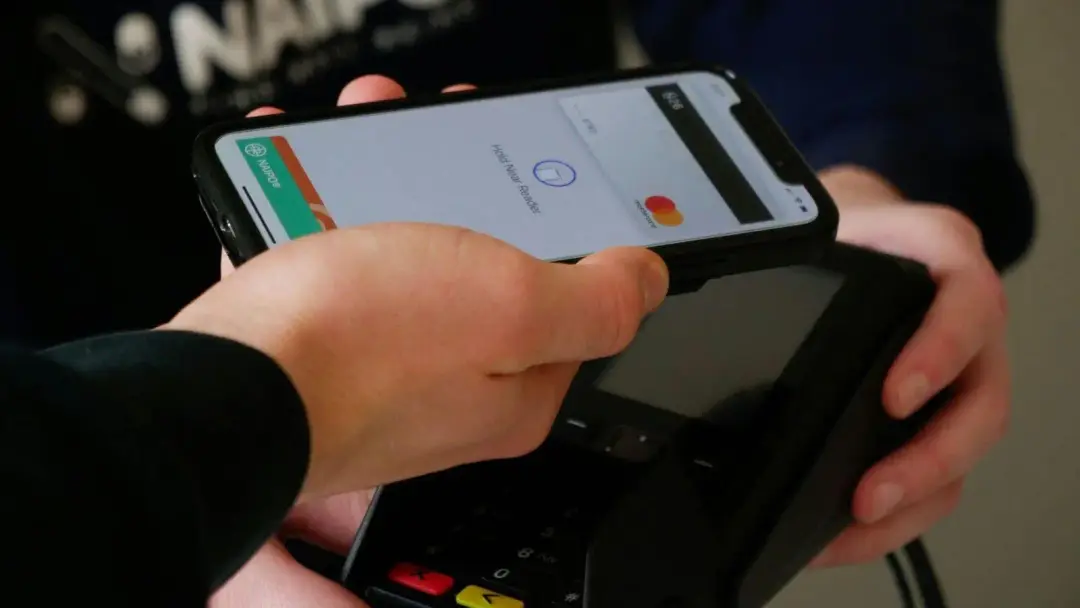
Apple Pay launches in India with Axis Bank, Visa, Mastercard
Apple has launched its payments service Apple Pay in India from September 30, with availability on iPhone, iPad and Apple Watch and Mac support to follow. The company has partnered with Axis Bank, Visa and Mastercard, so initially only Axis Bank-issued Visa and Mastercard credit cards can be added. Apple said millions of merchants, including Blinkit, Croma, Reliance brands, Tata 1mg and Zomato, will accept it. Apple Pay operates in over 90 countries.
Source
Indian Express — Technology · read the original report ↗
Desk check · compared with the source
What the desk checked (5)
- Apple Pay launched in India on September 30, available on iPhone, iPad and Apple Watch, with Mac support coming soon. — Attributed to Apple in the source; the embedded tweet is dated September 30, 2026, which an editor should reconcile with the stated launch day.
- Apple has partnered with Axis Bank, Visa and Mastercard, so initially only Axis Bank-issued Visa and Mastercard credit cards can be added. — Stated in the source as the launch arrangement; figure/partner names appear in source.
- Apple Pay is accepted by millions of merchants in India, including Blinkit, Croma, Reliance brands, Tata 1mg and Zomato. — Company-supplied list reproduced in the source; 'millions of merchants' is an unquantified Apple claim.
- Apple's share of India's smartphone market has doubled to 8% since 2022. — Attributed to Counterpoint Research as cited by Reuters.
- Apple Pay is available in more than 90 countries and works with more than 11,000 bank and network partners. — Figure appears in source, attributed to Apple; not independently verified here.
Analysts’ view opinion
Apple Pay's India debut is a headline moment with a deliberately narrow opening — one bank (Axis), and only Visa and Mastercard credit cards. That makes this less a frontal assault on UPI than the arrival of a card-based, tokenised tap-to-pay layer aimed at Apple's relatively high-spending user base. It also signals Apple's India strategy shifting from manufacturing and retail towards services and ecosystem revenue.
- Launching with a single issuer looks like a low-risk pilot; real usage will stay limited until debit cards and more banks are added.
- Apple's core pitch is experience — tokenised tap-to-pay with no separate app, PIN or OTP — which is a meaningful friction cut in Indian card payments.
- By routing merchant acceptance through PSPs like Cashfree, Razorpay, Pine Labs and Paytm, Apple avoids building an acquiring network and rides the existing terminal base.
- With about 8% smartphone share, Apple isn't playing a volume game, but it can pull higher-ticket card spend — attractive to banks and networks.
- Arriving while the UPI merchant fee debate is live is likely coincidental, but it sharpens attention on card-versus-UPI economics for merchants.
What to watch — Watch for additional banks, debit card and RuPay support, and above all whether Apple Pay eventually connects to UPI in any form.
The story does not establish what Apple Pay costs users or merchants, when other banks join, or whether any UPI or RuPay integration is planned.
Deep dive
Research brief · 8 facts · 3 dates · exam-readyThe brief
Context
Apple has launched Apple Pay, its tap-to-pay wallet service, in India, entering one of the world's largest digital payments markets. The service lets users pay in stores and online using tokenised card details stored on their Apple devices, without opening a separate payments app. Until now Apple's India push had largely been about manufacturing and retail expansion. The launch comes amid debate over the Indian government's new 0.4 per cent UPI merchant fee on some transactions.
Key facts
- Apple Pay became available to users in India on September 30, on iPhone, iPad and Apple Watch, with Mac support 'coming soon'.
- Apple partnered with Axis Bank, Visa and Mastercard; initially only Axis Bank-issued Visa and Mastercard credit cards can be added.
- Launch merchants include Apple Store locations, Blinkit, Chaayos, Comet, Croma, Interflora, Ixigo, Le15 Patisserie, Reliance brands, Tata 1mg and Zomato.
- Payment service providers involved include Cashfree, JusPay, Mswipe, Paytm, PayU, Pine Labs, Razorpay and Worldline.
- Apple Pay is available in more than 90 countries and regions and works with more than 11,000 bank and network partners worldwide.
- Apple's share of India's smartphone market has doubled to 8% since 2022, per Counterpoint Research cited by Reuters.
- India's population is cited at 1.4 billion people with a rapidly expanding middle class.
- The government's new 0.4 per cent UPI merchant fee on some transactions has sparked debate over its impact on businesses.
Timeline
- Since 2022Apple's share of India's smartphone market doubles to 8%, per Counterpoint Research.
- September 30 (2026, per Greg Joswiak's post)Apple Pay officially launches in India on iPhone, iPad and Apple Watch with Axis Bank, Visa and Mastercard.
- Coming soon (date not stated in the source)Mac support for Apple Pay in India, plus more merchants and apps over time.
Who has a stake
- Apple — Expanding beyond manufacturing and retail into India's digital payments market, one of its fastest-growing markets.
- Axis Bank — Exclusive launch bank partner; its Visa and Mastercard credit cardholders are the only eligible users initially.
- Visa and Mastercard — Card network rails for Apple Pay transactions in India, gaining tokenised card volumes.
- Merchants such as Blinkit, Croma, Reliance brands, Tata 1mg, Zomato — New tap-to-pay and online checkout option for customers; face the new 0.4% UPI merchant fee debate on card/UPI economics.
- Payment service providers (Cashfree, JusPay, Mswipe, Paytm, PayU, Pine Labs, Razorpay, Worldline) — Enable Apple Pay across their merchant networks, adding to their acceptance offerings.
- iPhone, iPad and Apple Watch users in India — Can pay in stores without an extra app, PIN or OTP, and online without re-entering card details.
Why it matters
Apple's entry adds a global device-based wallet to an already crowded Indian digital payments market, at a moment when the 0.4 per cent UPI merchant fee on some transactions is being debated. It signals a shift in Apple's India strategy from manufacturing and retail to services, in a market where its smartphone share has doubled to 8% since 2022. For consumers, tokenised tap-to-pay promises checkout without a separate app, PIN or OTP, raising questions on security, privacy and card-versus-UPI economics.
UPSC angle
Prelims pointers
- Apple Pay launched in India on September 30 with Axis Bank, Visa and Mastercard as partners.
- Apple Pay is available in over 90 countries and regions, with 11,000+ bank and network partners.
- Apple Pay uses tokenised card details stored on the device for tap-and-pay, in-store and online.
- Jennifer Bailey is Apple's vice president of Apple Pay and Apple Wallet; Greg Joswiak announced the India launch on X.
- Apple's India smartphone market share: doubled to 8% since 2022 (Counterpoint Research, cited by Reuters).
- India has introduced a 0.4 per cent UPI merchant fee on some transactions, a contested move.
Mains framing
Apple Pay's India debut illustrates how global technology firms are moving from hardware and retail presence to embedded financial services in a market of 1.4 billion people with a rapidly expanding middle class. The immediate causes are Apple's fast-growing device base (share doubled to 8% since 2022), large-scale iPhone assembly in India, and a consumer shift toward cashless, security-conscious payments. Implications are threefold: competition intensifies in an already crowded digital payments market; tokenisation on-device may improve security and reduce friction by removing the need for a separate app, PIN or OTP; and the economics of card-based tap-to-pay will now be compared against UPI, especially after the government's contested 0.4 per cent UPI merchant fee on some transactions. Constraints remain — at launch only Axis Bank Visa and Mastercard credit cards are supported, limiting reach to a narrow, affluent segment, and Mac support is pending. The way forward, as suggested by the source, lies in widening bank and network partnerships (Apple works with 11,000+ globally), deeper integration through PSPs such as Razorpay, Paytm, Pine Labs and Worldline to expand merchant acceptance, while regulators weigh interoperability, data privacy and a level playing field between domestic rails and proprietary device wallets.
Key terms
- Apple Pay
- Apple's tap-to-pay wallet service allowing in-store and online payments using tokenised cards stored on Apple devices.
- Tokenisation
- Replacing actual card details with a device-stored token so the real card number is not shared during a transaction.
- Payment Service Provider (PSP)
- Intermediary that enables merchants to accept digital payments; here Cashfree, JusPay, Mswipe, Paytm, PayU, Pine Labs, Razorpay, Worldline.
- UPI merchant fee (0.4%)
- New government-introduced charge on some UPI transactions for merchants, which has sparked debate over business impact.
- Tap-to-pay
- Contactless payment by tapping a device at a terminal, without an extra app, PIN or OTP as per Apple.
Practice questions
- Apple Pay's entry into India comes amid a contested 0.4 per cent UPI merchant fee. Discuss the implications of global device-based wallets for India's digital payments ecosystem.
- How does tokenisation improve payment security and privacy? Examine with reference to Apple Pay's launch in India.
- Apple's India strategy has shifted from manufacturing and retail to services. Analyse the drivers and the regulatory issues such expansion raises.
Grounded only in the source report — figures and dates are the source's, not inferred.