
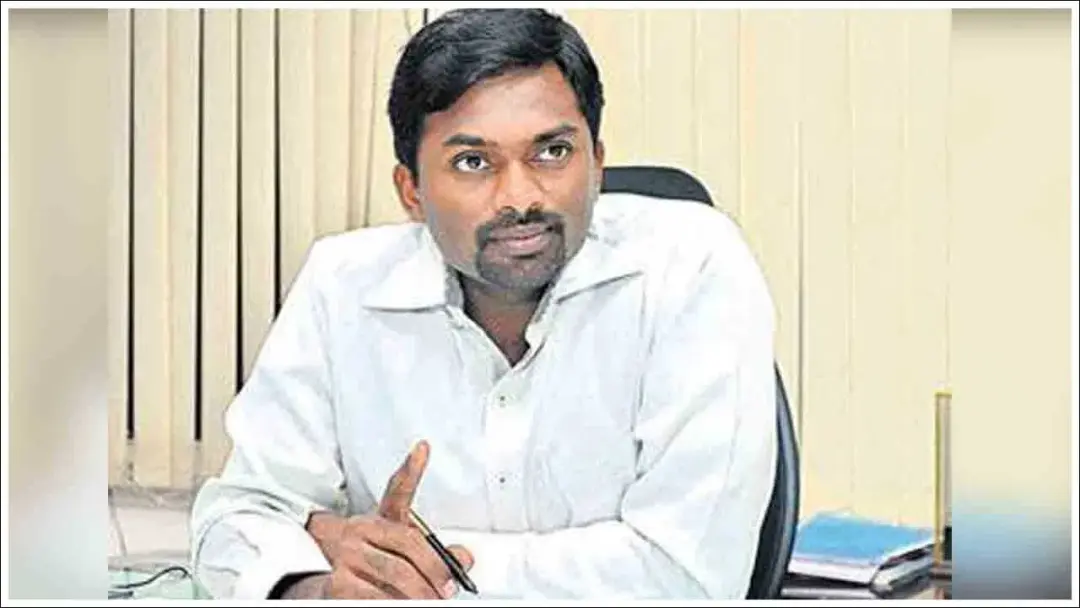
Rs 21.85 crore cash seized in Hyderabad, says Ronald Ross
District Election Officer and GHMC Commissioner Ronald Ross said enforcement teams in Hyderabad have so far seized Rs 21,85,37,377 in cash, other goods worth Rs 16,70,35,260 and 26,576.325 litres of illicit liquor during the Lok Sabha election period. Cases were booked against 276 people for poll code violations and 274 were arrested, while FIRs were registered against 376 people. Officials resolved 582 complaints on cash and goods and 38 on MCC violations.
Source
Hyderabad — వార్తలు · read the original report ↗
Desk check · compared with the source
What the desk checked (5)
- Rs 21,85,37,377 in cash, goods worth Rs 16,70,35,260 and 26,576.325 litres of illicit liquor seized so far in Hyderabad — Attributed in source to District Election Officer and GHMC Commissioner Ronald Ross; figures appear as given in source.
- Cases filed against 276 people for poll code violations and 274 arrested; FIRs registered against 376 people — Attributed to the election officer; internally the arrest figure is lower than cases, FIR count stated separately without further explanation.
- 582 complaints on election-related cash and goods received and resolved; 38 MCC violation complaints acted upon — Attributed to the election officer; no independent documentation cited.
- In the past 24 hours, Rs 14,00,582 cash and goods worth Rs 3,55,584 seized; Excise seized 59.76 litres of liquor, 6 cases, 7 arrests — Figures appear in source as stated by the officer; not independently verifiable.
- Since the poll schedule, flying squads seized Rs 5,75,58,955, police and IT department Rs 15,79,84,182 and SST teams Rs 29,94,240 — Attributed to the election officer; component totals are presented without a stated sum.
Analysts’ view opinion
Rs 21.85 crore in cash, Rs 16.70 crore worth of other items and more than 26,000 litres of illicit liquor seized in the Hyderabad district alone is an indirect measure of how expensive and how closely fought this Lok Sabha contest is. The figure does not, by itself, indict any party; it is an official account of an enforcement machinery that is visibly active. Politically, though, such numbers are quickly weaponised — each side can be expected to read them as proof of the other's "money politics".
- The bulk of the seizures — Rs 15.79 crore — came through the police and Income Tax wings, which will likely shift the conversation to how central and state agencies are coordinating.
- 276 cases, 274 arrests and 376 FIRs signal firm code enforcement, but since the story does not name who faces these cases, the vacuum leaves room for cross-party allegations.
- In a cash-heavy urban constituency like Hyderabad, these numbers reinforce the general understanding that the cost of influencing voters runs high.
- The claim that all 582 cash/goods complaints and 38 MCC complaints were disposed of reads as the election machinery guarding its own credibility.
- Large seizures routinely invite complaints of selective targeting from whichever side feels squeezed; no such reaction is recorded in this story yet.
What to watch — Watch the pace of seizures as polling nears, whether any party figures surface in these cases, and how the parties respond publicly.
The story does not establish whose money or goods these were, or that any of it was meant for electoral use; whether the seized amounts are legitimate will only be settled after investigation.
Deep dive
Research brief · 8 facts · 3 dates · exam-readyThe brief
Context
During the 2024 Lok Sabha election campaign period, enforcement teams across Telangana have been intercepting unaccounted cash, liquor and goods being moved to influence voters. Hyderabad district, under District Election Officer and GHMC Commissioner Ronald Ross, has reported one of the larger hauls. Such seizures are made by flying squads, Static Surveillance Teams (SST), police, the Income Tax department and the Excise department, which operate once the election schedule is announced and the Model Code of Conduct (MCC) comes into force.
Key facts
- Cash of Rs 21,85,37,377 seized in Hyderabad district so far during the Lok Sabha election period, per DEO and GHMC Commissioner Ronald Ross.
- Other goods worth Rs 16,70,35,260 seized in the same period.
- 26,576.325 litres of illicit liquor seized in Hyderabad district.
- Cases booked against 276 people for violating the election code; 274 arrested.
- FIRs registered against 376 people.
- 582 complaints relating to election cash and other goods were received and resolved; all 38 MCC violation complaints were acted upon.
- In the preceding 24 hours alone, Rs 14,00,582 cash and goods worth Rs 3,55,584 were seized; Excise seized 59.76 litres of illicit liquor, booked 6 cases and arrested 7 people; 10 cash/goods complaints resolved and 7 FIRs filed.
- Agency-wise cash seizures since the poll schedule: flying squads Rs 5,75,58,955; police and IT department Rs 15,79,84,182; SST teams Rs 29,94,240.
Timeline
- From the announcement of the election scheduleEnforcement teams begin seizures in Hyderabad: flying squads Rs 5.75 crore, police/IT Rs 15.79 crore, SST Rs 29.94 lakh.
- Last 24 hours before the statementRs 14,00,582 cash and Rs 3,55,584 worth of goods seized; 59.76 litres illicit liquor, 6 cases, 7 arrests by Excise.
- May 4 (Hyderabad)Ronald Ross announces cumulative seizures of Rs 21,85,37,377 cash, goods worth Rs 16,70,35,260 and 26,576.325 litres of illicit liquor.
Who has a stake
- Ronald Ross, District Election Officer and GHMC Commissioner — Responsible for enforcing the poll code and reporting seizures in Hyderabad district.
- Flying squads, SST teams, police and Income Tax department — Field agencies that made the cash seizures, accounting for Rs 5.75 crore, Rs 29.94 lakh and Rs 15.79 crore respectively.
- Excise department — Seized illicit liquor, booked 6 cases and arrested 7 people in the latest 24-hour period.
- Political parties and campaigners — Face cases, arrests and FIRs for poll code violations during the Lok Sabha campaign.
- Voters of Hyderabad — Protection from inducements such as cash and liquor that distort free and fair voting.
- Persons booked and arrested — 276 booked, 274 arrested and 376 facing FIRs over election-related violations.
Why it matters
Large-scale cash and liquor seizures are the clearest measurable sign of money power seeking to influence voters, and of how far enforcement machinery is stretched during elections. The Hyderabad figures — nearly Rs 22 crore in cash plus Rs 16.7 crore in goods — show that despite the Model Code of Conduct, unaccounted inducements continue to flow during campaigns. They also test whether complaint redressal, FIRs and arrests translate into deterrence rather than routine paperwork.
UPSC angle
Prelims pointers
- District Election Officer for Hyderabad during the Lok Sabha polls: Ronald Ross, who is also GHMC Commissioner.
- Hyderabad seizures: Rs 21,85,37,377 cash, goods worth Rs 16,70,35,260, 26,576.325 litres illicit liquor.
- Poll code violations: 276 cases booked, 274 arrested, 376 FIRs registered.
- Complaints: 582 on cash/goods resolved; 38 MCC violation complaints acted upon.
- Enforcement machinery named in the source: flying squads, SST teams, police, Income Tax department, Excise department.
- Cash seizure split: police and IT Rs 15,79,84,182; flying squads Rs 5,75,58,955; SST Rs 29,94,240.
Mains framing
The Hyderabad seizures illustrate the persistent problem of money and liquor power in Indian elections. Causes include the high cost of campaigning, weak disclosure of informal campaign finance, and the ease of moving cash and goods through ordinary transport routes, which the source notes were being used covertly. The institutional response is a layered enforcement grid — flying squads, Static Surveillance Teams, police, the Income Tax department and Excise — operating from the date the poll schedule is announced, backed by a complaint redressal mechanism: in Hyderabad, 582 cash and goods complaints and 38 MCC complaints were acted upon, with 276 cases, 274 arrests and 376 FIRs. The implications are twofold: such volumes signal that detection has improved, but equally that inducement remains widespread enough to distort voter choice in an urban constituency. The way forward, on the evidence in the source, lies in sustaining round-the-clock surveillance (the last 24 hours alone yielded Rs 14 lakh in cash), ensuring seized-cash cases are followed through to prosecution rather than ending at the FIR stage, and tightening coordination between election, police, tax and excise authorities so that deterrence outlasts the campaign period.
Key terms
- District Election Officer (DEO)
- Officer in charge of conducting elections in a district; in Hyderabad the post is held by GHMC Commissioner Ronald Ross.
- GHMC
- Greater Hyderabad Municipal Corporation, the city's civic body whose Commissioner is also the district election officer here.
- Model Code of Conduct (MCC)
- Set of norms governing parties and candidates during elections; 38 MCC violation complaints were acted upon in Hyderabad.
- Flying Squad
- Mobile election enforcement team that intercepts illegal cash and inducements; seized Rs 5,75,58,955 in Hyderabad.
- Static Surveillance Team (SST)
- Fixed checkpoint team monitoring movement of cash and goods; seized Rs 29,94,240 in Hyderabad.
- FIR
- First Information Report registering a cognisable offence; filed against 376 people in this election period.
Practice questions
- Despite an elaborate enforcement grid of flying squads, SSTs and tax authorities, large cash seizures continue during elections. Examine the structural causes and suggest reforms.
- Discuss the role of the District Election Officer and the Model Code of Conduct in ensuring free and fair elections, with reference to recent seizures in Hyderabad.
- How far do seizure statistics serve as a reliable indicator of electoral malpractice? Critically analyse.
Grounded only in the source report — figures and dates are the source's, not inferred.