
IIT-Bombay student's parents allege forced removal from Mumbai
The parents of an IIT-Bombay student who allegedly died by suicide last week said on Wednesday they were forcibly taken out of Mumbai in a private car, hours before a planned hunger strike. Men in plain clothes asked them to change vehicles at the Powai campus, and in a video the family said they realised they had reached Karanja Lad in Washim district. Police did not comment. An FIR under Section 108 BNS and the SC/ST Act names the institute.
Source
Hindustan Times — India · read the original report ↗
Desk check · some claims need care
What the desk checked (5)
- Parents were forcibly taken out of Mumbai in a private car hours before a planned hunger strike — Allegation by the parents and an unnamed person present; no police confirmation in source
- The family realised they had reached Karanja Lad in Washim district, where they recorded a video — Based on the family's video claim as described in the source
- Student was found dead on Friday evening, hours after being pulled up for using a mobile phone in an exam — Attributed to police in the source
- FIR registered against the institute under Section 108 BNS and SC/ST (Prevention of Atrocities) Act, 1989 — Stated as fact in source; specific section and law cited
- Institute said the student was assured the incident would not affect his career — Attributed to IIT-Bombay, which refuted students' allegations
Analysts’ view opinion
This has stopped being only a campus tragedy: once an FIR invokes the SC/ST (Prevention of Atrocities) Act, the story enters one of the most politically charged arenas in Indian public life — caste and access in elite institutions. The allegation that the parents were moved out of Mumbai hours before a hunger strike risks shifting the political argument from the death itself to whether a protest was suppressed. With no immediate police comment on record, that vacuum is likely to be filled by opposition parties and student organisations.
- The addition of SC/ST Act provisions converts an administrative-negligence story into a caste-justice one, making it a natural rallying point for Dalit and Adivasi representation politics.
- The claim that plain-clothes men asked the family to switch vehicles — with no established account of who sent them — is the kind of unexplained detail that invites accusations against the state machinery.
- By demanding the arrest of the IIT-Bombay director and Dean of Student Affairs, the family has framed a simple, politically portable demand; the institute's denial guarantees a public contest of versions.
- Because an IIT is a centrally funded institution operating in a state, accountability pressure lands on both state and central authorities — an awkward two-front problem for those in office.
- The family's claim that permission for the hunger strike had been obtained, combined with police silence, tilts the optics in their favour for now.
What to watch — Watch whether police and the institute put an official account of the transfer on record, and whether student bodies and opposition parties can scale this into a state-wide agitation.
The story does not establish who moved the parents, on whose instructions, or that coercion in fact occurred — and the allegations around the student's death remain allegations under investigation.
Deep dive
Research brief · 8 facts · 4 dates · exam-readyThe brief
Context
An IIT-Bombay student was found dead on Friday evening, hours after he was pulled up for using a mobile phone during an examination, according to police. Students alleged he was asked to leave the exam hall and threatened with disciplinary action including suspension, a charge the institute denies, saying he was assured the incident would not affect his career. An FIR has been registered against the institute under Section 108 of the Bharatiya Nyaya Sanhita (abetment of suicide) and the SC/ST (Prevention of Atrocities) Act, 1989. On Wednesday, the student's parents alleged they were forcibly driven out of Mumbai in a private car, hours before a hunger strike they had planned over the death.
Key facts
- The student was found dead on Friday evening, hours after being pulled up for using a mobile phone during an examination, police said.
- An FIR has been registered against IIT-Bombay under Section 108 (abetment of suicide) of the Bharatiya Nyaya Sanhita and provisions of the SC/ST (Prevention of Atrocities) Act, 1989.
- The parents have sought the arrest of IIT-Bombay director Shireesh Kedare and Dean of Student Affairs Satyanarayan Dulla.
- On Wednesday the parents alleged they were forcibly taken out of Mumbai in a private car, hours before a scheduled hunger strike.
- A person present with the family at the Powai campus said men in plain clothes arrived in the early hours and asked the family to shift to another vehicle; he did not know their identities.
- In a video that surfaced later, the family said the driver had assured them he would take them to their house in Yavatmal district.
- The family said they realised, on stopping to use a washroom, that they had reached Karanja Lad in Washim district, where the video was shot.
- The parents claimed they had taken permission for the hunger strike; there was no immediate comment from the police at the time of filing the report.
Timeline
- Friday eveningThe IIT-Bombay student was found dead, hours after being pulled up for using a mobile phone in an examination.
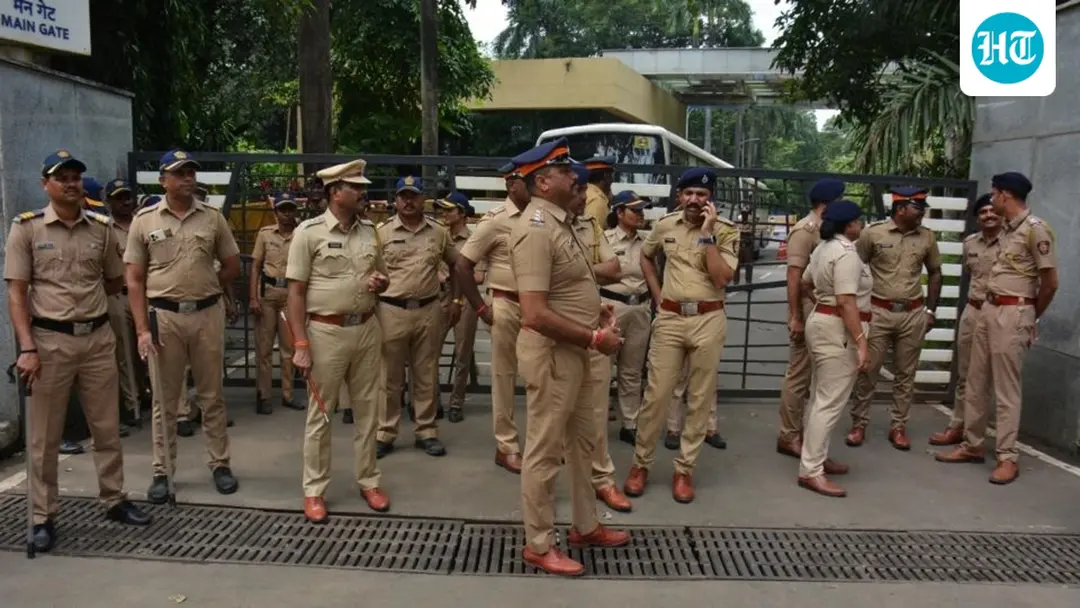
- TuesdayPolice deployment seen at the IIT Bombay gate amid the family's protest.
- Wednesday, early hoursMen in plain clothes asked the protesting family at the Powai campus to shift to another vehicle; the family was driven out of Mumbai.
- WednesdayFamily shoots a video at Karanja Lad in Washim district alleging they were forcibly removed hours before their planned hunger strike.
Who has a stake
- Parents of the deceased student — Seek arrest of IIT-Bombay's director and dean, and the right to continue their protest; allege forced removal from Mumbai.
- IIT-Bombay administration (director Shireesh Kedare, Dean Satyanarayan Dulla) — Named in an FIR for abetment of suicide and under the SC/ST Act; has refuted allegations of threats to the student.
- Police — Investigating the FIR; yet to comment on the family's allegation of forced removal; had deployed personnel at the IIT gate.
- IIT-Bombay students — Alleged the victim was asked to leave the exam hall and threatened with suspension; concerned about campus disciplinary practices.
- Unidentified men in plain clothes / driver — Alleged to have moved the family from Powai to Washim district without their consent.
Why it matters
A death on a premier institute's campus has escalated into allegations that a grieving family was physically removed from the city hours before a permitted protest, raising questions about the right to peaceful protest and the conduct of authorities. With an FIR invoking both abetment of suicide and the SC/ST Act, the case tests how institutions handle disciplinary action, caste-related grievances and student mental health.
UPSC angle
Prelims pointers
- Section 108 of the Bharatiya Nyaya Sanhita deals with abetment of suicide.
- The Scheduled Castes and the Scheduled Tribes (Prevention of Atrocities) Act was enacted in 1989.
- IIT-Bombay is located at Powai, Mumbai; its director is Shireesh Kedare and Dean of Student Affairs is Satyanarayan Dulla.
- Karanja Lad is in Washim district; the family's home is in Yavatmal district, both in Maharashtra.
- An FIR is a First Information Report registered by police on a cognisable offence.
Mains framing
The case of the IIT-Bombay student's death folds together three distinct governance failures alleged in the source: institutional handling of exam-hall discipline, the invocation of caste atrocity law suggesting the grievance is not purely academic, and the alleged coercive removal of a protesting family from Mumbai hours before a hunger strike for which they claimed to have permission. The institute's denial that the student was threatened, set against students' account that he was ordered out of the hall and warned of suspension, points to the absence of transparent, documented and counselling-linked procedures when a student is pulled up during examinations. The FIR under Section 108 BNS along with the SC/ST (Prevention of Atrocities) Act, 1989 places the burden on investigators to establish whether caste-based discrimination contributed to the death, while the parents' demand for the arrest of the director and dean raises the question of institutional versus individual accountability. The alleged forced transfer of the family to Karanja Lad in Washim, with police yet to comment, touches the constitutional freedom to assemble peacefully and the duty of the state to protect, not pre-empt, lawful protest. The way forward lies in an independent, time-bound probe into both the death and the removal, grievance and counselling mechanisms in higher education institutions that are accessible and recorded, and protection of complainants' right to protest.
Key terms
- Section 108, Bharatiya Nyaya Sanhita
- Provision dealing with abetment of suicide, invoked in the FIR against IIT-Bombay.
- SC/ST (Prevention of Atrocities) Act, 1989
- Law against offences and atrocities committed on Scheduled Castes and Scheduled Tribes; its provisions were added to the FIR.
- FIR
- First Information Report, the police record that initiates investigation into an alleged offence.
- Dean of Student Affairs
- Institute official responsible for student welfare and discipline; at IIT-Bombay, Satyanarayan Dulla, whose arrest the parents seek.
- Hunger strike
- Form of protest by fasting; the parents said they had taken permission for one before being taken out of Mumbai.
Practice questions
- Examine the adequacy of grievance redressal and mental health mechanisms in India's premier technical institutions in the light of student suicides.
- Discuss the legal and constitutional issues raised when authorities allegedly remove a family from a city hours before a permitted protest.
- What is the significance of invoking the SC/ST (Prevention of Atrocities) Act, 1989 alongside abetment of suicide in cases involving campus deaths?
Grounded only in the source report — figures and dates are the source's, not inferred.