
Canal water reaching 80% of Punjab's fields, says CM Mann
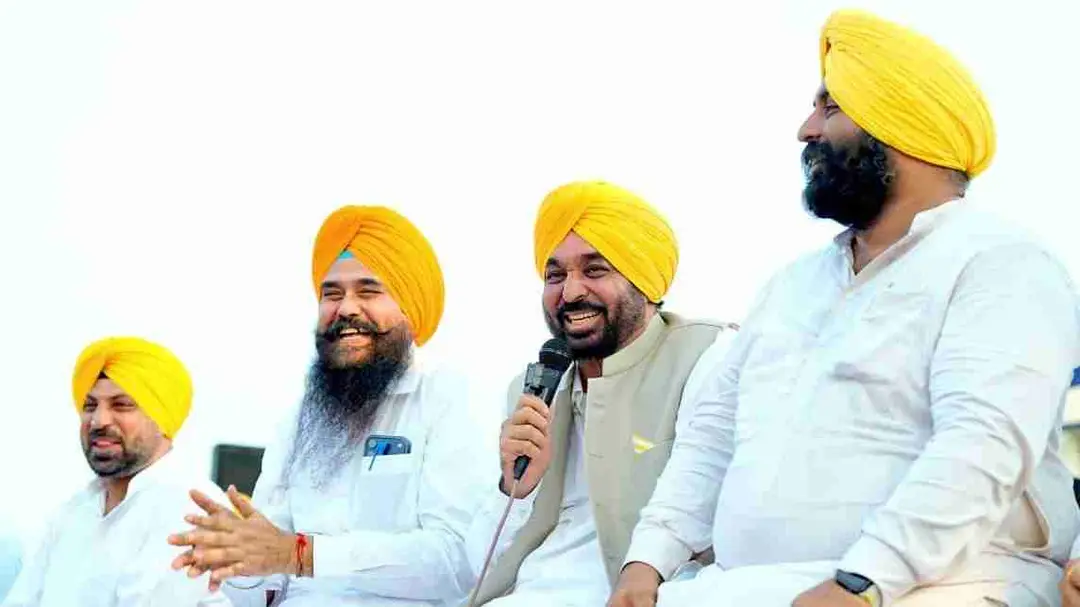
Punjab Chief Minister Bhagwant Singh Mann said canal water now reaches 80% of the state's fields, against 22% before the AAP government, and pledged to raise it to 100%. Speaking at a Lok Milni programme in Jindwari village, Sri Anandpur Sahib, he cited a 14,000-km pipeline network, free electricity and 70,000 merit-based jobs. He handed cheques of ₹20 lakh each to six panchayats and criticised the Congress, BJP and Akali Dal.
Source
Punjab — CM & govt · read the original report ↗
Desk check · some claims need care
What the desk checked (5)
- Canal water now reaches 80% of Punjab's fields, against 22% before the AAP government. — Attributed to CM Bhagwant Mann; the same speech elsewhere gives the earlier figure as 26%, an internal inconsistency in the source.
- A 14,000-km canal-water pipeline network has been laid and 45,000 km of roads are being upgraded. — Attributed to the CM in direct quotes; no independent data cited.
- Over 70,000 youth given government jobs and more than 90% households receive free power. — CM's claim in quoted remarks; no supporting documentation in source.
- BJP responsible for the deaths of more than 700 Punjab farmers during the farm-laws protest. — Political allegation by the CM; unverified and contested, handle with attribution.
- Mukh Mantri Sehat Yojna offers cashless treatment up to ₹10 lakh per family; Mawan Dheeyan Satkar Yojna gives ₹1,000 (₹1,500 for SC women) with ₹9,300 crore allotted. — Figures appear in the source as stated by the CM; scheme details not independently sourced.
Analysts’ view opinion
This is less a development update than an early draft of AAP's 2027 Punjab campaign frame. On the Lok Milni stage, Mann stacks canal water, free power, jobs and health cover on one side, and bundles Congress, BJP and Akali Dal together as parties of the chair and dynasty on the other — collapsing a multi-cornered contest into a single referendum on his government. His targeting of a possible BJP-Akali tie-up is a pre-emptive strike: label the alliance opportunist before it even exists.
- A village-level meeting in the Anandpur Sahib belt plus ₹20 lakh cheques to six panchayats points to a deliberate effort to build strength through the panchayat network.
- The 22%-to-80% canal water claim is aimed squarely at the farm vote, and water has always been Punjab's most emotive political currency.
- By foregrounding Chandigarh, Panjab University and water share, AAP casts itself as the defender of Punjab's interests and the BJP as the centralising outsider.
- The attack on the Akalis over beadbi and drugs is designed to stop the panthic vote from consolidating again; the personal framing of Sukhbir Badal as out of touch serves the same end.
- Citing local-body gains in Rajasthan signals that Punjab is being used as the showcase for AAP's national expansion, though all of this is the government's own scorecard.
What to watch — Watch whether the BJP-Akali alliance talk firms up, how far AAP scales these Lok Milni outreach events across districts, and whether the opposition mounts a data-based challenge to the canal water figures.
Every figure and achievement here is the Chief Minister's own assertion — the story offers no independent verification, no opposition rebuttal, and confirms no official announcement of any BJP-Akali alliance.
Deep dive
Research brief · 8 facts · 4 dates · exam-readyThe brief
Context
Punjab Chief Minister Bhagwant Singh Mann is holding "Lok Milni" public outreach programmes across the state, using them to list his AAP government's claims on irrigation, power, jobs and welfare while attacking the Congress, BJP and Shiromani Akali Dal. At Jindwari village in Sri Anandpur Sahib he claimed canal water now reaches 80% of Punjab's fields against 22% earlier, and promised to take it to 100%. The speech came in the context of long-running Punjab disputes over river waters, Chandigarh, Panjab University, BBMB, the SYL canal and RDF funds, and against reports of a possible BJP-Akali Dal alliance.
Key facts
- CM Mann said canal water now reaches 80% of Punjab's fields, against 22% before the AAP government, and vowed to take it to 100%.
- Elsewhere in the same speech he said area under canal irrigation rose from 26% to 80% after he assumed charge.
- He cited a 14,000-km canal-water pipeline network built to take canal water to fields.
- Cheques of ₹20 lakh each were handed over to six panchayats at the Jindwari Lok Milni.
- He claimed jobs to over 70,000 youth on merit without corruption, and that more than 90% households get free power.
- Mukh Mantri Sehat Yojna offers cashless treatment up to ₹10 lakh per resident family; Mann called Punjab the first state to offer such coverage.
- Under Mawan Dheeyan Satkar Yojna, from July 1 women above 18 get ₹1,000 (₹1,500 for SC women); 97% of Punjab women covered, ₹9,300 crore allotted in the budget.
- Other claims: 3,100 sports stadiums being built, 45,000 km of roads being renovated, and BJP blamed for the death of more than 700 farmers during the farm-laws protest.
Timeline
- Over 4.5 years ago (AAP government's tenure so far)AAP government assumed charge in Punjab; Mann says canal irrigation then covered 22-26% of fields.
- July 1 (year not stated in the source)Mawan Dheeyan Satkar Yojna payments begin, with notifications to women beneficiaries above 18.
- "Till a few days back" before the eventAkali leader Sukhbir Badal was opposing the BJP; Mann alleged the Akalis are now seeking an alliance with the BJP.
- Tuesday (date not stated in the source)Mann addresses Lok Milni at Jindwari village, Sri Anandpur Sahib; hands ₹20 lakh cheques to six panchayats.
Who has a stake
- Punjab farmers — Expansion of canal irrigation and daytime power supply reduce dependence on groundwater and diesel pumping.
- AAP government of Punjab / CM Bhagwant Singh Mann — Uses irrigation, jobs and welfare claims to build a pre-election record and project a 'Rangla Punjab' narrative.
- BJP — Accused by Mann of an anti-Punjab mindset over Panjab University, Chandigarh, BBMB, SYL, Harike canal, RDF and farmer deaths.
- Shiromani Akali Dal / Sukhbir Badal — Accused of beadbi of Sri Guru Granth Sahib, drug trade patronage and opportunistic alliance-seeking with the BJP.
- Congress — Clubbed by Mann with BJP and Akali Dal as parties locked in a 'fight for the chair'.
- Panchayats and village bodies — Received ₹20 lakh each (six panchayats) for village development works.
- Women and SC women in Punjab — Direct benefit transfers of ₹1,000 (₹1,500 for SC women) under Mawan Dheeyan Satkar Yojna.
Why it matters
Canal irrigation coverage is central to Punjab's groundwater crisis and farm economics, so claims of a jump from 22-26% to 80% of fields are a major political and policy assertion. The same speech links Punjab's federal grievances — Chandigarh, Panjab University, BBMB, SYL, RDF — to party politics ahead of the next state election, showing how centre-state disputes are mobilised electorally.
UPSC angle
Prelims pointers
- Sri Anandpur Sahib, Punjab: venue of the Lok Milni programme addressed by CM Bhagwant Singh Mann.
- BBMB = Bhakra Beas Management Board; SYL = Sutlej Yamuna Link canal — both cited as Punjab's disputes with the Centre.
- Mukh Mantri Sehat Yojna: Punjab scheme offering cashless treatment up to ₹10 lakh per family.
- Mawan Dheeyan Satkar Yojna: ₹1,000 monthly-type assistance to women above 18, ₹1,500 for SC women; ₹9,300 crore budget allocation.
- AAP's election symbol is the jhaadu (broom); Mann cited AAP gains in Rajasthan local government elections.
- Cabinet Minister Harjot Singh Bains and Lok Sabha MP Malwinder Singh Kang attended the Jindwari event.
Mains framing
Punjab's agrarian distress is inseparable from its water question: decades of tubewell-based paddy cultivation have made surface (canal) water expansion a policy priority, and the Mann government's claim of raising canal coverage from 22-26% to 80% of fields through a 14,000-km pipeline network is presented as its flagship achievement, alongside free power to over 90% households, daytime supply to farmers, 70,000 merit-based jobs, 3,100 sports stadiums and 45,000 km of road upgrades. The same address, however, shows how welfare delivery is fused with contentious politics — the Sehat Yojna's ₹10 lakh cashless cover and the Mawan Dheeyan Satkar Yojna's ₹9,300 crore outlay are placed beside allegations against the BJP (Chandigarh, Panjab University, BBMB, SYL, Harike canal, RDF, over 700 farmer deaths) and the Akali Dal (beadbi, drugs, alliance opportunism). Two tensions deserve scrutiny in an answer: the fiscal sustainability of large transfer schemes alongside free power, and the verifiability of irrigation figures, which the source itself reports inconsistently as 22% and 26%. The way forward lies in independently audited irrigation and groundwater data, canal-water expansion tied to crop diversification, and resolution of Punjab's federal disputes through institutional forums rather than electoral rhetoric.
Key terms
- Lok Milni
- Public interaction programme where the Punjab CM meets villagers directly, takes feedback and announces grants.
- Canal irrigation coverage
- Share of cultivated area receiving surface water from canals rather than groundwater tubewells.
- BBMB
- Bhakra Beas Management Board, the body managing shared river projects, cited by Mann as a Punjab grievance.
- SYL canal
- Sutlej Yamuna Link canal, a long-disputed river water-sharing project involving Punjab.
- RDF
- Rural Development Fund, central funds Punjab alleges have been withheld unfairly.
- Beadbi
- Sacrilege; Mann accused the Akali Dal of the beadbi of Sri Guru Granth Sahib and shielding the perpetrators.
Practice questions
- Expanding canal irrigation is often projected as the answer to Punjab's groundwater crisis. Critically examine, in the light of recent state government claims.
- Discuss how unresolved centre-state disputes such as Chandigarh, BBMB and the SYL canal shape electoral politics in Punjab.
- Evaluate the fiscal implications of universal welfare schemes such as free power, cashless health cover and direct cash transfers to women in a debt-stressed state.
Grounded only in the source report — figures and dates are the source's, not inferred.