
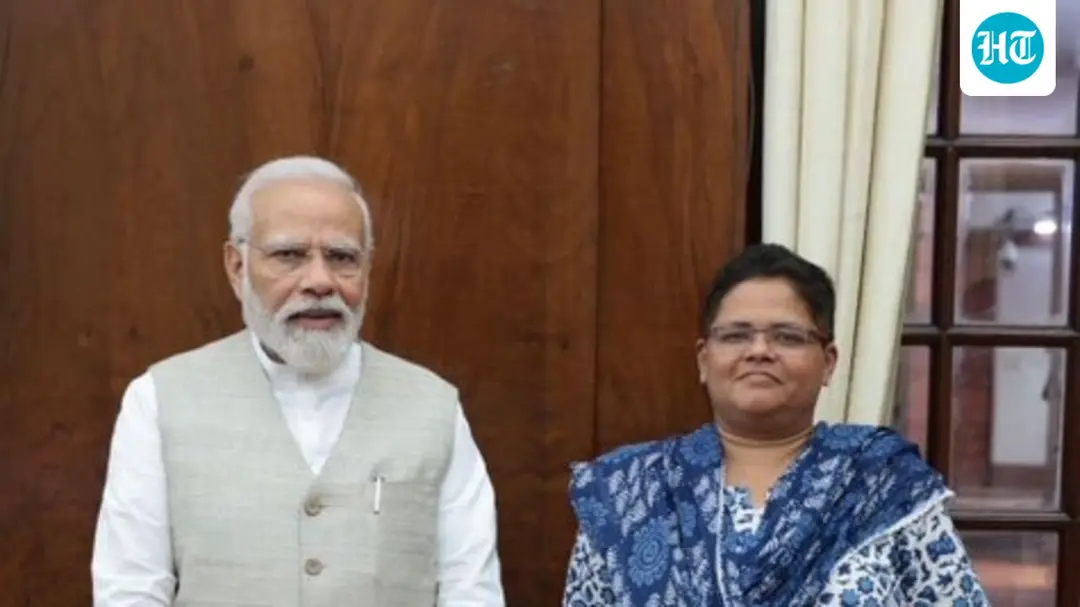
Senior journalist Payal Mehta dies at 46; leaders offer condolences
Senior CNN-News18 journalist Payal Mehta, 46, died on Sunday. She developed uneasiness while on a visit to Mumbai and was taken to hospital around 2 am, but her pulse went silent before treatment could be administered, senior journalist Sheela Bhatt said on X. She was known for covering national politics and the Parliament beat. Prime Minister Narendra Modi, Amit Shah, Rajnath Singh, Mallikarjun Kharge, Rahul Gandhi, Om Birla, Devendra Fadnavis and Assam CM Sarma offered condolences.
Source
Hindustan Times — India · read the original report ↗
Desk check · compared with the source
What the desk checked (4)
- Senior journalist Payal Mehta, 46, died on Sunday after sudden uneasiness during a visit to Mumbai. — Age, date and circumstances appear in the source; account of hospitalisation attributed to senior journalist Sheela Bhatt's post on X.
- She was taken to hospital around 2 am and died before treatment could be administered. — Directly quoted from Sheela Bhatt's post on X; no medical or official source given.
- Mehta was a senior journalist with CNN-News18 who covered national politics and the Parliament beat. — Stated in the source and supported by a tribute post attributed to CNN-News18.
- PM Narendra Modi, Amit Shah, Rajnath Singh, Mallikarjun Kharge, Rahul Gandhi, Om Birla, Devendra Fadnavis and Assam CM Sarma offered condolences. — Each condolence is quoted and attributed by name in the source; Lok Sabha Speaker's name given as 'Om Birla' in source text.
Analysts’ view opinion
When the government and the opposition front benches react in the same voice to the death of a Parliament-beat reporter, it says something about the credibility Payal Mehta had built inside the Delhi political system and the cross-party reach of her contacts. Condolences came from PM Modi, Amit Shah and Rajnath Singh as well as Mallikarjun Kharge and Rahul Gandhi, from Speaker Om Birla to Devendra Fadnavis and the Assam Chief Minister — professional respect rather than political messaging. That unusual unanimity also quietly illustrates how dependent the Parliament beat is on sustained working relationships with politicians across the aisle.
- Identical warmth from ruling and opposition leaders suggests she was not slotted into any one camp — a hard thing to achieve on the national political beat.
- The Parliament beat is less an assignment than an information ecosystem built on continuous direct access to leaders; a key node in that network is now gone.
- Reactions from the Maharashtra and Assam chief ministers, alongside Union ministers, indicate her reporting footprint extended beyond Delhi into state politics.
- The Speaker's condolence reflects the institutional recognition Parliament accords to the press corps that covers it.
- This is fundamentally a personal tragedy with no winners or losers politically; what it reveals is the texture of the journalist-politician working relationship.
What to watch — Watch for whether the House formally notes her passing when it next meets, and how press bodies and the Parliament press corps respond.
The story establishes no medical cause of death beyond a sudden uneasiness, and nothing further has been confirmed.
Deep dive
Research brief · 8 facts · 3 dates · exam-readyThe brief
Context
Payal Mehta, a senior journalist with CNN-News18 known for covering national politics and the Parliament beat, died on Sunday at the age of 46. She was on a visit to Mumbai when she developed sudden uneasiness and was rushed to hospital around 2 am, where she died before treatment could be administered. Her death drew condolences from across the political spectrum, including the Prime Minister, Union ministers, the Congress leadership, the Lok Sabha Speaker and two chief ministers.
Key facts
- Payal Mehta, senior journalist with CNN-News18, died on Sunday at the age of 46.
- She was on a visit to Mumbai when she developed uneasiness and was taken to hospital around 2 am.
- Senior journalist Sheela Bhatt said on X that her pulse went silent before any treatment could be administered.
- CNN-News18 described her as one of the standout political reporters of her generation and a formidable presence in Parliament.
- PM Narendra Modi called her a hardworking journalist who remained firmly connected to the ground, with a deep understanding of national issues.
- Home Minister Amit Shah called her passing an irreplaceable loss to the field of journalism.
- Defence Minister Rajnath Singh said she covered the Parliament beat with great commitment and professionalism.
- Condolences also came from Congress President Mallikarjun Kharge, LoP in Lok Sabha Rahul Gandhi, Lok Sabha Speaker Om Birla, Maharashtra CM Devendra Fadnavis and Assam CM Sarma.
Timeline
- Visit to Mumbai (date not stated in the source)Payal Mehta developed sudden uneasiness while on a visit to Mumbai.
- Around 2 amShe was taken to the hospital; her pulse went silent before treatment could be administered.
- SundayPayal Mehta, 46, passed away; tributes posted by CNN-News18 and political leaders on X.
Who has a stake
- Payal Mehta's family, friends and colleagues — Bereaved by her sudden and untimely death; recipients of condolences from leaders across parties.
- CNN-News18 — Loses a senior political reporter described as deeply respected, well connected and a formidable presence in Parliament.
- Parliament press corps / journalism fraternity — Loss of a reporter on the Parliament beat; Amit Shah called it an irreplaceable loss to journalism.
- Union government leaders (PM Modi, Amit Shah, Rajnath Singh) — Publicly mourned her, citing her ground-connected reporting and professionalism.
- Opposition leaders (Mallikarjun Kharge, Rahul Gandhi) — Condoled her death, noting her diligence and keen understanding of public affairs.
- Lok Sabha Speaker Om Birla — Called her passing a profound loss to journalism, reflecting her Parliament coverage.
- Chief Ministers Devendra Fadnavis (Maharashtra) and Sarma (Assam) — Recalled personal interactions and her field presence and energy.
Why it matters
The death of a 46-year-old Parliament beat reporter, mourned equally by the treasury benches and the Opposition, underlines the role political journalists play as a shared channel between institutions of governance and the public. The tributes highlight ground reporting and access built over years as the core of credible political coverage.
UPSC angle
Prelims pointers
- Payal Mehta was a senior journalist with CNN-News18 covering national politics and the Parliament beat; she died on Sunday aged 46.
- Rahul Gandhi is described in the source as Leader of Opposition in the Lok Sabha.
- Om Birla is the Lok Sabha Speaker who condoled her death.
- Devendra Fadnavis is the Chief Minister of Maharashtra; Sarma is the Chief Minister of Assam.
- Amit Shah is the Union Home Minister and Rajnath Singh the Defence Minister, as named in the tributes.
- Mallikarjun Kharge is the Congress President who issued condolences.
Mains framing
The death of CNN-News18's Payal Mehta at 46 is, on the face of it, a personal tragedy, but the near-unanimous condolences from the Prime Minister, Union Home and Defence Ministers, the Congress President, the Leader of Opposition, the Lok Sabha Speaker and two Chief Ministers point to the specific institutional function of the Parliament beat reporter. As the tributes note, her value lay in access matched by an understanding of national politics and a "relentless commitment to being on the ground" — the combination that allows legislative proceedings, party positions and policy debates to be translated for citizens. The fact that leaders from rival parties recalled her equally suggests that credible beat reporting retains cross-party trust even in a polarised media environment. The source does not discuss the working conditions, health risks or job security of political reporters, so any wider prescription must stay limited to what is stated: the loss of experienced ground reporters thins the pool of institutional memory in political journalism, and sustaining that capacity requires newsrooms and public institutions to keep valuing on-the-ground reporting over remote commentary.
Key terms
- Parliament beat
- A journalist's assigned area of coverage focused on parliamentary proceedings, MPs, parties and legislative business.
- CNN-News18
- The English news broadcaster where Payal Mehta worked as a senior journalist.
- Leader of Opposition (Lok Sabha)
- Head of the largest opposition party in the Lok Sabha; Rahul Gandhi holds the post as per the source.
- Lok Sabha Speaker
- Presiding officer of the lower house of Parliament; Om Birla, who called her death a profound loss to journalism.
- Ground reporting
- Journalism based on first-hand presence and field verification, repeatedly cited in tributes to Mehta.
Practice questions
- Discuss the role of beat journalism, particularly Parliament reporting, in strengthening democratic accountability in India.
- Cross-party tributes to a political journalist suggest that credible reporting can retain trust across the political divide. Examine this in the context of contemporary Indian media.
- What does the reliance of political journalism on personal access and ground presence imply for the training and retention of experienced reporters in Indian newsrooms?
Grounded only in the source report — figures and dates are the source's, not inferred.