
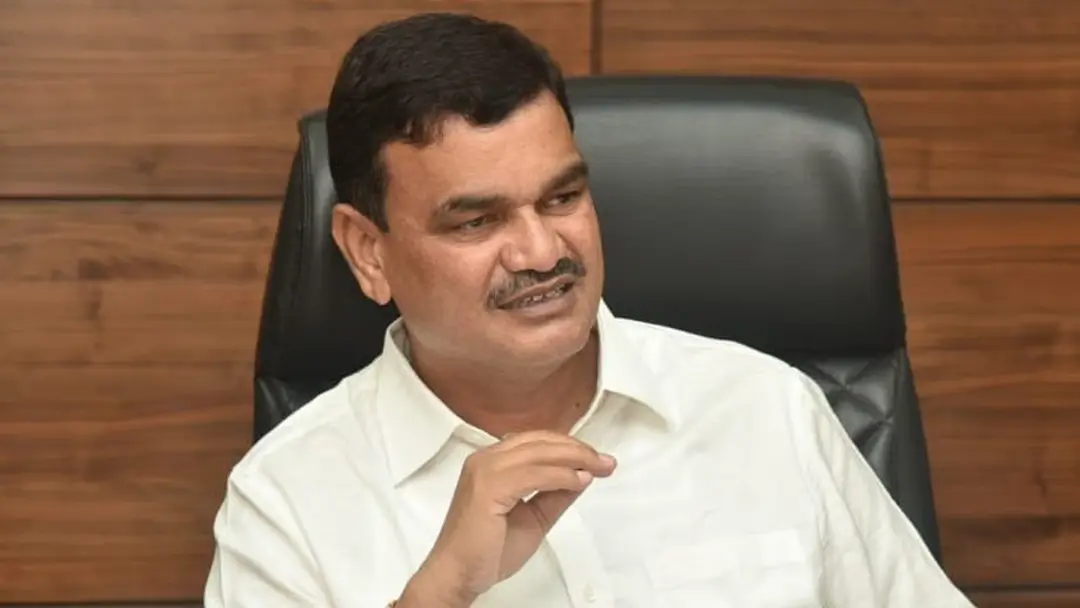
Maharashtra Agriculture Minister Bharne in Delhi for drought, Rabi talks
Maharashtra Agriculture Minister Dattatray Bharne has arrived in Delhi to meet Union Agriculture Minister Shivraj Singh Chouhan and attend a national-level meeting on the 2026 Rabi season, where he is expected to seek maximum assistance for the state. Following rainfall deficits, the state government has declared drought in 265 talukas across 32 of 36 districts and set up a relief sub-committee chaired by Revenue Minister Chandrashekhar Bawankule. A central team is expected in Karnataka on October 3 and Maharashtra on October 4.
Source
Agriculture — Shivraj Singh Chouhan · read the original report ↗
Desk check · some claims need care
What the desk checked (5)
- Maharashtra has declared drought in 265 talukas across 32 of 36 districts. — Figure appears in source; no official order or spokesperson cited.
- A drought relief sub-committee chaired by Revenue Minister Chandrashekhar Bawankule has been announced. — Stated in source as government action; no attribution to a named source or document.
- Agriculture Minister Dattatray Bharne is in Delhi to meet Union Agriculture Minister Shivraj Singh Chouhan and attend a national meeting on the 2026 Rabi season. — Central claim of the source; presented as fact without named attribution.
- A central team is expected to visit Karnataka on October 3 and Maharashtra on October 4. — Source frames this as anticipated, not confirmed; date for the Union minister's Maharashtra visit said to be finalised later.
- Bharne is expected to seek maximum central assistance for Maharashtra for the Rabi season. — Expectation stated by the source, not a quoted demand.
Analysts’ view opinion
A drought declaration covering 265 talukas in 32 of 36 districts is not a localised problem — it is stress across Maharashtra's farm economy. Rainfall deficits of this spread hit incomes twice: once through damaged standing crops, and again through low soil moisture and depleted water storage that can shrink Rabi sowing. That is why the Agriculture Minister's Delhi trip and the push for "maximum assistance" for Rabi is essentially a fiscal negotiation — an attempt to share the relief burden with the Centre — and the central team's field assessment is what will size the cheque.
- A drought declaration is largely an economic instrument: it opens the door to compensation, loan restructuring and distribution-related relief, though the story names no package figure.
- The damage runs across two seasons — current crop losses cut farm incomes now, while moisture and water shortfalls could limit Rabi acreage next.
- Support for Rabi inputs — seed, fertiliser, irrigation and fuel — only helps if it arrives before the sowing window closes; late money buys far less output.
- The real question is who pays: pressure is building on the state exchequer, which makes the demand for a central share predictable.
- Weaker rural incomes rarely stay inside agriculture — they show up in rural consumption, farm-labour work and local trade.
What to watch — Whether the central team's Maharashtra visit is confirmed for October 4, and how large and how fast any assistance is released after that assessment — ideally ahead of the Rabi sowing window.
The story does not establish the scale of crop loss, the number of affected farmers, or any amount sought or sanctioned, and even the central visit date is described only as expected.
Deep dive
Research brief · 8 facts · 5 dates · exam-readyThe brief
Context
Large parts of Maharashtra have seen significant rainfall deficits this season, damaging standing crops. The state government has begun a preliminary review of the drought-like situation, declared drought in 265 talukas spread over 32 of its 36 districts, and set up a drought relief sub-committee under Revenue Minister Chandrashekhar Bawankule. Against this backdrop, state Agriculture Minister Dattatray Bharne has travelled to Delhi to meet Union Agriculture Minister Shivraj Singh Chouhan and attend a national-level meeting on the 2026 Rabi season, where he is expected to press for maximum central assistance.
Key facts
- Maharashtra has declared drought in 265 talukas across 32 of its 36 districts, covering talukas from various revenue departments of the state.
- A sub-committee for drought relief has been announced, chaired by Revenue Minister Chandrashekhar Bawankule.
- State Agriculture Minister Dattatray Bharne has arrived in Delhi to meet Union Agriculture Minister Shivraj Singh Chouhan.
- Bharne will participate in a national-level meeting concerning the 2026 Rabi season.
- Bharne is expected to demand maximum assistance for Maharashtra for the Rabi season at the meeting.
- A central team is expected to visit Karnataka on October 3 and Maharashtra on October 4 to assess the drought situation.
- The date for the Union Agriculture Minister's visit to Maharashtra to assess drought is likely to be finalised on the day of the Delhi meeting.
- Significant rainfall deficits in various parts of Maharashtra have adversely affected crops in many areas.
Timeline
- Before the Delhi visitRainfall deficits damage crops; state government begins preliminary review of the drought-like situation.
- Before the Delhi visitDrought declared in 265 talukas across 32 of 36 districts; drought relief sub-committee announced under Revenue Minister Chandrashekhar Bawankule.
- Day of the storyAgriculture Minister Dattatray Bharne arrives in Delhi, meets Union Agriculture Minister Shivraj Singh Chouhan and attends the national-level 2026 Rabi season meeting; date of the Union Minister's Maharashtra visit likely finalised.
- October 3Central team expected to visit Karnataka.
- October 4Central team expected to visit Maharashtra to assess the drought situation.
Who has a stake
- Farmers in the 265 declared drought talukas — Crop losses from rainfall deficits; depend on relief measures and Rabi season support.
- Dattatray Bharne, Maharashtra Agriculture Minister — Leading the state's case in Delhi for maximum central assistance for the Rabi season and drought relief.
- Shivraj Singh Chouhan, Union Agriculture Minister — Decides on central support; his visit to Maharashtra to assess drought is to be scheduled.
- Chandrashekhar Bawankule, Maharashtra Revenue Minister — Chairs the state sub-committee on drought relief.
- Central assessment team — Expected to verify ground conditions in Karnataka (October 3) and Maharashtra (October 4).
- Karnataka — Also on the central team's itinerary, indicating a wider regional rainfall-deficit concern.
Why it matters
A drought declaration covering 265 talukas in 32 of 36 districts signals a near state-wide agrarian stress that will shape sowing, credit and relief decisions for the coming Rabi season. Central assistance and the findings of the visiting central team will determine how quickly affected farmers get support, making the Delhi meeting a decisive step.
UPSC angle
Prelims pointers
- Maharashtra has 36 districts; drought declared in 265 talukas across 32 of them.
- Maharashtra's drought relief sub-committee is chaired by Revenue Minister Chandrashekhar Bawankule.
- Union Agriculture Minister named in the story: Shivraj Singh Chouhan; Maharashtra Agriculture Minister: Dattatray Bharne.
- National-level meeting was on the 2026 Rabi season.
- Central team's expected visits: Karnataka on October 3, Maharashtra on October 4.
- Rabi is the winter-sown season; the taluka is the unit used for drought declaration in Maharashtra.
Mains framing
Maharashtra's declaration of drought in 265 talukas across 32 of 36 districts illustrates how rainfall deficits translate rapidly into crop damage and fiscal demands on both state and Centre. The immediate cause cited in the source is a significant rainfall shortfall in various parts of the state; the institutional response has been a preliminary state-level review, a drought relief sub-committee under the Revenue Minister, and political outreach to Delhi ahead of the 2026 Rabi season. The implications are threefold: uncertainty for farmers planning Rabi sowing, dependence on the quantum and timing of central assistance, and the need for verification through a central team that is expected in Karnataka on October 3 and Maharashtra on October 4. The way forward, as suggested by the sequence in the source, lies in aligning the state's taluka-level drought assessment with the central team's findings so that relief and Rabi-season support reach affected areas without delay; the source does not detail the specific relief measures or amounts sought.
Key terms
- Rabi season
- The winter cropping season; the national-level meeting attended by Bharne concerned the 2026 Rabi season.
- Taluka
- Sub-district administrative unit; Maharashtra's drought declaration covers 265 talukas.
- Drought relief sub-committee
- State panel announced for drought relief, chaired by Revenue Minister Chandrashekhar Bawankule.
- Central team visit
- Centre's field assessment of drought conditions, expected in Karnataka on October 3 and Maharashtra on October 4.
- Rainfall deficit
- Shortfall in expected rainfall; cited as the reason crops were adversely affected in many parts of Maharashtra.
Practice questions
- Examine how rainfall deficits translate into administrative drought declarations in India, using Maharashtra's declaration of drought in 265 talukas as a case.
- Discuss the respective roles of state governments and the Union Agriculture Ministry in drought assessment and relief, with reference to central assessment team visits.
- What measures can improve preparedness for the Rabi season in regions facing monsoon shortfalls? Illustrate with the Maharashtra example.
Grounded only in the source report — figures and dates are the source's, not inferred.