
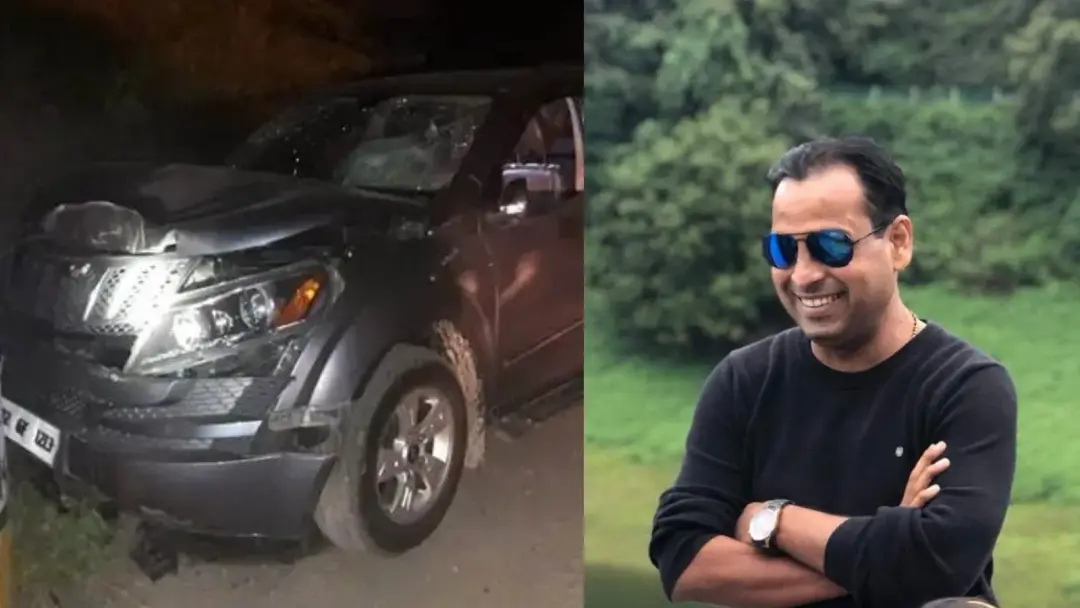
Ex-constable gets 10 years in Vivek Tiwari shooting case
Eight years after Apple sales executive Vivek Tiwari, 38, was shot dead during a late night police check in Lucknow in 2018, a court on Monday sentenced former constable Prashant Chaudhary to 10 years' rigorous imprisonment with a Rs 20,000 fine. He was convicted last Thursday of culpable homicide not amounting to murder. Co-accused constable Sandeep Kumar was acquitted. Tiwari's brother-in-law Vishnu Shukla called it "only half justice" and said the family will challenge the sentence and the acquittal.
Source
Indian Express — Cities · read the original report ↗
Desk check · compared with the source
What the desk checked (5)
- A court on Monday sentenced former constable Prashant Chaudhary to 10 years' rigorous imprisonment and a Rs 20,000 fine. — Attributed in source to District Government Counsel Rakesh Pandey; figures appear in source.
- Chaudhary was convicted last Thursday of culpable homicide not amounting to murder; co-accused constable Sandeep Kumar was acquitted. — Stated as fact by the source reporting on court proceedings.
- The family will challenge both the sentence and Kumar's acquittal, calling it 'only half justice'. — Directly quoted to Tiwari's brother-in-law Vishnu Shukla speaking to The Indian Express.
- Chaudhary fired his service pistol at Tiwari's car on September 29, 2018, and the bullet struck him, causing a crash. — Described in source as police claims and FIR allegations by colleague Sana Khan; constables claimed self-defence.
- Tiwari, 38, died of a bullet injury as per the post mortem report. — Attributed to then Lucknow SSP Kalanidhi Naithani in the source.
Analysts’ view opinion
The verdict turns on the sharpest distinction in Indian homicide law: whether the shot was intentional killing or a culpable act without the intention required for murder. By convicting Prashant Chaudhary of culpable homicide not amounting to murder rather than murder, the trial court appears to have accepted that death was caused by a culpable act but stopped short of finding the intention or knowledge needed for the graver charge — a finding that also implicitly rejected the plea of self-defence as a complete answer. The acquittal of the second constable suggests the court did not find proof beyond reasonable doubt of his shared role in the shooting, which is a separate evidentiary question from Chaudhary's liability.
- The murder-versus-culpable-homicide line hinges on intention and knowledge, and the reduced conviction signals the court read the evidence as falling short of the murder threshold.
- A plea of self-defence, if accepted fully, would have led to acquittal; the conviction indicates the court found the force used was not legally justified, though the story does not set out the court's reasoning.
- Acquittal of the co-accused reflects the criminal standard of proof beyond reasonable doubt on his individual role, and does not amount to a finding that nothing happened.
- The family's stated intention to challenge both the sentence as inadequate and the acquittal points to appellate and possible revision routes, where higher courts can enhance a sentence or re-examine an acquittal only on limited, well-settled grounds.
- The roughly eight-year gap between the 2018 incident and this sentencing is itself a rights issue, touching the speedy-trial expectations of both the victim's family and the accused.
What to watch — Watch whether the family and the State file appeals within the limitation period, and whether any challenge to the acquittal and to the quantum of sentence is entertained by the higher court.
The story does not set out the court's written reasoning, the evidence it relied on, or whether the State itself will appeal — so why murder was ruled out and why the second constable was acquitted remains unestablished here.
Deep dive
Research brief · 8 facts · 5 dates · exam-readyThe brief
Context
Vivek Tiwari, a 38-year-old Apple sales executive from New Hyderabad Colony in Lucknow, was shot dead in the early hours of September 29, 2018, when two constables on a motorcycle signalled his car to stop near Makdoompur outpost in Gomti Nagar Extension. Constable Prashant Chaudhary allegedly fired his service pistol at the moving car; the bullet hit Tiwari and his car crashed into a divider. The case triggered a public outcry over police use of firearms, and a special investigation team was set up by the then DGP. Eight years later, a Lucknow court has convicted and sentenced Chaudhary while acquitting the co-accused constable.
Key facts
- A Lucknow court on Monday sentenced former constable Prashant Chaudhary to 10 years' rigorous imprisonment and a fine of Rs 20,000.
- Chaudhary was convicted last Thursday of culpable homicide not amounting to murder.
- Co-accused constable Sandeep Kumar, who was out on bail, was acquitted by the court.
- Vivek Tiwari, 38, an Apple sales executive, was shot dead around 1.30 am on September 29, 2018 near Makdoompur outpost, Gomti Nagar Extension, Lucknow.
- Police said the bullet hit Tiwari's neck; the then Lucknow SSP Kalanidhi Naithani said the post mortem confirmed death by bullet injury.
- An FIR against the two constables was registered the day after the shooting at Gomti Nagar police station, based on the complaint of Tiwari's colleague Sana Khan.
- Then DGP O P Singh constituted a special investigation team (SIT) to probe the case.
- Tiwari is survived by his wife Kalpana, an Officer on Special Duty at the Nagar Nigam, and two children.
Timeline
- Around 1.30 am, September 29, 2018Tiwari and colleague Sana Khan were signalled to stop by two constables on a bike; Kumar allegedly struck Sana with a baton and Chaudhary allegedly fired at the car, hitting Tiwari, whose car crashed into a divider.
- Same night, after the shootingThe two constables fled the scene; Sana sought help from the police control room and Tiwari was taken to hospital, where he died during treatment.
- The following day (September 30, 2018)FIR registered against the two constables at Gomti Nagar police station; they were subsequently arrested. A SIT was constituted by then DGP O P Singh.
- Last ThursdayCourt convicted Prashant Chaudhary of culpable homicide not amounting to murder.
- Monday (eight years after the incident)Court sentenced Chaudhary to 10 years' rigorous imprisonment with Rs 20,000 fine; acquitted co-accused Sandeep Kumar.
Who has a stake
- Prashant Chaudhary, former constable — Convicted of culpable homicide not amounting to murder; sentenced to 10 years' rigorous imprisonment and a Rs 20,000 fine.
- Sandeep Kumar, co-accused constable — Acquitted by the court; the family says it will challenge the acquittal.
- Tiwari's family (wife Kalpana, two children, brother-in-law Vishnu Shukla) — Call the verdict "only half justice" and plan to challenge both the sentence and Kumar's acquittal, arguing it was a clear case of murder.
- Sana Khan, Tiwari's colleague and eyewitness — Complainant in the FIR; was allegedly struck with a baton and witnessed the shooting.
- Uttar Pradesh Police — Institutional credibility over use of service weapons; then DGP O P Singh set up an SIT and then SSP Kalanidhi Naithani handled the probe locally.
- Prosecution / District Government Counsel Rakesh Pandey — Secured conviction and sentence in a high-profile case against serving policemen.
Why it matters
The case is a test of accountability when police firepower is used on unarmed civilians, and of how long such trials take — a sentence came eight years after the killing. The conviction of one constable alongside the acquittal of the other leaves the family arguing that the outcome falls short of murder, setting up appeals. It also keeps focus on the rules and training governing the use of service weapons during night checks.
UPSC angle
Prelims pointers
- Vivek Tiwari, 38, Apple sales executive, shot dead in Lucknow on September 29, 2018 during a late night police check.
- Former constable Prashant Chaudhary: 10 years' rigorous imprisonment plus Rs 20,000 fine; co-accused constable Sandeep Kumar acquitted.
- Conviction was for culpable homicide not amounting to murder, not murder.
- FIR registered at Gomti Nagar police station, Lucknow, on the complaint of colleague Sana Khan.
- Then UP DGP O P Singh constituted a special investigation team (SIT) in the case.
- Then Lucknow SSP Kalanidhi Naithani said the post mortem confirmed death by bullet injury; bullet hit the neck.
Mains framing
The Vivek Tiwari case illustrates the twin problems of unregulated use of service firearms by police personnel and the slow pace of criminal accountability for uniformed personnel. The facts as recorded show constables on a night patrol signalling a private car to stop, a baton blow to the passenger, and a shot fired at a moving vehicle that killed the driver, with the constables then fleeing the scene and later pleading self-defence; the state responded with an FIR, arrests and a DGP-constituted SIT, which shows that institutional mechanisms can be activated under public pressure. Yet the judicial outcome — conviction for culpable homicide not amounting to murder for one accused and acquittal for the other, delivered eight years later — shows the gap between the victim's family's expectation of a murder conviction and what the trial established, prompting the family's plan to appeal both the sentence and the acquittal. The way forward lies in stricter protocols and training on when a service weapon may be discharged at civilians, immediate independent investigation of police firing incidents, protection and support for eyewitnesses such as the colleague who filed the FIR, and time-bound trials in cases of alleged custodial or police excesses so that both accountability and the accused's right to a fair trial are served.
Key terms
- Culpable homicide not amounting to murder
- The offence Chaudhary was convicted of — a homicide that falls short of the legal threshold of murder, carrying a lesser punishment.
- Rigorous imprisonment
- A prison sentence involving hard labour, as distinct from simple imprisonment; Chaudhary got 10 years of it.
- Special Investigation Team (SIT)
- A dedicated team of officers constituted for a specific case; here set up by the then DGP O P Singh to probe Tiwari's killing.
- FIR (First Information Report)
- The first police record of a cognisable offence; filed here at Gomti Nagar police station on Sana Khan's complaint.
- District Government Counsel
- The state's prosecuting lawyer at the district level; Rakesh Pandey held this post in Lucknow and confirmed the sentence.
- Officer on Special Duty (OSD)
- A designated official post; Tiwari's wife Kalpana serves as an OSD at the Nagar Nigam (municipal corporation).
Practice questions
- Critically examine the accountability mechanisms available when police personnel use service weapons against civilians, using the Vivek Tiwari case as a reference.
- Prolonged trials weaken both victims' faith in justice and the rights of the accused. Discuss with reference to a case decided eight years after the offence.
- Distinguish between murder and culpable homicide not amounting to murder, and explain why this distinction shaped the outcome in the Vivek Tiwari shooting case.
Grounded only in the source report — figures and dates are the source's, not inferred.