
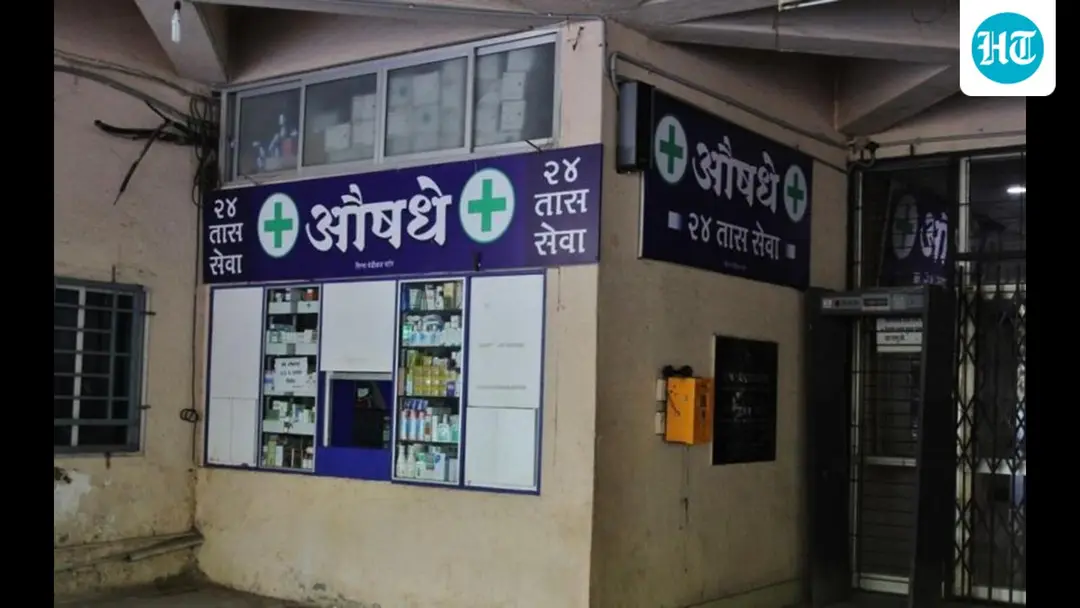
Centre proposes mandatory CCTV at medical stores to check drug sales
The Union health and family welfare ministry has proposed amendments to the Drugs Rules, 1945, to make CCTV cameras mandatory at medical stores to monitor unauthorised sale of drugs that require a prescription from a registered medical practitioner. A draft gazette notification issued on September 8 seeks stronger oversight of Schedule H, H1 and X drugs. The Drugs Consultative Committee deliberated the proposal and the Drugs Technical Advisory Board recommended its approval. The ministry has invited objections and suggestions.
Source
Hindustan Times — India · read the original report ↗
Desk check · compared with the source
What the desk checked (5)
- Union health ministry proposed amendments to the Drugs Rules, 1945, via a Draft Gazette Notification on September 8. — Attributed to a ministry statement quoted in the source; date appears in source.
- Medical stores would be required to install CCTV cameras as an additional regulatory safeguard. — Attributed to the ministry statement; described as a proposal, not yet law.
- The Drugs Consultative Committee deliberated the proposal and the Drugs Technical Advisory Board recommended its approval. — Attributed to the ministry statement in the source.
- Schedule H needs a valid prescription, H1 sale must be documented, and Schedule X covers habit-forming, psychotropic and narcotic substances. — Explanatory detail given in source without separate attribution.
- Objections and suggestions can be sent to the Under Secretary (Drugs) or emailed to drugsdiv-mohfw@gov.in. — Quoted from the draft notification as cited in the source.
Analysts’ view opinion
Over-the-counter sale of prescription drugs is a long-standing enforcement failure in Indian drug regulation, and the Centre's chosen fix is technological surveillance. In design terms, though, CCTV is less a deterrent than an evidence trail after the fact — the actual detection and prosecution still depends on the capacity of state drug control administrations. The case for tighter watch over habit-forming Schedule X medicines is strong, but the compliance cost on lakhs of small retail pharmacies and the data-handling questions will need to be settled in the final rule.
- This is not a new prohibition — prescription requirements under Schedules H, H1 and X already exist, so the proposal is an implicit admission that the gap is enforcement, not rules.
- Routing the proposal through the Drugs Consultative Committee and the Drugs Technical Advisory Board is the correct institutional path, and the invitation for objections leaves room for the final design to change.
- The compliance burden is likely to fall unevenly: cameras and storage are marginal costs for large pharmacy chains but a real fixed cost for small and rural outlets.
- How long footage must be retained, who may access it and how patient privacy is protected are not spelt out in the story, yet these details will largely decide whether the measure works.
- Past experience with e-pharmacy regulation and drug traceability suggests outcomes are determined less by the notification itself than by field inspection capacity.
What to watch — Watch how the final notification, after the objections window closes, specifies camera standards, footage retention periods and the terms on which state drug controllers may access recordings.
This remains a draft proposal — the story does not establish an implementation date, who bears the cost, the penalty for non-compliance, or any privacy safeguards for the footage.
Deep dive
Research brief · 8 facts · 4 dates · exam-readyThe brief
Context
India regulates the sale of medicines through the Drugs and Cosmetics framework, under which the Drugs Rules, 1945 classify certain medicines into schedules that can be dispensed only against a valid prescription from a registered medical practitioner. Despite this, there are persistent complaints of pharmacists selling prescription drugs over the counter. The Union health and family welfare ministry has now issued a draft gazette notification, dated September 8, proposing to amend the Drugs Rules, 1945 to make CCTV surveillance mandatory at medical stores as an additional safeguard for Schedule H, H1 and X drugs.
Key facts
- The Union health and family welfare ministry has proposed amendments to the Drugs Rules, 1945 to mandate CCTV cameras at medical stores.
- The proposal was issued through a Draft Gazette Notification on September 8.
- The amendment targets regulatory oversight of Schedule H, H1 and X drugs.
- Schedule H drugs require a valid prescription for sale; Schedule H1 is a sub-category where the sale must be well-documented.
- Schedule X covers habit-forming, psychotropic and narcotic substances.
- The Drugs Consultative Committee (DCC) first deliberated the proposal; it was then circulated to Drugs Technical Advisory Board (DTAB) members, which recommended approval.
- The ministry says the move will curb unauthorised sale and access to such medicines and improve transparency and accountability in the pharmaceutical supply chain.
- Objections and suggestions can be sent to the Under Secretary (Drugs), Ministry of Health and Family Welfare, or emailed to drugsdiv-mohfw@gov.in.
Timeline
- Before the draft notification (date not stated in the source)The Drugs Consultative Committee deliberated the CCTV surveillance proposal.
- Subsequently (date not stated in the source)The proposal was circulated among Drugs Technical Advisory Board members, which recommended its approval.
- September 8Ministry issues Draft Gazette Notification proposing amendments to the Drugs Rules, 1945, mandating CCTV at medical stores.
- After the notificationMinistry invites objections and suggestions from stakeholders on the proposed amendment.
Who has a stake
- Union Ministry of Health and Family Welfare — Proposing the amendment; expects stronger monitoring of Schedule H, H1 and X drug sales and better public health safeguards.
- Drugs Technical Advisory Board (DTAB) — Statutory technical advisory body that considered and recommended approval of the CCTV proposal.
- Drugs Consultative Committee (DCC) — First deliberated the proposal before it moved to DTAB.
- Medical stores and pharmacists — Would have to install and maintain CCTV cameras; face complaints of selling prescription drugs over the counter.
- Patients and the public — Affected by unauthorised access to prescription, habit-forming, psychotropic and narcotic medicines.
- Pharmaceutical supply chain participants — Ministry expects greater transparency and accountability in sale and distribution of scheduled drugs.
Why it matters
Over-the-counter sale of prescription-only medicines, including habit-forming and narcotic substances under Schedule X, poses risks of misuse, addiction and antimicrobial resistance-type harms to public health. Mandatory CCTV at retail pharmacies would create a verifiable record for regulators, shifting enforcement from occasional inspections to continuous surveillance. It also raises questions of compliance cost for small chemists and of data handling, which the consultation process must address.
UPSC angle
Prelims pointers
- Drugs Rules, 1945 is the rule framework proposed to be amended to mandate CCTV at medical stores.
- Draft Gazette Notification for the CCTV amendment was issued on September 8.
- Schedule H: prescription-only drugs; Schedule H1: sub-category requiring documented sale; Schedule X: habit-forming, psychotropic and narcotic drugs.
- DTAB (Drugs Technical Advisory Board) recommended approval of the CCTV proposal; DCC (Drugs Consultative Committee) deliberated it first.
- Comments on the draft go to the Under Secretary (Drugs), Ministry of Health and Family Welfare, or drugsdiv-mohfw@gov.in.
Mains framing
The proposed amendment to the Drugs Rules, 1945 responds to a well-documented enforcement gap: prescription-only medicines under Schedules H, H1 and X are routinely sold over the counter, enabled by weak documentation at the retail level and limited inspection capacity of drug regulators. By mandating CCTV surveillance at medical stores, the Centre seeks to create an auditable trail that deters unauthorised dispensing, particularly of habit-forming, psychotropic and narcotic substances under Schedule X, and to improve transparency and accountability across the pharmaceutical supply chain. The route taken is institutionally sound: the Drugs Consultative Committee deliberated the proposal, the Drugs Technical Advisory Board recommended approval, and the draft has been placed in the public domain for objections and suggestions. Implementation, however, will turn on questions the source does not settle: who reviews the footage, for how long it is retained, how privacy of patients purchasing sensitive medicines is protected, and how compliance costs fall on small, single-owner chemist shops. A credible way forward would pair surveillance with strengthened prescription documentation, adequate drug inspector capacity and clear norms on footage access, so that the measure improves public health outcomes rather than becoming a paper requirement.
Key terms
- Drugs Rules, 1945
- The rules governing manufacture, sale and distribution of drugs in India, now proposed to be amended to mandate CCTV at medical stores.
- Schedule H
- Category of drugs that can be sold only against a valid prescription from a registered medical practitioner.
- Schedule H1
- A sub-category of Schedule H where the sale must be well documented by the retailer.
- Schedule X
- Category covering habit-forming, psychotropic and narcotic substances, subject to the strictest sale controls.
- Drugs Technical Advisory Board (DTAB)
- Technical advisory body on drug regulation; it considered and recommended approval of the CCTV proposal.
- Drugs Consultative Committee (DCC)
- Committee that first deliberated the CCTV surveillance proposal before it went to DTAB.
Practice questions
- Critically examine whether mandatory CCTV surveillance at retail pharmacies can effectively curb over-the-counter sale of Schedule H, H1 and X drugs in India.
- Distinguish between Schedule H, Schedule H1 and Schedule X drugs under the Drugs Rules, 1945, and explain the regulatory rationale for treating them differently.
- Discuss the roles of the Drugs Consultative Committee and the Drugs Technical Advisory Board in India's drug regulatory decision-making.
Grounded only in the source report — figures and dates are the source's, not inferred.