
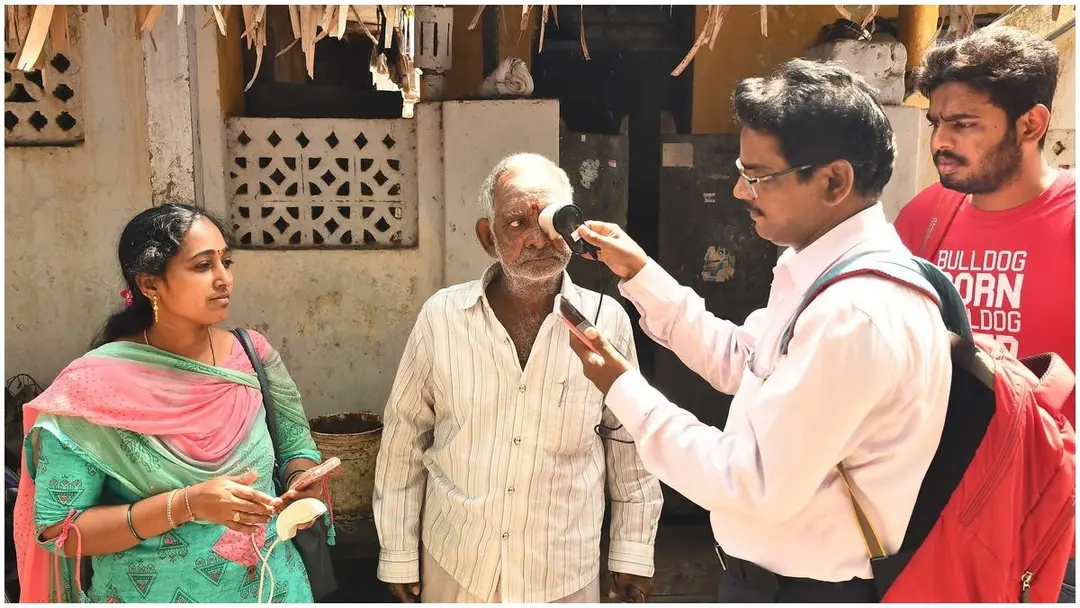
AP pensions to be paid from 6:30 am on October 1
NTR Bharosa pensions in Andhra Pradesh will be delivered at beneficiaries' homes from 6:30 am on October 1, Minister Kondapalli Srinivas said in a statement. An earlier decision to shift distribution to the afternoon was withdrawn after bank employees postponed a three-day strike. Swarna Gramam and Swarna Ward staff will withdraw 100% of the cash on September 30. The government released Rs 2,692.34 crore for October pensions, covering 61.80 lakh pensioners.
Source
ఆంధ్రప్రదేశ్ వార్తలు — Andhra Pradesh · read the original report ↗
Desk check · compared with the source
What the desk checked (5)
- NTR Bharosa pensions will be distributed at beneficiaries' homes from 6:30 am on October 1, reverting from the earlier afternoon schedule. — Attributed to Minister Kondapalli Srinivas in a statement; internally consistent with the reported withdrawal of the bank strike.
- Bank employees postponed their announced three-day strike. — Stated in the source without naming the bank unions or a date of postponement; no independent attribution given.
- Government released Rs 2,692.34 crore for October pensions, with Rs 2,692.28 crore credited to panchayat/ward accounts and Rs 6 lakh via DBT to NSAP pensioners in Gajapathinagaram mandal. — Figures attributed to the minister; the two components add up to the stated total, so internally consistent.
- Swarna Gramam/Swarna Ward staff will withdraw 100% of pension cash from banks on September 30. — Attributed to the minister's statement; figure and process appear in the source.
- 61.80 lakh pensioners in the state receive pensions on the 1st of every month. — Figure appears in the source, attributed to the minister; not independently verified.
Analysts’ view opinion
In Andhra Pradesh, pension day is not just welfare delivery — it is a monthly political performance. The moment the bank employees' three-day strike was deferred, the government withdrew its afternoon-distribution plan and the minister announced doorstep payments from 6:30 am on October 1, clearly to protect the message that commitments are kept on time. With 61.80 lakh beneficiaries and Rs 2,692.34 crore released, the sheer scale shows how large a voter bloc this scheme touches directly.
- Because even a one-day delay or a change of timing can become an opposition talking point, the swift return to the usual schedule looks politically calculated.
- Handing cash at the doorstep through secretariat staff makes the government physically visible to the beneficiary — politically higher-yield than a silent bank credit.
- The minister fronting the announcement and directing district officials is also a display of administrative grip over delivery.
- The pledge of payment 'on the 1st of every month' sets a benchmark that the opposition can cite against the government at the first slippage.
- The deferral of the bank unions' strike spared the government a potential blame-game over who was responsible for any disruption.
What to watch — Watch whether distribution actually begins smoothly at 6:30 am on October 1 across districts, and how the opposition frames any local delays.
The story rests on a government announcement and does not establish how the distribution actually went, how the opposition or bank unions responded, or what electoral effect it may have.
Deep dive
Research brief · 8 facts · 4 dates · exam-readyThe brief
Context
Andhra Pradesh delivers its NTR Bharosa social security pensions in cash at beneficiaries' doorsteps on the first day of every month, through secretariat (Swarna Gramam/Swarna Ward) staff. Because bank employees had announced a three-day strike at the end of September, the government had earlier decided to shift the October 1 distribution from morning to afternoon. With the strike postponed, Minister Kondapalli Srinivas announced that distribution will begin as usual at 6:30 am on October 1, with cash fully withdrawn from banks on September 30.
Key facts
- Pension distribution at beneficiaries' homes will start at 6:30 am on October 1, as announced by Minister Kondapalli Srinivas in a statement.
- The earlier decision to distribute pensions in the afternoon was dropped after bank employees postponed their announced three-day strike.
- Swarna Gramam / Swarna Ward staff will withdraw 100% of the pension cash from banks on September 30 itself.
- The government released Rs 2,692.34 crore for October pension distribution.
- Of this, Rs 2,692.28 crore was credited to panchayat/ward accounts and Rs 6 lakh will go via DBT to NSAP pensioners' accounts in Gajapatinagaram mandal.
- The state has 61.80 lakh pensioners, who the Minister said will receive pensions on the 1st of every month.
- District Project Directors, MPDOs, Municipal Commissioners were directed to coordinate with SLBC and bankers so cash is ready by September 30.
- Pensions are handed over in cash at homes by secretariat staff, as per the pre-existing plan restored after the strike was called off.
Timeline
- Earlier (before the strike was postponed)Government decided to shift October 1 pension distribution from morning to afternoon due to the announced three-day bank employees' strike.
- SubsequentlyBank employees postponed their three-day strike; government restored the original morning distribution plan.
- September 30Swarna Gramam / Swarna Ward staff to withdraw 100% of pension cash from banks; required cash to be kept ready.
- October 1, from 6:30 amNTR Bharosa pensions to be distributed at beneficiaries' homes by secretariat staff.
Who has a stake
- 61.80 lakh AP pensioners — Receive NTR Bharosa pension cash at their doorstep on the 1st of the month without delay to the afternoon.
- Minister Kondapalli Srinivas — Announced the revised schedule and asserted all arrangements for doorstep distribution are complete.
- Swarna Gramam / Swarna Ward (secretariat) staff — Must withdraw 100% of cash on September 30 and deliver it door-to-door from the morning of October 1.
- Bank employees' unions — Their postponement of the three-day strike removed the disruption to banking operations and cash withdrawal.
- District Project Directors, MPDOs, Municipal Commissioners, SLBC and bankers — Directed to coordinate to ensure the required cash is ready by September 30.
- NSAP pensioners in Gajapatinagaram mandal — Rs 6 lakh to be credited directly to their accounts through DBT instead of cash delivery.
Why it matters
Monthly cash pensions are a lifeline for 61.80 lakh elderly, widowed and disabled beneficiaries in Andhra Pradesh, and a single day's delay affects household budgets across the state. The episode shows how dependent a doorstep cash-delivery model is on banking operations — a three-day bank strike was enough to force a change of timing until it was postponed. It also highlights the administrative machinery, from SLBC coordination to ward-level staff, needed to move nearly Rs 2,700 crore in cash in one day.
UPSC angle
Prelims pointers
- NTR Bharosa is Andhra Pradesh's social security pension scheme; pensions are paid on the 1st of every month.
- Rs 2,692.34 crore released for October pensions; 61.80 lakh pensioners in the state.
- Rs 2,692.28 crore credited to panchayat/ward accounts; Rs 6 lakh via DBT to NSAP pensioners in Gajapatinagaram mandal.
- Swarna Gramam / Swarna Ward staff withdraw 100% of the pension cash from banks and deliver it at homes.
- SLBC (State Level Bankers' Committee) is the coordination body named for ensuring cash availability.
- Distribution on October 1 begins at 6:30 am, restored from an earlier afternoon plan after bank employees postponed a three-day strike.
Mains framing
Andhra Pradesh's doorstep delivery of NTR Bharosa pensions illustrates both the strength and fragility of last-mile welfare delivery. The strength lies in predictability and inclusion: 61.80 lakh pensioners receive cash at home on the 1st of every month, with Rs 2,692.34 crore pre-released to panchayat and ward accounts and ward-level staff mobilised to withdraw and distribute it. The fragility is visible in the fact that an announced three-day bank employees' strike was enough to make the government shift distribution to the afternoon, a decision reversed only when the strike was postponed. A cash-based model depends on uninterrupted banking operations, physical cash logistics and tight coordination among District Project Directors, MPDOs, Municipal Commissioners, SLBC and bankers. The partial use of DBT — Rs 6 lakh credited to NSAP pensioners' accounts in Gajapatinagaram mandal — points to a possible hybrid way forward: retaining doorstep cash for those who cannot access banks, while expanding account-based transfers and building contingency protocols so that industrial action or banking disruptions do not alter payment dates for the most vulnerable.
Key terms
- NTR Bharosa
- Andhra Pradesh's pension scheme under which social security pensions are paid to beneficiaries every month.
- Swarna Gramam / Swarna Ward
- Village and ward level units whose staff withdraw pension cash from banks and hand it over at beneficiaries' homes.
- NSAP
- National Social Assistance Programme pensioners; Rs 6 lakh for such beneficiaries in Gajapatinagaram mandal is being paid via DBT.
- DBT
- Direct Benefit Transfer — crediting the benefit amount straight into the beneficiary's bank account.
- SLBC
- State Level Bankers' Committee, the bank-government coordination forum asked to help ensure cash readiness by September 30.
- MPDO
- Mandal Parishad Development Officer, a mandal-level official directed to coordinate pension cash arrangements.
Practice questions
- Evaluate the merits and risks of doorstep cash delivery of pensions compared with Direct Benefit Transfer, using Andhra Pradesh's NTR Bharosa model as an example.
- How do bank employees' strikes affect the delivery of welfare entitlements, and what contingency mechanisms should states build into monthly pension payment systems?
- Discuss the role of village/ward level functionaries and inter-departmental coordination bodies such as SLBC in ensuring last-mile delivery of social security benefits.
Grounded only in the source report — figures and dates are the source's, not inferred.