
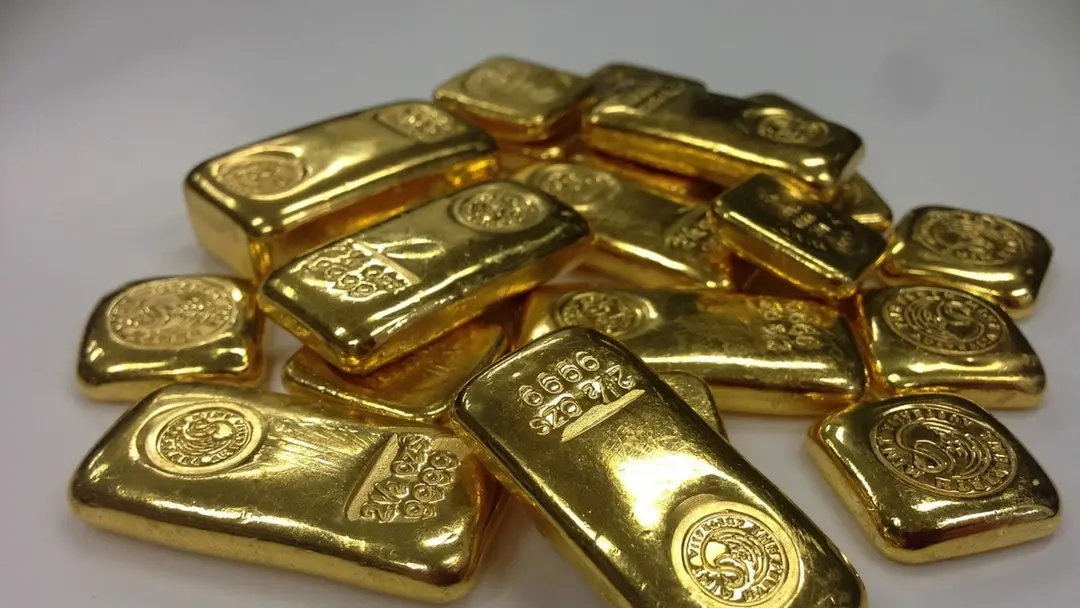
Gold, silver prices ease as US-Iran talks resume
Gold and silver prices declined slightly on Thursday after reports that indirect talks between the United States and Iran had resumed, easing market pressure. On MCX, the October 5 gold futures contract fell 0.12% to ₹1,51,071 per 10 grams, while the December 4 silver contract slipped 0.53% to ₹2,34,650 per kg. In Hyderabad on September 24, 24-carat gold was ₹1,51,570, 22-carat gold ₹1,38,939 and silver ₹2,34,400 a kg.
Source
హైదరాబాద్ — Hyderabad · read the original report ↗
Desk check · some claims need care
What the desk checked (5)
- MCX October 5 gold futures at ₹1,51,071 per 10 grams, down 0.12%, and December 4 silver at ₹2,34,650 per kg, down 0.53% — Figures appear in source, attributed to MCX futures market; percentages internally consistent with a 'slight decline' framing.
- Hyderabad 24-carat gold ₹1,51,570, 22-carat ₹1,38,939, silver ₹2,34,400 per kg on September 24 — Figure appears in source city-wise table; no issuing agency named for the city rates.
- IBA data showed Monday's 24-carat gold at ₹1,51,840 and 22-carat at ₹1,39,187, with 999 fine silver at ₹2,34,550 per kg — Attributed in source to India Bullion Association; not independently verifiable here.
- Prices eased after reports that indirect US-Iran talks resumed, involving Abbas Araghchi, Steve Witkoff and Jared Kushner — Source says the talks were 'reported' via mediators; no named agency or official statement cited — unattributed.
- Gold has risen over 75% recalling the 1979 bull run; silver rose from about ₹78,600 a kg in 2023-24 to above ₹2,40,000 by September 2026 — Figures appear in source with no source given; historical comparison is the writer's assessment and needs editorial checking.
Analysts’ view opinion
This is not a turn in the trend — it is a small adjustment as some geopolitical risk premium comes out of the price. A 0.12% dip in gold and 0.53% in silver on MCX barely qualifies as a fall: gold is still around ₹1.51 lakh per 10 grams and silver around ₹2.34 lakh per kg. Moves driven by headlines such as the resumption of indirect US-Iran talks are inherently fragile; if the talks stall, that premium goes straight back into the price.
- Declines of 0.12% and 0.53% offer almost no relief to a household budget — the difference is in the tens of rupees, not thousands.
- Silver falling more than gold is typical, since its industrial demand component makes it structurally more volatile.
- At these levels the gainers are existing holders and those borrowing against gold; the losers are first-time buyers and jewellery retailers, where demand usually shifts to lighter pieces and lower volumes.
- The story itself notes the gap between futures prices and shop prices — GST, making charges and local taxes push the consumer's actual outlay well above the quoted rate.
- The narrow spread across cities, all clustered near ₹1.51 lakh, suggests an efficiently arbitraged market where the driver is global news, not local factors.
What to watch — The near-term direction hinges on whether the US-Iran talks continue or break down; alongside that, watch whether festive and wedding-season jewellery demand holds up in volume terms at these price levels.
The story does not establish that prices have peaked or that a downtrend has begun, and some of the timeline and return figures it cites are not clearly sourced — none of this should be read as investment advice.
Deep dive
Research brief · 8 facts · 8 dates · exam-readyThe brief
Context
Gold and silver, treated as safe-haven assets, had rallied through 2025 on geopolitical tension between the United States and Iran and wider global economic uncertainty. On Thursday, news that indirect US-Iran talks had resumed eased that risk premium, pulling bullion prices slightly lower in both international and domestic markets. The story records the resulting futures moves on the MCX and the city-wise retail rates for 24-carat and 22-carat gold and silver on September 24.
Key facts
- On MCX, the October 5 gold futures contract fell 0.12% to Rs 1,51,071 per 10 grams in Thursday's early trade.
- The December 4 MCX silver contract slipped 0.53% to Rs 2,34,650 per kg.
- Indirect US-Iran talks resumed on Tuesday for the first time since the ceasefire failed in July, per the source.
- Iran's Foreign Minister Abbas Araghchi spoke through intermediaries with US representatives Steve Witkoff and Jared Kushner.
- Per India Bullion Association (IBA), on Monday 24-carat gold was Rs 1,51,840 per 10 g, 22-carat Rs 1,39,187, and 999 fine silver Rs 2,34,550 per kg.
- Hyderabad rates on September 24: 24-carat gold Rs 1,51,570; 22-carat Rs 1,38,939; silver Rs 2,34,400 per kg.
- Other September 24 city rates for 24-carat gold: Chennai Rs 1,51,770; Mumbai Rs 1,51,380; New Delhi Rs 1,51,120; Bengaluru Rs 1,51,450; Kolkata Rs 1,51,130.
- Gold prices have risen more than 75%, recalling the 1979 bull run; silver moved from about Rs 78,600 per kg in 2023-2024 to above Rs 2,40,000 by September 2026, as stated in the source.
Timeline
- 1979The historic gold bull run that the current rally is being compared with.
- 2023-2024Silver was around Rs 78,600 per kg.
- February this yearSevere US-Iran tensions began, heavily influencing gold prices.
- JulyThe ceasefire between the two countries failed.
- MondayIBA rates: 24-carat gold Rs 1,51,840 per 10 g; 22-carat Rs 1,39,187; 999 silver Rs 2,34,550 per kg.
- TuesdayRepresentatives of the US and Iran held indirect talks for the first time after the failed ceasefire.
- Thursday (September 24)Gold and silver eased in early trade; city-wise retail rates published.
- September 2026Silver crossed Rs 2,40,000 per kg, a fresh record, as stated in the source.
Who has a stake
- Retail jewellery buyers — Slight price relief, but final cost still includes local taxes, making charges and GST over the quoted rate.
- Bullion traders and jewellers — Demand and inventory valuation swing with daily gold and silver rate movements.
- MCX futures investors — Direct exposure to the October 5 gold and December 4 silver contracts that fell 0.12% and 0.53%.
- India Bullion Association (IBA) — Publishes the benchmark 24-carat, 22-carat gold and 999 fine silver rates used across cities.
- United States and Iran (Araghchi, Witkoff, Kushner) — Outcome of the indirect talks shapes the geopolitical risk premium in global bullion markets.
Why it matters
Gold and silver are both household savings instruments and safe-haven hedges in India, so geopolitical headlines from West Asia translate quickly into wedding-season jewellery bills. With gold up more than 75% and silver at record levels, even small daily dips matter to buyers, while futures traders read diplomacy as a signal for the risk premium. The episode shows how tightly domestic bullion pricing is tied to international events rather than local demand alone.
UPSC angle
Prelims pointers
- MCX (Multi Commodity Exchange) is where India's gold and silver futures contracts are traded; contracts are dated, e.g. October 5 gold, December 4 silver.
- 24-carat gold is the purest form; 22-carat is normally used for making jewellery.
- India Bullion Association (IBA) publishes daily benchmark gold and silver rates; 999 denotes fine silver purity.
- Retail jewellery prices add local taxes, making charges and GST to the quoted bullion rate.
- Gold and silver are safe-haven assets: prices typically fall when geopolitical tension eases.
- US-Iran indirect talks involved Iranian Foreign Minister Abbas Araghchi and US representatives Steve Witkoff and Jared Kushner.
Mains framing
The episode illustrates how India's bullion prices are a function of global risk sentiment rather than domestic fundamentals alone. US-Iran tensions that began in February and intensified after the July ceasefire failure pushed gold up by more than 75%, echoing the 1979 bull run, while silver rose from about Rs 78,600 a kg in 2023-2024 to record levels above Rs 2,40,000 as reported. The resumption of indirect talks on Tuesday immediately compressed the geopolitical premium, with MCX October gold slipping 0.12% to Rs 1,51,071 per 10 g and December silver 0.53% to Rs 2,34,650 per kg. For households, high bullion prices divert savings into unproductive assets and raise import-linked pressures; for investors, volatility driven by diplomacy underlines the need for transparent price discovery and hedging avenues. The way forward lies in wider awareness of the difference between quoted rates and final billed prices (taxes, making charges, GST), reliance on recognised benchmarks such as the India Bullion Association, and use of regulated futures markets for hedging rather than speculation.
Key terms
- MCX
- Multi Commodity Exchange, the Indian exchange where gold and silver futures contracts such as October 5 gold are traded.
- India Bullion Association (IBA)
- Body whose daily quotations are cited as the reference for 24-carat, 22-carat gold and 999 fine silver rates.
- Safe-haven demand
- Investor buying of assets like gold during economic uncertainty or conflict, which lifts prices.
- 22-carat vs 24-carat gold
- 22-carat is the alloy commonly used for jewellery; 24-carat is the purest form of gold.
- Indirect talks
- Negotiations conducted through intermediaries, as between Iran's Araghchi and US envoys Witkoff and Kushner.
- 999 fine silver
- Silver of 99.9% purity, the grade whose per-kg price is quoted as the benchmark.
Practice questions
- How do geopolitical developments in West Asia transmit to domestic gold and silver prices in India? Illustrate with the recent US-Iran talks.
- Discuss the implications of record-high bullion prices for Indian household savings and jewellery demand.
- What is the role of commodity futures exchanges such as MCX in price discovery and hedging for precious metals?
Grounded only in the source report — figures and dates are the source's, not inferred.