
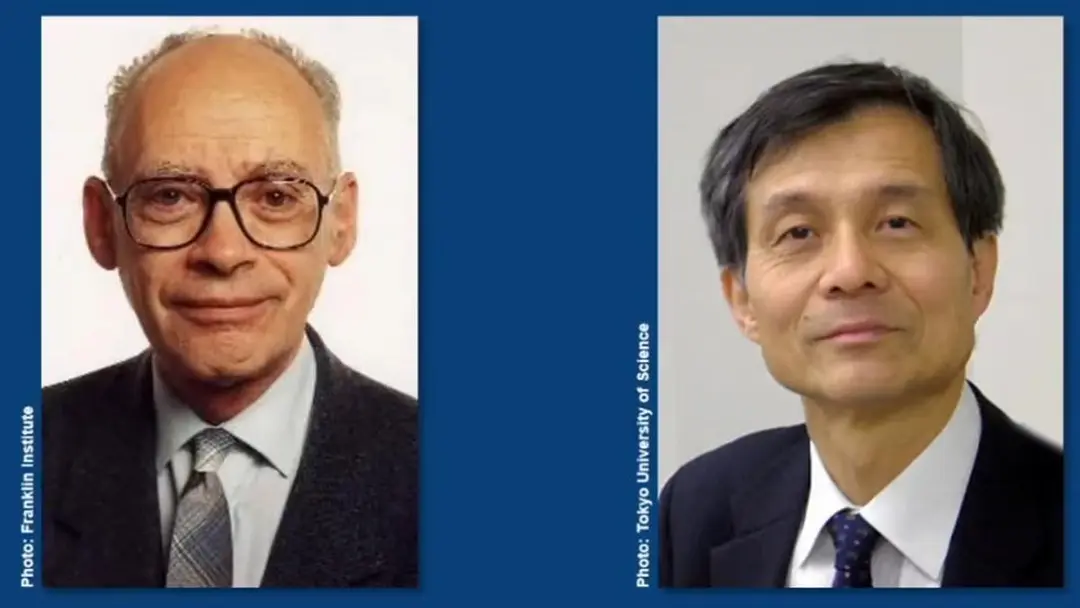
Chemistry Nobel 2026 awarded to Kagan and Soai
The Royal Swedish Academy of Sciences announced on Wednesday (October 7, 2026) that this year's Nobel Prize in Chemistry goes to Henri B. Kagan and Kenso Soai for the discovery of non-linear effects and autocatalysis in asymmetric organic synthesis. This year's medicine prize went to Karl Deisseroth, Peter Hegemann and Georg Nagel, and the physics prize to Francis Halzen. The award includes a diploma, a gold medal and 12 million kronor ($1.2 million).
Source
The Hindu — Science · read the original report ↗
Desk check · compared with the source
What the desk checked (5)
- Henri B. Kagan and Kenso Soai won the 2026 Nobel Prize in Chemistry for discovery of non-linear effects and autocatalysis in asymmetric organic synthesis. — Attributed to the Royal Swedish Academy of Sciences announcement on October 7, 2026.
- The 2026 Medicine prize went to Karl Deisseroth, Peter Hegemann and Georg Nagel for work leading to optogenetics. — Stated in source without separate attribution; consistent with Nobel week timeline given.
- The 2026 Physics prize was awarded to Francis Halzen for contributions to IceCube and discovery of high-energy astrophysical neutrinos. — Figure appears in source; no direct citation beyond the announcement context.
- The prize comprises a diploma, gold medal and 12 million kronor ($1.2 million), shared among multiple winners. — Figure appears in source as stated.
- Literature prize due October 8, peace prize October 9 and economics prize October 12, 2026. — Dates stated in source as scheduled announcements.
Analysts’ view opinion
A chemistry Nobel is not a security story on its face, but prizes like this are a reminder of where the deep science base that underwrites national power actually sits. Asymmetric organic synthesis — making molecules in one specific mirror-image form — is foundational to pharmaceuticals and fine chemicals, sectors that sit squarely inside today's supply-chain security debates. Read alongside this week's physics award for neutrino detection at the South Pole and the medicine award for light-controlled neuroscience, the 2026 slate maps onto domains that states increasingly treat as strategic: drug manufacturing resilience, polar and sensor infrastructure, and neurotechnology.
- Chirality-controlled synthesis is the chemistry beneath modern drug manufacturing, so leadership in this field has quiet implications for medical-supply resilience and pharmaceutical dependency.
- Nobel recognition typically trails the original work by decades, so this is a lagging indicator of past research investment rather than a snapshot of current scientific competition.
- The physics prize for IceCube points to large, long-horizon instruments in remote and strategically sensitive geographies such as Antarctica, where scientific presence and governance questions often overlap.
- Optogenetics sits in the neurotechnology space, an area several governments now examine through dual-use and export-control lenses, though the story itself makes no such claim.
- The laureates named — one associated with French and one with Japanese chemistry research traditions — underline that advanced science capacity remains distributed across allied industrial democracies rather than concentrated in any single state.
What to watch — Watch Friday's peace prize announcement, which carries far more immediate diplomatic weight than the science awards, and watch whether governments cite prizes like this in arguments for basic-research and pharmaceutical-manufacturing funding.
The story is an award announcement only: it establishes nothing about defence applications, dual-use concerns, state funding of this research, or any government's strategic posture, and the strategic framing here is interpretive context rather than reported fact.
Deep dive
Research brief · 8 facts · 8 dates · exam-readyThe brief
Context
The Royal Swedish Academy of Sciences announced on Wednesday, October 7, 2026, that the 2026 Nobel Prize in Chemistry goes to Henri B. Kagan and Kenso Soai for the discovery of "non-linear effects and autocatalysis in asymmetric organic synthesis". The announcement came during Nobel week, which opened with the medicine prize to Karl Deisseroth, Peter Hegemann and Georg Nagel for discoveries leading to optogenetics, followed by the physics prize to Francis Halzen for his work on the IceCube neutrino observatory. Each Nobel carries a diploma, a gold medal and a 12-million-kronor ($1.2 million) prize, shared if a discipline has more than one winner. The literature, peace and economics announcements were scheduled for October 8, 9 and 12, 2026.
Key facts
- The 2026 Nobel Prize in Chemistry was awarded to Henri B. Kagan and Kenso Soai, announced by the Royal Swedish Academy of Sciences on October 7, 2026.
- The citation is for the discovery of "non-linear effects and autocatalysis in asymmetric organic synthesis".
- The 2026 Nobel Prize in Physiology or Medicine went to Karl Deisseroth, Peter Hegemann and Georg Nagel for discoveries that led to optogenetics, which allows control of select nerve cells using light.
- The 2026 Nobel Prize in Physics went to Francis Halzen for contributions to IceCube, a neutrino observatory at the South Pole, and the discovery of high-energy neutrinos of astrophysical origin.
- The Nobel comprises a diploma, a gold medal and a 12-million-kronor ($1.2 million) prize, shared when a discipline has more than one winner.
- The 2025 Chemistry Nobel honoured Japan's Susumu Kitagawa, U.K.-born Richard Robson and American-Jordanian Omar Yaghi for developing a method of designing molecular structures.
- The 2024 Chemistry Nobel recognised David Baker, Demis Hassabis and John Jumper for computational protein design and protein structure prediction.
- The literature prize was due on October 8, 2026, the peace prize on October 9, 2026, and the economics prize on October 12, 2026.
Timeline
- 2024Chemistry Nobel awarded to David Baker, Demis Hassabis and John Jumper for computational protein design and protein structure prediction.
- 2025Chemistry Nobel awarded to Susumu Kitagawa, Richard Robson and Omar Yaghi for developing a method of designing molecular structures.
- Start of Nobel week 2026Physiology or Medicine prize announced for Karl Deisseroth, Peter Hegemann and Georg Nagel (optogenetics).
- Before October 7, 2026Physics prize announced for Francis Halzen (IceCube, high-energy astrophysical neutrinos).
- October 7, 2026Royal Swedish Academy of Sciences announces Chemistry Nobel for Henri B. Kagan and Kenso Soai.
- October 8, 2026Literature laureate to be revealed.
- October 9, 2026Peace prize announcement due.
- October 12, 2026Economics prize to wrap up the Nobel season.
Who has a stake
- Henri B. Kagan and Kenso Soai — The 2026 Chemistry laureates, honoured for non-linear effects and autocatalysis in asymmetric organic synthesis; they share the 12-million-kronor prize.
- Royal Swedish Academy of Sciences — The body that announces and confers the Nobel Prize in Chemistry (and Physics).
- Karl Deisseroth, Peter Hegemann, Georg Nagel — 2026 Physiology or Medicine laureates for discoveries leading to optogenetics.
- Francis Halzen — 2026 Physics laureate for contributions to the IceCube neutrino observatory and discovery of high-energy astrophysical neutrinos.
- Global chemistry research community — Recognition of asymmetric synthesis research shapes scientific priorities and visibility of the field.
Why it matters
The Chemistry Nobel 2026 spotlights asymmetric organic synthesis — chemistry that distinguishes between mirror-image forms of molecules — a field central to how complex molecules are built. Alongside optogenetics in medicine and high-energy neutrino astronomy in physics, the 2026 awards show the Nobel committees rewarding tools and techniques that let researchers control matter and probe the universe with new precision.
UPSC angle
Prelims pointers
- Nobel Prize in Chemistry 2026: Henri B. Kagan and Kenso Soai, for non-linear effects and autocatalysis in asymmetric organic synthesis.
- Nobel Prizes in Chemistry and Physics are announced by the Royal Swedish Academy of Sciences.
- Nobel Prize in Physiology or Medicine 2026: Karl Deisseroth, Peter Hegemann and Georg Nagel — optogenetics (controlling nerve cells with light).
- Nobel Prize in Physics 2026: Francis Halzen — IceCube neutrino observatory at the South Pole; high-energy astrophysical neutrinos.
- Each Nobel: diploma, gold medal and 12 million kronor ($1.2 million), shared among multiple winners in a discipline.
- 2025 Chemistry Nobel: Susumu Kitagawa, Richard Robson, Omar Yaghi (designing molecular structures); 2024: Baker, Hassabis, Jumper (protein design/prediction).
Mains framing
The 2026 Nobel Prize in Chemistry to Henri B. Kagan and Kenso Soai for discovering non-linear effects and autocatalysis in asymmetric organic synthesis continues a visible pattern in recent Nobel decisions: rewarding enabling methods rather than isolated discoveries. The 2024 prize went to computational protein design and structure prediction, the 2025 prize to designing molecular structures, and the 2026 medicine and physics prizes to optogenetics — controlling select nerve cells with light — and to the IceCube observatory's detection of high-energy neutrinos of astrophysical origin. Taken together, the awards suggest that progress in contemporary science flows from large, often collaborative, instrument- and technique-driven research programmes whose payoffs appear across disciplines. The implication for science policy in countries like India is the need for sustained, long-horizon funding for fundamental chemistry and physics, strong experimental infrastructure, and international collaboration of the kind that observatories such as IceCube represent. Beyond prize counts, the way forward lies in building institutional depth so that method-creating research — not only application-driven work — can be pursued at home.
Key terms
- Asymmetric organic synthesis
- Branch of organic chemistry concerned with making one specific mirror-image form of a molecule; the field cited in the 2026 Chemistry Nobel.
- Autocatalysis
- A reaction in which a product acts as catalyst for its own formation; part of the Kagan-Soai Nobel citation.
- Non-linear effects
- Effects where output is not directly proportional to input; discovered by the laureates in asymmetric organic synthesis (further detail not stated in the source).
- Optogenetics
- Technique that allows scientists to control select nerve cells using light; basis of the 2026 medicine Nobel.
- IceCube
- A neutrino observatory at the South Pole, linked to Francis Halzen's 2026 Physics Nobel and the discovery of high-energy astrophysical neutrinos.
- Royal Swedish Academy of Sciences
- The institution that announces the Nobel Prizes in Chemistry and Physics.
Practice questions
- The 2026 Nobel Prize in Chemistry recognises non-linear effects and autocatalysis in asymmetric organic synthesis. Discuss why recent Nobel Prizes increasingly reward enabling methods and techniques over single discoveries.
- Large international research facilities such as the IceCube neutrino observatory have become central to frontier physics. Examine the implications for scientific collaboration and research funding in developing countries.
- With reference to the 2026 Nobel awards in chemistry, medicine and physics, assess how advances in one scientific discipline create tools for others.
Grounded only in the source report — figures and dates are the source's, not inferred.