
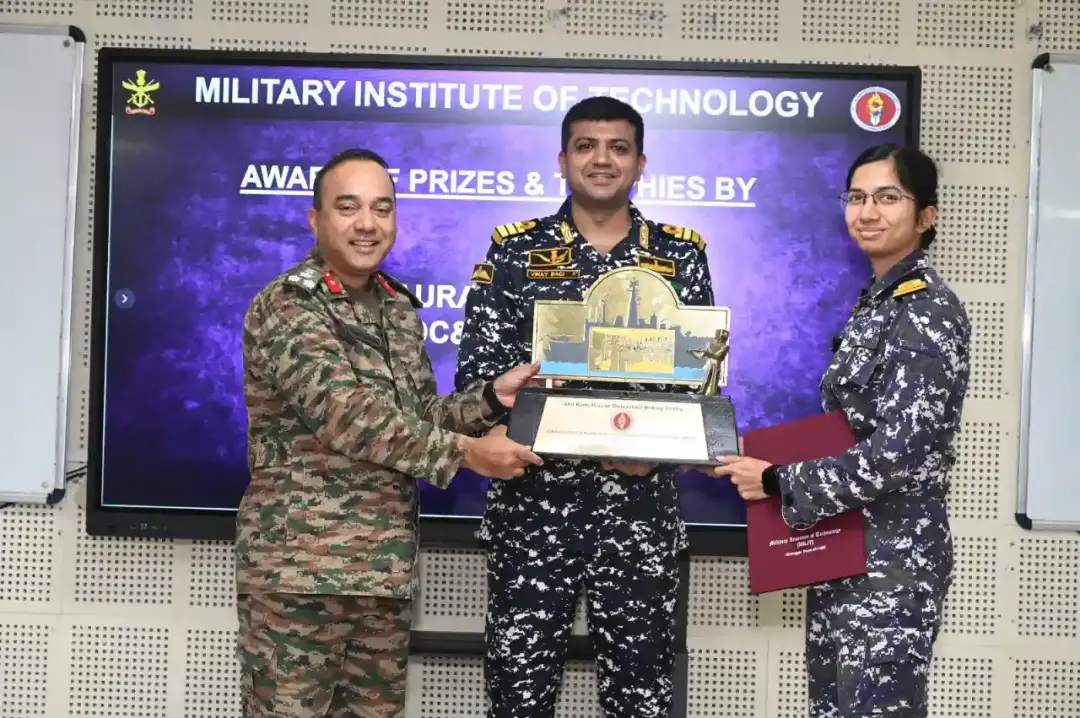
41 officers complete 10-week marine propulsion controls course at MILIT
Forty-one officers completed the 10-week Marine Propulsion Controls Technology Course (MPCTC-78) at the Military Institute of Training (MILIT). They included 17 from the Indian Navy, eight from the Indian Coast Guard and 16 from friendly foreign countries, with participants from Namibia, Togo, Tanzania, the Philippines and Sri Lanka. The course covered controls, embedded systems, digital signal processing, sensors and instrumentation, microcontrollers and autonomous systems. Brigadier Saurabh Bhargava, DC&CI, MILIT, addressed the graduating officers.
Source
Indian Navy · read the original report ↗
Desk check · compared with the source
What the desk checked (4)
- 41 officers completed the 10-week Marine Propulsion Controls Technology Course (MPCTC-78) at MILIT. — Figure and course designation appear in the source; no external document cited.
- Participants included 17 Indian Navy, eight Indian Coast Guard and 16 officers from friendly foreign countries. — Break-up appears in the source and sums to 41, internally consistent.
- Foreign participants came from Namibia, Togo, Tanzania, the Philippines and Sri Lanka. — Countries listed in source; consistent with its later reference to five friendly foreign countries.
- Brigadier Saurabh Bhargava, DC&CI, MILIT, addressed the graduating officers on autonomous systems and new platforms. — Attributed to a named officer; remarks paraphrased, no direct quote given.
Analysts’ view opinion
ఇది పైకి చూస్తే ఒక సాధారణ శిక్షణ కోర్సు ముగింపు వార్త; కానీ రాజకీయ-వ్యూహాత్మక కోణంలో చూస్తే ఇది భారత "డిఫెన్స్ డిప్లొమసీ"లో భాగం. నమీబియా, టోగో, టాంజానియా (ఆఫ్రికా–హిందూ మహాసముద్ర తీరం), ఫిలిప్పీన్స్ (దక్షిణ చైనా సముద్రం), శ్రీలంక (పొరుగు దేశం) — ఈ ఐదు దేశాల ఎంపికే భారత సముద్ర ప్రాధాన్యాల మ్యాప్ను చెబుతోంది. ఆయుధ ఒప్పందాల కంటే తక్కువ వివాదాస్పదమైన, తక్కువ ఖర్చుతో కూడిన శిక్షణ-ఆధారిత ప్రభావ విస్తరణ ఇది — దీనికి దేశీయంగా రాజకీయ వ్యతిరేకత వచ్చే అవకాశం కూడా చాలా తక్కువ.
- విదేశీ అధికారులకు శిక్షణ ఇవ్వడం అనేది దీర్ఘకాలిక పెట్టుబడి — నేటి ట్రైనీలు రేపటి కమాండర్లు, అంటే భవిష్యత్ సంస్థాగత సంబంధాలపై ప్రభావం.
- శ్రీలంక అధికారుల భాగస్వామ్యం పొరుగు దేశాలతో రక్షణ సహకారం కొనసాగుతోందని సూచిస్తుంది; ఈ ప్రాంతంలో ప్రభావ పోటీ నేపథ్యంలో దీనికి రాజకీయ విలువ ఉంది.
- ఆఫ్రికా, ఆగ్నేయాసియా దేశాలను ఒకే కోర్సులో చేర్చడం — భారత్ తనను 'గ్లోబల్ సౌత్కు శిక్షణ కేంద్రం'గా చూపించుకునే ప్రయత్నానికి అనుగుణం.
- స్వయంప్రతిపత్తి వ్యవస్థలు, ఎంబెడెడ్ టెక్నాలజీపై దృష్టి పెట్టడం — స్వదేశీ రక్షణ ఉత్పత్తి, సాంకేతిక స్వావలంబన అనే ప్రభుత్వ రాజకీయ కథనానికి బలం చేకూర్చే అంశం.
- ఇలాంటి కార్యక్రమాలు పార్టీలకు అతీతంగా విమర్శకు గురికాని రంగం కావడంతో, ప్రతిపక్షాల నుంచి బహిరంగ ప్రతిస్పందన ఉండే అవకాశం స్వల్పం.
What to watch — రానున్న నెలల్లో ఈ ఐదు దేశాలతో నౌకాదళ విన్యాసాలు, ఓడల సందర్శనలు లేదా రక్షణ సహకార ఒప్పందాలు ముందుకు కదులుతాయా — శిక్షణ సంబంధాలు విస్తృత వ్యూహాత్మక భాగస్వామ్యాలుగా మారుతున్నాయా అనేది గమనించాల్సిన అంశం.
ఈ కథనం కేవలం ఒక కోర్సు ముగింపును తెలియజేస్తోంది; ఇది ఏ ప్రభుత్వ విధాన మార్పు, కొత్త రక్షణ ఒప్పందం లేదా ఈ దేశాలతో నిర్దిష్ట వ్యూహాత్మక అవగాహనను ధ్రువీకరించడం లేదు — దౌత్యపరమైన అర్థాలు నా విశ్లేషణ మాత్రమే, ప్రకటిత లక్ష్యాలు కావు.
Deep dive
Research brief · 8 facts · 2 dates · exam-readyThe brief
Context
The Military Institute of Training (MILIT) conducts specialised technology courses for Indian and foreign military officers. Its 78th Marine Propulsion Controls Technology Course (MPCTC-78), a 10-week programme, concluded with 41 officers graduating. The batch mixed officers from the Indian Navy, the Indian Coast Guard and five friendly foreign countries, reflecting India's use of professional military education as a channel of defence cooperation. The syllabus focused on the control, computing and sensor technologies that increasingly underpin modern warships and autonomous maritime platforms.
Key facts
- 41 officers completed the 10-week Marine Propulsion Controls Technology Course (MPCTC-78) at MILIT.
- Composition: 17 officers from the Indian Navy, 8 from the Indian Coast Guard and 16 from Friendly Foreign Countries.
- Foreign participants came from five countries: Namibia, Togo, Tanzania, the Philippines and Sri Lanka.
- Course content covered controls, embedded systems, digital signal processing, sensors and instrumentation, microcontrollers, and technologies for autonomous systems and platform management.
- Brigadier Saurabh Bhargava, DC&CI, MILIT, addressed the graduating officers.
- Brig Bhargava referred to global technological developments witnessed during the three months of the officers' training to underline the pace of change.
- He highlighted the diverse range of naval platforms inducted recently and the resulting technological complexity of maritime forces.
- Graduating officers were urged to master core technology principles, enhance professional competencies and stay abreast of emerging technologies.
Timeline
- 10-week (about three-month) course durationOfficers from the Indian Navy, Indian Coast Guard and five friendly foreign countries undergo MPCTC-78 training at MILIT.
- At conclusion of the courseBrigadier Saurabh Bhargava, DC&CI, MILIT, addresses the 41 graduating officers on autonomous systems and continuous technological adaptation.
Who has a stake
- Military Institute of Training (MILIT) — Conducts advanced technology training; its courses build technically proficient military leadership and host foreign officers.
- Indian Navy (17 officers) — Needs officers who understand control architectures, sensors and embedded computing on increasingly sophisticated warships.
- Indian Coast Guard (8 officers) — Gains technically trained officers for platform management and maritime operations alongside the Navy.
- Friendly Foreign Countries (16 officers from Namibia, Togo, Tanzania, Philippines, Sri Lanka) — Exposure to India's specialised military training ecosystem and stronger professional links with Indian maritime institutions.
- Brigadier Saurabh Bhargava, DC&CI, MILIT — Set the message that staying current with technology is an operational imperative, not merely an advantage.
Why it matters
Modern warships and unmanned platforms depend on control architectures, embedded computing, sensors and automation, so operational effectiveness now rests as much on personnel skills as on equipment. Training foreign officers alongside Indian ones turns military education into an instrument of defence cooperation with African, Southeast Asian and neighbouring maritime partners. It also builds a shared professional understanding of autonomous technologies across services and partner navies.
UPSC angle
Prelims pointers
- MPCTC-78 = 78th Marine Propulsion Controls Technology Course, conducted at MILIT, duration 10 weeks.
- Graduates: 41 total — 17 Indian Navy, 8 Indian Coast Guard, 16 from Friendly Foreign Countries.
- Five foreign countries represented: Namibia, Togo, Tanzania, the Philippines, Sri Lanka.
- Brigadier Saurabh Bhargava holds the post of DC&CI at MILIT.
- Subjects taught: controls, embedded systems, digital signal processing, sensors and instrumentation, microcontrollers, autonomous systems and platform management.
- 'Friendly Foreign Countries' (FFC) is the term used for partner nations whose officers train at Indian military institutions.
Mains framing
The completion of MPCTC-78 by 41 officers at MILIT illustrates two converging trends in Indian defence: the technological transformation of maritime warfare and the use of professional military education as diplomacy. Modern naval platforms increasingly rely on sophisticated control architectures, embedded computing, sensors and digital signal processing for propulsion and platform management, and the emergence of unmanned and autonomous systems is reshaping surveillance, reconnaissance and maritime logistics. This makes technical literacy an operational requirement rather than a specialist niche — as the address at MILIT noted, the recent induction of a diverse range of naval platforms demands that officers continuously update knowledge and integrate emerging technologies. Simultaneously, the presence of 16 officers from Namibia, Togo, Tanzania, the Philippines and Sri Lanka shows how training slots build professional links with Indian Ocean and Indo-Pacific partners and create a common understanding of technology applications. The way forward implied by the source lies in sustained emphasis on core technology principles, continuous skill development for both Navy and Coast Guard personnel, and expanding international professional exchange so that human capability keeps pace with platform sophistication.
Key terms
- MILIT (Military Institute of Training)
- The institute that conducted the 10-week Marine Propulsion Controls Technology Course for Indian and foreign officers.
- MPCTC-78
- The 78th Marine Propulsion Controls Technology Course, focused on advanced control and computing technologies for naval platforms.
- Embedded systems
- Dedicated computing hardware and software built into equipment; central to propulsion control and automated onboard functions.
- Digital signal processing
- Techniques to process and exploit data generated by modern sensors on naval platforms.
- Friendly Foreign Countries (FFC)
- Partner nations whose officers train in Indian military institutions; here Namibia, Togo, Tanzania, the Philippines and Sri Lanka.
- Autonomous systems
- Unmanned and increasingly self-operating platforms changing how forces conduct surveillance, reconnaissance and logistics.
Practice questions
- How is the growing use of embedded systems, sensors and autonomous platforms changing skill requirements for officers of India's maritime forces? Discuss with reference to specialised training institutions.
- Examine the role of professional military education and training of foreign officers as an instrument of India's defence diplomacy in the Indian Ocean and Indo-Pacific.
- 'Operational effectiveness depends not only on equipment capability but on personnel who can understand and adapt systems.' Critically analyse in the context of technology-intensive naval warfare.
Grounded only in the source report — figures and dates are the source's, not inferred.