
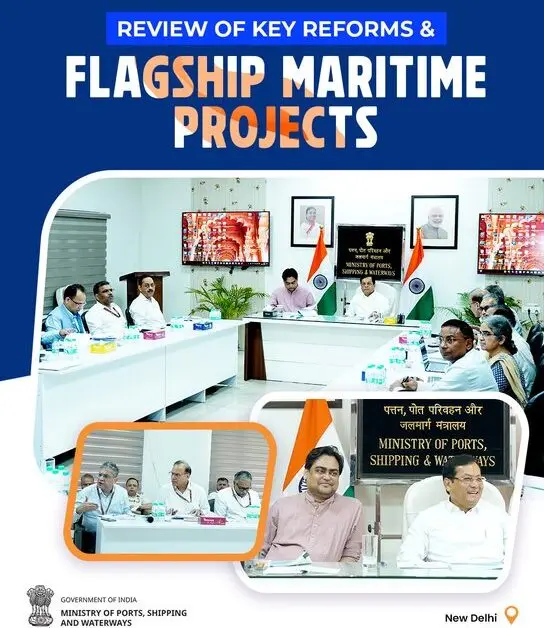
Sonowal reviews maritime reforms, flagship shipping initiatives
Union Minister for Ports, Shipping and Waterways Sarbananda Sonowal, along with Minister of State Shantanu Thakur, reviewed maritime reforms and flagship programmes in New Delhi. Discussions covered indigenous shipbuilding, port and infrastructure modernisation, multimodal connectivity and global competitiveness. The review also emphasised coastal shipping, inland water transport and skills, employment and livelihood opportunities for coastal and riverine communities. The ministry said the initiatives are aligned with the Atmanirbhar Bharat vision and the objective of positioning India as a leading maritime nation.
Source
Ports & Shipping — Sarbananda Sonowal · read the original report ↗
Desk check · compared with the source
What the desk checked (4)
- Union Minister Sarbananda Sonowal, with MoS Shantanu Thakur, reviewed maritime reforms and flagship initiatives. — Attributed to the Ministry of Ports, Shipping and Waterways in the source; no independent confirmation possible.
- The review focused on indigenous shipbuilding, port modernisation, coastal shipping and inland waterways. — Stated in source text and repeated in its key takeaways; no supporting data or documents cited.
- Initiatives are aligned with the Atmanirbhar Bharat vision and aim to make India a competitive global shipbuilding and repair hub. — Policy aspiration as described in the source; no targets, timelines or figures given.
- Ministry's recent annual reporting highlights continuing work on green hydrogen and maritime infrastructure. — Source refers to annual reporting generally without citing the specific document.
Analysts’ view opinion
ఇది పైకి ఒక పరిపాలనా సమీక్ష మాత్రమే అయినా, రాజకీయంగా చూస్తే తీర, నదీ ప్రాంత ఓటర్లను లక్ష్యంగా చేసుకున్న సందేశ నిర్మాణం స్పష్టంగా కనిపిస్తుంది. అస్సాంకు చెందిన సర్బానంద సోనోవాల్, పశ్చిమ బెంగాల్లో బలమైన మత్స్యకార, నదీతీర ఓటర్ల ప్రాతినిధ్యం ఉన్న శంతను ఠాకూర్ కలిసి ఈ సమీక్ష చేయడం — తూర్పు భారత తీర ప్రాంత రాజకీయాలకు కేంద్రం ఇస్తున్న ప్రాధాన్యతను సూచిస్తుంది. "ఆత్మనిర్భర్ భారత్" చట్రంలో స్వదేశీ నౌకా నిర్మాణాన్ని ఉంచడం ద్వారా ఆర్థిక విధానాన్ని జాతీయవాద కథనంతో ముడిపెట్టే బీజేపీ శైలి ఇక్కడ కొనసాగుతోంది.
- ఉపాధి, నైపుణ్యాలు, జీవనోపాధి అనే పదజాలం ముందుకు రావడం — మౌలిక సదుపాయాల ప్రాజెక్టులను స్థానిక ఓటరుకు అందే ప్రయోజనంగా మార్చి చూపే రాజకీయ వ్యూహాన్ని సూచిస్తుంది.
- సోనోవాల్ (అస్సాం), ఠాకూర్ (బెంగాల్) ఇద్దరూ కలిసి కనిపించడం, తూర్పు–ఈశాన్య ప్రాంతాల్లో పార్టీ ముఖాలను ప్రాధాన్య శాఖల పనితీరుతో అనుసంధానించే ప్రయత్నంగా చదవవచ్చు.
- ప్రైవేటు రంగ భాగస్వామ్యంపై ఉద్ఘాటన — ఓడరేవుల నిర్వహణ, కార్మిక సంఘాలు, రాష్ట్ర ప్రభుత్వాల అధికార పరిధి విషయాల్లో ప్రతిపక్షాల విమర్శలకు ద్వారం తెరిచే అంశం.
- ఓడరేవులు, జలమార్గాలు రాష్ట్ర–కేంద్ర సమన్వయం అవసరమైన రంగం కావడంతో, బీజేపీ-యేతర ప్రభుత్వాలున్న తీర రాష్ట్రాలతో నిధులు, పరిహారం, భూసేకరణపై ఘర్షణ సాధారణంగా తలెత్తే అవకాశం ఉంది.
- సమీక్షలో ప్రకటించిన లక్ష్యాలకు నిర్దిష్ట గడువులు, గణాంకాలు కథనంలో లేవు — ఇది కొలవదగిన హామీల కంటే ఉద్దేశ ప్రకటనగానే ఇప్పటికి నిలుస్తుంది.
What to watch — రాబోయే బడ్జెట్, పథక ప్రకటనల్లో స్వదేశీ నౌకా నిర్మాణానికి నిర్దిష్ట కేటాయింపులు, తీర రాష్ట్రాల వారీగా ప్రాజెక్టుల పంపిణీ ఎలా ఉంటుందో — అదే ఈ సమీక్ష రాజకీయ ప్రకటనా, పాలనా చర్యా అని తేల్చుతుంది.
ఈ కథనం సమీక్ష జరిగిందని మాత్రమే చెబుతోంది; ఏ నిర్ణయాలు తీసుకున్నారు, ఎంత నిధులు, ఏ కాలపరిమితి, ఏ రాష్ట్రాలకు ఏమి — వీటిలో ఏదీ నిర్ధారించలేదు, ఎన్నికల ఉద్దేశం ఉందని చెప్పే ఆధారం కూడా కథనంలో లేదు.
Deep dive
Research brief · 8 facts · 2 dates · exam-readyThe brief
Context
The Union Ministry of Ports, Shipping and Waterways (MoPSW) held a leadership review in New Delhi of its reforms and flagship programmes for India's maritime sector. Union Minister Sarbananda Sonowal and Minister of State Shantanu Thakur assessed progress on indigenous shipbuilding, port and infrastructure modernisation, multimodal connectivity and inland/coastal water transport. The exercise is framed within the Government's Atmanirbhar Bharat vision and the stated objective of making India a leading maritime nation with stronger links to global maritime supply chains. The source is a ministry-level review readout; it does not state specific targets, outlays or dates.
Key facts
- Union Minister for Ports, Shipping and Waterways Sarbananda Sonowal, with Minister of State Shantanu Thakur, reviewed maritime reforms and flagship programmes in New Delhi.
- The review focused on indigenous shipbuilding, modern maritime infrastructure, enhanced port and shipping capabilities, global competitiveness and inclusive growth.
- A major thrust was strengthening the domestic shipbuilding ecosystem and creating opportunities for Indian shipyards, maritime enterprises and allied industries.
- Stated aim: enabling India to emerge as a competitive global shipbuilding and ship repair hub while enhancing self-reliance.
- Discussions covered modernisation of ports, shipping infrastructure and multimodal maritime connectivity, and ease of doing business in the sector.
- Emphasis was placed on harnessing India's extensive coastline and inland waterways to promote coastal shipping and inland water transport for cargo movement.
- The Ministry's recent annual reporting highlights continuing work on green hydrogen, maritime infrastructure and sectoral modernisation.
- Initiatives were described as aligned with the Atmanirbhar Bharat vision and the objective of positioning India as a leading maritime nation.
Timeline
- Date not stated in the sourceSonowal and Thakur hold a review of key maritime reforms, flagship programmes and ongoing initiatives in New Delhi.
- Prior to the review (period not stated)Ministry's annual reporting flags continuing work on green hydrogen, maritime infrastructure and sectoral modernisation.
Who has a stake
- Ministry of Ports, Shipping and Waterways (MoPSW) — Nodal ministry driving reforms across shipbuilding, shipping, ports, inland waterways and coastal logistics with an outcome-driven approach.
- Sarbananda Sonowal, Union Minister — Led the review; accountable for delivering measurable progress and institutional reforms in the maritime ecosystem.
- Shantanu Thakur, Minister of State — Co-reviewed programmes covering ports, shipping and waterways.
- Indian shipyards and allied industries — Stand to gain orders and capacity as the domestic shipbuilding and repair base is expanded.
- Coastal and riverine communities — Targeted for livelihoods, skills, employment and participation in the maritime economy.
- Private sector and global supply chain partners — Greater private participation sought; stronger integration of Indian maritime sector with global supply chains.
- Trade and logistics users (exporters, cargo owners) — Depend on port efficiency, capacity, multimodal connectivity and ease of doing business.
Why it matters
Shipping carries the bulk of India's external trade, so port efficiency, ship availability and logistics costs directly affect export competitiveness and inflation in freight-dependent sectors. Building a domestic shipbuilding and repair base reduces dependence on foreign yards and creates industrial employment, while coastal and inland water transport can shift cargo off congested road and rail networks. The review signals that the Government is treating the maritime value chain as an integrated growth and employment driver rather than a set of isolated port projects.
UPSC angle
Prelims pointers
- Ministry of Ports, Shipping and Waterways: Union Minister Sarbananda Sonowal; Minister of State Shantanu Thakur.
- Review priorities: indigenous shipbuilding, port modernisation, multimodal maritime connectivity, coastal shipping and inland water transport.
- Stated goal: make India a competitive global shipbuilding and ship repair hub, aligned with Atmanirbhar Bharat.
- Ministry's annual reporting flags green hydrogen alongside maritime infrastructure and sectoral modernisation.
- Inclusive agenda: skills, employment and livelihoods for coastal and riverine communities.
- Reform levers cited: policy reforms, technology, infrastructure, skilled human resources and greater private-sector participation.
Mains framing
India's maritime sector is being repositioned from a transport utility into a driver of trade competitiveness, manufacturing and employment, and the Sonowal-Thakur review captures this shift by clubbing indigenous shipbuilding, port modernisation, multimodal connectivity, coastal shipping and inland water transport under one reform frame. The underlying causes of urgency are structural: limited domestic shipbuilding and repair capacity, high logistics costs, congestion on road and rail networks, and thin integration with global maritime supply chains. Implications run in three directions — industrial (orders and capability for Indian shipyards and allied industries), logistical (efficiency, capacity and ease of doing business at ports), and social (skills, jobs and livelihoods for coastal and riverine populations, which the review explicitly foregrounds). The way forward stated by the Ministry rests on policy reform, technology, infrastructure creation, skilled human resources and greater private-sector participation, with sustainability signalled through green hydrogen work and modal shift to waterways. The test, however, will be measurable outcomes: the source describes intent and priorities but does not specify targets, timelines or outlays, so accountability will depend on the Ministry's own promised outcome-driven, metrics-based reporting.
Key terms
- MoPSW
- Ministry of Ports, Shipping and Waterways, the nodal Union ministry for ports, shipping, shipbuilding and inland waterways.
- Indigenous shipbuilding
- Building ships domestically in Indian shipyards to raise self-reliance and reduce dependence on foreign yards.
- Coastal shipping
- Movement of cargo between Indian ports along the coastline as an alternative to road and rail transport.
- Inland water transport
- Cargo and passenger movement on rivers and inland waterways, promoted for cheaper and more sustainable logistics.
- Multimodal maritime connectivity
- Seamless linking of ports with road, rail and waterway networks to move cargo efficiently end to end.
- Atmanirbhar Bharat
- The Government's self-reliance vision, here applied to domestic shipbuilding, ship repair and maritime capability.
Practice questions
- Examine how strengthening indigenous shipbuilding and ship repair capacity can improve India's trade competitiveness and industrial employment. What constraints must be addressed?
- Coastal shipping and inland water transport are cheaper and cleaner than road freight, yet under-used in India. Discuss the reasons and suggest measures for a modal shift.
- "Maritime development must be inclusive." Evaluate the case for skills, employment and livelihood interventions for coastal and riverine communities within India's maritime reform agenda.
Grounded only in the source report — figures and dates are the source's, not inferred.