
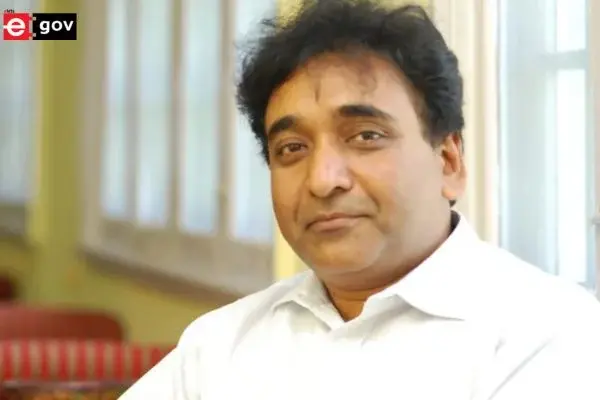
Rajesh Aggarwal named new Chief Secretary of Maharashtra
The Maharashtra government has appointed senior IAS officer Rajesh Aggarwal (1989 batch) as the state's new Chief Secretary. Aggarwal, who recently returned to the state after a central deputation, was serving as Additional Chief Secretary for administrative reforms and good governance. He is expected to get a one-year tenure. He succeeds Rajesh Kumar, whose three-month extension ends on November 30, 2025. Aggarwal holds a B.Tech in Computer Science from IIT Delhi.
Source
Maharashtra — CM & govt · read the original report ↗
Desk check · compared with the source
What the desk checked (4)
- Rajesh Aggarwal, a 1989-batch IAS officer, has been appointed Maharashtra's new Chief Secretary. — Attributed to the Government of Maharashtra in the source; no order number or official quote given.
- He is expected to receive a one-year tenure. — Framed as an expectation in the source, not a confirmed order; no source named.
- He succeeds Rajesh Kumar, whose three-month extension ends on November 30, 2025. — Dates appear in the source and are internally consistent with Kumar assuming charge on June 30.
- Aggarwal previously served as Secretary in the Department of Empowerment of Persons with Disabilities and Secretary, Skills Development and Entrepreneurship, and holds a B.Tech in Computer Science from IIT Delhi. — Biographical details appear in the source without independent attribution.
Analysts’ view opinion
A Chief Secretary appointment looks administrative on the surface, but it is a consequential political choice about who runs the state machinery. By picking Rajesh Aggarwal, an officer identified with e-governance and data-driven administration, the government appears to be signalling that administrative reform and digital service delivery will be its showcase, now under an officer with a full expected one-year tenure rather than short extensions. What political calculations sat behind the choice, however, is not set out in the story.
- With Rajesh Kumar's three-month extension ending on November 30, the government is moving from a stopgap arrangement to an officer with a fuller term.
- The expected one-year tenure signals a preference for administrative continuity and stability at the top of the bureaucracy.
- Elevating the officer handling administrative reforms and good governance is politically readable as the government foregrounding delivery and efficiency.
- His recent return from central deputation could help Delhi–Mumbai coordination, though the story offers no evidence on that point.
- Opposition parties typically probe such appointments on transparency and seniority, while governments defend them on experience — expect that familiar exchange rather than a major confrontation.
What to watch — Watch the senior-level transfers and portfolio reshuffles that follow Aggarwal taking charge, as they will reveal the government's real priorities.
The story does not establish any political deliberations, coalition consultations or rival candidates behind the appointment, and the tenure remains an expectation rather than a confirmed term.
Deep dive
Research brief · 8 facts · 4 dates · exam-readyThe brief
Context
The Chief Secretary is the senior-most civil servant in a state, heading the state administration and acting as the principal adviser to the Chief Minister and the link between the political executive and the bureaucracy. Maharashtra has appointed 1989-batch IAS officer Rajesh Aggarwal to the post. He replaces Rajesh Kumar, who had been given a three-month extension ending on November 30, 2025. Aggarwal had recently returned to the state cadre after a central deputation and was Additional Chief Secretary for administrative reforms and good governance.
Key facts
- Rajesh Aggarwal, a 1989-batch IAS officer, has been appointed Chief Secretary of Maharashtra by the state government.
- He is expected to receive a one-year tenure in the post.
- He succeeds Rajesh Kumar, whose three-month extension ends on November 30, 2025.
- Rajesh Kumar had assumed charge as Chief Secretary on June 30 after his earlier retirement date was extended.
- Before this appointment, Aggarwal was Additional Chief Secretary in charge of administrative reforms and good governance, after returning from central deputation.
- His central assignments include Secretary, Department of Empowerment of Persons with Disabilities; Secretary, Skills Development and Entrepreneurship; and Additional Secretary and Financial Advisor in the Union Ministry of Petroleum and Natural Gas.
- At the state level he has served as Principal Secretary of the Information Technology Department.
- He holds a B.Tech in Computer Science from IIT Delhi and has been associated with Aadhaar, Jan Dhan Yojana, DigiLocker and Jeevan Pramaan.
Timeline
- June 30Rajesh Kumar assumed charge as Maharashtra Chief Secretary after his retirement date was extended.
- Before the new appointmentRajesh Aggarwal returned to the Maharashtra cadre from central deputation and was posted as Additional Chief Secretary for administrative reforms and good governance.
- November 30, 2025Rajesh Kumar's three-month extension as Chief Secretary ends.
- Announced nowRajesh Aggarwal named the new Chief Secretary of Maharashtra, expected to get a one-year tenure.
Who has a stake
- Government of Maharashtra — Makes the appointment; the Chief Secretary heads its administrative machinery and drives policy implementation.
- Rajesh Aggarwal — Takes charge as the state's top bureaucrat with an expected one-year tenure.
- Rajesh Kumar (outgoing Chief Secretary) — His three-month extension as Chief Secretary ends on November 30, 2025.
- Maharashtra state bureaucracy and IAS cadre — Leadership change at the apex of the administrative hierarchy affects postings, reforms and governance priorities.
- Citizens of Maharashtra — Aggarwal's record in e-governance and digital service delivery could shape citizen service delivery in the state.
Why it matters
The Chief Secretary is the administrative head of a state government, and the choice signals the governance priorities of the political leadership. Aggarwal's background in IT, e-governance and national digital programmes such as Aadhaar, Jan Dhan Yojana, DigiLocker and Jeevan Pramaan suggests a continued push towards data-driven administration in India's most industrialised state. The transition also highlights how extensions and central deputations shape succession at the top of the IAS.
UPSC angle
Prelims pointers
- Rajesh Aggarwal (IAS, 1989 batch) is the new Chief Secretary of Maharashtra; expected tenure of one year.
- Outgoing Chief Secretary Rajesh Kumar took charge on June 30; his three-month extension ends November 30, 2025.
- Aggarwal earlier served as Secretary, Department of Empowerment of Persons with Disabilities, and Secretary, Skills Development and Entrepreneurship.
- He was Additional Secretary and Financial Advisor in the Union Ministry of Petroleum and Natural Gas, and Principal Secretary, IT Department, Maharashtra.
- He has been associated with Aadhaar, Jan Dhan Yojana, DigiLocker and Jeevan Pramaan.
- Ashish Kundra was appointed the new Chief Secretary of Ladakh (as noted in the source).
Mains framing
The appointment of a Chief Secretary is both an administrative and a political act: the office is the apex of the state's permanent executive, coordinating departments, advising the Chief Minister and steering implementation. In Maharashtra's case, the outgoing incumbent Rajesh Kumar had taken charge on June 30 after an extension of his retirement date and then received a three-month extension ending November 30, 2025 — illustrating how service extensions and central deputations complicate orderly succession planning in the IAS. The choice of Rajesh Aggarwal, a 1989-batch officer with an IIT Delhi computer science background, experience as Principal Secretary of the state IT Department, and central stints covering disability empowerment, skills development and petroleum finance, suggests an emphasis on administrative reforms, good governance and technology-enabled delivery. His association with Aadhaar, Jan Dhan Yojana, DigiLocker and Jeevan Pramaan places him within the broader trajectory of India's digital public infrastructure. The way forward, on the evidence in the source, lies in translating this e-governance and data-driven orientation into measurable improvements in citizen service delivery, while ensuring stability and predictability of tenure at the top of the state bureaucracy.
Key terms
- Chief Secretary
- The senior-most civil servant and administrative head of a state government, coordinating departments and advising the Chief Minister.
- Additional Chief Secretary
- A senior rank in the state secretariat below the Chief Secretary; Aggarwal held the administrative reforms and good governance charge.
- Central deputation
- Posting of a state-cadre IAS officer to the Union government for a period, after which the officer returns to the state cadre.
- DigiLocker
- A government digital platform for storing and sharing official documents and certificates online.
- Jeevan Pramaan
- Digital life certificate system used for pensioners to authenticate themselves electronically.
- Jan Dhan Yojana
- National financial inclusion initiative for opening bank accounts and delivering benefits, with which Aggarwal was associated.
Practice questions
- Discuss the role and functions of the Chief Secretary in state administration. How do service extensions and central deputations affect succession at the top of the civil services?
- Examine how digital public infrastructure initiatives such as Aadhaar, Jan Dhan Yojana and DigiLocker have reshaped citizen service delivery in India.
- "Administrative reforms and good governance require leadership continuity." Critically evaluate in the context of short tenures for senior bureaucrats.
Grounded only in the source report — figures and dates are the source's, not inferred.