
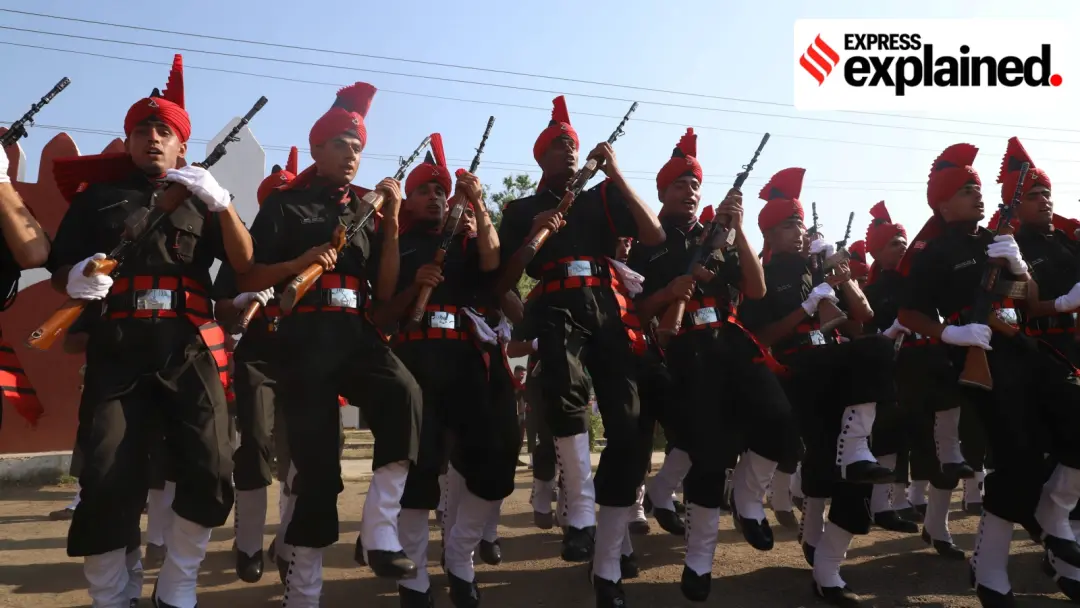
Uttarakhand sets up Agniveer Cell to aid returning personnel
Uttarakhand is setting up an Agniveer Cell, announced on July 17, to help Agniveers find work after their four-year tenure. It will map skills, identify vacancies, provide additional training and link them with employers. The first Navy and Air Force Agniveers complete service in November 2026, and the first sizeable Army batches in December 2026 and January 2027. The cell estimates about 1,200 will return in the first two Army batches. Those leaving get a Rs 11.71 lakh Seva Nidhi payout and a skill certificate.
Source
Jobs · read the original report ↗
Desk check · compared with the source
What the desk checked (5)
- Uttarakhand's Agniveer Cell was announced on July 17 to handle employment, skilling, rehabilitation and scheme access. — Date and mandate appear in source; no notifying authority named beyond the state.
- About 1,200 Uttarakhand Agniveers will return in the first two Army batches. — Attributed in source to the cell's estimate, as learnt by The Indian Express; an estimate, not final data.
- First Navy and Air Force Agniveers complete service in November 2026; first sizeable Army batches in December 2026 and January 2027. — Stated in source as 'it is learnt', without named official source; forward-looking projection.
- Agniveers leaving after four years get a tax-free Seva Nidhi payout of Rs 11.71 lakh with interest and a skill certificate; up to 25% of a batch may continue in the regular cadre. — Figures appear in source as scheme provisions; no document cited.
- Uttarakhand notified rules in September 2025 for 10% horizontal reservation for demobilised Agniveers in specified uniformed Group-C posts. — Figure and month appear in source, attributed to state rules; notification not quoted.
Analysts’ view opinion
In a state where military service runs through families, Uttarakhand's Agniveer Cell is an attempt to convert a politically sensitive question about the Agnipath scheme into an administrative answer. The timing matters: the first batches return between November 2026 and January 2027, a period that overlaps with the state's approaching electoral cycle. Building the cell on top of the 10% horizontal reservation notified in September 2025 lets the state defend the central scheme while quietly filling its gaps.
- Agnipath is a Union scheme, but the discontent of Agniveers who find no job after four years would land on the state government's doorstep — this looks like pre-emptive political risk management.
- The estimate of roughly 1,200 returnees in the first two Army batches is numerically modest, yet its resonance in hill constituencies with dense military households is disproportionately large.
- Placing a retired officer at the helm — Colonel (retd) Ajay Kothiyal, who also chairs the Ex-Servicemen Welfare Advisory Council — is a credibility play aimed squarely at military families.
- The reservation is confined to specified Group-C uniformed posts and the cell creates no vacancies of its own, so outcomes hinge on how CAPFs, PSUs and private employers respond.
- If visible placements lag when the first batches return, the gap between announcement and delivery could become a ready line of opposition attack on Agnipath itself.
What to watch — Watch whether the vacancy database is as active as the skills database, and how many of the first returning batch are actually placed — those two numbers will decide whether the cell reads as delivery or as signalling.
The story does not establish the cell's budget, staffing, statutory powers or placement targets, nor does it characterise the move as electoral or attribute gain to any party — that reading is analysis, not reporting.
Deep dive
Research brief · 8 facts · 5 dates · exam-readyThe brief
Context
The Agnipath scheme, under which Agniveers serve a four-year military engagement, will see its first cohorts demobilised from late 2026. Only up to 25% of a batch can be retained in the regular cadre; the rest leave with a Seva Nidhi payout and a skill certificate. In Uttarakhand, where military service is common among families, the state announced an Agniveer Cell on July 17 as a single state-level mechanism to map returning Agniveers' skills, identify vacancies, arrange bridge training and link them with employers. It builds on rules notified in September 2025 giving 10% horizontal reservation to demobilised Agniveers in specified uniformed Group-C posts.
Key facts
- Uttarakhand's Agniveer Cell was announced on July 17 as a dedicated state-level mechanism for Agniveers returning after their four-year engagement.
- The first Navy and Air Force Agniveers are due to complete service in November 2026.
- The first sizeable Army batches from Uttarakhand are expected to complete tenure in December 2026 and January 2027.
- The cell estimates around 1,200 Uttarakhand Agniveers will return in the first two Army batches.
- Under Agnipath, up to 25% of personnel from a batch can be selected for continued service in the regular cadre; the rest leave.
- Those leaving after four years get a one-time tax-free 'Seva Nidhi' payout of Rs 11.71 lakh, with interest, plus a skill certificate.
- Uttarakhand notified rules in September 2025 providing 10% horizontal reservation for demobilised Agniveers in direct recruitment to specified uniformed Group-C posts.
- Reserved posts include police, fire, prisons, forest, excise and Secretariat security posts, among others.
Timeline
- July 17Uttarakhand announces the Agniveer Cell to assist Agniveers returning after four years of service.
- September 2025Uttarakhand notifies rules giving 10% horizontal reservation to demobilised Agniveers in specified uniformed Group-C direct recruitment.
- November 2026First Navy and Air Force Agniveers due to complete their four-year service.
- December 2026First sizeable Army batch from Uttarakhand expected to complete tenure.
- January 2027Second Army batch from Uttarakhand expected to complete tenure.
Who has a stake
- Returning Agniveers of Uttarakhand domicile — Employment, self-employment, skill upgradation and rehabilitation after four years of service; risk of taking any available job if placement is delayed.
- Uttarakhand government / Agniveer Cell — Must build and keep current a database of Agniveers and of vacancies, and deliver the matching and training function promised.
- Colonel Ajay Kothiyal (retd), Ex-Servicemen Welfare Advisory Council — Heads the cell; describes it as a bridge between Agniveers, institutions with jobs, and the cell connecting the two.
- Employers: state departments, CAPFs, PSUs, private companies — Need to translate military trades such as logistics, communications, vehicle maintenance and security into their own job descriptions.
- Union government — Envisaged Agniveers' military training, skills and experience being used in civilian life after demobilisation.
Why it matters
The first Agnipath cohorts begin leaving the forces from November 2026, so 2026-27 is the first real test of whether the scheme's promise of civilian reabsorption works in practice. Uttarakhand, with its high density of military families, is trying an institutional answer — a single window that maps skills to vacancies and fills gaps with bridge training — which other states may be judged against.
UPSC angle
Prelims pointers
- Agnipath scheme: four-year engagement; up to 25% of a batch may be retained in the regular cadre.
- Seva Nidhi: one-time tax-free payout of Rs 11.71 lakh with interest, plus a skill certificate, for exiting Agniveers.
- Uttarakhand Agniveer Cell announced on July 17; mandate covers employment, self-employment, skill development, rehabilitation and access to government schemes.
- Uttarakhand's September 2025 rules: 10% horizontal reservation for demobilised Agniveers in specified uniformed Group-C posts.
- First Navy and Air Force Agniveers exit in November 2026; first sizeable Uttarakhand Army batches in December 2026 and January 2027.
- About 1,200 Uttarakhand Agniveers estimated to return in the first two Army batches.
Mains framing
The Agnipath scheme's design — four years of service with only up to 25% retention — creates a recurring annual outflow of young, trained personnel into the civilian labour market, and the first such outflow begins in November 2026. The central problem is not merely jobs but translation: an Agniveer experienced in logistics, communications, vehicle maintenance, security or engineering support may have substantial practical skill that a private company's or civilian recruitment system's job descriptions do not automatically recognise. Uttarakhand's response has two layers: a statutory entitlement (10% horizontal reservation in specified uniformed Group-C posts, notified September 2025) and an intermediary institution (the Agniveer Cell, announced July 17) that maintains a consolidated database of domiciled Agniveers — qualifications, force and unit, dates of recruitment and completion, technical skills, post-service status, entrepreneurial interest — and maps it against vacancies, pay and eligibility in state departments, CAPFs, PSUs and private firms, with skills-gap analysis and bridge training where certification is missing. The source identifies two risks: delay, which could breed dissatisfaction and push Agniveers into whatever work appears; and scale, since an Agniveer database is useful only if the vacancy database is equally live. The way forward implied is continuous employer engagement, job-specific short courses tied to actual vacancies, and handholding on schemes, financing and banking for those choosing self-employment.
Key terms
- Agnipath scheme
- Recruitment model under which Agniveers serve four years, with up to 25% of a batch selected for continued service in the regular cadre.
- Seva Nidhi
- One-time tax-free payout of Rs 11.71 lakh with interest given to an Agniveer on completing four years and leaving the forces.
- Agniveer Cell (Uttarakhand)
- State-level single-window mechanism for employment, self-employment, skill development, rehabilitation and scheme access for returning Agniveers.
- Horizontal reservation
- Here, a 10% quota for demobilised Agniveers cutting across specified uniformed Group-C direct recruitments in Uttarakhand.
- Bridge training
- Short courses or refresher training arranged by the cell when an Agniveer lacks a specific certification or skill an employer requires.
- CAPFs
- Central Armed Police Forces, among the employer categories the cell must track for vacancies and eligibility criteria.
Practice questions
- Examine the challenges of reabsorbing demobilised Agniveers into the civilian workforce. How far can state-level mechanisms such as Uttarakhand's Agniveer Cell address them?
- Distinguish between reservation-based entitlements and institutional facilitation in employment policy, using Uttarakhand's 10% Group-C quota and its Agniveer Cell as illustrations.
- 'A skills database is only as useful as the vacancy database it is matched against.' Discuss with reference to skill-mapping initiatives for ex-servicemen and Agniveers.
Grounded only in the source report — figures and dates are the source's, not inferred.