
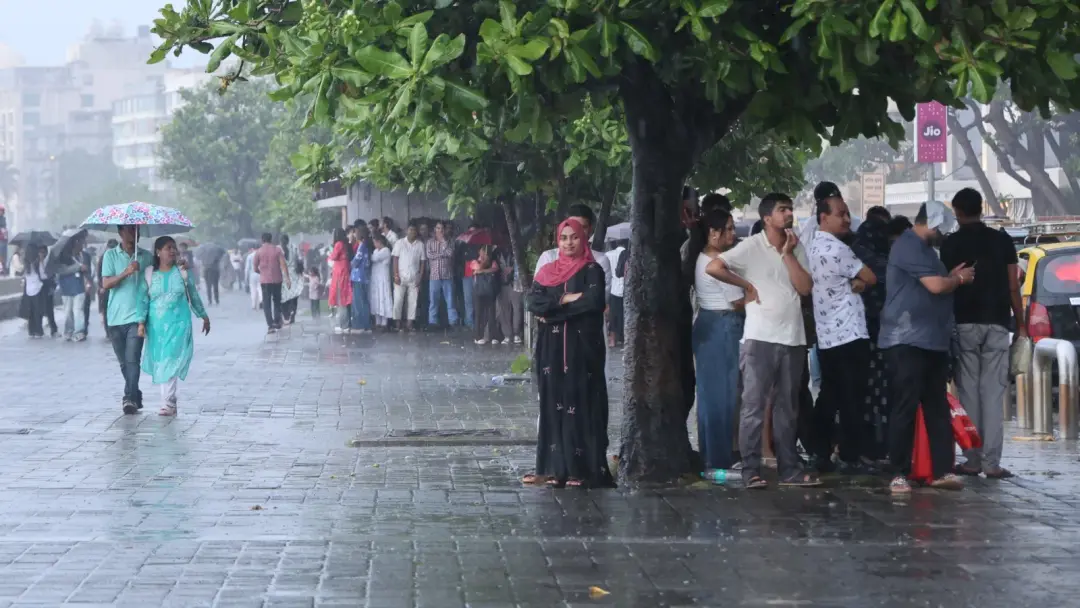
Mumbai suburbs cross annual monsoon rainfall quota, says IMD
Mumbai's suburbs recorded 2,442.6 mm of rain from the onset of the southwest monsoon in June until Tuesday morning, September 15, IMD data shows. The Santacruz observatory, which averages 2,389 mm over June-September, is running a 2 percent surplus. The Colaba station has logged only 1,896 mm against its 2,103 mm average. Mumbai saw deficits in June and August but over 1,000 mm in a week in July. Seven lakes are at 97.94 percent capacity.
Source
Indian Express — Cities · read the original report ↗
Desk check · compared with the source
What the desk checked (5)
- Mumbai suburbs recorded 2,442.6 mm of rain from June to Tuesday morning, September 15. — Figure appears in source and is attributed to IMD data for the Santacruz observatory.
- Santacruz averages 2,389 mm and Colaba 2,103 mm during June-September. — Attributed to IMD climatological records in the source.
- Colaba observatory recorded only 1,896 mm in the same period. — Figure appears in source, attributed to IMD data.
- Seven lakes stock touched 97.94 percent of capacity, accounting for 14.71 lakh litres. — Figure appears in source without a named agency; the unit stated for lake stock is unusual and may need editorial checking.
- The extended dry spell was due to the El Nino system; no more heavy spells expected, with light to moderate showers until the weekend. — Attributed generally to meteorologists and IMD forecast, no individual official named.
Analysts’ view opinion
వర్షపాత గణాంకాలు వాతావరణ వార్తగా కనిపించినా, ముంబైలో ఇది ఎప్పుడూ రాజకీయ అంశమే — నీటి నిల్వ, డ్రైనేజీ, జలమయమైన రోడ్లు నేరుగా బీఎంసీ పాలనా పనితీరుపై ముద్ర వేస్తాయి. ఏడు సరస్సుల్లో నిల్వ 97.94 శాతానికి చేరడం అధికారంలో ఉన్నవారికి తక్షణ ఉపశమనం; నీటి కోతల భయం తగ్గడం అంటే వేసవి వరకు ఒక సున్నితమైన రాజకీయ సమస్య తొలగినట్టే. కానీ శివారు ప్రాంతాలు కోటా దాటినా కొలాబా (ద్వీప నగరం) లోటులో ఉండడం, జూలైలో వారం రోజుల్లో 1,000 మి.మీ. కురవడం — ఈ అసమానతలే ప్రతిపక్షాలకు "అసమాన సన్నద్ధత, అసమాన పరిహారం" అనే విమర్శకు ఆధారం ఇస్తాయి.
- నీటి నిల్వ దాదాపు నిండడం పాలకపక్షానికి కలిసొచ్చే అంశం — నీటి కోతలు అనేవి ముంబైలో అత్యంత ప్రత్యక్ష రాజకీయ ఒత్తిడి కలిగించే విషయం.
- సగటు దాటిన మొత్తం వర్షపాతం, పంపిణీ సమస్యలను కప్పిపుచ్చుతుంది: జూన్లో 25 శాతం లోటు, ఆగస్టులో సగటులో 57 శాతమే — ఈ ఒడిదొడుకులు ప్రణాళికకు సవాలు.
- జూలైలో వారం రోజుల్లోనే 1,000 మి.మీ. కురిసిన తీరు, డ్రైనేజీ, నాలాల పనుల నాణ్యతపై చర్చను తప్పకుండా తిరిగి తెరపైకి తెస్తుంది.
- శివారు ప్రాంతాలు అధికం, కొలాబా లోటు — ఈ ప్రాంతీయ తేడా వార్డుల స్థాయి రాజకీయాల్లో వనరుల కేటాయింపు వాదనగా మారే అవకాశం ఉంది.
- బీఎంసీ ఎన్నికల నేపథ్యంలో ఇలాంటి గణాంకాలు రెండు వర్గాలకూ ఉపయోగపడతాయి — పాలకులు నిల్వను, ప్రతిపక్షం జలమయ దృశ్యాలను ముందుకు తెస్తాయి.
What to watch — అక్టోబర్లో రుతుపవనాలు ఉపసంహరించిన తర్వాత నీటి సరఫరా కోతలపై బీఎంసీ ఎలాంటి ప్రకటన చేస్తుందో, ఈ సీజన్లో ముంపు నివారణ పనులపై ఏ స్థాయిలో రాజకీయ ఆరోపణలు–ప్రత్యారోపణలు జరుగుతాయో గమనించాలి.
ఈ కథనం వర్షపాతం, సరస్సుల నిల్వ గణాంకాలను మాత్రమే తెలియజేస్తుంది — ఏ పార్టీ లేదా నేత స్పందన, బీఎంసీ ఎన్నికల షెడ్యూల్, నీటి కోతలపై నిర్ణయం, లేదా ఏదైనా రాజకీయ వివాదం దీనిలో నిర్ధారించబడలేదు.
Deep dive
Research brief · 8 facts · 8 dates · exam-readyThe brief
Context
Mumbai receives virtually all of its annual rainfall during the June-September southwest monsoon, measured mainly at two IMD stations — Santacruz for the suburbs and Colaba for the island city. This year the season began with an extended dry spell linked to El Niño, producing deficits in June and August, offset by extremely heavy rain in July. By the morning of Tuesday, September 15, the suburbs had crossed their full seasonal average, even though the monsoon season had not yet ended.
Key facts
- Mumbai's suburbs recorded 2,442.6 mm of rain from the monsoon onset in June until the morning of Tuesday, September 15.
- IMD's Santacruz observatory has a June-September average of 2,389 mm; it is now running a 2 percent surplus.
- The Colaba coastal station in the island city division has logged only 1,896 mm against its seasonal average of 2,103 mm.
- In June, Mumbai received only 414 mm of rain — a 25 percent deficit against the month's average.
- In August, the city recorded only 57 percent of the month's seasonal average rainfall.
- In July, both suburban and island city stations registered over 1,000 mm of rainfall in a single week.
- Pockets of the city received over 100 mm of rainfall between Sunday and Monday morning as showers returned.
- Stock in the seven lakes supplying the city touched 97.94 percent of total capacity on Tuesday morning, accounting for 14.71 lakh litres.
Timeline
- June (monsoon onset)Mumbai records only 414 mm of rain, a 25 percent deficit; an extended dry spell is attributed to the El Niño system.
- JulySuburban and island city stations register over 1,000 mm of rainfall within a week.
- AugustCity records only 57 percent of the month's seasonal average rainfall.
- Last year (2022 season, per source: 'last year')Mumbai had surpassed its annual average rainfall quota by August.
- Sunday to Monday morning (mid-September)Moderate rain returns; pockets of the city receive over 100 mm.
- Tuesday morning, September 15Suburbs cross seasonal quota at 2,442.6 mm; seven lakes at 97.94 percent capacity.
- Until the weekendIMD forecasts light to moderate showers; no more heavy spells expected.
- OctoberMonsoon is expected to finally retreat.
Who has a stake
- India Meteorological Department (IMD) — Maintains the Santacruz and Colaba observatories, climatological averages and rainfall forecasts on which the city's monsoon assessment rests.
- Mumbai's suburbs (Santacruz division) — Have already crossed the full seasonal average with a 2 percent surplus before the season's end.
- Island city division (Colaba) — Still lagging at 1,896 mm against a 2,103 mm average, showing intra-city rainfall disparity.
- Mumbai's residents and water supply system — The seven lakes at 97.94 percent capacity determine drinking water availability for the year ahead.
- Maharashtra and civic administration — Must manage flood risk from intense spells and water supply planning through the non-monsoon months.
Why it matters
Mumbai's annual water security depends almost entirely on four monsoon months, so the seven lakes reaching 97.94 percent capacity matters as much as the rainfall total itself. The season also shows how a headline surplus can conceal sharp variability — deficits in June and August, over 1,000 mm in a week in July, and the island city still short of its average.
UPSC angle
Prelims pointers
- IMD's Santacruz observatory represents Mumbai's suburbs (June-September average 2,389 mm); Colaba represents the island city (2,103 mm).
- Suburbs recorded 2,442.6 mm from June to September 15, a 2 percent surplus; Colaba stood at 1,896 mm.
- Mumbai's June rainfall was 414 mm, a 25 percent deficit; August saw only 57 percent of the monthly average.
- El Niño is known to affect the southwest monsoon and was linked to this season's extended dry spell.
- Seven lakes supplying Mumbai were at 97.94 percent capacity (14.71 lakh litres) on September 15.
- The southwest monsoon covers June to September and was expected to retreat in October.
Mains framing
Mumbai's 2023 monsoon illustrates the growing gap between seasonal totals and rainfall reliability. Although the suburban Santacruz station crossed its 2,389 mm seasonal average with a 2 percent surplus by September 15, the season was marked by an El Niño-linked extended dry spell, a 25 percent June deficit, an August that yielded just 57 percent of normal, and a single July week in which both divisions received over 1,000 mm. The Colaba station, at 1,896 mm against a 2,103 mm average, shows that even within one metropolis rainfall distribution is uneven, which complicates both flood management and water accounting. The concentration of rain into short, intense bursts strains urban drainage and civic crisis response, while the lakes finally filling to 97.94 percent capacity underlines how narrowly the city's water security depends on a few heavy spells. The way forward, on the evidence available here, lies in reading monsoon performance through distribution and intensity rather than end-of-season surplus, and in planning drainage, reservoir and water-supply decisions around that variability; specific policy measures are not stated in the source.
Key terms
- Southwest monsoon
- The June-September rain-bearing season during which Mumbai receives its entire annual rainfall quota.
- Santacruz observatory
- IMD station representing Mumbai's suburbs, with a June-September climatological average of 2,389 mm.
- Colaba observatory
- IMD's coastal station for the island city division, with a seasonal average of 2,103 mm.
- El Niño
- A climate system known to affect the southwest monsoon; blamed for this season's extended dry spell over Mumbai.
- Seasonal average quota
- The long-period climatological rainfall a station normally records over June-September, used to judge surplus or deficit.
- Seven lakes
- The reservoirs supplying Mumbai's water, at 97.94 percent of total capacity or 14.71 lakh litres on September 15.
Practice questions
- Mumbai's suburbs crossed their seasonal rainfall average even as the island city remained in deficit. Discuss what such intra-city variation implies for urban flood and water management.
- Examine how El Niño influences the Indian southwest monsoon, using the 2023 Mumbai season as an illustration of dry spells followed by intense bursts of rain.
- 'A seasonal surplus is not the same as a good monsoon.' Critically analyse this statement with reference to the month-wise rainfall distribution recorded in Mumbai.
Grounded only in the source report — figures and dates are the source's, not inferred.