
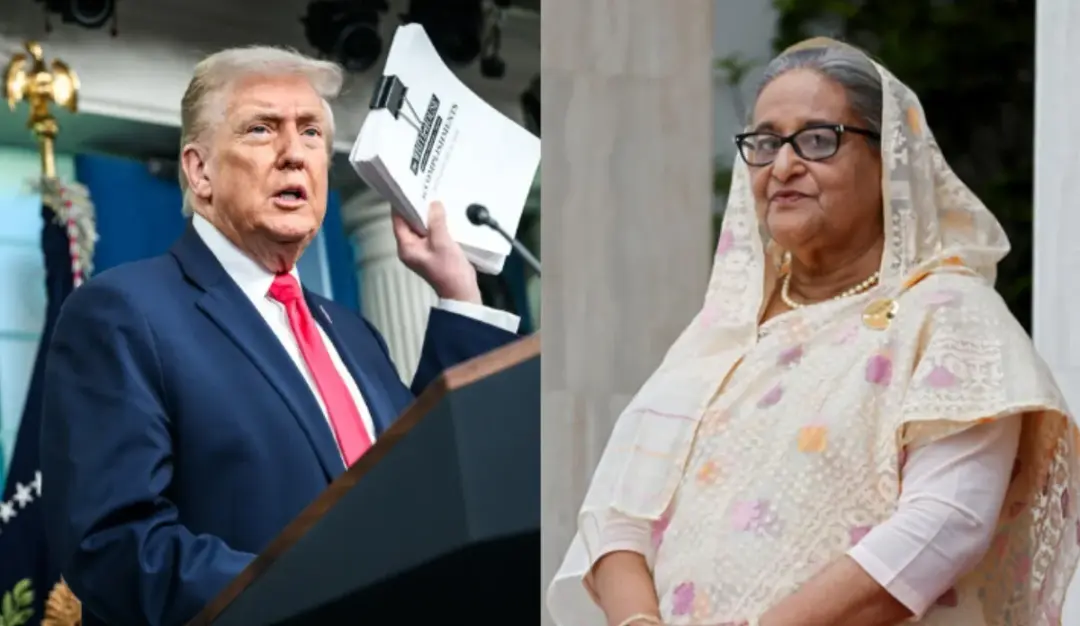
US declines to intervene in Sheikh Hasina case, says officials
US State Department officials said Washington has no intention of intervening in the Sheikh Hasina matter, adding that India and Bangladesh should resolve it between themselves. The issue was discussed during UNGA meetings in New York. Hasina has been living in Delhi since 5 August 2024 after leaving Bangladesh following a student movement. She was tried for crimes against humanity and sentenced to death, and the Awami League was banned. Dhaka is seeking her extradition.
Source
Politics · read the original report ↗
Desk check · some claims need care
What the desk checked (5)
- US State Department officials said they have no intention of intervening in the Sheikh Hasina matter — Attributed to unnamed US State Department officials; no document or named spokesperson cited.
- Sheikh Hasina has been living in Delhi since 5 August 2024 after leaving Bangladesh following a student movement — Date and circumstance appear in source; no official source cited for them.
- Hasina was tried for crimes against humanity and sentenced to death in Bangladesh, and the Awami League has been banned — Stated in source without attribution to court or government order; significant claim requiring editorial verification.
- Bangladesh's government is seeking Hasina's extradition from India — Stated in source, but the source inconsistently names the government as 'Tanzim Rahman' in one place and 'BNP' in another; internal inconsistency.
- US official said, 'We hope both countries will discuss and reach a solution' and declined to comment on Bangladesh's domestic politics — Direct quotes attributed to an unnamed US official; speaker not identified.
Analysts’ view opinion
Washington's "we don't intend to intervene" is not neutrality — it is a strategic choice. By framing the Sheikh Hasina question as a bilateral India–Bangladesh matter, the US avoids antagonising the current government in Dhaka while also avoiding a clash with Delhi. But that vacuum is precisely where pressure between India and Bangladesh can build, because handing over a former prime minister under a death sentence is a near-impossible option for Delhi, politically and strategically.
- The non-intervention line signals US willingness to do business with the present dispensation in Dhaka.
- Calling the Awami League ban an internal matter invites criticism that Washington applies democracy standards selectively.
- India is boxed in: extraditing someone it has sheltered would damage its credibility, refusing would further sour ties with Dhaka.
- With no external mediator, the dispute could spill into other bilateral tracks such as border management, security cooperation and trade.
- A hands-off West also leaves room for other regional powers to expand influence in Dhaka.
What to watch — Watch whether Delhi responds formally to the extradition demand and whether the issue is channelled into a structured bilateral dialogue.
The story does not establish which side the US privately favours, what India will decide on extradition, or what talks, if any, are under way between Delhi and Dhaka.
Deep dive
Research brief · 8 facts · 4 dates · exam-readyThe brief
Context
Former Bangladesh Prime Minister Sheikh Hasina has been living in Delhi since 5 August 2024, after she left Bangladesh in the wake of a student movement. In Bangladesh she was tried for crimes against humanity and sentenced to death, and her party, the Awami League, has been banned. Dhaka is now demanding her extradition from India, and the issue came up during UNGA meetings in New York, where US State Department officials said Washington does not intend to intervene and that India and Bangladesh should settle it between themselves.
Key facts
- US State Department officials said last week that Washington has no intention of intervening in the Sheikh Hasina matter.
- US officials said India and Bangladesh should resolve the Sheikh Hasina issue between themselves; the matter was discussed during UNGA meetings in New York.
- Sheikh Hasina has been living in Delhi since 5 August 2024, having left Bangladesh after a student movement.
- Hasina was tried for crimes against humanity and sentenced to death in Bangladesh.
- Her party, the Awami League, has been banned in Bangladesh.
- The Bangladesh government named in the source as the Tanzim Rahman government is demanding that India hand over Sheikh Hasina.
- A US official said: 'We hope both countries will reach a solution through discussion among themselves.'
- On the ban on Awami League activities, a US official called it Bangladesh's internal matter, saying: 'I do not want to comment in any way on Bangladesh's domestic politics.'
Timeline
- 5 August 2024Sheikh Hasina leaves Bangladesh after a student movement and begins living in Delhi.
- After she left (date not stated in the source)Hasina is tried for crimes against humanity and sentenced to death in Bangladesh; the Awami League is banned.
- During UNGA meetings in New York (exact dates not stated in the source)The Sheikh Hasina issue is discussed; US officials signal non-intervention.
- Last week (as per the source)US State Department officials publicly state they have no intention of intervening in the matter.
Who has a stake
- Sheikh Hasina — Former Bangladesh PM living in Delhi since 5 August 2024; faces a death sentence after conviction for crimes against humanity and Dhaka's extradition demand.
- Government of India — Hosting Hasina in Delhi while under pressure from Dhaka to hand her over; must manage rising tension with Bangladesh.
- Bangladesh government (Tanzim Rahman government, described in the source as the BNP government) — Seeking Hasina's extradition from India and having banned the Awami League.
- United States State Department — Chose neutrality, calling the Awami League ban an internal matter, apparently to keep good relations with the current Bangladesh government.
- Awami League and its supporters — Party banned; supporters disappointed at US silence and waiting for restoration of the party's political activities.
Why it matters
Hasina's presence in Delhi and Dhaka's extradition demand are becoming a major irritant in India-Bangladesh relations, and US neutrality removes any external mediating pressure. Washington's refusal to comment on the Awami League ban, while it routinely speaks of democracy globally, raises questions about consistency and signals its interest in working with the current government in Dhaka.
UPSC angle
Prelims pointers
- Sheikh Hasina, former Prime Minister of Bangladesh, has been in Delhi since 5 August 2024.
- She was tried for crimes against humanity and sentenced to death in Bangladesh; the Awami League stands banned.
- UNGA (UN General Assembly) meetings in New York were the venue where the issue was discussed.
- The US State Department described the ban on Awami League activities as Bangladesh's internal matter.
- Bangladesh is seeking Hasina's extradition from India; the US says the two countries should resolve it bilaterally.
Mains framing
The Sheikh Hasina extradition demand illustrates how domestic political rupture in a neighbouring state can quickly become a bilateral and diplomatic problem for India. After leaving Bangladesh on 5 August 2024 following a student movement, Hasina has lived in Delhi; her conviction for crimes against humanity, the death sentence and the ban on the Awami League have given Dhaka a legal basis to press for her return, while India must weigh legal obligations, humanitarian considerations and its long-standing relationship with Bangladesh. The United States, by stating it has no intention of intervening and by declining to comment on the Awami League ban as an internal matter, has effectively left the two neighbours to negotiate alone, which the source suggests may deepen rather than ease tension. The way forward, as the source indicates, lies in direct India-Bangladesh dialogue toward a mutually acceptable solution; a durable settlement would also require clarity on the status of banned political activity in Bangladesh, since disenfranchised Awami League supporters remain a source of instability.
Key terms
- UNGA
- United Nations General Assembly; its meetings in New York were where the Hasina issue was discussed.
- Extradition
- The formal handing over of a person by one country to another for trial or punishment; Dhaka seeks Hasina's handover from India.
- Crimes against humanity
- The category of charge under which Sheikh Hasina was tried in Bangladesh, leading to a death sentence.
- Awami League
- Sheikh Hasina's political party, whose activities have been banned in Bangladesh.
- US State Department
- The United States' foreign affairs ministry, whose officials stated they would not intervene in the Hasina matter.
- BNP government
- The current government in Dhaka as described in the source, with which Washington appears keen to maintain good relations.
Practice questions
- Discuss how the Sheikh Hasina extradition demand tests India's neighbourhood diplomacy and its handling of political asylum-like situations.
- Examine the implications of US non-intervention in the India-Bangladesh dispute over Sheikh Hasina for regional stability in South Asia.
- 'Selective silence weakens democracy promotion.' Critically evaluate this in light of the US refusal to comment on the ban on the Awami League.
Grounded only in the source report — figures and dates are the source's, not inferred.