
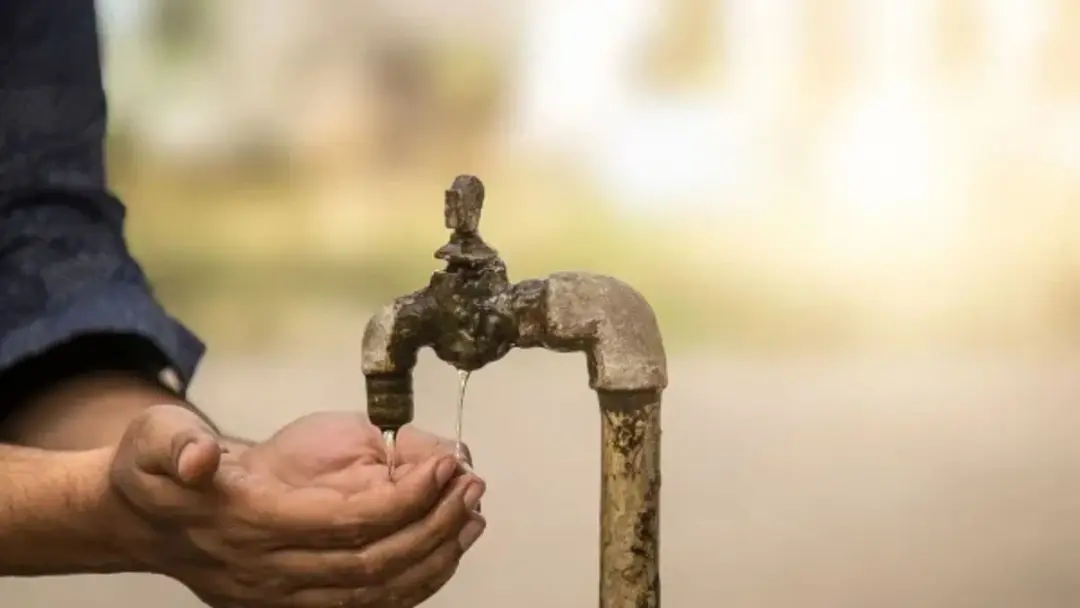
50 of 2,132 water samples unfit in Pune railway division drive
The Pune division of Central Railway tested 2,132 drinking water samples in August and September under a special drive launched after Comptroller and Auditor General observations on station sanitation and passenger amenities. Of these, 50 were found unfit, and were declared fit after corrective measures and retesting, a release issued Tuesday said. The drive covered 1,401 locations, 1,382 tanks were cleaned and seven pipeline leakages were rectified.
Source
Indian Express — Cities · read the original report ↗
Desk check · compared with the source
What the desk checked (5)
- Pune division of Central Railway tested 2,132 drinking water samples in August and September, of which 50 were unfit. — Figures appear in source, attributed to the Pune Railway Division press release issued Tuesday.
- After corrective measures and retesting, no bacterial or E. coli contamination was detected. — Attributed to the division; no independent lab data cited in source.
- The drive covered 1,401 locations and 1,382 water tanks, all of which were cleaned. — Figures appear in source, attributed to the division.
- Seven pipeline leakages were recorded and all were rectified with no work pending. — Attributed to the division; internally consistent.
- A 'tank to tap' filtration and monitoring system is proposed at about 20,000 locations network-wide. — Presented as part of a Railway Board exercise; no specific document or official named in source.
Analysts’ view opinion
On paper this is an administrative press note; politically it is an attempt to get ahead of an audit narrative. With the CAG's observations on sanitation and passenger amenities already before a parliamentary panel, a division-level release full of numbers — issued on Railway Board directives — functions as pre-emptive defence. The headline figure, 50 unfit samples out of 2,132, is the kind of number the government side can present as transparency and critics can present as proof of neglect.
- The release itself stresses that the CAG audit flagged no station in this division specifically on drinking water quality — language designed to blunt blame before it lands.
- Every problem is closed out in the same breath ('retested and found fit', 'all seven leakages rectified, nothing pending'), a communication design that leaves critics little open ground.
- The fact that this flows from Railway Board directives and a network-wide 'tank to tap' proposal at around 20,000 locations shows this is a centralised political-administrative response, not a local Pune initiative.
- Drinking water and station cleanliness are issues urban voters experience directly, so such statistical releases double as ready-made answers for local representatives' questions.
- Opponents are unlikely to accept roughly 2.3% unfit samples as trivial; the argument that the lapse surfaced only because testing happened is their strongest line.
What to watch — With the parliamentary panel seeking the railways' response, watch whether other divisions issue similar number-led statements and whether funding and timelines for the 'tank to tap' rollout are announced.
The story establishes no political party reaction, no named leader's comment and no electoral motive behind the release — this reading rests only on what the official statement contains.
Deep dive
Research brief · 8 facts · 3 dates · exam-readyThe brief
Context
The Comptroller and Auditor General (CAG) examined sanitation facilities and passenger amenities at railway stations and flagged deficiencies. Acting on the CAG observations and subsequent Railway Board directives, the Pune division of Central Railway ran a special drive in August and September to inspect and test drinking water installations at stations, railway colonies and workplaces. A press release issued by the division on Tuesday reported the results: 2,132 samples tested, 50 initially found unfit, and corrective action taken. The division clarified that the CAG audit had not specifically flagged any Pune division station over drinking water quality.
Key facts
- Pune division of Central Railway tested 2,132 drinking water samples in August and September 2025 under the special drive.
- Of the 2,132 samples, 50 were found unfit; after corrective measures and retesting they were found fit.
- The drive covered 1,401 locations including water sources, filtration plants, underground, overhead and PVC tanks, water booths, taps and dispensing points.
- All 1,382 water tanks on platforms, station premises, railway colonies and office premises were cleaned during the inspection period.
- Seven cases of pipeline leakages were recorded and all seven were rectified, with no work pending.
- Samples underwent physical, chemical and bacteriological testing; after corrective action and retesting, no bacterial or E. coli contamination was detected.
- E. coli testing kits have been provided at the offices of the concerned Inspectors of Works (IOWs).
- The Railway Board proposes a 'tank to tap' filtration and monitoring system at around 20,000 locations across the railway network.
Timeline
- Before the drive (date not stated in the source)CAG report makes observations on sanitation facilities and passenger amenities at railway stations; Railway Board issues directives.
- August and SeptemberPune division conducts special drive: 1,401 locations inspected, 1,382 tanks cleaned, 2,132 water samples tested, seven pipeline leakages rectified.
- Tuesday (date not stated in the source)Pune Railway Division issues press release with the drive's findings, including 50 unfit samples later declared fit.
Who has a stake
- Rail passengers at Pune division stations — Safety and quality of drinking water at platforms, water booths, taps and dispensing points.
- Pune division, Central Railway — Must implement uniform testing and maintenance of drinking-water installations and show compliance with monitoring protocol.
- Railway Board — Driving the network-wide response to CAG observations, including 'tank to tap' monitoring at about 20,000 locations.
- Comptroller and Auditor General (CAG) — Its audit observations on station sanitation and passenger amenities triggered the inspection drive.
- Inspectors of Works (IOWs) and field units — Given E. coli testing kits and instructed to keep a regular schedule for water-quality testing and tank cleaning.
- Residents of railway colonies and railway employees — Drinking water installations at colonies and workplaces were also brought under the testing and cleaning exercise.
- Parliamentary panel — Has sought the railways' response on the CAG report flagging deficient passenger amenities.
Why it matters
Drinking water at railway stations is a basic public health amenity used by lakhs of travellers, and bacteriological contamination carries direct disease risk. The Pune division numbers show how an audit observation translated into measurable field action — 1,382 tanks cleaned, seven leakages fixed and 50 unfit samples corrected. It also illustrates the accountability chain from CAG audit to Railway Board directive to divisional compliance and parliamentary scrutiny.
UPSC angle
Prelims pointers
- CAG is the constitutional auditor whose report on station sanitation and passenger amenities triggered the railway drive.
- Pune division, Central Railway tested 2,132 water samples in August-September; 50 were initially unfit.
- Drive coverage: 1,401 locations inspected, 1,382 tanks cleaned, 7 pipeline leakages rectified.
- Water samples were tested on physical, chemical and bacteriological parameters; E. coli is the key contamination indicator.
- Railway Board proposes a 'tank to tap' filtration and monitoring system at about 20,000 locations network-wide.
- A Parliamentary panel has sought the railways' response on the CAG report on deficient passenger amenities.
Mains framing
The Pune division exercise is a case study in how external audit can drive service delivery in a large public utility. CAG observations on station sanitation and passenger amenities prompted Railway Board directives, which the division operationalised as a time-bound drive across 1,401 locations covering sources, filtration plants, tanks, booths and taps — testing 2,132 samples physically, chemically and bacteriologically, cleaning 1,382 tanks and rectifying seven pipeline leakages. That 50 samples initially failed, even though the audit had not specifically flagged the division on water quality, suggests routine maintenance gaps rather than isolated failures: leaking or missing taps, accumulated silt and ageing storage. The response points to the way forward the railways itself has outlined — a "tank to tap" filtration and monitoring system at around 20,000 locations, phased replacement of worn-out tanks, testing at source and outlet points, centralised monitoring, scheduled cleaning, and decentralised capacity such as E. coli kits with Inspectors of Works. The larger challenge is institutionalising periodicity and transparency so that compliance survives beyond an audit-triggered campaign, with published results and parliamentary follow-up as the enforcement backstop.
Key terms
- Comptroller and Auditor General (CAG)
- India's supreme audit institution; its report on station sanitation and passenger amenities prompted this drive.
- Railway Board
- Apex decision-making body of Indian Railways that issued directives for comprehensive drinking-water inspections.
- 'Tank to tap' system
- Proposed filtration and monitoring arrangement covering water from storage tanks to delivery points at about 20,000 railway locations.
- E. coli
- Bacterium used as an indicator of faecal contamination in drinking water; testing kits given to Inspectors of Works.
- Inspector of Works (IOW)
- Railway field-level engineering official responsible for maintenance of works, now equipped with E. coli testing kits.
- Bacteriological testing
- Examination of water for microbial contamination, done alongside physical and chemical tests on the 2,132 samples.
Practice questions
- Audit institutions can improve public service delivery only if their observations trigger verifiable field action. Examine with reference to the CAG observations on railway passenger amenities and the Pune division's drinking water drive.
- Discuss the institutional mechanisms available in India for ensuring drinking water quality in public transport facilities, and the challenges in sustaining them beyond campaign-mode drives.
- What is the role of the Comptroller and Auditor General and parliamentary committees in enforcing accountability in large public utilities such as Indian Railways?
Grounded only in the source report — figures and dates are the source's, not inferred.