
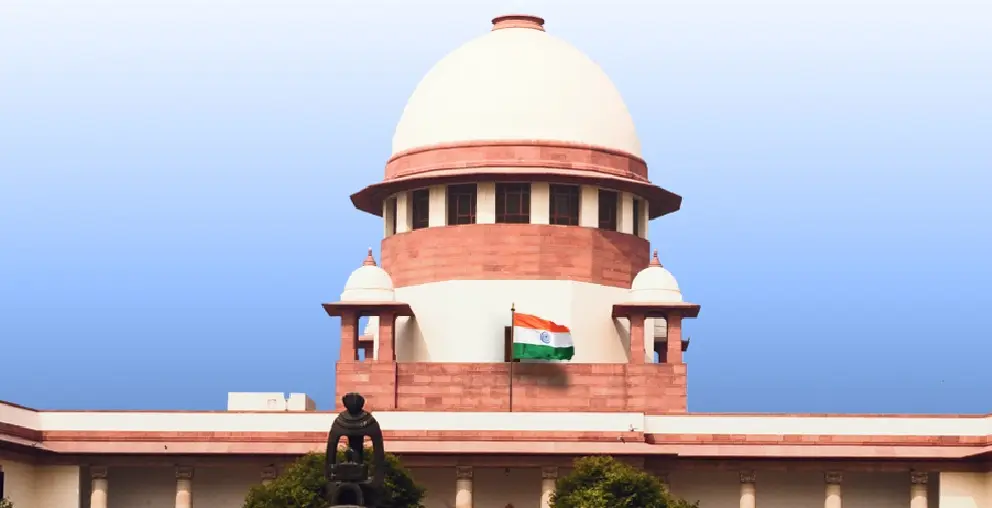
Supreme Court asks EC for timeline on TMC name, symbol dispute
The Supreme Court on Thursday asked the Election Commission to indicate the time frame within which it could finally decide the dispute between two rival All India Trinamul Congress factions over the party's name and 'flowers and grass' symbol. A bench of CJI Surya Kant and Justices Joymalya Bagchi and V. Mohana heard Mamata Banerjee's plea, and, citing delays in the Shiv Sena case, said the matter should be decided expeditiously. On September 17, the EC barred both factions from using the name and symbol, allotting temporary ones. Hearing: September 28.
Source
Deccan Chronicle · read the original report ↗
Desk check · compared with the source
What the desk checked (5)
- The Supreme Court asked the Election Commission to indicate a time frame to finally decide the TMC name and symbol dispute. — Attributed in source to a three-judge bench headed by CJI Surya Kant; direct quote from the CJI included.
- Mamata Banerjee, described as former West Bengal chief minister, has challenged the EC's freeze on the TMC name and symbol. — As stated in source; the designation 'former chief minister' appears in the source text and is reproduced without independent checking.
- On September 17, the EC barred both factions from using the TMC name and 'flowers and grass' symbol and allotted temporary names and symbols. — Date and action appear in the source; no EC order number or spokesperson cited.
- Kapil Sibal sought adjudication by October citing forthcoming West Bengal local body elections; the rival faction called that too short. — Attributed to named senior counsel for both sides in the source.
- The matter was posted for hearing on September 28. — Figure appears in source as the court's listing date.
Analysts’ view opinion
A frozen name and symbol is not a legal inconvenience for a party like the TMC — it is a direct hit on the currency of recognition that mass parties trade in at the booth. Mamata Banerjee's push for an October deadline and the rival faction's plea for more time reveal the real contest: whoever inherits the 'flowers and grass' symbol before West Bengal's local body polls holds a structural advantage, and whoever is denied it must rebuild identity from scratch. The Supreme Court's invocation of the Shiv Sena delays signals judicial impatience with drift, but the bench has also declined to disturb the interim arrangement for already-notified byelections — a split that suits neither side fully.
- Symbol disputes are decided by the Election Commission but felt at the ballot; a temporary symbol forces any faction to spend its campaign explaining itself rather than attacking opponents.
- Kapil Sibal's argument on the timing of the interim order is as much political framing as legal — it casts the freeze as coming mid-process, an argument that plays to a wider audience beyond the courtroom.
- The rival faction's resistance to an October deadline suggests it benefits from a longer contest, during which the original party identity stays neutralised for everyone.
- The bench's Shiv Sena reference is significant context: that case became a cautionary example of how prolonged adjudication can settle a political question by default rather than by decision.
- For the EC, the pressure now runs both ways — move too fast and it invites claims of denying a fair hearing; move too slowly and it faces the charge of letting delay do the deciding.
What to watch — Watch the September 28 hearing for the time frame the Election Commission proposes, and whether it lands before or after West Bengal's local body elections — that single date will shape the political ground more than any interim order.
The story does not establish the merits of either faction's claim, why the split occurred, the relative strength of the two camps, or any dates for the West Bengal local body polls — and the court has expressed no view on who should ultimately get the name and symbol.
Deep dive
Research brief · 8 facts · 3 dates · exam-readyThe brief
Context
The All India Trinamul Congress has split into two rival factions, each claiming the party's name and its "flowers and grass" election symbol. On September 17, the Election Commission froze the name and symbol for the forthcoming elections and gave both groups temporary names and symbols pending final adjudication. Former West Bengal chief minister Mamata Banerjee challenged that freeze in the Supreme Court, which on Thursday asked the EC to state how long it would take to finally decide the dispute.
Key facts
- A three-judge Supreme Court bench of CJI Surya Kant and Justices Joymalya Bagchi and V. Mohana heard Mamata Banerjee's plea against the EC's freeze order.
- On September 17, the EC barred both TMC factions from using the party name and the 'flowers and grass' symbol for forthcoming elections, allotting temporary names and symbols.
- The court asked senior advocate D.S. Naidu, for the EC, to ascertain a 'reasonable' time frame for final adjudication.
- The CJI said: 'Find out, for final adjudication, how much time are you expected to take?... Reasonable time in which parties are given fair opportunity and you have time to apply your mind... But not too long.'
- The bench referred to delays in deciding the Shiv Sena dispute and said the TMC matter should be decided expeditiously.
- Senior advocate Kapil Sibal, for Banerjee, questioned the timing of the EC's interim order, saying it came after the byelection process had begun.
- Justice Bagchi observed that the election schedule was already notified and the interim arrangement for the notified byelections could not be disturbed at this stage.
- Sibal sought adjudication in October in view of forthcoming local body elections in West Bengal; the rival faction's counsel said October would be too short given the factual issues.
Timeline
- September 17The EC barred both TMC factions from using the party name and 'flowers and grass' symbol, allotting temporary names and symbols pending final adjudication.
- Thursday (date of hearing, as reported)Supreme Court bench asked the EC to indicate a reasonable time frame for finally deciding the dispute; noted delays in the Shiv Sena case.
- September 28Matter posted for the next hearing in the Supreme Court.
Who has a stake
- Mamata Banerjee, former West Bengal chief minister — Petitioner challenging the EC's freeze of the TMC name and symbol; seeks early adjudication before local body polls.
- Rival All India Trinamul Congress faction — Claims the party name and symbol; argues an October deadline is too short given the factual issues involved.
- Election Commission of India — Must decide the symbol dispute; asked by the court to state a reasonable time frame for final adjudication.
- Supreme Court (CJI Surya Kant, Justices Joymalya Bagchi, V. Mohana) — Supervising the timeline so both factions get a fair hearing without prolonged delay as in the Shiv Sena case.
- Voters in West Bengal — Face notified byelections and forthcoming local body elections with temporary names and symbols instead of the familiar TMC symbol.
Why it matters
A party's name and symbol are the primary cue voters use to identify candidates, so freezing them in the middle of an election cycle directly affects electoral recognition and campaigning. The court's insistence on a time frame, citing delays in the Shiv Sena dispute, tests whether the Election Commission can settle intra-party claims before the next round of polls in West Bengal.
UPSC angle
Prelims pointers
- Dispute: two rival factions of the All India Trinamul Congress over party name and the 'flowers and grass' election symbol.
- On September 17, the EC froze the TMC name and symbol and allotted temporary names and symbols to both factions.
- Supreme Court bench: CJI Surya Kant with Justices Joymalya Bagchi and V. Mohana; next hearing September 28.
- Counsel: Kapil Sibal for Mamata Banerjee; D.S. Naidu for the Election Commission.
- The court cited delays in the Shiv Sena symbol dispute while urging expeditious decision in the TMC case.
Mains framing
Intra-party splits increasingly convert into contests before the Election Commission over the party name and symbol, which are electorally decisive assets. In the TMC case, the EC's September 17 interim order froze the name and 'flowers and grass' symbol and allotted temporary ones, a step the petitioner argues came after the byelection process had already begun; the Supreme Court declined to disturb the interim arrangement for notified byelections but pressed the EC to fix a reasonable timeline for final adjudication, expressly invoking the delays seen in the Shiv Sena dispute. The tension is between two legitimate needs: giving both factions a fair opportunity to lead evidence on contested factual issues, and deciding before the next electoral cycle, here West Bengal's forthcoming local body elections, so that voters are not repeatedly confronted with substitute symbols. The way forward suggested by the proceedings is judicially supervised time-bound adjudication by the poll panel, with interim arrangements limited to already-notified elections, rather than open-ended freezes that effectively decide outcomes by delay.
Key terms
- All India Trinamul Congress (TMC)
- The West Bengal-based party whose name and 'flowers and grass' symbol are claimed by two rival factions.
- Freezing of a symbol
- An EC order barring rival factions from using the disputed party name and symbol, with temporary ones allotted pending final decision.
- Interim order
- A temporary arrangement, here the EC's September 17 allotment of substitute names and symbols, until final adjudication.
- Shiv Sena dispute
- An earlier party name-and-symbol case cited by the bench as an example of delay in final adjudication.
- Final adjudication
- The EC's conclusive decision on which faction is entitled to the party name and symbol, after both sides present evidence.
Practice questions
- Examine the Election Commission's role in adjudicating intra-party disputes over party names and symbols. Should such adjudication be bound by statutory timelines?
- Freezing a party symbol during a notified election can alter electoral outcomes. Critically discuss with reference to the TMC and Shiv Sena disputes.
- To what extent should courts supervise the pace of quasi-judicial decision-making by constitutional bodies like the Election Commission?
Grounded only in the source report — figures and dates are the source's, not inferred.