
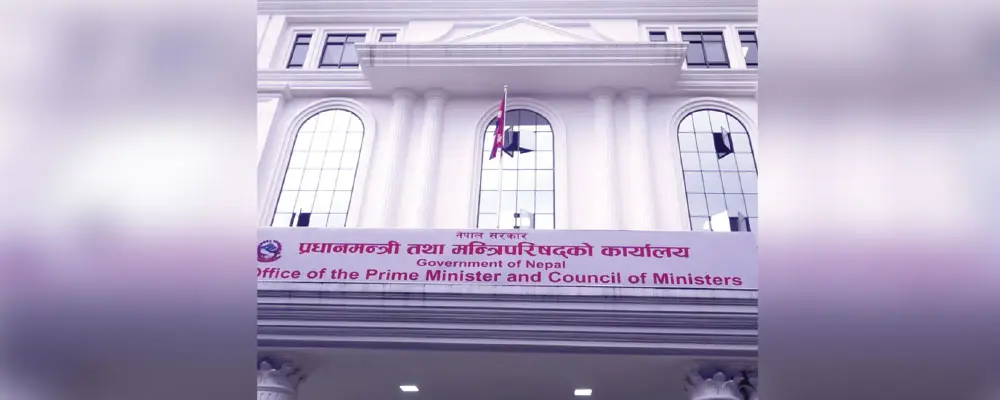
Nepal moves to make foreign employment an option, not compulsion
Nepal's government has intensified efforts to turn foreign employment from a compulsion into an option, in line with its fiscal policy and programmes. A press note from the Secretariat of the Office of the Prime Minister said implementation of the 'Employment Promotion Decade (2083-2092 BS)', announced for fiscal year 2026/27, continues. The Ministry of Youth, Labour and Employment is holding a seven-day Skills and Employment Fair in Itahari, Koshi Province, from September 30 to October 6. Assistant Spokesperson Jagadish Parajuli said 'Skills and Employment Fair Operation Guidelines, 2083' were issued to expand the campaign nationwide.
Source
Nepal · read the original report ↗
Desk check · compared with the source
What the desk checked (5)
- Government is working to make foreign employment an option rather than a compulsion, under its fiscal policy and programmes — Attributed to a press note from the Secretariat of the Office of the Prime Minister.
- An 'Employment Promotion Decade (2083-2092 BS)' was announced in the policy and programme for fiscal year 2026/27 — Figure and period appear in the source as stated; no independent confirmation.
- A seven-day Skills and Employment Fair will be held in Itahari, Koshi Province, from September 30 to October 6 — Dates and venue appear in the source, attributed to the ministry.
- 'Skills and Employment Fair Operation Guidelines, 2083' issued to expand the campaign nationwide — Attributed to Assistant Spokesperson Jagadish Parajuli of the Ministry of Youth, Labour and Employment.
- An instruction and coordination committee has been formed under the coordination of the Minister for Labour — Attributed to Parajuli; committee membership details not given in source.
Analysts’ view opinion
Framing foreign employment as a "compulsion" to be turned into an "option" is less an economic formula than a political one — it speaks directly to one of Nepal's rawest public grievances, the steady outflow of young workers. By branding it an "Employment Promotion Decade," the government is trying to own that grievance as a long-horizon agenda rather than a short-term promise. The fact that the announcement came from the Prime Minister's Office Secretariat, with a coordination committee under the Labour Minister, signals clear political ownership at the top.
- A ten-year frame (2083–2092 BS) buys the government room to be judged over a horizon longer than any single electoral cycle.
- Releasing the note through the PM's Office Secretariat marks this as a whole-of-government headline agenda, not just one ministry's scheme.
- Launching the first fair in Itahari, Koshi Province, before going nationwide can be read as building direct outreach in regions heavily touched by outward migration.
- Delivery through provincial governments, local levels and district administrations improves reach but also spreads credit — and blame — across tiers of government.
- The story does not record any opposition response; typically such announcements invite the arithmetic challenge of how many jobs, where and by when.
What to watch — Watch whether, as the fairs scale nationwide, the government publishes actual placement numbers rather than only footfall and participation counts.
This account rests on a government press note and establishes no budget figures, job targets, measurable effect on migration, or reaction from opposition parties.
Deep dive
Research brief · 8 facts · 4 dates · exam-readyThe brief
Context
Nepal has long relied on foreign employment, with large numbers of youth migrating abroad for work. The government's policy and programme for the current fiscal year 2026/27 announced an 'Employment Promotion Decade (2083-2092 BS)' aimed at creating conditions in which young Nepalis' energy and skills can be used within the country. As part of implementing that action plan, the Ministry of Youth, Labour and Employment is holding a Skills and Employment Fair in Itahari, Koshi Province, and has issued guidelines to take the campaign nationwide. The stated goal is to make going abroad for work an option rather than a compulsion.
Key facts
- The Nepal government is implementing an action plan for the 'Employment Promotion Decade (2083-2092 BS)', announced in the policy and programme for fiscal year 2026/27.
- A seven-day Skills and Employment Fair is being organised in Itahari, Koshi Province, from September 30 to October 6.
- The fair is organised by Nepal's Ministry of Youth, Labour and Employment.
- The Ministry has issued the 'Skills and Employment Fair Operation Guidelines, 2083' to expand the campaign nationwide.
- An instruction and coordination committee has been formed under the coordination of the Minister for Labour.
- Fair management is being carried out in collaboration with provincial governments, local levels and district administrations.
- Stalls will include the private sector, industries and enterprises, training providers, development partners and the Social Security Fund.
- The fair offers skills testing, training, career counselling and entrepreneurship services, and aims to match jobseekers to employers' actual workforce demands.
Timeline
- Fiscal year 2026/27 policy and programmeNepal announces the 'Employment Promotion Decade (2083-2092 BS)' and continues implementing its action plan.
- Before September 18 (date not stated)Ministry issues 'Skills and Employment Fair Operation Guidelines, 2083' and forms an instruction and coordination committee under the Minister for Labour.
- September 18Office of the Prime Minister's Secretariat issues a press note on efforts to make foreign employment an option, not a compulsion.
- September 30 to October 6Seven-day Skills and Employment Fair held in Itahari, Koshi Province.
Who has a stake
- Nepali youth and jobseekers — Access to skills testing, training, career counselling, entrepreneurship services and domestic jobs matching their qualifications and interests.
- Ministry of Youth, Labour and Employment, Nepal — Lead agency organising the fair and expanding the campaign nationwide through the 2083 operation guidelines.
- Office of the Prime Minister's Secretariat — Communicates and oversees delivery of the policy objective of retaining youth energy and skills within the country.
- Provincial governments, local levels and district administrations — Partners in overall management of the fair; responsible for local delivery of the nationwide campaign.
- Private sector, industries, enterprises and training providers — Set out actual workforce demands through stalls and recruit skilled workers domestically.
- Social Security Fund and development partners — Participate with stalls, linking jobseekers to social security coverage and support services.
Why it matters
Nepal's economy and society are shaped by large-scale outward labour migration, and the government is now framing domestic job creation as a decade-long mission rather than a one-off scheme. For India, which shares an open border and deep labour-market links with Nepal, shifts in Nepali employment policy have direct regional relevance. The fair model also tests whether skills matching, testing and entrepreneurship support can be delivered through federal, provincial and local coordination.
UPSC angle
Prelims pointers
- 'Employment Promotion Decade' in Nepal covers 2083-2092 BS, announced in the policy and programme for FY 2026/27.
- Skills and Employment Fair venue: Itahari, Koshi Province, Nepal; duration seven days, September 30 to October 6.
- Nodal ministry: Ministry of Youth, Labour and Employment, Nepal.
- 'Skills and Employment Fair Operation Guidelines, 2083' were issued to scale the campaign nationwide.
- An instruction and coordination committee is coordinated by Nepal's Minister for Labour.
- BS refers to Bikram Sambat, the official calendar of Nepal, roughly 56-57 years ahead of the Gregorian calendar.
Mains framing
Nepal's move to convert foreign employment from a compulsion into an option reflects a structural problem: limited domestic absorption of a young workforce, pushing large numbers into overseas labour markets. The government's response, as reported, is institutional rather than merely promotional: a decade-long Employment Promotion Decade (2083-2092 BS) embedded in the FY 2026/27 policy and programme, operational guidelines to standardise and nationalise skills-and-employment fairs, a coordination committee under the Minister for Labour, and joint delivery with provincial governments, local levels and district administrations. The fair's design addresses classic labour-market failures - information asymmetry between employers and jobseekers, unrecognised skills, and absent career guidance - by bringing employers, training providers, development partners and the Social Security Fund onto one platform for skills testing, counselling and entrepreneurship support. The unstated challenge is scale and quality: whether fairs translate into durable, adequately paid jobs, whether the private sector generates enough demand, and whether social security coverage follows placement. A credible way forward lies in linking fair-based placement data to training curricula, monitoring outcomes beyond attendance, and sustaining federal-provincial-local coordination over the full decade. For India, this offers a comparative lens on skilling-to-employment linkages and on managing migration-dependent economies.
Key terms
- Employment Promotion Decade (2083-2092 BS)
- Nepal's ten-year employment push announced in the FY 2026/27 policy and programme, with a continuing action plan.
- Skills and Employment Fair
- A multi-stakeholder event linking jobseekers with employers, plus skills testing, training, counselling and entrepreneurship services.
- Skills and Employment Fair Operation Guidelines, 2083
- Ministry-issued rules to standardise and expand the fair campaign across Nepal.
- Ministry of Youth, Labour and Employment
- Nepal's nodal ministry organising the fair and rolling out the nationwide campaign.
- Social Security Fund
- Nepali institution participating with a stall at the fair, linked to workers' social security coverage.
- BS (Bikram Sambat)
- Nepal's official calendar, used in the decade's title 2083-2092 and in the 2083 guidelines.
Practice questions
- Nepal has framed foreign employment as a 'compulsion' rather than a choice. Examine the policy instruments announced in its Employment Promotion Decade (2083-2092 BS) and assess what determines their success.
- Discuss how job fairs and skills-testing platforms can address information asymmetry in labour markets, using Nepal's Skills and Employment Fair as an illustration.
- Multi-level coordination between federal, provincial and local governments is central to Nepal's employment campaign. Analyse the opportunities and risks of such cooperative delivery models.
Grounded only in the source report — figures and dates are the source's, not inferred.