
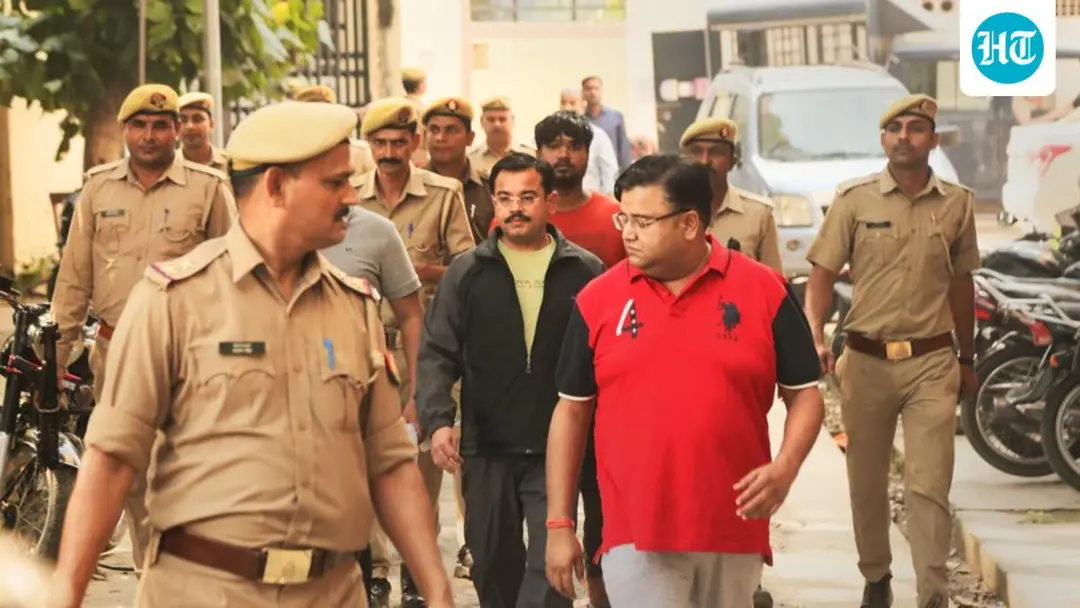
Supreme Court tells UP to replace prosecutor in Lakhimpur case
The Supreme Court on Tuesday directed the Uttar Pradesh government to replace, within two weeks, the public prosecutor conducting the Lakhimpur Kheri violence trial against Ashish Mishra, after victims said crucial eyewitnesses were being given up. The bench headed by CJI Surya Kant sought a senior prosecutor with fair trial experience. It forwarded allegations against the presiding judge to the Allahabad High Court chief justice. Eight people were killed in the 2021 violence.
Source
Hindustan Times — India · read the original report ↗
Desk check · compared with the source
What the desk checked (4)
- Supreme Court directed the UP government to replace the public prosecutor within two weeks with a senior prosecutor of fair trial experience — Attributed in source to a bench headed by CJI Surya Kant, with justices Joymalya Bagchi and V Mohana; direct quotes provided
- The prosecutor gave up crucial eyewitnesses in the trial — Attributed to an application moved by the victims and reflected in the bench's oral observations; not independently established in source
- The presiding judge faces a high court administrative enquiry and issued a non-bailable warrant against a witness who cited medical grounds — Attributed to advocate Prashant Bhushan for the victims; the court declined to remove the judge and referred the matter to the Allahabad HC chief justice
- Eight people were killed in the 2021 Lakhimpur Kheri violence; Ashish Mishra arrested within six days and is now on bail — Figures and sequence appear in source, partly citing the police charge sheet
Analysts’ view opinion
The Supreme Court's order to replace the public prosecutor in the Lakhimpur Kheri trial is a judicial step with an unmistakable political signal: the top court is uneasy about how a state-run prosecution is handling a case against the son of a former Union minister. That is awkward for the UP government, and opposition parties and farm groups will likely read it as vindication of their long-standing complaints. Equally, by declining to remove the presiding judge and routing that grievance to the Allahabad High Court, the bench kept its intervention narrow — this is a warning about process, not a verdict on anyone.
- Ordering the state to replace its own prosecutor implies judicial doubt about the fairness of the prosecution, which is politically uncomfortable for the UP administration.
- Because the case grows out of protests against the since-repealed farm laws, it can easily be pulled back into active political argument by farm unions and the opposition.
- The involvement of a former Union minister's family keeps this a sensitive local issue with farmer and community sentiment attached.
- By sending the complaint against the judicial officer to the High Court chief justice rather than acting itself, the court respected institutional boundaries and blunted claims of overreach.
- A separate case against four farmers means both sides retain material for competing political narratives.
What to watch — Watch whom the UP government appoints as the new senior prosecutor within the two-week window, and whether the victims' side accepts that choice.
The story does not establish that political pressure caused the prosecutor's conduct, nor does it settle the allegations against the judicial officer or the outcome of the trial.
Deep dive
Research brief · 8 facts · 4 dates · exam-readyThe brief
Context
In October 2021, eight people were killed in violence at Lakhimpur Kheri in Uttar Pradesh, where farmers had gathered to protest against the now-repealed farm laws. Ashish Mishra, son of then Union minister Ajay Mishra, is accused of mowing down farmers with a convoy of vehicles; three occupants of his car were pulled out and lynched by enraged protesters. The Supreme Court has been monitoring the trial, and the victims moved an application alleging that the public prosecutor was giving up crucial eyewitnesses and that the presiding judge was intimidating witnesses. On Tuesday the court ordered the prosecutor's replacement and referred the complaints against the judge to the Allahabad High Court.
Key facts
- The Supreme Court directed the Uttar Pradesh government to replace the incumbent public prosecutor in the Lakhimpur trial within two weeks with a senior prosecutor having "fair experience" of conducting trial.
- The bench was headed by CJI Surya Kant and also comprised Justices Joymalya Bagchi and V Mohana.
- The bench observed it "may not be a very fair prosecution if the public prosecutor gives up on witnesses", noting the witnesses given up were eyewitnesses.
- The court directed its registry to forward the victims' application to the Chief Justice of the Allahabad High Court for appropriate remedial action, with a report to be shared in a sealed cover.
- The court refused to remove the presiding judge, saying it is only monitoring the trial and the High Court is best placed to deal with allegations against the judicial officer.
- Advocate Prashant Bhushan, for the victims, said the presiding judge faces an administrative enquiry by the High Court for withdrawing SC/ST Prevention of Atrocities Act and NDPS Act cases to himself and granting bail and acquittals in many cases.
- A non-bailable warrant was issued against a witness who produced an illness slip with a medical certificate; police allegedly visited and intimidated the family, after which the witness does not wish to appear.
- Eight people were killed in the Lakhimpur Kheri violence; Ashish Mishra was arrested within six days of the incident.
Timeline
- 2021Eight people killed in Lakhimpur Kheri violence during farmers' protest against the now-repealed farm laws; Ashish Mishra accused of mowing down farmers.
- Within six days of the incidentAshish Mishra arrested.
- Before the present hearingVictims move an application in the Supreme Court alleging the prosecutor gave up crucial eyewitnesses and that the presiding officer issued an NBW against an ailing witness.
- Tuesday (date of order)Supreme Court bench led by CJI Surya Kant orders replacement of the public prosecutor in two weeks and forwards the application to the Allahabad High Court Chief Justice.
Who has a stake
- Victims/families of the eight killed — Fair prosecution and conviction; they allege eyewitnesses are being given up and witnesses intimidated.
- Uttar Pradesh government — Must appoint a senior public prosecutor with fair trial experience within two weeks; its prosecution conduct is under scrutiny.
- Ashish Mishra, accused — Facing trial; currently on bail on condition that he not stay in Lakhimpur and not influence witnesses directly or indirectly.
- Supreme Court bench (CJI Surya Kant, Justices Joymalya Bagchi, V Mohana) — Monitoring the trial and ensuring fair prosecution without taking over High Court's administrative role.
- Allahabad High Court Chief Justice — Asked to look into allegations against the presiding judicial officer and report back in a sealed cover.
- Four farmers in a separate criminal case — Booked by police in the connected lynching case; they are out on bail.
Why it matters
The case tests whether the state prosecution can be trusted to pursue a trial where the accused is the son of a former Union minister, since a prosecutor giving up eyewitnesses can hollow out a case without any formal acquittal. It also shows the Supreme Court balancing trial monitoring with restraint, leaving complaints against a sitting judicial officer to the High Court's administrative jurisdiction.
UPSC angle
Prelims pointers
- Lakhimpur Kheri violence (2021): eight killed during protest against the now-repealed farm laws; accused Ashish Mishra, son of then Union minister Ajay Mishra.
- Supreme Court bench: CJI Surya Kant with Justices Joymalya Bagchi and V Mohana; ordered prosecutor replaced within two weeks.
- Complaints against a trial judge are referred to the High Court Chief Justice, who exercises administrative control over subordinate courts.
- Acts named in the allegations against the presiding judge: SC/ST (Prevention of Atrocities) Act and NDPS Act.
- NBW (non-bailable warrant) was issued against a witness who sought exemption on medical grounds.
- Ashish Mishra's bail conditions: cannot stay in Lakhimpur; cannot influence witnesses directly or indirectly.
Mains framing
The Lakhimpur Kheri order highlights a structural weakness in Indian criminal justice: the public prosecutor is appointed by the state, yet is expected to act as an officer of the court, a conflict that sharpens when the accused is politically connected. Here the victims alleged that eyewitnesses were being \"given up\" on the dates they were called, and the Supreme Court found this unusual enough to order a senior prosecutor with fair trial experience to be installed within two weeks. The case simultaneously exposes the pressure on witnesses, an NBW was issued against a witness who filed a medical certificate, and police allegedly intimidated the family, though the court accepted that the trial judge's urgency flowed from its own repeated directions to expedite the trial, and said it was for the prosecutor to inspire confidence that a witness's absence was genuine. On institutional propriety, the court declined to remove the presiding officer, holding that as a monitoring court it should not substitute for the Allahabad High Court, which was asked to act and report in a sealed cover. The way forward lies in insulating prosecutorial decisions from executive influence, credible witness protection so that testimony survives to the stage of cross-examination, and prompt administrative scrutiny of judicial conduct by the High Court rather than ad hoc intervention by the apex court.
Key terms
- Public prosecutor
- State-appointed lawyer who conducts criminal trials on behalf of the prosecution; expected to act fairly, not merely to win.
- Giving up a witness
- When the prosecutor chooses not to examine a listed witness on the date called, so their evidence never reaches the record.
- Non-bailable warrant (NBW)
- Court order for arrest and production of a person, here issued against a witness who sought exemption on medical grounds.
- SC/ST (Prevention of Atrocities) Act
- Law against atrocities on Scheduled Castes and Tribes; the presiding judge is alleged to have withdrawn such cases to himself.
- NDPS Act
- Narcotic Drugs and Psychotropic Substances Act; cases under it were also allegedly withdrawn by the judge to his own court.
- Sealed cover report
- A report submitted confidentially to the court, here the Allahabad High Court's action-taken report on the judicial officer.
Practice questions
- Discuss the tension between a public prosecutor's duty to the court and appointment by the state government, using the Supreme Court's Lakhimpur Kheri order as an illustration.
- Examine the Supreme Court's role in 'monitoring' trials. When should it defer to the High Court's administrative control over subordinate judiciary?
- Witness intimidation is a central obstacle to criminal justice in India. Critically analyse, with reference to the issues raised in the Lakhimpur Kheri trial.
Grounded only in the source report — figures and dates are the source's, not inferred.