
Rotary Club opens three welfare projects in Jamshedpur
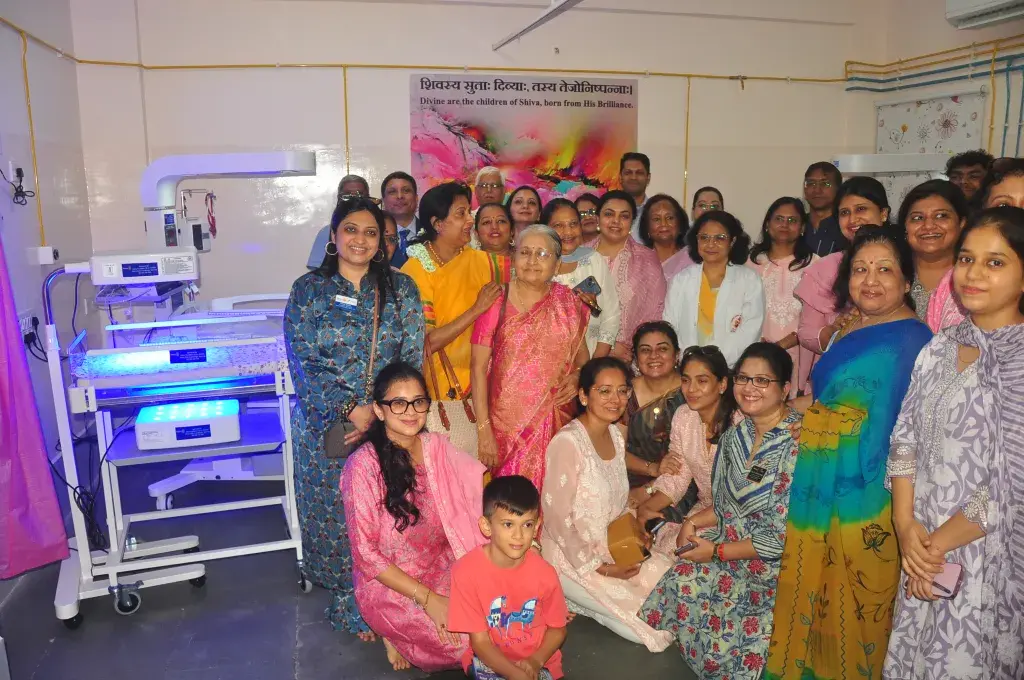
The Rotary Club of Jamshedpur Steel City inaugurated three welfare projects on Friday. A ₹60 lakh Global Grant 7-bed neonatal intensive care unit, sponsored by Keshavji Chhaganlal Jewelers, was opened at Sri Sathya Sai Sanjeevani Hospital in Bistupur. An ₹80 lakh project with dialysis machines, ICU beds and an RO plant was launched at Rajasthan Seva Sadan Hospital, Jugsalai. A drinking water station at the Sakchi CJM Court, a Rotary Wheel and a clock tower were also unveiled. District Governor Bipin Chachan and Club President Shivani Goel attended.
Source
Sri Sathya Sai — health · read the original report ↗
Desk check · compared with the source
What the desk checked (5)
- Rotary Club of Jamshedpur Steel City inaugurated three welfare projects on Friday, June 27. — Stated in source with date and day; no independent confirmation possible.
- A 7-bed NICU worth ₹60 lakh was inaugurated at Sri Sathya Sai Sanjeevani Hospital, Bistupur, sponsored by Keshavji Chhaganlal Jewelers. — Figure and sponsor named in source; attributed to the event organisers.
- An ₹80 lakh Global Grant healthcare project with dialysis machines, ICU beds and an RO plant was launched at Rajasthan Seva Sadan Hospital, Jugsalai. — Figure and facilities listed in source; no external verification.
- A drinking water station was inaugurated at the CJM Court premises in Sakchi. — Reported with named judicial officials present.
- Quote: 'Our projects aim to bring positive and lasting change in society.' — Directly attributed to Club President Shivani Goel in the source.
Analysts’ view opinion
On the surface this is a service-club event — but politically it illustrates how non-state, business-philanthropic networks are filling gaps in Jamshedpur's public health infrastructure. Neonatal ICU beds, dialysis machines and clean drinking water are exactly the deliverables politicians usually promise from the campaign stage; here they arrive via a Rotary club and a jewellery firm's sponsorship. Notably, no political figure appears in the story — the dignitaries are judges and Rotary office-bearers, suggesting a platform deliberately kept apolitical.
- A ₹60 lakh NICU and an ₹80 lakh dialysis-plus-ICU project show work normally associated with the public health system being delivered through the voluntary sector.
- The presence of the Chief Judicial Magistrate and Principal District and Sessions Judge at the court-premises water station gave visibility to the judiciary rather than to elected leaders.
- Local business and community institutions build social capital — and with it indirect civic influence — through projects of this kind.
- For elected representatives this cuts both ways: they can welcome and share credit, but such projects also invite opposition questions about gaps in government hospitals.
- A woman serving as club president at the centre of these inaugurations reflects a slowly shifting profile of civic leadership.
What to watch — Watch whether local representatives and the state health machinery respond by framing this as partnership or whether it becomes a talking point about public hospital shortfalls — and on what terms, and at what cost, these facilities are available to patients.
The story establishes no involvement by any party or politician and makes no claim about government health failures; it also does not specify patient charges, the full funding trail, or who bears long-term maintenance.
Deep dive
Research brief · 8 facts · 4 dates · exam-readyThe brief
Context
The Rotary Club of Jamshedpur Steel City, a local chapter of the international service organisation Rotary, inaugurated three welfare projects in Jamshedpur on Friday, June 27, focused on public health and community infrastructure. Two of them are Global Grant projects — Rotary's funding mechanism for larger, sponsored service projects — at Sri Sathya Sai Sanjeevani Hospital, Bistupur, and Rajasthan Seva Sadan Hospital, Jugsalai. The third is a drinking water station at the Chief Judicial Magistrate's court premises in Sakchi. The events were held in the presence of Rotary District Governor Bipin Chachan and Club President Shivani Goel.
Key facts
- The Rotary Club of Jamshedpur Steel City inaugurated three welfare projects on Friday, June 27, in Jamshedpur.
- A 7-bed Neonatal Intensive Care Unit (NICU) was inaugurated at Sri Sathya Sai Sanjeevani Hospital, Bistupur.
- The NICU is a Global Grant project valued at Rs 60 lakh, sponsored by Keshavji Chhaganlal Jewelers.
- The NICU includes ventilators, incubators, monitors and other critical equipment.
- An Rs 80 lakh Global Grant healthcare project was launched at Rajasthan Seva Sadan Hospital, Jugsalai, with dialysis machines, ICU beds and an RO water purification plant.
- A drinking water station was inaugurated at the CJM Court premises in Sakchi for court visitors and staff.
- A Rotary Wheel and a Clock Tower were also inaugurated on the occasion.
- Those present included District Governor Bipin Chachan, First Lady Shilpi Chachan, CJM Vishal Gaurav, Principal District and Sessions Judge Arvind Kumar Pandey, Club President Shivani Goel and S.P. Bagaria.
Timeline
- June 27 (Friday)Drinking water station inaugurated at the CJM Court premises, Sakchi, in the presence of CJM Vishal Gaurav, Principal District and Sessions Judge Arvind Kumar Pandey and Club President Shivani Goel.
- June 27 (Friday)7-bed NICU, a Rs 60 lakh Global Grant project, inaugurated at Sri Sathya Sai Sanjeevani Hospital, Bistupur.
- June 27 (Friday)Rs 80 lakh Global Grant healthcare project with dialysis machines, ICU beds and an RO plant launched at Rajasthan Seva Sadan Hospital, Jugsalai, by Bipin Chachan and S.P. Bagaria.
- June 27 (Friday)A Rotary Wheel and a Clock Tower inaugurated on the same occasion.
Who has a stake
- Rotary Club of Jamshedpur Steel City — Executed and inaugurated the three projects; its Global Grant record and service credibility are tied to their functioning.
- Sri Sathya Sai Sanjeevani Hospital, Bistupur — Receives the 7-bed NICU with ventilators, incubators and monitors, expanding neonatal care capacity in the city.
- Rajasthan Seva Sadan Hospital, Jugsalai — Gains dialysis machines, ICU beds and an RO water purification plant under the Rs 80 lakh project.
- Keshavji Chhaganlal Jewelers — Sponsor of the Rs 60 lakh Global Grant NICU project.
- CJM Court, Sakchi (judges, staff and litigants) — Court visitors and staff get access to clean drinking water through the new station.
- Newborns and kidney patients in Jamshedpur — Direct beneficiaries of added NICU beds, dialysis machines and ICU beds.
Why it matters
Neonatal intensive care and dialysis are capital-intensive services that are often scarce or costly in mid-sized industrial cities, so philanthropic additions of a 7-bed NICU and dialysis machines directly widen access for poorer patients. The projects also illustrate how civil society bodies and private sponsors supplement public health and civic infrastructure, including basic amenities like drinking water at a court complex.
UPSC angle
Prelims pointers
- Rotary Club of Jamshedpur Steel City inaugurated three welfare projects on June 27 in Jamshedpur, Jharkhand.
- 7-bed NICU at Sri Sathya Sai Sanjeevani Hospital, Bistupur: Global Grant project worth Rs 60 lakh, sponsored by Keshavji Chhaganlal Jewelers.
- Rs 80 lakh Global Grant project at Rajasthan Seva Sadan Hospital, Jugsalai: dialysis machines, ICU beds, RO water purification plant.
- Drinking water station inaugurated at CJM Court premises, Sakchi.
- Rotary District Governor: Bipin Chachan; Club President: Shivani Goel; CJM: Vishal Gaurav; Principal District and Sessions Judge: Arvind Kumar Pandey.
- A Rotary Wheel and a Clock Tower were also unveiled during the event.
Mains framing
Health infrastructure gaps in industrial and tier-two cities often show up most sharply in high-cost, equipment-heavy services such as neonatal intensive care and dialysis, where a single ventilator, incubator or dialysis machine can determine whether a patient is treated locally or referred to a distant metro. The Jamshedpur projects — a Rs 60 lakh, 7-bed NICU at Sri Sathya Sai Sanjeevani Hospital and an Rs 80 lakh package of dialysis machines, ICU beds and an RO plant at Rajasthan Seva Sadan Hospital — show how service organisations like Rotary, using Global Grants and private sponsorship such as that by Keshavji Chhaganlal Jewelers, can fill these gaps quickly. The accompanying drinking water station at the Sakchi CJM Court underlines a parallel point: public institutions that citizens are compelled to visit often lack basic amenities. The implication is that voluntary and philanthropic capital is now a visible supplement to state provisioning at the district level. The way forward lies in ensuring such donated assets have recurring funds for staff, consumables and maintenance, transparent beneficiary access criteria so poorer patients actually benefit, and coordination with district health authorities so new capacity is mapped against actual local need rather than duplicated.
Key terms
- NICU (Neonatal Intensive Care Unit)
- A specialised hospital unit for critically ill or premature newborns, equipped here with ventilators, incubators and monitors.
- Global Grant
- Rotary's larger project funding mechanism, used for both the Rs 60 lakh NICU and the Rs 80 lakh hospital project in Jamshedpur.
- RO water purification plant
- Reverse osmosis system to purify water; installed as part of the Rs 80 lakh project at Rajasthan Seva Sadan Hospital, Jugsalai.
- District Governor (Rotary)
- The office-bearer heading a Rotary district; Bipin Chachan held this post and attended all three inaugurations.
- Chief Judicial Magistrate (CJM) Court
- A district-level criminal court; its Sakchi premises received the new drinking water station.
Practice questions
- How do civil society and philanthropic organisations supplement public health infrastructure in India's tier-two cities? Illustrate with the Jamshedpur example.
- Donated medical equipment often falls idle for want of staff and maintenance funds. What institutional safeguards can ensure sustainability of such philanthropic health assets?
- Discuss the importance of basic amenities such as clean drinking water at public institutions like courts in improving citizen access to justice and services.
Grounded only in the source report — figures and dates are the source's, not inferred.