
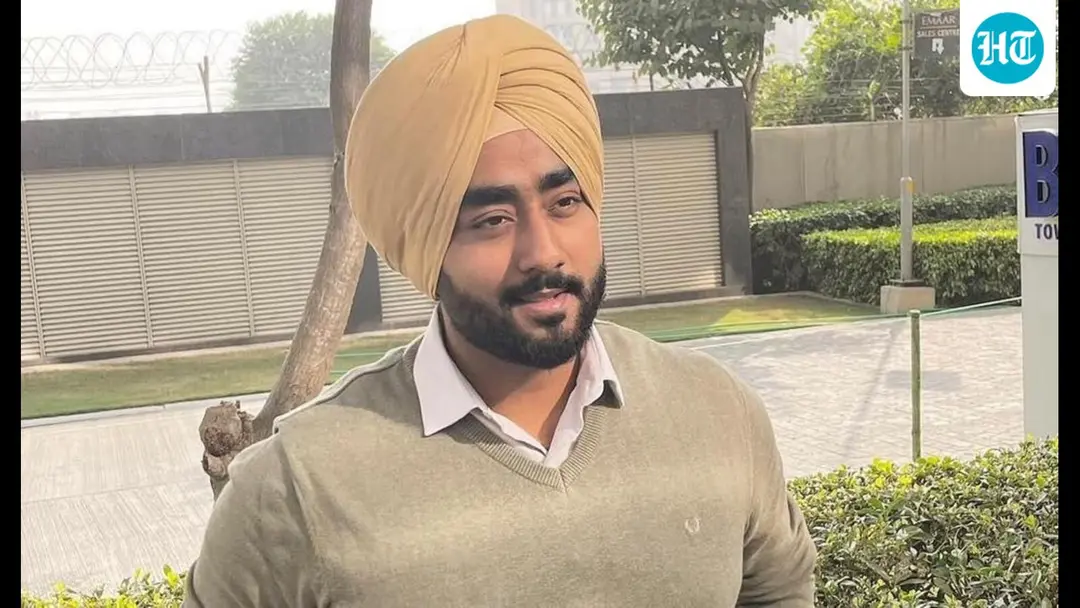
Family alleges Gurugram Police destroyed evidence in realtor's murder case
The family of Yuvraj Singh Manchanda, 31, allegedly killed in Gurugram on September 6, has accused Gurugram Police of destroying all evidence, cremating him as an unidentified person and not preserving his belongings. The family said the body was recovered from a sewer on September 10 and cremated on September 14. Police denied the allegations, saying details were uploaded and the ashes, kada and watch were preserved. Delhi Police arrested former colleague Anya Vats, 35, and her partner Sanyam Sachdeva, 36, in Uttarakhand.
Source
Hindustan Times — India · read the original report ↗
Desk check · some claims need care
What the desk checked (5)
- Yuvraj Singh Manchanda, 31, was allegedly killed by a former colleague and her partner in Gurugram on September 6. — Attributed in source as an allegation; accused named as Anya Vats, 35, and Sanyam Sachdeva, 36, arrested by Delhi Police in Uttarakhand.
- Gurugram Police 'destroyed all evidence', cremated the body as unidentified and discarded the ashes. — Allegation attributed to the victim's sister Karishma; denied by Gurugram Police.
- Details were uploaded on Zipnet on September 16, six days after the body was recovered. — Figure appears in source, stated by SHO Rajesh Bagri and echoed by Delhi Police officials; DCP Hitesh Yadav says CCTNS upload was on September 14.
- Autopsy found cause of death as 'likely drowning' with no bullet injury. — Attributed to Gurugram Police and Dr Manav Chauhan; Delhi Police says it has not yet received the post-mortem report.
- Ashes, kada and watch are preserved by police. — Attributed to Gurugram Police; directly contradicted by the family's account.
Analysts’ view opinion
This has effectively split into two legal tracks: the murder case against the two accused, and the separate question of whether the investigating force met its procedural duties. The story sets out an SOP for unidentified bodies — photographing the body and scene, collecting evidence, uploading details online, issuing hue-and-cry notices, holding the body 72 hours, preserving belongings — and the family alleges breaches that Gurugram Police deny, saying they acted within the mandated window. The decisive legal question is whether the alleged lapses are administrative shortcomings or a loss of evidence that could weaken the prosecution at trial.
- Breaching an SOP usually attracts departmental or administrative accountability rather than automatically collapsing a murder case, though it can open arguments about chain of custody.
- Non-preservation of clothing and viscera, if established, narrows the physical evidence available and gives the defence room to probe, although the story says a DNA swab was preserved.
- The autopsy finding of "likely drowning" is a preliminary medical opinion; cause of death and any homicide finding are ultimately tested through expert evidence in court.
- Two different state forces being involved raises jurisdictional and coordination issues, reflected in Delhi Police saying it will issue notice to the doctor and the investigating officer.
- Where a family cannot obtain a post-mortem report or belongings, remedies generally available include requests to senior officers, information-access routes, and approaching a magistrate or high court.
What to watch — Watch for the post-mortem report formally reaching Delhi Police, any departmental inquiry or notices against Gurugram officers, and which physical evidence ultimately makes it into the chargesheet.
The story does not establish that evidence was deliberately destroyed — these remain family allegations against police denials, with no court or official inquiry having yet found any lapse.
Deep dive
Research brief · 8 facts · 6 dates · exam-readyThe brief
Context
Yuvraj Singh Manchanda, a 31-year-old real estate sales professional from Delhi, went missing on September 6 after leaving for what he told his family was a work meeting in Gurugram. His body was recovered from a Gurugram sewer on September 10 and cremated on September 14 as an unidentified body. Delhi Police later arrested his former colleague Anya Vats, 35, and her partner Sanyam Sachdeva, 36, from Uttarakhand, and the family has accused Gurugram Police of destroying evidence, mishandling the case and discarding his ashes and clothes. The dispute turns on whether Gurugram Police followed the SOP for unidentified dead bodies, including timely uploading of details on Zipnet and preservation of belongings.
Key facts
- Yuvraj Singh Manchanda, 31, a real estate sales professional, was allegedly killed in Gurugram on September 6.
- His body was recovered from a Gurugram sewer on September 10 and cremated on September 14 as an unidentified body.
- Delhi Police arrested Anya Vats, 35, and her partner Sanyam Sachdeva, 36, in Uttarakhand on a Monday, 10 days after the murder.
- Delhi Police officials alleged Gurugram Police uploaded the details on Zipnet six days after the body was recovered and did not preserve his clothes.
- Badshahpur SHO Inspector Rajesh Bagri said Zipnet details were uploaded on September 16 and the body was preserved for 72 hours after autopsy before cremation.
- DCP (south Gurugram) Hitesh Yadav said the UIDP performa was filled and information uploaded on the pan-India CCTNS network on September 14, calling Zipnet an obsolete platform used by barely three states.
- Autopsy by Dr Manav Chauhan of Haryana health department's forensic department gave the cause of death as "likely drowning"; a DNA swab was preserved, viscera was not, and no bullet or pellet injury was found.
- Manchanda was due to be married on October 25; his family last saw him buying a sherwani in Lajpat Nagar, and texts from his phone continued till September 8, after which it was switched off.
Timeline
- September 6Manchanda visits Lajpat Nagar with sisters to buy a sherwani, then leaves for a 'work meeting' in Gurugram; allegedly killed the same day.
- September 7-8Family receives texts from his phone saying he was finalising a deal; phone switched off after September 8.
- September 10Body recovered from a Gurugram sewer; police control room alerted, hue-and-cry notice and advertisement issued, per Gurugram Police.
- September 14Body cremated as unidentified; Gurugram Police say UIDP details uploaded on CCTNS the same day.
- September 16Accused caught; family learns of the murder; Gurugram Police upload details on Zipnet, as per SHO Bagri.
- Monday (10 days after the murder)Delhi Police arrest Anya Vats and Sanyam Sachdeva from Uttarakhand.
Who has a stake
- Manchanda family (sisters Karishma and Harsimran, parents) — Seeking the body, ashes, clothes and post-mortem report; allege evidence destroyed and ashes discarded.
- Gurugram Police (DCP Hitesh Yadav, SHO Rajesh Bagri) — Face allegations of SOP violations; assert ashes, kada and watch preserved and CCTNS upload was within time.
- Delhi Police (DCP southeast Vineet Kumar) — Investigating the murder, interrogating the accused, and alleging Gurugram lapses; yet to receive the post-mortem report.
- Accused Anya Vats, 35, and Sanyam Sachdeva, 36 — Arrested in Uttarakhand and under interrogation for the alleged murder.
- Dr Manav Chauhan, Haryana health department forensic department — Conducted the autopsy; Delhi Police say a notice will be issued to the doctor and the investigating officer.
- LN Rao, former DCP, Delhi Police Special Cell — As an expert voice, calls the alleged non-preservation of clothing and Zipnet lapse a major violation.
Why it matters
The case exposes how gaps in handling unidentified dead bodies - delayed database entries, cremation within days and non-preservation of clothing - can destroy the forensic trail of a possible murder before investigators even identify the victim. It also shows friction between two state police forces and reliance on parallel platforms (Zipnet and CCTNS), which can leave a missing person unmatched with a recovered body. For families, the consequence is no body, no ashes, no post-mortem report and no closure.
UPSC angle
Prelims pointers
- Zipnet (Zonal Integrated Police Network) is an online platform for sharing information on missing persons, unidentified and recovered bodies and stolen vehicles.
- CCTNS is described in the source as the pan-India network on which Gurugram Police uploaded the UIDP performa on September 14.
- Under the Delhi Police SOP on missing persons and unidentified dead bodies, police must photograph the body and crime scene, collect evidence, upload details on Zipnet and issue hue-and-cry notices and newspaper advertisements.
- Under the SOP, a body unclaimed at a mortuary for 72 hours can be sent for last rites, but belongings must be preserved.
- Victim: Yuvraj Singh Manchanda, 31; accused: Anya Vats, 35, and Sanyam Sachdeva, 36, arrested from Uttarakhand.
- Autopsy finding: cause of death "likely drowning"; DNA swab preserved, viscera not preserved, no bullet or pellet injury.
Mains framing
The Manchanda case illustrates how procedural lapses in handling unidentified dead bodies can compromise a criminal investigation at its most critical stage. The family alleges that Gurugram Police cremated the body on September 14, discarded the ashes and burned the clothes, and uploaded details on Zipnet only on September 16 - six days after recovery - while police counter that alerts, hue-and-cry notices and an advertisement were issued on September 10, the UIDP performa was uploaded on the pan-India CCTNS on September 14 within the mandatory period, and the kada, watch and ashes were preserved. Two structural causes emerge: the presumption of accidental death (the autopsy gave \"likely drowning\", viscera was not preserved) which lowered the evidentiary threshold, and fragmented, inconsistently used databases - one force relies on Zipnet, the other calls it obsolete - which prevents matching a missing person report in Delhi with a body recovered in Gurugram. The implications are legal and institutional: as former DCP LN Rao notes, clothing cannot be discarded after post-mortem in any circumstance, and lost physical evidence weakens prosecution while Delhi Police still awaits the post-mortem report. The way forward suggested by the facts is uniform, enforceable SOP compliance across state forces, mandatory preservation of clothing and biological samples in all unidentified body cases, interoperable and actively used national databases, and accountability mechanisms - the Delhi Police proposal to issue notices to the autopsy doctor and investigating officer being one such step.
Key terms
- Zipnet
- Zonal Integrated Police Network, an online platform police use to share data on missing persons, unidentified and recovered bodies and stolen vehicles.
- CCTNS
- The pan-India police network on which Gurugram Police say they uploaded the unidentified body information on September 14.
- UIDB / UIDP performa
- The unidentified dead body record/form police fill and circulate to enable identification of a recovered body.
- Hue-and-cry notice
- A public notice, along with newspaper advertisements, that police must issue to help identify an unidentified body or trace a person.
- Viscera preservation
- Retention of internal organs during autopsy for toxicological testing; not done here as the autopsy revealed nothing suspicious.
- 72-hour rule
- Under the SOP, an unclaimed body at a mortuary can be sent for last rites after 72 hours, while its belongings must still be preserved.
Practice questions
- Critically examine the adequacy of existing standard operating procedures for handling unidentified dead bodies in India, using the Manchanda case to illustrate gaps in evidence preservation.
- Inter-state coordination failures and fragmented police databases weaken criminal investigations. Discuss with reference to the use of Zipnet and CCTNS in this case.
- What reforms in forensic practice and police accountability would prevent the premature classification of a suspected homicide as an accidental death?
Grounded only in the source report — figures and dates are the source's, not inferred.