
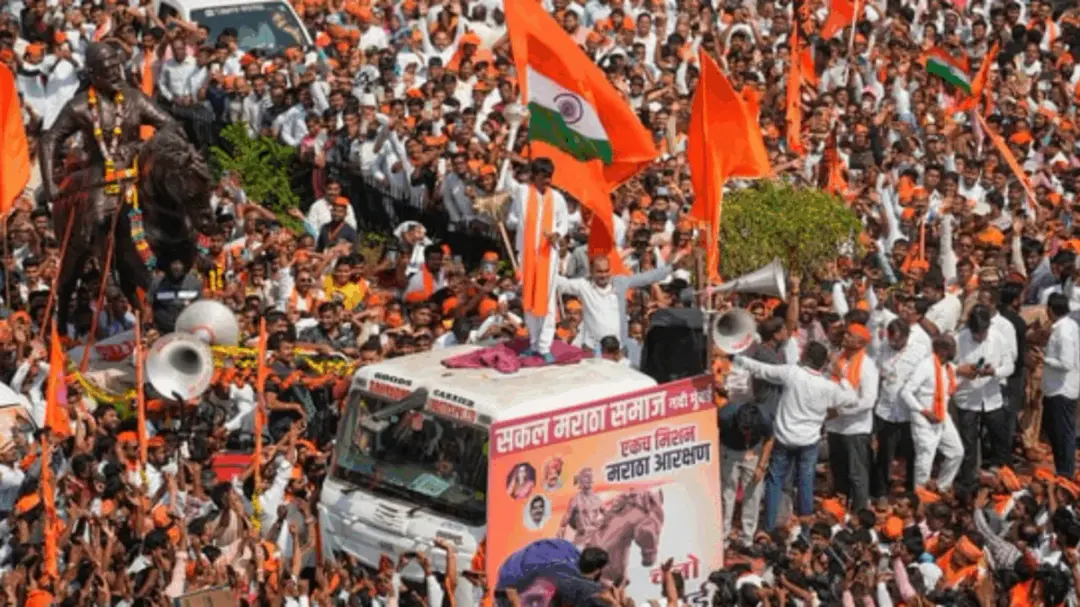
Jarange heads to Mumbai; Azad Maidan permission still pending
Maratha reservation activist Manoj Jarange left Antarwali Sarati in Jalna district for Mumbai on the 18th day of his indefinite hunger strike, travelling via Beed, Ahilyanagar and Pune. Mumbai Police have rejected two of his applications to protest at Azad Maidan; a third, for 50 people, is pending, with officials citing Ganeshotsav. The earlier agitation affected 21 major roads and over 60 BEST bus routes. Chief Minister Devendra Fadnavis appealed to him to reconsider.
Source
News18 — India · read the original report ↗
Desk check · compared with the source
What the desk checked (5)
- Mumbai Police have twice rejected Jarange's Azad Maidan applications and a third, for 50 people on September 18, is pending, with officials citing Ganeshotsav. — Attributed to Mumbai Police/officials in the source; no document cited.
- Jarange left Antarwali Sarati in Jalna district on Tuesday, the 18th day of his indefinite hunger strike, travelling via Beed, Ahilyanagar and Pune. — Stated as reported fact in the source; no direct quote or official confirmation given.
- During the earlier agitation at least 21 major roads were affected and over 60 BEST bus routes were hit. — Figures appear in the source but are not attributed to police or BEST.
- CM Devendra Fadnavis appealed to Jarange to reconsider protesting during Ganesh celebrations, saying most demands are met and the rest depend on court or constitutional processes. — Attributed to the Chief Minister's public statement; paraphrased, not verbatim.
- Jarange has stopped medical treatment and saline since the second rejection and says he will approach the High Court if permission is not granted. — Attributed to Jarange's own statements as reported.
Analysts’ view opinion
జరాంగే మళ్లీ ముంబై వైపు కదలడం అనేది కేవలం ఒక నిరాహార దీక్ష కాదు — అది రాష్ట్ర ప్రభుత్వం మీద ఒత్తిడి పెట్టే రాజకీయ పరీక్ష. ఫడ్నవీస్ ప్రభుత్వానికి ఇది రెండు వైపులా పదునున్న కత్తి: అనుమతి ఇస్తే గత ఆందోళన నాటి స్తంభన పునరావృతమయ్యే ప్రమాదం, నిరాకరిస్తే మరాఠా వర్గంలో "అణచివేత" అనే భావన బలపడే ప్రమాదం. అందుకే గణేశోత్సవాన్ని కారణంగా చూపడం, "చాలా డిమాండ్లు తీర్చాం, మిగిలినవి కోర్టు పరిధిలో ఉన్నాయి" అని చెప్పడం — రాజకీయ ఘర్షణను న్యాయపరమైన, పరిపాలనాపరమైన అంశంగా మార్చే వ్యూహంగా కనిపిస్తుంది.
- పోలీసు అనుమతిని రెండుసార్లు తిరస్కరించడం, మూడోది పెండింగ్లో ఉంచడం — నేరుగా ఘర్షణ కాకుండా సమయాన్ని లాగే పరిపాలనా వ్యూహంగా చూడవచ్చు.
- ముఖ్యమంత్రి స్వయంగా బహిరంగ విజ్ఞప్తి చేయడం, చర్చల తలుపులు మూయలేదని చెప్పడం — వర్గాన్ని దూరం చేసుకోకుండా ఉద్యమాన్ని చల్లార్చాలనే ఉద్దేశాన్ని సూచిస్తుంది.
- బీడ్, అహిల్యానగర్, పుణె మార్గంలో ప్రయాణం అంటే మరాఠ్వాడా–పశ్చిమ మహారాష్ట్ర మీదుగా మద్దతును పెంచుకుంటూ వెళ్లడం; రాజధాని చేరకముందే రాజకీయ బలప్రదర్శన.
- వైద్య చికిత్స, సలైన్ నిలిపివేసినట్టు చెప్పడం ఒత్తిడిని గరిష్ఠ స్థాయికి తీసుకెళ్తుంది — ఆరోగ్యం క్షీణిస్తే ప్రభుత్వానికి రాజకీయ ఖర్చు అమాంతం పెరుగుతుంది.
- గత ఆందోళనలో 21 రహదారులు, 60కి పైగా బెస్ట్ మార్గాలు దెబ్బతిన్న అనుభవం — ముంబైకర్ల అసౌకర్యం ఒకవైపు, రిజర్వేషన్ డిమాండ్ మరోవైపు; ఈ రెండింటి మధ్య ప్రజాభిప్రాయం ఎటు మొగ్గుతుందో కీలకం.
What to watch — మూడో దరఖాస్తుపై ముంబై పోలీసుల నిర్ణయం, జరాంగే హైకోర్టుకు వెళ్తారా — ఈ రెండే ఉద్యమం వేదిక మారుతుందా, రాజీ కుదురుతుందా, లేక ఘర్షణగా మారుతుందా అని నిర్ణయిస్తాయి.
ఏ పార్టీకి ఇది ఎన్నికల్లో లాభమో నష్టమో, ప్రభుత్వం–జరాంగే మధ్య చర్చలు ఏ దశలో ఉన్నాయో, అనుమతి తిరస్కరణ వెనుక రాజకీయ ఉద్దేశం ఉందో లేదో ఈ కథనం స్థాపించలేదు.
Deep dive
Research brief · 8 facts · 6 dates · exam-readyThe brief
Context
Manoj Jarange, the Maratha reservation activist from Antarwali Sarati in Jalna district, is again marching to Mumbai to press demands for quota benefits for the Maratha community. On the 18th day of an indefinite hunger strike he set out via Beed, Ahilyanagar and Pune, even though Mumbai Police had not cleared his application to protest at Azad Maidan. His earlier full-scale march in late August and early September brought large parts of south Mumbai to a standstill, and his 2023 agitation saw curfew, arson and vandalism in Maharashtra. Two applications have been rejected in four days and a third, for 50 people, is pending, with police citing the ongoing Ganeshotsav.
Key facts
- Jarange left Antarwali Sarati in Jalna district for Mumbai on Tuesday, the 18th day of his indefinite hunger strike, travelling via Beed, Ahilyanagar and Pune.
- Mumbai Police rejected two of his Azad Maidan applications in the past four days; a third, seeking permission for 50 people on September 18, is pending.
- Officials cite the ongoing Ganeshotsav as a complicating factor in granting permission.
- During the last agitation at least 21 major roads around Azad Maidan and CSMT were affected by diversions and closures.
- Over 60 BEST bus routes were hit by the road closures, pushing commuters onto crowded Central and Harbour line trains.
- BMC headquarters, opposite Azad Maidan, shut most of its gates last time, keeping only two partially open.
- Coastal Road south-bound stretches near Amarsons Garden were blocked near Breach Candy as marchers moved through.
- Kitabkhana bookstore postponed a launch and the CSMVS museum shut 'until further notice' during the last protest.
Timeline
- 2023Jarange's Maratha quota agitation saw curfew, arson and vandalism, pushing Maharashtra to the brink of large-scale civil unrest.
- Late August–early September (last march)Full-scale march to Mumbai brought large parts of south Mumbai to a standstill for days; Bombay High Court ordered roads cleared and unauthorised spaces vacated.
- Past four days before the reportMumbai Police reject two of Jarange's applications to protest at Azad Maidan.
- After the second rejectionJarange stops taking medical treatment and saline, says he will not surrender before the government.
- September 18 (application date)Third application, seeking permission for 50 people at Azad Maidan, still pending.
- Tuesday (18th day of fast)Jarange leaves Antarwali Sarati for Mumbai; says he will approach the High Court if permission is not granted by Tuesday afternoon.
Who has a stake
- Manoj Jarange — Leading an indefinite hunger strike for Maratha reservation; has stopped treatment and saline and says he is prepared to die for the community's next generation.
- Mumbai Police — Decide on the pending third Azad Maidan application; must balance protest rights with Ganeshotsav crowd and traffic management.
- Chief Minister Devendra Fadnavis — Appealed to Jarange to reconsider protesting during Ganesh celebrations; says most demands met and the rest depend on court or constitutional processes.
- Bombay High Court — Intervened last time ordering roads cleared; may again be moved by Jarange if permission is denied.
- Mumbai commuters and residents — Face road closures, BEST route disruptions, overcrowded trains, slower ambulances and undeliverable e-commerce orders.
- BMC and south Mumbai businesses/institutions — Civic headquarters access restricted; events cancelled, bookstore launch postponed, CSMVS museum shut last time.
- Maratha protesters from Marathwada, Vidarbha, Satara, Sangli, Pune, Junnar — Camped on footpaths and lanes near the civic office and J J School of Art, cooking and sleeping in the open despite rain.
Why it matters
The standoff tests how a democratic state balances the right to protest with the civic costs of shutting down a metropolis's busiest zone during a major festival. It also shows the limits of executive action on reservation demands, with the Chief Minister saying the remaining demands depend on court and constitutional processes, leaving the judiciary as the arbiter.
UPSC angle
Prelims pointers
- Manoj Jarange is a Maratha reservation activist from Antarwali Sarati village, Jalna district, Maharashtra.
- Azad Maidan in south Mumbai, opposite the BMC headquarters, is the city's designated protest venue.
- BEST is Mumbai's civic bus and electricity utility; over 60 of its routes were disrupted in the last agitation.
- CSMVS (Chhatrapati Shivaji Maharaj Vastu Sangrahalaya) museum shut 'until further notice' during the last protest.
- Devendra Fadnavis is Chief Minister of Maharashtra as per the source.
- Bombay High Court had earlier ordered both authorities and protesters to clear roads and vacate unauthorised spaces.
Mains framing
The renewed Maratha quota agitation illustrates the friction between the constitutional right to peaceful assembly and the state's duty to maintain public order and essential services. Causes include unresolved reservation demands that, as the Chief Minister concedes, now rest on judicial and constitutional processes rather than executive fiat, plus the mobilising power of a leader on an indefinite hunger strike who has refused medical treatment. Implications documented from the previous march are severe and measurable: 21 major roads affected, over 60 BEST routes disrupted, overcrowded suburban trains, delayed ambulances and police vehicles, a near-sealed civic headquarters, cancelled events and undeliverable e-commerce orders — costs borne largely by uninvolved commuters, patients and small businesses, and amplified this time by Ganeshotsav crowds. The way forward suggested by the source is procedural rather than confrontational: a police decision on the pending application for a limited gathering of 50, negotiated venue or scale, government's stated willingness to continue talks within legal limits, and judicial mediation by the Bombay High Court, which last time ordered both authorities and protesters to restore free movement.
Key terms
- Maratha reservation
- Demand for quota benefits for the Maratha community in Maharashtra, the core issue of Jarange's agitation.
- Azad Maidan
- Ground in south Mumbai, opposite BMC headquarters, used for permitted protests; Jarange's applications to protest there are pending or rejected.
- BEST
- Mumbai's public bus service; over 60 of its routes were disrupted by road closures during the last agitation.
- Ganeshotsav
- The Ganesh festival under way in Mumbai, cited by police and the Chief Minister as a reason to defer the protest.
- BMC
- Brihanmumbai Municipal Corporation, the civic body whose headquarters opposite Azad Maidan shut most gates during the last protest.
- Indefinite hunger strike
- Fast without a fixed end date; Jarange was on its 18th day and had stopped taking saline and medical treatment.
Practice questions
- Discuss how the state should balance the fundamental right to peaceful assembly with the protection of essential services and public order, using the Maratha quota protests in Mumbai as an illustration.
- Reservation demands increasingly depend on judicial and constitutional processes rather than executive decisions. Examine this statement in the light of the Maratha reservation agitation.
- What administrative and urban-mobility preparedness measures should a metropolis like Mumbai adopt for large, announced protests? Illustrate with the disruptions recorded during the earlier Azad Maidan agitation.
Grounded only in the source report — figures and dates are the source's, not inferred.