
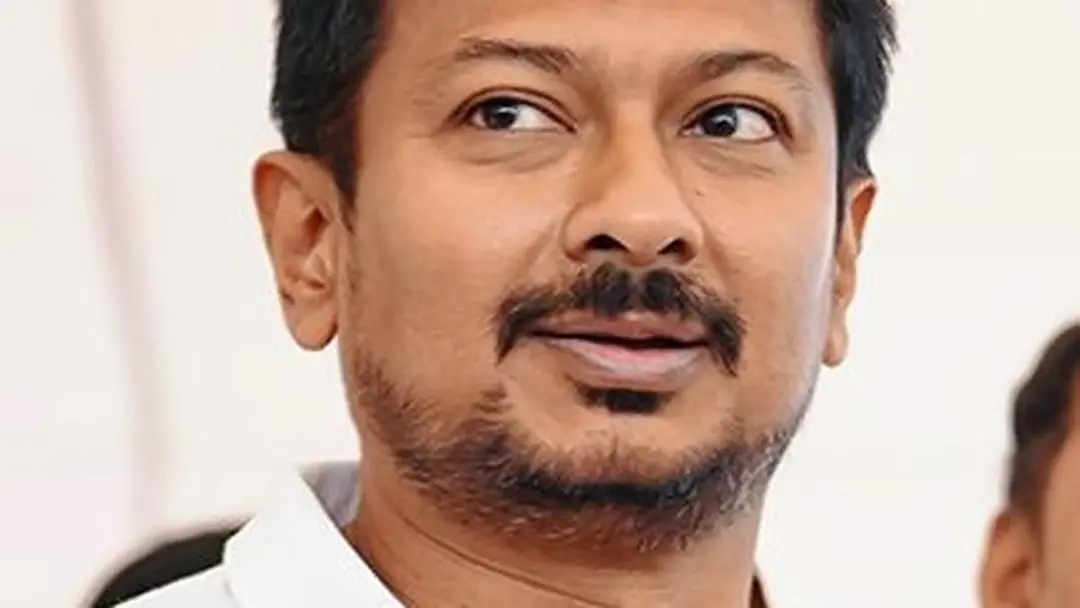
Udhayanidhi welcomes Tamil Nadu decision against Navodaya schools
Leader of Opposition Udhayanidhi Stalin on Friday welcomed the government's decision to adhere to the two-language policy in Tamil Nadu and not permit Navodaya schools in the State. He urged the government to press the State's arguments in the ongoing Supreme Court case, and suggested convening a special Assembly session, if required, to adopt a resolution reiterating the State's stand. In a statement, he said the State opposed no language, including Hindi, and there was no connection between learning Hindi and patriotism.
Source
The Hindu — National · read the original report ↗
Desk check · compared with the source
What the desk checked (5)
- Leader of Opposition Udhayanidhi Stalin welcomed the government's decision to follow the two-language policy and not permit Navodaya schools in Tamil Nadu. — Attributed to Udhayanidhi Stalin in a statement on Friday; appears in source.
- He urged the State to keep arguing its position in the ongoing Supreme Court case on Navodaya schools. — Attributed to Udhayanidhi Stalin; case details beyond this are not given in the source.
- He suggested convening a special Assembly session, if required, to adopt a resolution reiterating the State's stand. — Attributed statement; no date or government response mentioned in source.
- Tamil Nadu leads India in higher education enrolment and women's workforce participation. — Claim made by Udhayanidhi Stalin; no supporting data or source cited in the article.
- Tamils have produced Nobel laureates and leading ISRO scientists without knowing Hindi. — Assertion by Udhayanidhi Stalin; no names or figures given in source.
Analysts’ view opinion
The Leader of the Opposition welcoming a government decision is itself the political story here: on language policy, Tamil Nadu's competing parties find it safer to converge than to differ. The two-language policy remains one of the most potent mobilising issues in the State, and nobody appears willing to be seen retreating from it. The call for a special Assembly session and a resolution signals a strategy to shift the argument from the courtroom to a political stage where positions must be declared on the record.
- An opposition endorsement of the government's stand projects broad intra-State consensus on language, narrowing the space for any party to break ranks.
- The Assembly resolution suggestion is less a legal device than a political one — it forces every party to place its position on the public record.
- The framing of 'not against Hindi, only against imposition' is a careful attempt to pre-empt accusations of separatism.
- Invoking Tamil contributions in national crises seeks to move the debate from a loyalty test to a question of federal rights and State autonomy.
- Citing development markers such as higher education enrolment and women's workforce participation wraps the language argument in a governance-performance shield.
What to watch — Watch whether a special session and resolution actually materialise, how the Supreme Court case progresses, and how rival parties position themselves once the issue reaches the Assembly floor.
The story does not establish whether the government will convene such a session, what stage the court case is at, or how the Centre and other parties will respond.
Deep dive
Research brief · 8 facts · 3 dates · exam-readyThe brief
Context
Tamil Nadu has long followed a two-language policy (Tamil and English) in schools, rejecting the three-language formula associated with the National Education Policy, and has resisted Navodaya Vidyalayas on the ground that they require Hindi instruction. The State government's position on not permitting Navodaya schools is the subject of an ongoing case in the Supreme Court. In this context, Leader of Opposition Udhayanidhi Stalin issued a statement welcoming the government's decision to stick to the two-language policy and to not allow Navodaya schools in the State.
Key facts
- Leader of Opposition Udhayanidhi Stalin on Friday welcomed the government's decision to adhere to the established two-language policy and not permit Navodaya schools in Tamil Nadu.
- He urged the State government to continue putting forth strong arguments in the ongoing Supreme Court case on establishing Navodaya schools in Tamil Nadu.
- He suggested convening a special session of the Tamil Nadu Assembly, if required, to adopt a resolution reiterating the State's position.
- In his statement he said Tamil Nadu is not opposed to any language, including Hindi.
- He argued that allowing each State to follow the language policy of its choice would further strengthen the unity of India.
- He cited the Indo-China War, the Bangladesh Liberation War, the Kargil 'War' and the Gujarat earthquake as occasions when Tamils demonstrated patriotism.
- He said Tamil Nadu, which follows the two-language policy, is a leader in India in higher education enrolment and women's workforce participation.
- He said Tamils have produced Nobel laureates and leading scientists at ISRO without knowing Hindi. Statement published September 19, 2026.
Timeline
- Ongoing (as of the report)Case in the Supreme Court concerning the establishment of Navodaya schools in Tamil Nadu.
- Friday (as reported)Udhayanidhi Stalin welcomes the State government's decision to adhere to the two-language policy and not permit Navodaya schools.
- September 19, 2026, 02:01 am ISTReport of his statement published.
Who has a stake
- Udhayanidhi Stalin, Leader of Opposition — Backs the two-language policy, urges strong legal arguments and a possible special Assembly resolution reiterating the State's stand.
- Tamil Nadu government — Its decision against permitting Navodaya schools and its defence of the two-language policy is before the Supreme Court.
- Supreme Court of India — Hearing the ongoing case on establishing Navodaya schools in Tamil Nadu.
- Tamil Nadu Legislative Assembly — May be convened in a special session to adopt a resolution on the State's language policy position, as suggested.
- School students and parents in Tamil Nadu — Affected by whether Navodaya schools operate in the State and by the language policy followed in schools.
Why it matters
The dispute goes beyond schooling to the federal question of whether States can choose their own language policy, now being tested in the Supreme Court. Udhayanidhi Stalin's framing — that opposing Hindi imposition is not disloyalty, and that Tamil Nadu has developed without Hindi — sets the political terms of the debate. A special Assembly resolution, if convened, would formally place the legislature's weight behind the State's stand.
UPSC angle
Prelims pointers
- Tamil Nadu follows a two-language policy in school education; the State has declined to permit Navodaya schools.
- A case on establishing Navodaya schools in Tamil Nadu is pending in the Supreme Court.
- Udhayanidhi Stalin is the Leader of Opposition referred to in the story.
- He suggested a special session of the Tamil Nadu Assembly to adopt a resolution on the State's language policy stand.
- Claims cited: Tamil Nadu leads in higher education enrolment and women's workforce participation.
- Statement published on September 19, 2026.
Mains framing
The Navodaya schools row in Tamil Nadu illustrates how education, a subject of shared central-State responsibility, becomes a site of federal contestation over language. The State's refusal to permit Navodaya schools flows from its long-standing two-language policy, and the matter is now before the Supreme Court, with the Leader of Opposition urging the government to argue its case strongly and, if needed, have the Assembly adopt a resolution reiterating the stand. The argument advanced is twofold: that opposition to Hindi imposition is not opposition to any language nor a question of patriotism, and that Tamil Nadu's record — leadership in higher education enrolment and women's workforce participation, Nobel laureates and ISRO scientists — shows development has not been hampered by not knowing Hindi. The claim that letting each State follow a language policy of its choice would strengthen national unity reframes linguistic autonomy as a unifying rather than a divisive principle. A way forward consistent with the source lies in resolving the question through the judicial process and legislative articulation of the State's position, while keeping the debate on language de-linked from questions of loyalty to the nation.
Key terms
- Two-language policy
- Tamil Nadu's established school language policy, which the State government has decided to continue adhering to.
- Navodaya schools
- Centrally run schools that the Tamil Nadu government has decided not to permit in the State; the subject of the Supreme Court case.
- Leader of Opposition
- The post held by Udhayanidhi Stalin, who issued the statement welcoming the government's decision.
- Special session of the Assembly
- A specially convened sitting of the Tamil Nadu legislature, suggested for adopting a resolution on the State's language stand.
- Hindi imposition
- The term used for compelling Hindi learning; Udhayanidhi said opposing it does not mean Tamils want a separate country.
Practice questions
- Examine the federal issues raised by Tamil Nadu's refusal to permit Navodaya schools and its adherence to the two-language policy.
- "Allowing each State to follow the language policy of its choice would strengthen the unity of India." Critically discuss this proposition.
- Discuss the role of State legislatures in articulating a State's position on subjects under judicial consideration, with reference to the suggested special Assembly resolution in Tamil Nadu.
Grounded only in the source report — figures and dates are the source's, not inferred.