
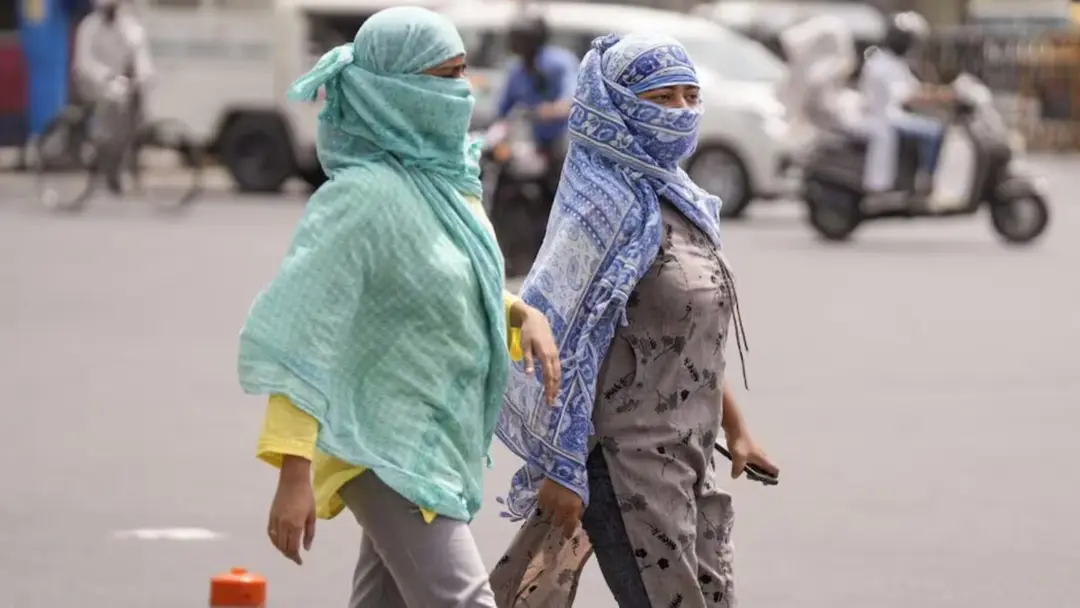
Super El Niño may cause 15,800 extra heat deaths in India: Study
The ongoing Super El Niño could cause around 451,000 additional heat-related deaths worldwide between September 2026 and February 2027, according to a University of Chicago Climate Impact Lab study. India is projected to record about 15,800 such deaths, including 7,400 between December and February, ranking fourth after Nigeria, Indonesia and Sudan. The study estimates global land temperatures 1.2 degrees Celsius above normal and 44% more extremely hot days. It is yet to be peer-reviewed.
Source
News18 — India · read the original report ↗
Desk check · some claims need care
What the desk checked (5)
- Super El Niño could cause about 451,000 additional heat-related deaths worldwide between September 2026 and February 2027. — Attributed in source to University of Chicago's Climate Impact Lab projections; figure appears in source.
- India may see around 15,800 additional heat deaths, including 7,400 between December 2026 and February 2027. — Figures appear in source, attributed to the same CIL study.
- India ranks fourth, behind Nigeria, Indonesia and Sudan, with Brazil completing the top five. — Stated in source as study projection; ranking internally consistent.
- The event will push global land temperatures about 1.2C above normal with 44% more extremely hot days. — Figures appear in source, attributed to the study.
- Report is yet to be submitted to a peer-reviewed journal; estimates based on 24,378 regions and ECMWF forecasts. — Methodology and peer-review status stated in source; not independently verifiable here.
Analysts’ view opinion
Read strategically, this projection is less a weather story than an early-warning product with security consequences. A forecast of roughly 451,000 additional heat deaths globally, with about 15,800 in India, lands on regions that are already fragile — the Sahel, Southeast Asia and South Asia — where heat stacks onto drought, food price stress and thin public health capacity. The more consequential point for policymakers is the capability itself: mortality can now be projected months ahead, which shifts heat from a disaster-response problem to a planning and pre-positioning problem, and creates political accountability for governments that fail to act on the warning.
- India's fourth-place ranking, behind Nigeria, Indonesia and Sudan, underlines that the heaviest burden falls on tropical states with limited fiscal and health-system buffers rather than on the wealthiest emitters.
- The Sahel cluster of roughly 66,800 projected additional deaths across Nigeria, Sudan, Niger and Chad overlaps with zones already facing conflict and displacement pressures, where climate shocks tend to compound existing instability.
- The World Food Programme's August warning that El Niño impacts could push about 50 million people into acute hunger points to food-price and migration pressures that typically travel across borders faster than heat itself.
- For India, the study's note that southern states drive winter mortality while northern winters are normally cold enough to blunt the effect argues for regionally differentiated preparedness rather than a single national heat plan.
- The researchers' expectation that heat deaths in India and Pakistan keep rising into summer means the exposure window extends well past the six-month forecast, with implications for outdoor labour, power demand and water management.
What to watch — Watch whether governments and humanitarian agencies convert the lead time into concrete measures — early-warning systems, cooling and hydration capacity, surge medical staffing and outdoor-worker protections — and whether food-security agencies begin pre-positioning ahead of the projected peak.
The report is still to be submitted for peer review and its figures are model-based estimates with acknowledged uncertainty, so they are a risk projection rather than a confirmed death toll, and the story establishes no government response, policy decision or verified casualty data.
Deep dive
Research brief · 8 facts · 7 dates · exam-readyThe brief
Context
El Niño is a naturally occurring warming of the equatorial Pacific Ocean that reshapes weather worldwide; in India it is linked to higher temperatures and a suppressed monsoon. The current event has intensified into a "Super El Niño", surpassing the highest temperature previously recorded for the phenomenon months before its expected peak. A new study by the University of Chicago's Climate Impact Lab (CIL) projects how much additional heat mortality this event could cause between September 2026 and February 2027. The report, which is yet to be peer-reviewed, places India fourth globally in projected additional heat deaths.
Key facts
- CIL projects about 451,000 additional heat-related deaths globally between September 2026 and February 2027.
- India is projected to see around 15,800 additional heat-related deaths over the six-month period, ranking fourth globally.
- About 7,400 of India's projected additional heat deaths fall in December 2026 to February 2027 alone.
- The Super El Niño is expected to push global land temperatures about 1.2 degrees Celsius above normal and bring 44% more extremely hot days than a normal year.
- Nigeria, Indonesia, Sudan, India and Brazil are projected to record the five highest additional heat death tolls.
- Sahel countries Nigeria, Sudan, Niger and Chad are projected to see roughly 66,800 additional deaths combined; the Philippines, Vietnam, Thailand and Cambodia about 19,400; the United States about 3,500.
- Projections were built from temperature-mortality relationships across 24,378 regions worldwide, combined with seasonal forecasts from the European Centre for Medium-Range Weather Forecasts, measured against 1996-2025 average conditions.
- The World Food Programme warned in August that El Niño impacts could push about 50 million people into acute hunger and drive up food prices.
Timeline
- 1996-2025Baseline period of average conditions against which the study measures excess deaths.
- August (year as stated in source)World Food Programme warns El Niño impacts could push about 50 million people into acute hunger.
- Monday (as reported)The current El Niño surpasses the highest temperature previously recorded for the phenomenon, months before its expected peak.
- September 2026 - February 2027Forecast window of the Climate Impact Lab study on additional heat-related deaths.
- September 23, 2026Story first published.
- December 2026 - February 2027Period in which India is projected to see about 7,400 additional heat deaths.
- Beyond February 2027CIL expects heat deaths in India and Pakistan to keep rising into summer as abnormal warmth stacks onto seasonal heat.
Who has a stake
- India's population, especially southern India — Normal winter temperatures in the south are already warm enough to cause heat deaths, so abnormal warmth pushes mortality up sharply.
- Northern India — Winters are normally cold enough that heat rarely drives deaths, so a warmer-than-usual winter changes numbers little.
- University of Chicago's Climate Impact Lab (CIL) — Authored the projections; report is to be submitted to a peer-reviewed journal.
- Governments and humanitarian organisations — Months of advance warning could let them target cooling centres, hydration stations, medical staffing and outdoor-worker protections.
- Tropical and Sahel countries (Nigeria, Indonesia, Sudan, Brazil, Niger, Chad) — Projected to bear a significant share of additional heat mortality, with the Sahel four seeing roughly 66,800 additional deaths.
- Outdoor workers and vulnerable groups — Directly exposed to never-before-experienced heat extremes with consequences for health, food security and water stress.
- World Food Programme — Warned of El Niño-driven acute hunger for about 50 million people and rising food prices.
Why it matters
The study suggests a single climate event can temporarily deliver the kind of heat that human-driven warming is otherwise expected to bring roughly 20 years from now — described by researchers as a "postcard from our future". For India, the burden is not confined to summer: even winter warmth can be lethal in the south, and mortality is expected to keep rising into the following summer. Crucially, it shows heat deaths may now be forecastable months in advance, opening a window for targeted, life-saving preparedness rather than reactive emergency response.
UPSC angle
Prelims pointers
- El Niño: abnormal warming of the equatorial Pacific Ocean; in India associated with higher temperatures and suppression of the monsoon.
- Climate Impact Lab (CIL) is based at the University of Chicago; co-founder Prof Michael Greenstone.
- CIL study window: September 2026-February 2027; global projection about 451,000 additional heat deaths; India about 15,800.
- Top five projected tolls: Nigeria, Indonesia, Sudan, India, Brazil.
- Seasonal forecasts used were from the European Centre for Medium-Range Weather Forecasts (ECMWF), with a 51-member forecast ensemble.
- Study projects global land temperatures about 1.2°C above normal and 44% more extremely hot days; not yet peer-reviewed.
Mains framing
The Climate Impact Lab's projection of roughly 451,000 additional heat deaths globally and about 15,800 in India between September 2026 and February 2027 illustrates how a natural climate oscillation now compounds an already warmer, human-influenced baseline. The proximate cause is an exceptionally strong El Niño — a large redistribution of energy in the climate system — layered onto warming driven by continued fossil fuel use, producing an estimated 1.2°C rise in global land temperatures and 44% more extremely hot days. The Indian implication is distributional: northern winters are cold enough that extra warmth barely alters mortality, while southern India's already-warm winters mean added heat translates directly into deaths, and CIL expects the toll to keep climbing into summer for India and Pakistan. Method matters too — region-specific temperature-mortality relationships across 24,378 regions combined with ECMWF seasonal forecasts, benchmarked to 1996-2025 averages, though the report is yet to be peer-reviewed and carries uncertainty from both the 51-member forecast ensemble and the mortality relationship. The way forward flagged by researchers is anticipatory action: sharper heat forecasts and early-warning systems, cooling centres, hydration stations, surge medical staffing, protections for outdoor workers and health outreach, targeted at the highest-risk districts — while recognising, as Dr Tamma Carleton argues, that today's extremes will become normal and cannot be met by permanent emergency response alone. Cascading risks — drought, wildfire, flooding and food disruption, with the WFP warning of 50 million people facing acute hunger — widen this from a health question to one of food and water security.
Key terms
- Super El Niño
- An exceptionally powerful El Niño event; the current one has surpassed the highest temperature previously recorded for the phenomenon.
- Climate Impact Lab (CIL)
- University of Chicago research group that produced the heat mortality projections; co-founded by Prof Michael Greenstone.
- Excess deaths
- Deaths above what would be expected under average conditions; here benchmarked against 1996-2025 averages.
- ECMWF
- European Centre for Medium-Range Weather Forecasts, whose seasonal forecasts were combined with regional temperature-mortality relationships.
- Forecast ensemble
- A set of multiple model runs (here 51 members) whose spread indicates forecast uncertainty.
- World Food Programme (WFP)
- UN food agency that warned El Niño impacts could push about 50 million people into acute hunger and raise food prices.
Practice questions
- Discuss how El Niño events interact with anthropogenic climate change to intensify heat mortality risk, using the projections for India as an illustration.
- Seasonal forecasting of heat-related deaths months in advance can transform disaster response from reactive to anticipatory. Examine this statement with reference to the Climate Impact Lab study.
- Why does the projected heat mortality burden of a warmer-than-normal winter differ between northern and southern India? What does this imply for the design of heat action plans?
Grounded only in the source report — figures and dates are the source's, not inferred.