
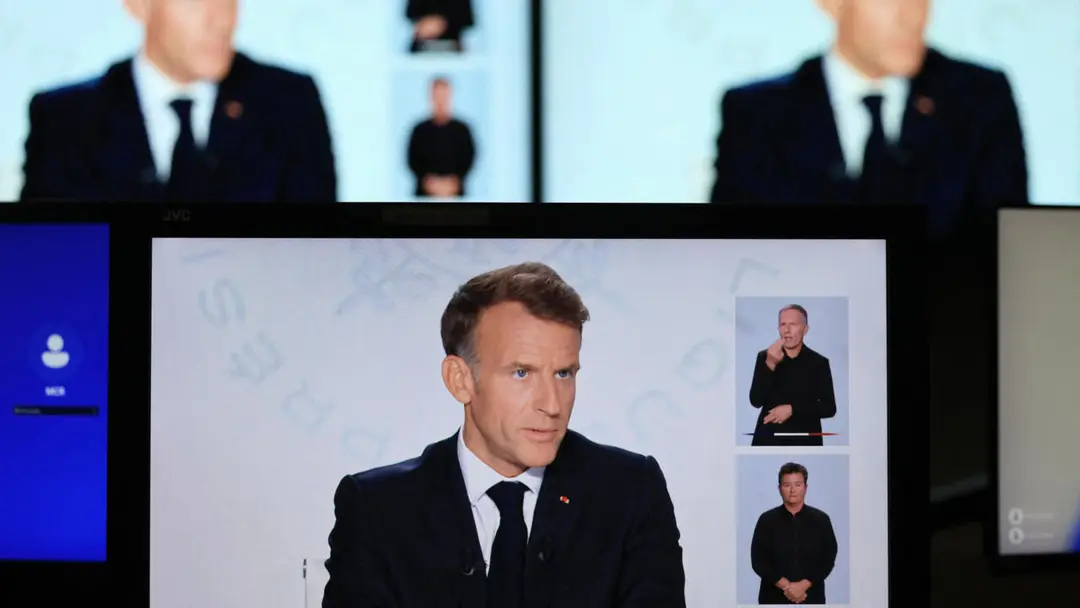
Macron denies CIA warned French services of Russian drone attacks
French President Emmanuel Macron rejected a report by Spanish newspaper El Mundo that the CIA had warned European governments of potential drone attacks from the Mediterranean, saying "the CIA did not inform French services", in an interview with TF1 and France 2. He warned France could face strikes similar to the failed attack on Leipzig airport, which Germany blamed on Russia. Macron also announced soldiers, radar and defence systems for Saudi Arabia's Red Sea port of Yanbu.
Source
France 24 · read the original report ↗
Desk check · compared with the source
What the desk checked (5)
- France will send soldiers, radar and defence systems to protect the Saudi Red Sea port of Yanbu. — Directly attributed to Macron in a TF1 and France 2 interview, with quote in source.
- Macron denied that the CIA informed French services about possible drone attacks from the Mediterranean. — Quoted denial attributed to Macron, responding to a report by Spanish newspaper El Mundo; the underlying report is not independently confirmed in the source.
- A US ban on diesel exports would be 'catastrophic' globally and for the US economy. — Attributed to Macron; source notes the White House has denied such a ban is under consideration.
- Germany said Russia was responsible for an attempted drone attack on Leipzig airport in August. — Attributed to the German government in the source; Russia is said to reject hybrid-attack allegations.
- France obtained an EU sanctions exemption for Alisher Usmanov, after which Azerbaijan pardoned a jailed French national. — Stated in source without named official attribution; sequence is presented as reported fact.
Analysts’ view opinion
Macron did two things in one interview: he denied the reported CIA warning while simultaneously affirming that the threat of Russian-linked attacks on French soil is real. What he rejected is a specific intelligence-sharing claim, not the threat itself — which leaves the separate, politically sensitive question of who told which ally what, and when. Meanwhile, sending soldiers, radars and defence systems to Yanbu on the Red Sea signals that France now treats the protection of energy transport routes as a direct national-security interest.
- The denial is narrow and aimed at the report, since Macron himself reinforced the Russian hybrid-threat narrative — so questions about allied intelligence coordination remain open.
- Invoking the Leipzig airport incident frames the drone risk as Europe-wide rather than a single country's problem, consistent with his order for a critical-infrastructure protection plan.
- Macron explicitly bounded the Yanbu deployment as protective and "not to get us involved in any conflicts", but with Houthi missile attacks on the area, any air-defence presence carries escalation exposure.
- Pairing domestic energy-price pressure with a foreign deployment in the same interview is no accident: supply security is the common thread.
- The controversy over France securing an EU sanctions exemption for Usmanov weakens the force of his anti-Russia argument and adds strain to European cohesion.
What to watch — Watch how fast the French critical-infrastructure plan becomes operational, how the size and duration of the Yanbu mission are defined, and whether other EU states follow suit.
The story does not establish whether the CIA warned other European governments, what El Mundo's report rests on, or how substantive the Mediterranean drone threat is — and Russia denies the hybrid-attack allegations.
Deep dive
Research brief · 8 facts · 4 dates · exam-readyThe brief
Context
French President Emmanuel Macron used a primetime television interview on TF1 and France 2 to address energy security and the threat of Russian "hybrid" attacks on Europe. He denied a report in the Spanish daily El Mundo that the CIA had warned European governments of possible drone attacks launched from the Mediterranean, while conceding that France could face strikes like the failed attempt on Leipzig airport in Germany. In the same interview he announced that France will deploy soldiers, radar and defence systems to protect Saudi Arabia's Red Sea oil port of Yanbu, which has come under missile attack from Yemen's Iran-backed Houthis, pushing crude prices higher.
Key facts
- Macron said on Thursday that France will send soldiers, radar systems and defence systems to protect the Saudi Red Sea port city of Yanbu, key for energy transport.
- Macron denied an El Mundo report that the CIA had warned European governments of potential drone attacks from the Mediterranean: "The CIA did not inform French services."
- Germany said Russia was responsible for an attempted drone attack in August on Leipzig airport; Macron warned France could face similar strikes.
- Macron said a US ban on diesel exports would be "catastrophic" globally and for the US economy; the White House has denied such a ban is under consideration.
- Crude oil prices have surged as the main alternative route for Saudi oil exports through Yanbu came under missile attack from Yemen's Iran-backed Houthis.
- Macron stressed the deployment is "not to get us involved in any conflicts, but to protect this site".
- Macron gathered French party chiefs at the Elysee last week to brief them on the growing threat from Russia, then ordered a plan to protect critical infrastructure from drone and cyber attacks.
- France got Russian-Uzbek metals tycoon Alisher Usmanov exempted from EU sanctions on national security grounds, shocking other EU members; Azerbaijan then pardoned a French national jailed for espionage.
Timeline
- AugustAttempted drone attack on Leipzig airport in Germany, which Berlin blamed on Russia.
- Last weekMacron gathered French party chiefs at the Elysee to brief them on the growing Russian threat; later ordered a plan to protect critical infrastructure from drone and cyber attacks.
- This weekFrance obtained an EU sanctions exemption for Alisher Usmanov, citing national security; Azerbaijan pardoned a French national jailed for espionage.
- ThursdayMacron's primetime TF1/France 2 interview: denies CIA warning, announces military means for Yanbu, calls a US diesel export ban "catastrophic".
Who has a stake
- Emmanuel Macron / France — Facing domestic pressure over high energy prices while asserting deterrence against Russia and securing oil supply routes.
- Saudi Arabia — Yanbu, its main alternative oil export route, is under Houthi missile attack and will host French troops and air defences.
- Yemen's Houthis (Iran-backed) — Their missile attacks on Yanbu are driving crude price surges and now draw a French military response.
- Russia — Accused by Macron of multiplying hostile and criminal acts to intimidate Europe; calls the allegations baseless anti-Russian hysteria.
- Germany — Attributed the August Leipzig airport drone attempt to Russia, setting the precedent Macron cites for France.
- CIA / United States — Named in the El Mundo report Macron denied; the White House has also denied considering a diesel export ban.
- European Union members — Shocked by France's push to exempt Usmanov from EU sanctions, raising questions on sanctions unity.
Why it matters
The story links two pressure points at once: European fears of Russian drone and cyber attacks on critical infrastructure, and the vulnerability of Gulf energy export routes that set global crude prices. For India, disruption around Red Sea and Saudi export terminals directly affects import costs and shipping. It also shows how sanctions unity and intelligence-sharing claims can be contested in public.
UPSC angle
Prelims pointers
- Yanbu is a Saudi Red Sea port city, the main alternative route for Saudi oil exports, now targeted by Houthi missiles.
- Germany blamed Russia for the attempted drone attack on Leipzig airport in August.
- El Mundo is the Spanish newspaper whose CIA-warning report Macron denied; CIA is the US Central Intelligence Agency.
- France's announced deployment to Yanbu comprises soldiers, radar systems and defence systems.
- Alisher Usmanov, a Russian-Uzbek metals tycoon, was exempted from EU sanctions at France's request on national security grounds.
- Macron spoke in a primetime interview to TF1 and France 2; the Elysee is the French presidential palace.
Mains framing
Macron's interview illustrates how energy security and hybrid warfare have converged in European strategic thinking. On one axis, Houthi missile attacks on Yanbu — Saudi Arabia's alternative export route — have pushed crude prices up and prompted France to deploy soldiers, radar and air-defence systems, framed narrowly as site protection rather than entry into a conflict, even as Macron warned that a US diesel export ban would be "catastrophic". On the other axis, he alleged that Russia is multiplying hostile and criminal acts to intimidate Europe and break its resolve on Ukraine, citing Germany's attribution of the August Leipzig airport drone attempt to Moscow, and has ordered a plan to shield critical infrastructure from drone and cyber attacks — while publicly denying El Mundo's claim that the CIA warned European governments of Mediterranean-launched drone attacks. The credibility cost is visible: France's success in exempting Alisher Usmanov from EU sanctions on national security grounds, followed by Azerbaijan's pardon of a French national jailed for espionage, weakened its hard line on Russia within the EU. The way forward suggested by the source is infrastructure hardening, transparent intelligence handling and consistency between sanctions policy and national bargains.
Key terms
- Yanbu
- Saudi Red Sea port city key to energy transport and the main alternative route for Saudi oil exports.
- Hybrid attacks
- Non-conventional hostile acts such as drone incursions and cyber attacks; Russia calls European allegations of these baseless.
- CIA
- US Central Intelligence Agency, reported by El Mundo to have warned European governments of drone attack threats — denied by Macron.
- Houthis
- Yemen's Iran-backed group whose missile attacks on Yanbu have contributed to surging crude oil prices.
- Elysee
- The French presidential palace, where Macron briefed party chiefs on the growing Russian threat last week.
- EU sanctions exemption
- A carve-out from EU restrictive measures; France secured one for tycoon Alisher Usmanov citing national security.
Practice questions
- Attacks on energy chokepoints increasingly shape global oil prices. Examine, with reference to Yanbu and the Red Sea, how such disruptions affect import-dependent economies and what policy responses are available.
- "Hybrid threats blur the line between peace and conflict." Discuss in the light of European allegations of Russian drone and cyber attacks on critical infrastructure.
- Do national security exemptions to multilateral sanctions regimes undermine their credibility? Analyse using France's handling of the Usmanov case.
Grounded only in the source report — figures and dates are the source's, not inferred.