
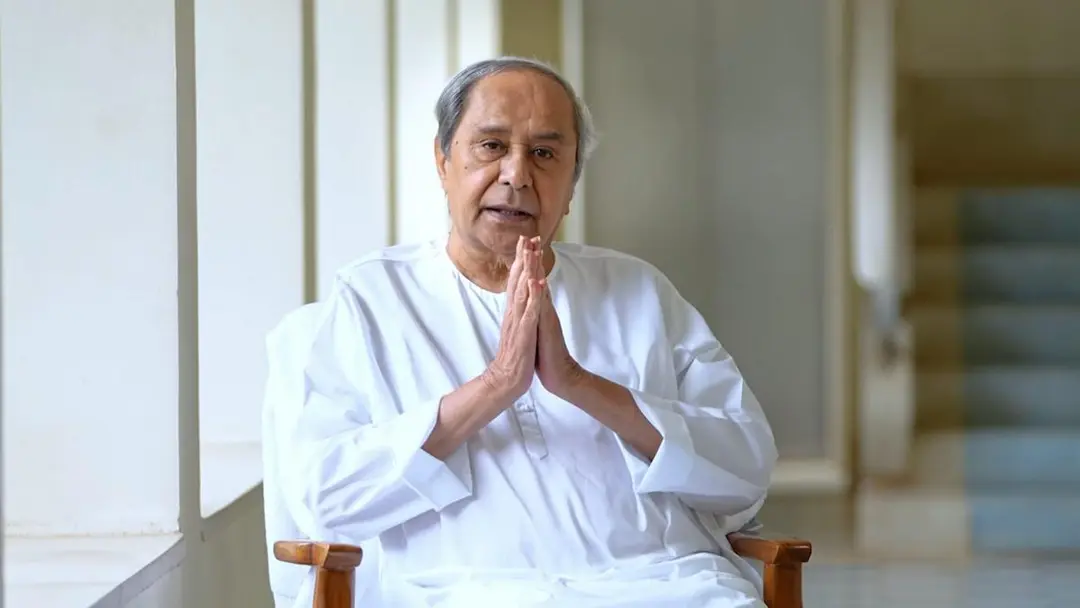
Patnaik seeks special Assembly session on MMDR Amendment Act
BJD President Naveen Patnaik on Sunday wrote to Odisha Chief Minister Mohan Charan Majhi urging a unanimous resolution demanding repeal of the Mines and Minerals (Development and Regulation) Amendment Act 2026, and sought a special Assembly session. He said the amendment strips Odisha of its constitutional right to tax mineral wealth and that 20 BJP MPs backed it. He said a nine-judge Supreme Court bench ruling opened the way for nearly Rs 12,000 crore in annual revenue. The Assembly session begins September 22.
Source
The Hindu — National · read the original report ↗
Desk check · compared with the source
What the desk checked (5)
- Naveen Patnaik wrote to CM Mohan Charan Majhi on September 20, 2026 seeking a unanimous resolution against the MMDR Amendment Act 2026. — Attributed to Patnaik's letter, quoted in source; date appears in source.
- The Orissa Legislative Assembly session is scheduled to commence from September 22. — Stated as fact in source without separate attribution.
- Twenty BJP MPs supported the amendment 'against the people of Odisha'. — Direct quote from Patnaik; a political assertion, not independently verified.
- A nine-judge Supreme Court constitutional bench upheld Odisha's stand, opening the way for past dues and about Rs 12,000 crore in annual recurring revenue. — Figure and characterisation are from Patnaik's letter as quoted in the source.
- This is Patnaik's third letter on the Act; BJD also held demonstrations and submitted a memorandum to President Droupadi Murmu. — Stated in source; no further documentation cited.
Analysts’ view opinion
This is classic opposition strategy — framing the issue as state interest versus party loyalty and putting the BJP in the awkward position of choosing between Delhi and Odisha. By demanding a "unanimous resolution", Naveen Patnaik positions the BJD as the guardian of Odisha's constitutional rights while turning the vote of 20 BJP MPs into a political weapon. Whether or not the resolution happens, the BJD gains a usable narrative — that is the real force of this letter.
- A third letter, public demonstrations and a memorandum to the President suggest the BJD is building a sustained campaign plank rather than making a one-off demand.
- Invoking the nine-judge Supreme Court bench and a recurring revenue of nearly Rs. 12,000 crore a year is an attempt to recast this as an "Odisha's money" issue rather than a partisan fight.
- Patnaik's praise for the Majhi government's own fight in the Supreme Court is a shrewd move — it makes it harder for the BJP to now stay silent on a central law without appearing inconsistent.
- For the BJP the issue is delicate: backing a resolution against a central Act embarrasses its own governments, while refusing risks the charge of surrendering state interests.
- With the session already due from September 22, a "special" session may not be technically necessary — the symbolic value of that demand appears to be the point.
What to watch — Watch whether the issue reaches the floor when the session begins on September 22, how the Majhi government responds, and whether other mineral-rich states pick up the same argument.
The story carries only the BJD's case — it does not establish the Centre's or the Majhi government's explanation of the amendment, any independent verification of the revenue-loss figures, or whether a special session will actually be convened.
Deep dive
Research brief · 8 facts · 6 dates · exam-readyThe brief
Context
Odisha, India's leading mineral-producing State, has long fought mining companies in courts over its power to levy taxes on mineral wealth and mineral-bearing lands. A nine-judge Constitution Bench of the Supreme Court upheld the States' position, which according to BJD opened the way for recovery of past dues and nearly Rs 12,000 crore in recurring annual revenue for Odisha. The Mines and Minerals (Development and Regulation) Amendment Act 2026 has now been enacted, and BJD President Naveen Patnaik says it strips Odisha of that constitutional taxing right. On September 20, 2026, he wrote to Chief Minister Mohan Charan Majhi seeking a special Assembly session and a unanimous resolution demanding repeal, ahead of the Assembly session beginning September 22.
Key facts
- Naveen Patnaik, BJD President and former Odisha CM, wrote to CM Mohan Charan Majhi on Sunday, September 20, 2026.
- He demanded a unanimous Assembly resolution seeking repeal of the Mines and Minerals (Development and Regulation) Amendment Act 2026.
- A session of the Orissa Legislative Assembly was scheduled to commence from September 22 (2026).
- Patnaik said the amendment "effectively strips Odisha of its constitutional right to levy taxes on its mineral wealth".
- He said 20 BJP MPs supported the amendment "against the people of Odisha" and that this is what mine owners wanted.
- A nine-judge Constitution Bench of the Supreme Court upheld Odisha's stand against mining companies' claims.
- Patnaik said the judgment opened the way for recovery of crores in past dues and a minimum recurring revenue of nearly Rs 12,000 crore every year.
- This was Patnaik's third letter on the MMDR Amendment Act 2026; BJD has also held public demonstrations and submitted a memorandum to President Droupadi Murmu seeking rollback.
Timeline
- Before the judgment (years)Mining companies challenged States' right to tax mineral wealth; BJD government fought in the High Court and Supreme Court, per Patnaik.
- SubsequentlyThe Majhi government also contested the case; the Advocate General of Odisha placed the State's position and financial implications before the Supreme Court.
- Date not stated in the sourceA nine-judge Constitution Bench of the Supreme Court upheld Odisha's stand against the mining companies.
- 2026Mines and Minerals (Development and Regulation) Amendment Act 2026 enacted; BJD stages demonstrations and submits memorandum to President Droupadi Murmu.
- September 20, 2026Patnaik writes his third letter to CM Majhi seeking a special session and a unanimous repeal resolution.
- September 22, 2026Orissa Legislative Assembly session scheduled to commence.
Who has a stake
- Government of Odisha / CM Mohan Charan Majhi — Must decide on convening a special session and a repeal resolution; had earlier fought the case in the Supreme Court through the Advocate General.
- Biju Janata Dal and Naveen Patnaik — Leading the political campaign for repeal through letters, demonstrations and a memorandum to the President.
- BJP MPs from Odisha — Patnaik says 20 BJP MPs backed the amendment, putting them at odds with the State's revenue interests.
- Mining companies / mine owners — Had challenged the States' taxing power in courts; Patnaik says the amendment delivers what they had been fighting for.
- People and youth of Odisha — Nearly Rs 12,000 crore in annual revenue with implications for the State's development and their future, per Patnaik.
- President Droupadi Murmu — Recipient of BJD's memorandum seeking rollback of the Act.
Why it matters
The dispute goes to the heart of fiscal federalism: whether a mineral-rich State can tax its own mineral wealth after the Supreme Court's nine-judge bench upheld that power. For Odisha, Patnaik puts the stake at past dues plus nearly Rs 12,000 crore a year, money tied to development spending. It also sets up a direct State-versus-Centre and BJD-versus-BJP confrontation on the floor of the Assembly.
UPSC angle
Prelims pointers
- MMDR Amendment Act 2026 = Mines and Minerals (Development and Regulation) Amendment Act 2026.
- A nine-judge Supreme Court Constitution Bench upheld Odisha's stand on taxing mineral wealth and mineral-bearing lands.
- Patnaik's claim: the ruling opened the way to nearly Rs 12,000 crore recurring annual revenue for Odisha plus past dues.
- Naveen Patnaik is BJD President and former Odisha CM; Mohan Charan Majhi is the current Chief Minister.
- Odisha's legislature is formally named the Orissa Legislative Assembly; its session was to begin September 22, 2026.
- BJD's protest route: three letters to the CM, public demonstrations, and a memorandum to President Droupadi Murmu.
Mains framing
The Odisha row over the MMDR Amendment Act 2026 is a test case in fiscal federalism and the limits of legislative response to judicial verdicts. After prolonged litigation by mining companies, a nine-judge Constitution Bench of the Supreme Court upheld the State's constitutional power to tax mineral wealth and mineral-bearing lands — a power Odisha's successive governments defended in court, with the Advocate General placing the State's financial exposure on record. The BJD's case is that the 2026 amendment legislatively undoes that gain, transferring benefit to mine owners and costing Odisha past dues plus a minimum of nearly Rs 12,000 crore annually, resources directly linked to development and youth opportunity. The demand for a special Assembly session and a unanimous resolution reflects a familiar federal instrument: using the State legislature to register collective dissent, as BJD has also done through demonstrations and a memorandum to the President. The way forward, as framed by the source, lies in a cross-party resolution reaffirming the rights upheld by the Court and pressing for repeal; the source does not state the Centre's justification or the Act's specific provisions, and any assessment must await those details.
Key terms
- MMDR Amendment Act 2026
- Mines and Minerals (Development and Regulation) Amendment Act 2026, which Patnaik says removes Odisha's right to tax mineral wealth.
- Nine-judge Constitution Bench
- The Supreme Court bench whose judgment upheld Odisha's stand against mining companies' claims on State taxing power.
- Biju Janata Dal (BJD)
- Odisha party led by Naveen Patnaik, now in opposition, spearheading the repeal campaign.
- Advocate General of Odisha
- The State's top law officer who, under the CM's direction, presented Odisha's position before the Supreme Court.
- Unanimous Assembly resolution
- A motion passed with all-party support in the legislature to formally assert a State's demand, here for repeal of the Act.
- Mineral-bearing lands
- Lands containing minerals; their taxability by States was part of the dispute decided by the Supreme Court.
Practice questions
- Examine how the MMDR Amendment Act 2026 controversy in Odisha illustrates tensions in India's fiscal federalism between Union legislation and State taxing powers.
- Discuss the role of State legislature resolutions as instruments of political and federal assertion, with reference to Odisha's demand for repeal of the MMDR Amendment Act 2026.
- "Mineral revenues are central to the development finances of resource-rich States." Critically analyse in the light of the Supreme Court's nine-judge bench verdict and Odisha's claim of nearly Rs 12,000 crore annual revenue.
Grounded only in the source report — figures and dates are the source's, not inferred.