
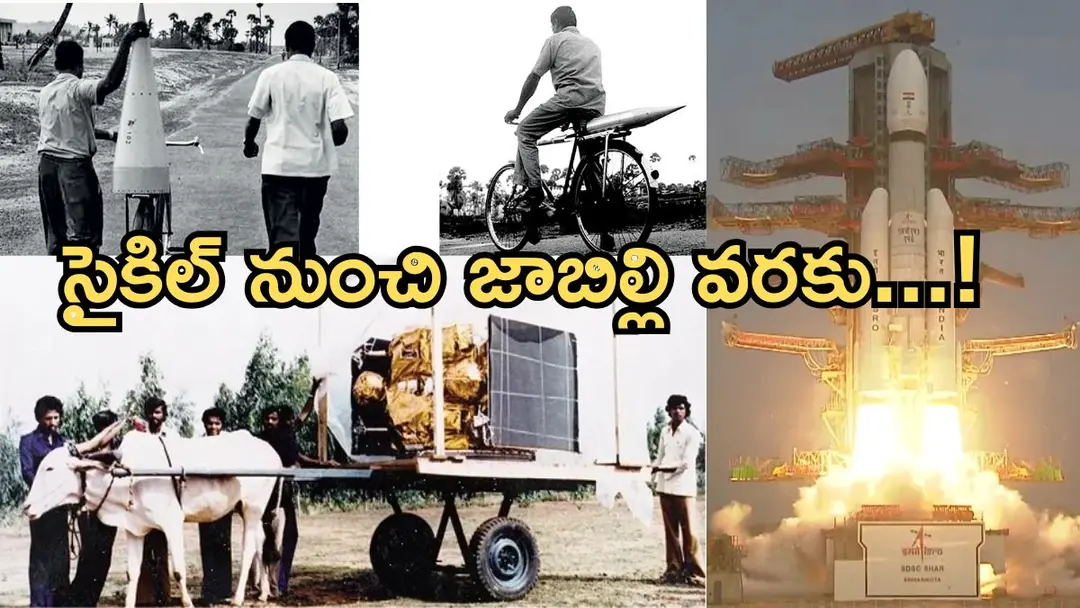
ISRO's journey: from Aryabhata to its 101st mission
A retrospective traces key milestones of ISRO since its founding in 1969. Aryabhata was launched in 1975 with Soviet Union cooperation, and Rohini went into orbit in 1980 on the indigenous SLV-3 from Sriharikota. Chandrayaan-1 detected traces of water on the Moon in 2008. Chandrayaan-3, launched on July 14, 2023, landed the Vikram lander at the lunar south pole on August 23. PSLV-C37 carried 104 satellites in 2017. On December 24, an LVM3 launched Bluebird Block 2.
Source
Science & ISRO · read the original report ↗
Desk check · some claims need care
What the desk checked (5)
- ISRO launched Bluebird Block 2 on an LVM3 on December 24, described as its 101st mission, enabling direct satellite-to-smartphone connectivity. — Stated in the source as same-day news with no official attribution; publication date given as December 24, 2025.
- Aryabhata (1975) was India's first satellite, launched with Soviet Union cooperation. — Appears in source as historical background, no source cited.
- Rohini (1980) was the first satellite placed in orbit by the indigenous SLV-3 from Sriharikota. — Appears in source, unattributed.
- Chandrayaan-3 launched on July 14, 2023 and landed the Vikram lander on the Moon's south pole on August 23, making India the first country to do so. — Dates and 'first country' claim appear in source without attribution; superlative should be checked by an editor.
- PSLV-C37 placed 104 satellites in orbit in one launch in 2017, 96 of them American. — Figures appear in the source; no source given.
Analysts’ view opinion
ISRO's arc from a Soviet-assisted first satellite in 1975 to today's 101st launch is, in technology terms, a story of moving up the value chain: first the satellite, then the launch vehicle, then the destination, and now the commercial payload. The December 24 LVM3 flight carrying BlueBird Block 2 is the most telling data point in the story, because it puts India's heavy-lift rocket at the service of direct satellite-to-smartphone connectivity — a segment where launch capacity, not ambition, is the bottleneck. The deeper shift is that ISRO is being judged less as a national prestige programme and more as an infrastructure provider in a crowded global launch market.
- The 1975-to-1980 jump from Aryabhata to Rohini on the indigenous SLV-3 was the decisive technology step: owning the launch vehicle, not just the spacecraft.
- PSLV's reputation as the 'workhorse' and the 2017 record of 104 satellites on PSLV-C37 — 96 of them American — showed that reliability plus low cost is India's real export product.
- LVM3's heavy-lift class, credited in the story with enabling Chandrayaan-3, is what makes ISRO relevant to large commercial constellations rather than only small rideshare payloads.
- Direct satellite-to-smartphone service, the stated aim of the BlueBird Block 2 launch, is one of the most contested frontiers in connectivity, and launch providers capture value regardless of which operator eventually wins.
- Chandrayaan-1's detection of water traces and Chandrayaan-3's south-polar landing gave India scientific credibility that reinforces, rather than competes with, its commercial launch pitch.
What to watch — Watch whether LVM3 can move to a repeatable, higher-cadence commercial schedule, and how Gaganyaan progresses — human-rated hardware is the next capability gate ISRO has set for itself.
The story is a milestone retrospective: it does not establish BlueBird Block 2's performance in orbit, the commercial terms or scale of the arrangement, ISRO's cost or cadence relative to other launch providers, or any timeline for Gaganyaan.
Deep dive
Research brief · 8 facts · 9 dates · exam-readyThe brief
Context
The story is a retrospective of the Indian Space Research Organisation (ISRO), founded in 1969 on the vision of Vikram Sarabhai, tracing its growth from carrying rocket parts on bicycles to completing its 101st launch. It lists the landmarks that shaped Indian spaceflight: the first satellite Aryabhata (1975), the first indigenous orbital launch (Rohini, 1980), the PSLV and GSLV/LVM3 launch vehicles, the Chandrayaan and Mangalyaan planetary missions, the 104-satellite world record and the solar mission Aditya L1. The peg is the December 24 launch of Bluebird Block 2 on an LVM3, described as ISRO's 101st mission and a step towards direct satellite-to-smartphone connectivity.
Key facts
- ISRO was founded in 1969; the story marks its 101st launch, dated December 24 (published December 24, 2025).
- Aryabhata, India's first satellite, was launched in 1975 with the cooperation of the Soviet Union.
- Rohini (1980) was the first satellite placed in orbit from Indian soil (Sriharikota) by an indigenous rocket, the SLV-3.
- PSLV is called ISRO's 'workhorse'; the source says it has flown over a hundred launches without knowing failure.
- GSLV/LVM3, nicknamed the 'Bahubali' rocket, carries heavy satellites of over 4 tonnes and was key to Chandrayaan-3.
- Chandrayaan-1 (2008) entered lunar orbit on the first attempt and detected traces of water on the Moon.
- Chandrayaan-3 was launched on July 14, 2023; the Vikram lander touched down on the Moon's south pole on August 23.
- PSLV-C37 set a record in 2017 by launching 104 satellites at once, of which 96 belonged to the United States.
Timeline
- 1969ISRO is founded, growing out of Vikram Sarabhai's vision.
- 1975Aryabhata, India's first satellite, is launched with Soviet Union cooperation.
- 1980Rohini is placed in orbit from Sriharikota by the indigenous SLV-3 rocket.
- 2008Chandrayaan-1 reaches lunar orbit on the first attempt and finds traces of water on the Moon.
- 2013Mangalyaan (Mars Orbiter Mission) enters Mars orbit on the first attempt at a cost lower than a Hollywood film budget.
- 2017PSLV-C37 launches 104 satellites in a single flight, 96 of them American.
- July 14, 2023Chandrayaan-3 is launched towards the Moon.
- August 23, 2023The Vikram lander touches down on the lunar south pole.
- December 24 (2025)LVM3 launches Bluebird Block 2, ISRO's 101st mission, advancing satellite-to-smartphone connectivity.
Who has a stake
- ISRO — Its credibility as a 'space power house' rests on a record of over a hundred successful launches and on delivering future missions.
- Vikram Sarabhai and ISRO's scientists — The source credits Sarabhai's vision and scientists' sustained dedication for ISRO reaching this level.
- India as a nation — Prestige from being, per the source, the first country to land at the Moon's south pole and from reaching Mars on the first attempt.
- Foreign/commercial satellite customers — PSLV's reliability and the 2017 launch of 96 American satellites show India's role as a launch service provider.
- Smartphone and telecom users — The Bluebird Block 2 launch aims to bring satellite connectivity directly to smartphones.
- Future Indian astronauts (Gaganyaan) — ISRO is preparing the Gaganyaan mission to carry Indians into space on its own.
Why it matters
ISRO's arc from a Soviet-assisted first satellite in 1975 to an indigenous heavy-lift launcher placing a commercial satellite-to-smartphone payload in orbit shows how India moved from dependence to self-reliance in space. The same capability now underpins scientific firsts such as the lunar south pole landing and commercial launches for foreign customers. For readers, the 101st mission is a marker of how space technology has shifted from prestige projects to everyday connectivity and services.
UPSC angle
Prelims pointers
- ISRO founded in 1969; Aryabhata, India's first satellite, launched 1975 with Soviet cooperation.
- Rohini (1980) was the first satellite orbited from Sriharikota using the indigenous SLV-3.
- PSLV is ISRO's 'workhorse'; GSLV/LVM3 is the 'Bahubali' rocket for payloads above 4 tonnes.
- Chandrayaan-1 (2008) detected traces of water on the Moon on India's first lunar attempt.
- Chandrayaan-3: launched July 14, 2023; Vikram lander touched down on the lunar south pole on August 23.
- PSLV-C37 (2017) launched a record 104 satellites in one flight, including 96 US satellites.
Mains framing
India's space programme illustrates how a developing country can convert scarce resources into strategic capability. Beginning in 1969 with imported launch support for Aryabhata (1975), ISRO progressively internalised technology: the SLV-3 put Rohini in orbit from Sriharikota in 1980, the PSLV became a reliable 'workhorse' with more than a hundred launches, and GSLV/LVM3 gave India heavy-lift capacity above 4 tonnes, which proved decisive for Chandrayaan-3. Scientific returns followed — water traces found by Chandrayaan-1 in 2008, a first-attempt Mars orbit insertion by Mangalyaan in 2013 at a cost the source compares to less than a Hollywood film budget, the lunar south pole landing by the Vikram lander on August 23, 2023, and Aditya L1 as India's first solar mission. The record 104-satellite PSLV-C37 flight in 2017, with 96 American satellites, signalled a commercial dimension, and the 101st mission's LVM3 launch of Bluebird Block 2 points to satellite connectivity delivered straight to smartphones. The way forward, as the story indicates, lies in human spaceflight through Gaganyaan and in scaling reliability and commercial services; the source notes India built this capability itself where other countries refused help.
Key terms
- ISRO
- Indian Space Research Organisation, founded in 1969, born of Vikram Sarabhai's vision, now credited with over a hundred successful launches.
- SLV-3
- India's indigenous launch vehicle that put Rohini into orbit from Sriharikota in 1980.
- PSLV
- Polar Satellite Launch Vehicle, called ISRO's 'workhorse'; PSLV-C37 launched 104 satellites in 2017.
- LVM3 / GSLV
- The heavy-lift 'Bahubali' rocket that carries satellites above 4 tonnes; central to Chandrayaan-3 and the Bluebird Block 2 launch.
- Vikram lander
- The Chandrayaan-3 lander that touched down on the Moon's south pole on August 23 after the July 14, 2023 launch.
- Gaganyaan
- ISRO's planned mission to carry Indians into space aboard an Indian craft.
Practice questions
- Trace the evolution of India's launch vehicle capability from SLV-3 to LVM3 and assess how it enabled ISRO's planetary and commercial missions.
- 'Low-cost innovation has been the hallmark of India's space programme.' Discuss with reference to Chandrayaan and Mangalyaan.
- How does the shift from scientific missions to services such as direct satellite-to-smartphone connectivity change the significance of India's space programme for ordinary citizens?
Grounded only in the source report — figures and dates are the source's, not inferred.