
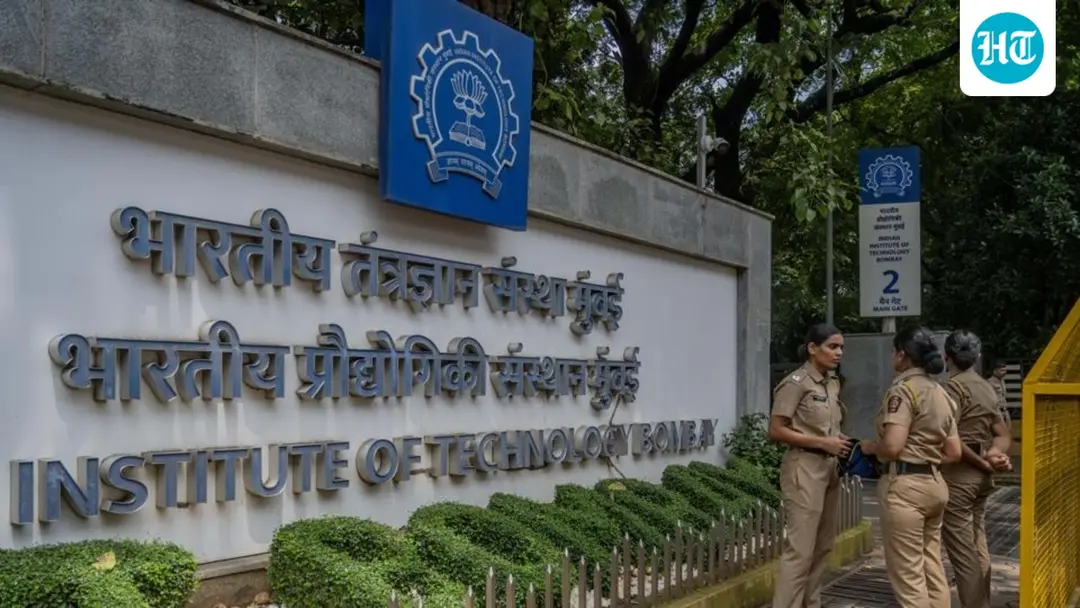
IIT-Bombay alumnus seeks withdrawal of SC/ST case against suspended dean
The suicide of a 22-year-old second-year BTech student at IIT-Bombay and the suspension of dean Suryanarayana Doolla have divided students and faculty. An FIR alleges abetment to suicide on grounds of caste discrimination. Alumnus Sudheendra Kulkarni urged withdrawal of the SC/ST Act case, saying automatically fixing guilt on persons of so-called upper castes amounts to 'reverse casteism'. IIT-Bombay said the student was found using a mobile phone in the exam and had uploaded the question paper to ChatGPT.
Source
Hindustan Times — India · read the original report ↗
Desk check · some claims need care
What the desk checked (5)
- A second-year BTech student of IIT-Bombay's Department of Energy Science and Engineering, aged 22, died by suicide. — Stated in source with HT reporting; no official statement quoted directly.
- An FIR alleges abetment to suicide against suspended dean Suryanarayana Doolla on grounds of caste discrimination. — Attributed to the FIR in the source; contents not independently verifiable here.
- Alumnus Sudheendra Kulkarni said the SC/ST Act case against Doolla must be withdrawn and called automatic blame on 'upper castes' 'reverse casteism'. — Directly quoted from Kulkarni's written statement in the source.
- IIT-Bombay said the student was found using a mobile phone in the exam and had uploaded the question paper to ChatGPT. — Attributed to IIT-Bombay in the source.
- IIT Bombay Faculty Forum president Rajkumar S Pant said the student had filed no complaint with the institute's SC/ST Cell. — Attributed to Pant via ANI, described as a reported statement.
Analysts’ view opinion
What began as a campus tragedy has become a public fight over one of the most politically sensitive laws in India — the SC/ST Act. On one side is the demand for institutional accountability in the death of a Dalit student; on the other, the argument that a faculty member is being penalised for doing his job — both mobilise powerful constituencies. By framing it as "reverse casteism", alumnus Sudheendra Kulkarni has shifted the debate from a single FIR to a demand for changing the law itself.
- The escalation from "withdraw this case" to "reform the Act" is the politically decisive move in this story.
- Faculty across multiple IITs rallying behind Doolla amounts to an organised pressure bloc that could shape both institutional and government responses.
- For Dalit and Adivasi groups the Act is a protective shield, so most parties will tread carefully around "misuse" arguments that can be electorally costly.
- Two parallel narratives — IIT's account of phone use and ChatGPT during the exam, and the caste-discrimination allegation in the FIR — make it easy for each political side to pick the version that suits it.
- The Faculty Forum's point that the student had not approached the institute's SC/ST Cell is likely to become central to the accountability debate.
What to watch — Watch whether the police investigation retains the SC/ST provisions in the FIR and how IIT-Bombay handles the suspension — that will drive the next round of reaction from Dalit organisations and faculty bodies alike.
The story does not establish whether caste discrimination occurred or what caused the suicide, and it records no formal position from any political party or government authority.
Deep dive
Research brief · 8 facts · 5 dates · exam-readyThe brief
Context
A 22-year-old second-year BTech student of the Department of Energy Science and Engineering at IIT-Bombay died by suicide hours after being caught using a mobile phone during an examination. Suryanarayana Doolla, the invigilator and dean of administrative affairs, was suspended, and an FIR alleges abetment to suicide on grounds of caste discrimination. Protests erupted at the Powai campus, while many faculty members and students said caste was not a factor and that the professor followed Senate-approved exam procedure. IIT-Bombay alumnus Sudheendra Kulkarni has now demanded withdrawal of the SC/ST Act case, calling it "reverse casteism".
Key facts
- A 22-year-old second-year BTech student of IIT-Bombay's Department of Energy Science and Engineering died by suicide.
- IIT-Bombay said the student had been found using a mobile phone during the examination and had uploaded the question paper on ChatGPT to seek answers.
- Suryanarayana Doolla, dean of administrative affairs and the invigilator at that exam, was suspended after the death.
- An FIR against Doolla alleges abetment to suicide on grounds of caste discrimination; several faculty members and students deny caste was a factor.
- Alumnus Sudheendra Kulkarni said in a statement: 'The case against Prof. Doolla under the SC/ST Act must be withdrawn.'
- Kulkarni said automatically fixing guilt on persons of 'so-called upper castes' when a student is SC or ST amounts to 'reverse casteism'.
- Faculty members said Doolla followed 'Senate-approved exam procedure' when he reported the student for phone use.
- IIT Bombay Faculty Forum president Professor Rajkumar S Pant said the institute has a dedicated SC/ST Cell and the student had raised no complaint there before his death (reported by ANI).
Timeline
- Day of the examinationThe second-year BTech student is caught using a mobile phone during an exam invigilated by Prof. Suryanarayana Doolla; he had uploaded the question paper on ChatGPT.
- Hours laterThe 22-year-old student dies by suicide.
- After the deathMassive protest erupts at the Powai campus; Doolla is suspended as dean of administrative affairs and an FIR alleging abetment to suicide on caste discrimination grounds is registered.
- SubsequentlyFaculty at IIT Bombay, Delhi and Madras rally behind Doolla; Faculty Forum president Rajkumar S Pant notes the institute's SC/ST Cell received no complaint from the student.
- Latest developmentAlumnus Sudheendra Kulkarni issues a statement seeking withdrawal of the SC/ST Act case and reforms in the Act.
Who has a stake
- Family of the deceased student — Seeking accountability for the death; the FIR alleges abetment to suicide on grounds of caste discrimination.
- Prof. Suryanarayana Doolla — Suspended as dean and named in an FIR under the SC/ST Act while supporters say he was only discharging invigilation duties.
- IIT-Bombay administration — Must balance exam integrity (it stated the student used a phone and ChatGPT) with student welfare and campus unrest.
- IIT faculty (Bombay, Delhi, Madras) and the IIT Bombay Faculty Forum — Fear that following institutional exam rules can invite criminal liability, affecting morale and recruitment of teachers.
- IIT-Bombay students — Protesting over the death; some say they do not condone cheating but wanted Doolla relieved of duties.
- SC/ST students and the institute's SC/ST Cell — Credibility of grievance redress on campus and of protections under the SC/ST Act are in question.
- Sudheendra Kulkarni (alumnus) — Pressing for withdrawal of the case, reform of the SC/ST Act, and stress-management support for students.
Why it matters
The case pits two legitimate concerns against each other: protection of SC/ST students from caste discrimination in elite institutions, and the ability of faculty to enforce examination rules without fear of criminal proceedings. How the probe and the institute handle it will shape student mental-health support, grievance redress through bodies like the campus SC/ST Cell, and the wider debate on alleged misuse of the SC/ST Act.
UPSC angle
Prelims pointers
- The suspended official was Suryanarayana Doolla, dean of administrative affairs at IIT-Bombay, who was the exam invigilator.
- The FIR alleges abetment to suicide on grounds of caste discrimination; the SC/ST Act was invoked.
- IIT-Bombay is located at Powai, Mumbai; the student belonged to the Department of Energy Science and Engineering.
- IIT-Bombay has a dedicated SC/ST Cell; the Faculty Forum president is Prof. Rajkumar S Pant.
- Faculty cited 'Senate-approved exam procedure' as the basis for reporting the student's phone use.
- Sudheendra Kulkarni, an IIT-Bombay alumnus, termed automatic guilt-fixing on upper castes 'reverse casteism'.
Mains framing
The IIT-Bombay episode shows how a disciplinary action in an examination hall can escalate into a contest over caste justice, institutional accountability and academic due process. The proximate trigger was an exam malpractice report — the institute says the student used a mobile phone and uploaded the question paper to ChatGPT — followed hours later by his suicide, the invigilator-dean's suspension and an FIR alleging abetment on caste grounds. Faculty across IITs argue that punishing a teacher for following Senate-approved procedure, before any finding of guilt, creates a chilling effect on discipline enforcement and on recruitment of teachers who are already short-staffed amid rising student intake; the Faculty Forum points out that the student had lodged no complaint with the campus SC/ST Cell. On the other side stands the reality that student suicides in elite institutions often involve marginalised students, and that statutory protections exist precisely because informal discrimination is hard to prove. Kulkarni's call to withdraw the case and reform the Act frames the issue as 'reverse casteism', but the source records only allegations, not findings. A balanced way forward, as suggested in the source, lies in allowing an impartial probe to conclude before action against individuals, strengthening stress management through coaching and peer-support initiatives, and making campus grievance mechanisms such as the SC/ST Cell genuinely accessible.
Key terms
- SC/ST Act
- The law on caste-based discrimination and atrocities, described in the story as having 'stringent provisions'; invoked in the FIR against Prof. Doolla.
- Abetment to suicide
- The criminal charge alleged in the FIR, i.e., instigating or aiding a person to take their own life.
- Dean of administrative affairs
- The senior administrative post at IIT-Bombay held by Suryanarayana Doolla, from which he was suspended.
- Senate-approved exam procedure
- The examination conduct rules cleared by the institute's Senate, which faculty say Doolla followed in reporting phone use.
- SC/ST Cell
- A dedicated campus grievance body for Scheduled Caste and Scheduled Tribe students; the Faculty Forum says no complaint was filed there by the student.
- 'Reverse casteism'
- Kulkarni's term for automatically assuming guilt of 'so-called upper caste' persons whenever an SC/ST student is involved.
Practice questions
- Student suicides in premier technical institutions are often read through the lens of caste. Discuss, using the IIT-Bombay case, how institutions can protect marginalised students while ensuring due process for faculty.
- Critically examine the argument that stringent provisions of the SC/ST Act are being misused, in light of demands for its reform raised after the IIT-Bombay incident.
- What institutional mechanisms exist in higher education campuses for grievance redress and mental-health support, and how can they be strengthened?
Grounded only in the source report — figures and dates are the source's, not inferred.