
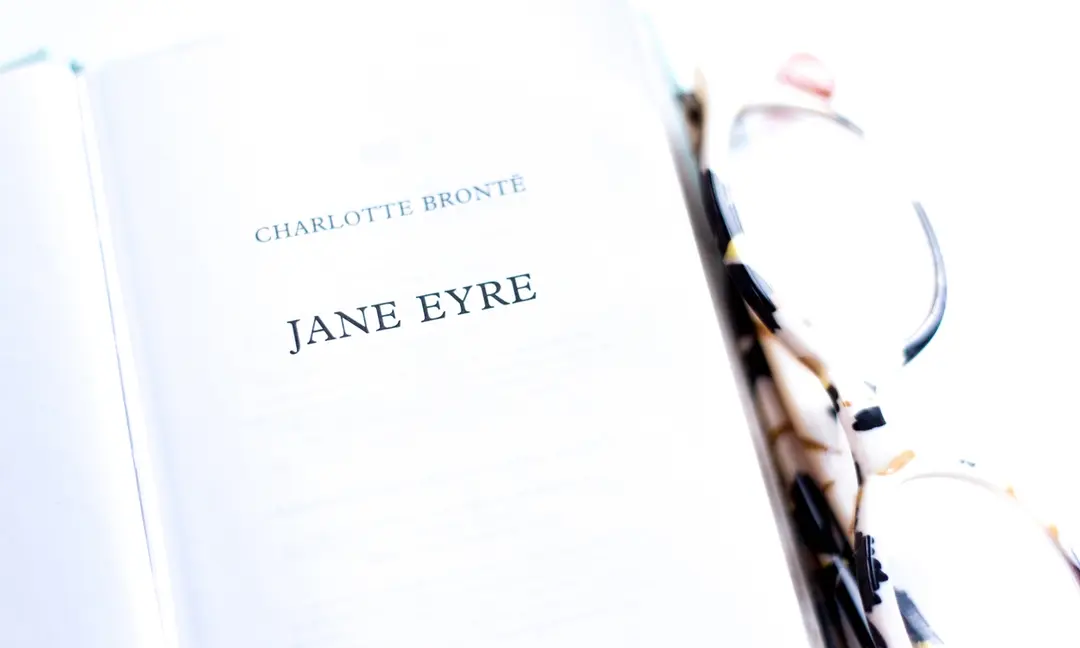
Global Times criticises CNN report on Jane Eyre in China curriculum
The British literary classic Jane Eyre was included in China's ninth-grade Chinese language curriculum as part of the "whole-book reading" list in the fall 2026 semester. Global Times said CNN reported the move while describing Chinese textbooks as "tightly curated by the state" and calling the inclusion "surprising". It noted a Chinese translation appeared in 1925 and that Shanghai Translation Publishing House printed about 270,000 copies in 1980. The Education Ministry says textbooks include Chinese and foreign works.
Source
Global Times (China) · read the original report ↗
Desk check · some claims need care
What the desk checked (5)
- Jane Eyre was added to the ninth-grade Chinese language curriculum's 'whole-book reading' list in the fall 2026 semester — Figure/date appears in source; no official document cited beyond the report itself.
- CNN described Chinese textbooks as 'tightly curated by the state' and called the inclusion 'surprising' — Attributed to CNN by the source, which is a critical commentary; original CNN wording not independently shown.
- Zhou Shoujuan's 1925 translation Chong Guang Ji is believed to be the earliest Chinese translation — Source itself hedges with 'is believed to be'; no source given.
- Shanghai Translation Publishing House issued Zhu Qingying's translation in 1980 with an initial print run of about 270,000 copies — Figure appears in source; unattributed.
- China's Ministry of Education says textbooks include a wide range of Chinese and foreign classical and contemporary works — Attributed to the Ministry of Education, paraphrased without direct quote.
Analysts’ view opinion
On the surface this is a curriculum item, but strategically it is a skirmish in the contest over soft power and narrative control. Global Times pushing back on CNN's framing of the inclusion as "surprising" — while citing a 1925 Chinese translation and a 1980 print run of about 270,000 copies — is a calculated counter to Western characterisations of China as culturally closed. The real dispute is not about Jane Eyre; it is about who gets to define how open or controlled Chinese society appears.
- School curricula are everywhere instruments of state identity-building, which is precisely why even the inclusion of foreign texts draws outside scrutiny.
- Global Times is a state-affiliated outlet, so this rebuttal is best read as an institutional information response rather than independent commentary.
- The strongest element of the Chinese argument is the historical record the story cites: over a century of documented readership for the novel in China.
- Conversely, the underlying point that textbook selection passes through official approval is not unreasonable and cannot be dismissed outright.
- Such tit-for-tat media exchanges sit inside a broader climate of US-China strategic mistrust, in which cultural questions are increasingly drawn into the competition.
What to watch — Watch how far Chinese official media leverage cultural items like this as proof of openness, and how Western outlets continue to scrutinise China's education system.
The story does not establish the intent behind the curriculum decision or the full context of CNN's reporting, since it rests on the Global Times account alone.
Deep dive
Research brief · 8 facts · 7 dates · exam-readyThe brief
Context
Global Times, a Chinese state-run newspaper, has published a rebuttal to a CNN report on the inclusion of Charlotte Bronte's Jane Eyre in China's ninth-grade Chinese language curriculum from the fall 2026 semester, where it features on the "whole-book reading" list. CNN reportedly described Chinese textbooks as "tightly curated by the state" and called the inclusion of a British romantic classic "surprising". Global Times argues the novel has been read in China for over a century and that Chinese textbooks routinely carry foreign classics, accusing CNN of reinforcing stereotypes. The exchange is part of a wider pattern of Chinese state media contesting Western reporting on China's education and culture.
Key facts
- Jane Eyre was included in China's ninth-grade Chinese language curriculum as part of the "whole-book reading" list in the fall semester of 2026.
- CNN described China's textbooks as "tightly curated by the state" and called the inclusion of the British romantic classic "surprising", per Global Times.
- In 1917, "A Sketch of Western Women Novelists" in Women's Magazine (founded in Shanghai in 1915) introduced Charlotte Bronte and Jane Eyre to Chinese readers.
- Zhou Shoujuan's translation Chong Guang Ji, from July 1925, is believed to be the earliest Chinese translation of the novel.
- The film Jane Eyre was released in China in 1979.
- In 1980, Shanghai Translation Publishing House published Zhu Qingying's translation with an initial print run of about 270,000 copies.
- China's Ministry of Education states that Chinese language textbooks include "a wide range of classical and contemporary works from both China and abroad".
- Foreign works already in Chinese textbooks include Resurrection, One Hundred Years of Solitude, Hamlet and To the Skylark; Lincoln's Gettysburg Address is in a People's Education Press high school elective curriculum.
Timeline
- 1915Women's Magazine is founded in Shanghai.
- 1917"A Sketch of Western Women Novelists" in Women's Magazine introduces Charlotte Bronte and Jane Eyre to Chinese readers.
- July 1925Zhou Shoujuan's Chong Guang Ji, believed to be the earliest Chinese translation of Jane Eyre, appears.
- 1979The film Jane Eyre is released in China.
- 1980Shanghai Translation Publishing House publishes Zhu Qingying's translation with an initial print run of about 270,000 copies.
- Fall semester 2026Jane Eyre is included in the ninth-grade Chinese language curriculum under the "whole-book reading" list.
- Not dated in the sourceCNN reports the inclusion; Global Times publishes a rebuttal accusing it of reinforcing stereotypes.
Who has a stake
- Global Times (Chinese state-run daily) — Seeks to rebut what it calls outdated, prejudiced Western framing of Chinese education and culture.
- CNN — Its reporting is challenged over the "tightly curated by the state" description and alleged selective quoting of Beijing Daily coverage.
- Chinese Ministry of Education — Curriculum authority; asserts textbooks carry a wide range of Chinese and foreign classical and contemporary works.
- Chinese ninth-grade students and teachers — Will read and teach Jane Eyre as part of the "whole-book reading" requirement from fall 2026.
- Chinese parents and scholars cited by CNN — Some reportedly object, fearing the novel could teach girls that their "brain should being wrongly ruled by love" and question its effect on "healthy values".
- Publishers (Shanghai Translation Publishing House, People's Education Press) — Central to circulating foreign literature and textbook content in China.
Why it matters
A school reading list has become a proxy battleground in the wider information contest between Chinese state media and Western outlets, showing how routine curriculum decisions get read as political signals. It also underlines that cultural exchange, translation history and textbook content are now part of narrative diplomacy. For readers, it is a case study in how the same fact can be framed as openness or as state control.
UPSC angle
Prelims pointers
- Jane Eyre, by Charlotte Bronte, enters China's ninth-grade Chinese language "whole-book reading" list in the fall 2026 semester.
- Earliest believed Chinese translation: Zhou Shoujuan's Chong Guang Ji, July 1925.
- Shanghai Translation Publishing House, 1980: Zhu Qingying's translation, initial print run about 270,000 copies.
- Women's Magazine, founded in Shanghai in 1915, introduced Charlotte Bronte to Chinese readers in 1917.
- Foreign works in Chinese textbooks named by Global Times: Resurrection, One Hundred Years of Solitude, Hamlet, To the Skylark.
- Lincoln's Gettysburg Address features in a People's Education Press high school elective curriculum.
Mains framing
The dispute over Jane Eyre's inclusion in China's ninth-grade curriculum illustrates how education and culture have become sites of geopolitical narrative contestation. CNN's framing of Chinese textbooks as \"tightly curated by the state\" and the inclusion as \"surprising\" was met by a Global Times rebuttal marshalling a century-long reception history: an introduction to Charlotte Bronte in 1917, the 1925 Zhou Shoujuan translation, the 1979 film release, and a 1980 print run of about 270,000 copies, alongside the Ministry of Education's position that textbooks carry both Chinese and foreign works such as Resurrection, One Hundred Years of Solitude and Hamlet. The causes lie in mutual distrust and the tendency of both state and commercial media to read curriculum choices as ideological signals; the implication is that literary exchange, arguably the most durable form of soft power, is flattened into propaganda claims, with parental concerns about gender and \"healthy values\" also folded into the argument. A way forward suggested by the source's own logic is fuller context in reporting — including domestic appreciation as well as criticism — and recognition that great literature transcends language, nationality and time, making cultural exchange a shared asset rather than a point-scoring device.
Key terms
- Whole-book reading
- A category in the Chinese language curriculum requiring students to read a complete book rather than extracts; Jane Eyre joins it for ninth grade.
- Global Times
- Chinese state-run newspaper; here it publishes the rebuttal to CNN's report on the curriculum change.
- Chong Guang Ji
- Zhou Shoujuan's July 1925 translation, believed to be the earliest Chinese rendering of Jane Eyre.
- People's Education Press
- Chinese textbook publisher whose high school elective curriculum includes Lincoln's Gettysburg Address.
- Shanghai Translation Publishing House
- Publisher that issued Zhu Qingying's Jane Eyre translation in 1980 with about 270,000 initial copies.
- Chinese Ministry of Education
- Body that sets curriculum norms and states textbooks include classical and contemporary works from China and abroad.
Practice questions
- How do school curricula and textbook content function as instruments of soft power and sites of international narrative contestation? Illustrate with the Jane Eyre controversy.
- Critically examine the claim that media framing, rather than facts, drives perceptions of China's education system.
- "Great literature transcends language, nationality and time." Discuss the role of literary translation in shaping cultural exchange between nations.
Grounded only in the source report — figures and dates are the source's, not inferred.