
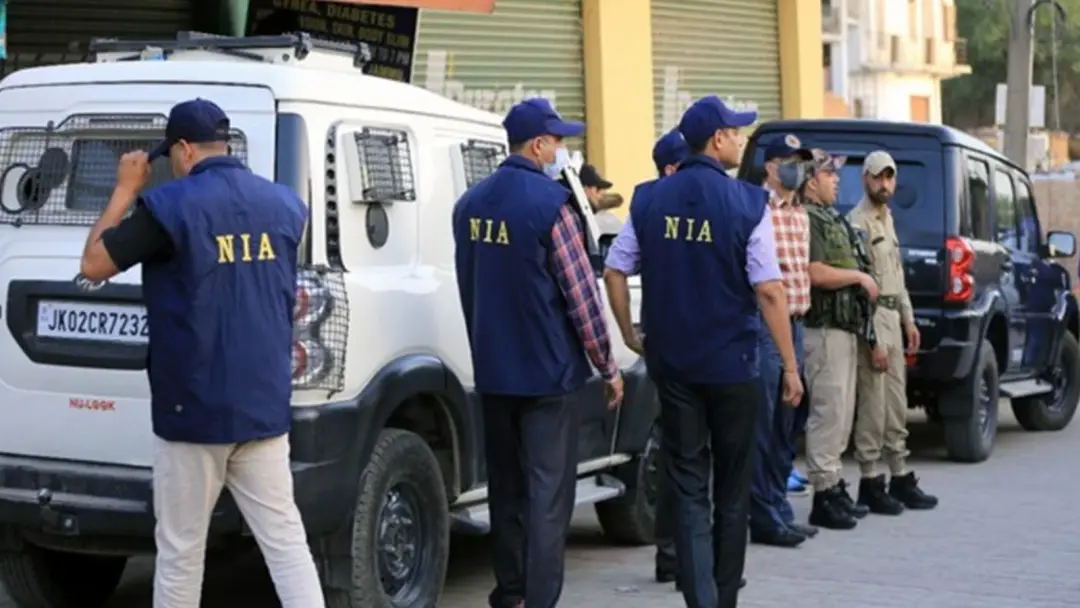
Delhi court lets seven foreign nationals in NIA case travel for a month
A Delhi court has allowed seven foreign nationals, arrested in March for allegedly conspiring to carry out terrorist activities against India, to travel to the USA and Ukraine for one month to meet their families, subject to conditions. The six Ukrainians and one American were discharged in Immigration and Foreigners Act cases after paying compounding charges to the FRRO. NIA Special Judge Prashant Sharma said the right to travel abroad falls under Article 21. The NIA said its UAPA investigation continues.
Source
Indian Express — India · read the original report ↗
Desk check · compared with the source
What the desk checked (5)
- A Delhi court allowed seven foreign nationals — six Ukrainians and one American — to travel to the USA and Ukraine for one month to meet families, subject to conditions. — Attributed to an order dated September 24 by NIA Special Judge Prashant Sharma, as reported in the source.
- The seven were discharged in allegations under the Immigration and Foreigners Act, 2025 after paying compounding charges to the FRRO in Delhi. — Stated in the source without direct document citation; attributed to court proceedings.
- The seven were granted default bail because the first chargesheet did not include UAPA sections; UAPA probe kept pending. — Attributed to Judge Sharma's September 18 order and to SPP Rahul Tyagi's submissions for the NIA.
- The accused allegedly entered Myanmar illegally via Mizoram to train Myanmar-based Ethnic Armed Groups in drone warfare, and delivered drone consignments from Europe in Mizoram. — Attributed to the NIA's investigation; allegations untested in court.
- The accused were arrested on March 13, 2026, and the 180-day chargesheet period ended September 8, 2026. — Figures appear in the source, but the years conflict with the source's reference to arrests 'this March' — internal date inconsistency an editor should check.
Analysts’ view opinion
On paper this is a judicial order; politically it is a story about investigative pace. Default bail followed because the first chargesheet, filed within the 180-day window, carried only Immigration and Foreigners Act sections rather than UAPA, and the one-month travel permission is an extension of that logic. For a government that treats toughness on terror cases as political capital, it is an awkward headline; for opposition voices and civil-liberties advocates, the same episode offers two very different arguments.
- A UAPA FIR that produced a first chargesheet limited to immigration offences invites political questions about agency preparedness rather than intent.
- The judge's invocation of the right to travel abroad under Article 21 revives the familiar rights-versus-national-security debate in Indian politics.
- With six Ukrainians and one American accused, the case has an unavoidable diplomatic dimension, though the story shows no sign of any government intervention.
- References to Myanmar, Mizoram and drone consignments push attention onto northeastern border management, always a sensitive Centre-state political subject.
- By stressing that the probe continues and a supplementary chargesheet is possible, the NIA keeps political room to recover its position.
What to watch — Watch whether UAPA sections appear in a supplementary chargesheet and whether the accused return after the one-month window — those two facts will set the case's political trajectory.
The story establishes nothing about guilt, about any political or diplomatic pressure, or about how any party has reacted.
Deep dive
Research brief · 8 facts · 4 dates · exam-readyThe brief
Context
Seven foreign nationals — six Ukrainians and one American — were arrested by the National Investigation Agency (NIA) in March for allegedly conspiring to carry out terrorist activities against India, with an FIR under Section 18 of the UAPA (conspiracy). The NIA's first chargesheet invoked only the Immigration and Foreigners Act, 2025, keeping the UAPA probe pending, which led the Rouse Avenue court to grant them default bail. On September 24, NIA Special Judge Prashant Sharma allowed the seven to travel to the USA and Ukraine for one month to meet families, holding that the right to travel abroad is an extension of Article 21. The NIA says its UAPA investigation is still ongoing and a supplementary chargesheet may follow.
Key facts
- Seven foreign nationals — six Ukrainians and one American — were allowed by a Delhi court to travel to the USA and Ukraine for one month to meet their families, subject to conditions.
- The accused are Matthew Aaron Vandyke, Viktor Kaminskyi, Petro Hurba, Taras Slyviak, Ivan Sukmanovskyi, Marian Stefankiv and Maksim Honcharuk.
- The FIR was lodged under Section 18 of the UAPA, which punishes conspiracy; the accused were arrested on March 13, 2026.
- The NIA's 180-day period to file a chargesheet under UAPA sections ended on September 8, 2026.
- The first chargesheet invoked only Sections of the Immigration and Foreigners Act, 2025, so the seven got default bail; Vandyke's bail order is dated September 18.
- After paying compounding charges to the Foreigners Regional Registration Office (FRRO) in Delhi, all seven were discharged in the Immigration and Foreigners Act allegations.
- NIA Special Judge Prashant Sharma held in the September 24 order that the right to travel abroad is an extension of fundamental rights under Article 21.
- As per the NIA, the accused entered Myanmar illegally via Mizoram without valid travel documents to conduct pre-scheduled drone warfare training for Myanmar-based Ethnic Armed Groups targeting the Myanmar Military Junta.
Timeline
- March 13, 2026The seven foreign nationals are arrested by the NIA for allegedly conspiring to carry out terrorist activities against India.
- September 8, 2026The NIA's 180-day period to file a chargesheet under UAPA sections ends.
- September 18, 2026Judge Prashant Sharma grants default bail to Matthew Aaron Vandyke, noting the chargesheet was 'piecemeal' and that co-accused too are entitled to default bail.
- September 24, 2026Court order permits all seven to travel abroad for one month, subject to undertakings, addresses, phone numbers and emails being furnished.
Who has a stake
- The seven accused (six Ukrainians, one American) — On default bail; allowed one month abroad to meet families while the UAPA probe against them remains open.
- National Investigation Agency (NIA) — Says substantial UAPA investigation is complete but further probe is on into import and recovery of drones and accessories through India; may file a supplementary chargesheet.
- NIA Special Judge Prashant Sharma, Rouse Avenue Court — Had to balance Article 21 travel rights against the needs of an ongoing terror-conspiracy investigation.
- Foreigners Regional Registration Office (FRRO), Delhi — Received compounding charges, after which the accused were discharged in the Immigration and Foreigners Act allegations.
- Prosecution team — SPP Rahul Tyagi, PP Ankit Gautam and advocates Jatin Khatri and Amit Rohilla represented the NIA and sought undertakings from the accused.
- Mizoram–Myanmar border region — Drone consignments from Europe were allegedly delivered to individuals and groups in Mizoram; accused allegedly crossed into Myanmar via Mizoram.
Why it matters
The case tests how courts balance an accused foreign national's Article 21 right to travel against the state's interest in an unfinished terror investigation, especially where default bail arose from a chargesheet that omitted the UAPA offence. It also spotlights alleged cross-border drone supply and training networks running through Mizoram into Myanmar, raising questions about India's border and dual-use technology controls.
UPSC angle
Prelims pointers
- Section 18 of the UAPA punishes conspiracy to commit a terrorist act.
- Under UAPA, the investigating agency gets up to 180 days to file a chargesheet; failure entitles the accused to default bail.
- FRRO — Foreigners Regional Registration Office — handles registration and compounding of offences by foreigners.
- The Immigration and Foreigners Act, 2025 was the only law invoked in the NIA's first chargesheet in this case.
- Article 21 of the Constitution covers the right to life and personal liberty; courts read the right to travel abroad as its extension.
- Rouse Avenue Court in Delhi hosts the Special NIA Court; Judge Prashant Sharma passed the September 18 and September 24 orders.
Mains framing
The order raises a classic liberty-versus-security question in India's anti-terror jurisprudence. By filing a first chargesheet only under the Immigration and Foreigners Act, 2025 while keeping the UAPA probe pending beyond the 180-day limit, the NIA created a 'piecemeal' filing that the court held could not defeat the accused's statutory right to default bail — an institutional lesson on investigative timeliness rather than judicial leniency. Having secured bail, and having been discharged in the immigration offences after compounding charges to the FRRO, the accused sought foreign travel; the court, invoking the right to travel abroad as an extension of Article 21, permitted a one-month visit while imposing conditions such as undertakings to join the investigation and disclosure of addresses, phone numbers and emails, noting the NIA had not claimed their physical presence was needed soon. The substantive allegations — illegal entry into Myanmar via Mizoram without valid travel documents, drone-warfare training for Myanmar-based Ethnic Armed Groups, and multiple consignments of European drones delivered to individuals and groups in Mizoram — point to the security dimension of dual-use drone flows and porous frontier regions. The way forward, on the source's own terms, lies in the NIA completing the UAPA investigation and filing a supplementary chargesheet if an offence is made out, while courts continue calibrating conditions that safeguard both liberty and the integrity of the probe.
Key terms
- UAPA Section 18
- Provision of the Unlawful Activities (Prevention) Act penalising conspiracy or attempt to commit a terrorist act; the FIR here was registered under it.
- Default bail
- Bail an accused becomes entitled to when the investigating agency fails to file a chargesheet for the alleged offence within the statutory period — 180 days under UAPA here.
- FRRO
- Foreigners Regional Registration Office; the accused paid compounding charges to the Delhi FRRO and were discharged in the immigration allegations.
- Immigration and Foreigners Act, 2025
- The law under which the NIA's first chargesheet was filed against the seven accused.
- Ethnic Armed Groups (EAGs)
- Myanmar-based armed outfits opposing the Myanmar Military Junta, whom the accused allegedly trained in drone warfare.
- Supplementary chargesheet
- An additional chargesheet filed after further investigation; the NIA said it may file one if a UAPA offence is made out.
Practice questions
- Critically examine how courts balance the Article 21 right to travel abroad against the requirements of an ongoing terror investigation, using the NIA case against the seven foreign nationals.
- Discuss the concept of default bail under the UAPA. What does the filing of a 'piecemeal' chargesheet reveal about investigative practice and accused persons' statutory rights?
- Alleged cross-border movement of drones through Mizoram into Myanmar highlights new security challenges on India's eastern frontier. Analyse the governance and border-management issues involved.
Grounded only in the source report — figures and dates are the source's, not inferred.