
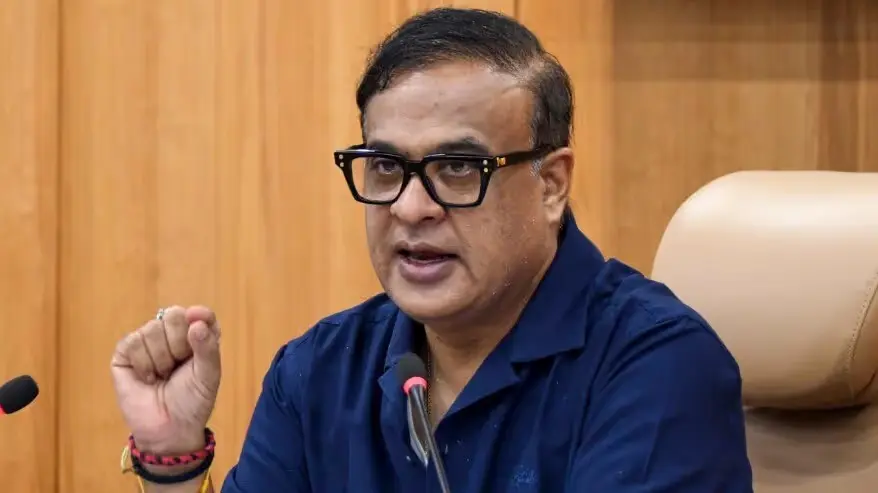
Assam to open government drug rehab centres in every district
Assam Chief Minister Himanta Biswa Sarma said on September 15 that the state will set up government-run drug rehabilitation centres in every district to combat addiction. Speaking in Jorhat after a two-day District Commissioners' Conference, he said complaints had been received against private de-addiction centres and drug consumption detected at some, and that such facilities would be strictly scrutinised. The conference also discussed creating land banks in every district for industrial investment.
Source
Assam — CM & govt · read the original report ↗
Desk check · compared with the source
What the desk checked (5)
- Assam will set up government-run drug rehabilitation centres in every district. — Attributed to CM Himanta Biswa Sarma at a Jorhat press conference on September 15.
- The government received several complaints against private de-addiction centres and drug consumption was detected at some. — Attributed to the chief minister; no data or inspection records cited in the source.
- The BRICS Guwahati Declaration on drugs will bring member countries together against narcotics. — Statement of the CM's assessment; text of the declaration not quoted in source.
- The two-day District Commissioners' Conference involved over 27 hours of deliberations across 15 departments. — Figure appears in the source, attributed to Sarma's post on X.
- Land banks will be created in every district for industrial investment. — Attributed to the CM, who said he directed district commissioners to identify suitable land.
Analysts’ view opinion
With Assam heading towards an election cycle, Chief Minister Himanta Biswa Sarma is positioning the anti-drugs drive as the signature theme of his governance — and the promise of a government de-addiction centre in every district shifts the message from enforcement to rehabilitation and welfare. Tighter scrutiny of private centres puts both regulatory control and public credit in the government's hands, while placing existing private operators under fresh pressure. Read alongside land banks, schooling and health, this looks like a deliberate twin narrative of investment plus administrative discipline.
- Anti-narcotics politics cuts across party lines in Assam, so the opposition has little room to oppose the idea itself and will likely attack delivery instead.
- Citing complaints against private facilities builds an advance justification for greater state intervention in the sector.
- The line that private rehab centres will soon be unnecessary invites pushback from stakeholders in that sector over livelihoods and compensation.
- Pushing district commissioners to 'compete' and shed a 'colonial mindset' also serves politically by locating accountability for delivery gaps in the bureaucracy.
- Invoking the BRICS Guwahati Declaration links a state-level agenda to national and international stages, enhancing the Chief Minister's stature.
What to watch — Watch for funding, staffing and timelines for the district centres — that will decide whether this stays an announcement or becomes a budgeted programme.
The story does not establish how many centres, at what cost or by when, nor the number or nature of complaints against private centres, and carries no response from the opposition or private operators.
Deep dive
Research brief · 8 facts · 2 dates · exam-readyThe brief
Context
Assam Chief Minister Himanta Biswa Sarma announced on September 15 that the state will set up government-run drug rehabilitation centres in every district, saying complaints had been received against private de-addiction centres and drug consumption was detected at some of them. The announcement came at a press conference in Jorhat after a two-day District Commissioners' Conference. The same conference discussed land banks for industry, middle-school education, the health sector and administrative reform. Sarma also referred to the BRICS Guwahati Declaration on drugs as a platform for a united international fight against narcotics.
Key facts
- On September 15, CM Himanta Biswa Sarma announced government-run drug rehabilitation centres in every district of Assam.
- Sarma said the government had received several complaints against private de-addiction centres, with drug consumption detected at some such facilities.
- He said private rehab centres will be strictly scrutinised and "soon there will be no need for private rehab facilities".
- Sarma cited the BRICS Guwahati Declaration on drugs as bringing member countries together to strengthen the fight against narcotics.
- District commissioners were directed to explore suitable land so that a land bank is made available for industries in every district.
- The two-day District Commissioners' Conference concluded shortly after midnight after more than 27 hours of deliberations involving ministers, DCs and senior officials across 15 departments.
- The conference also discussed improving the education system at the middle-school level and aspects of the health sector.
- Sarma said officers must shed a 'colonial administrative mindset' and bring private-sector professionalism into administration, noting technology and artificial intelligence in everyday governance.
Timeline
- Two days ending September 15 (concluded shortly after midnight)District Commissioners' Conference held with ministers, DCs and senior officials across 15 departments, over 27 hours of deliberations.
- September 15CM Sarma announces at a Jorhat press conference that government drug rehabilitation centres will be set up in every district and private centres strictly scrutinised.
Who has a stake
- Assam government / Chief Minister Himanta Biswa Sarma — Driving the anti-drug push, administrative reform and industrial land policy; accountable for delivery of new district rehab centres.
- District Commissioners — Directed to identify land for land banks, ensure effective scheme implementation, shed 'colonial mindset' and make their districts the finest in the country.
- Private de-addiction centres — Face strict scrutiny after complaints and detection of drug consumption; CM says they may become unnecessary once government centres open.
- Persons with drug addiction and their families — Access to state-run rehabilitation facilities in every district instead of relying on private centres.
- Industrial investors — Land availability is a constraint on setting up industries in Assam; district land banks are proposed to ease this.
- BRICS member countries — Parties to the BRICS Guwahati Declaration on drugs, cited as a framework for a united fight against narcotics.
Why it matters
Drug addiction in Assam is being addressed through a shift from private to state-run rehabilitation, raising questions of regulation, capacity and quality of care in de-addiction services. The same conference links social policy to economic policy, with land banks pitched as the answer to investors' complaint that land is not available for industry.
UPSC angle
Prelims pointers
- Assam CM Himanta Biswa Sarma announced district-wise government drug rehabilitation centres on September 15.
- Announcement made in Jorhat after a two-day District Commissioners' Conference.
- BRICS Guwahati Declaration on drugs was cited by the CM on international anti-narcotics cooperation.
- Land banks in every district proposed to overcome land shortage for industries in Assam.
- Conference involved ministers, DCs and officials from 15 departments and over 27 hours of deliberations.
- Conference agenda also covered middle-school education and the health sector.
Mains framing
Assam's decision to open government drug rehabilitation centres in every district responds to a regulatory failure in the private de-addiction sector: the Chief Minister said several complaints had been received against private centres and that drug consumption was detected at some of them, prompting strict scrutiny and the assertion that private facilities will soon be unnecessary. The move frames de-addiction as a public health responsibility of the state rather than a market service, but its success will depend on capacity, trained personnel and quality of care in every district — details not stated in the source. The announcement sits within a wider governance push articulated at the District Commissioners' Conference: shedding what the CM called a colonial administrative mindset, adopting private-sector professionalism, using technology and artificial intelligence, ensuring effective implementation of schemes, and creating district land banks to unlock industrial investment where land availability is a bottleneck. The CM also invoked the BRICS Guwahati Declaration on drugs, situating a state-level rehabilitation drive within international cooperation against narcotics. The way forward implied is coupling supply-side enforcement and international coordination with demand-side treatment, backed by measurable district-level accountability.
Key terms
- District Commissioners' Conference
- A two-day meeting of Assam's ministers, district commissioners and senior officials across 15 departments to review governance priorities.
- De-addiction / drug rehabilitation centre
- Facility providing treatment and rehabilitation for persons with substance addiction; Assam plans a government-run one in every district.
- BRICS Guwahati Declaration on drugs
- Agreement cited by the CM as bringing BRICS member countries together to strengthen the fight against narcotics.
- Land bank
- A pool of identified, suitable government land kept ready in each district for allotment to industries seeking to invest.
- District Commissioner (DC)
- Senior district administrative officer responsible for scheme implementation and public welfare in the district.
Practice questions
- Assam plans government-run drug rehabilitation centres in every district while placing private de-addiction centres under strict scrutiny. Discuss the merits and challenges of state-led de-addiction services.
- How can land banks at the district level address constraints on industrial investment? Examine with reference to Assam's announcement.
- Examine the role of international frameworks such as the BRICS Guwahati Declaration on drugs in complementing state-level anti-narcotics efforts in India's Northeast.
Grounded only in the source report — figures and dates are the source's, not inferred.