
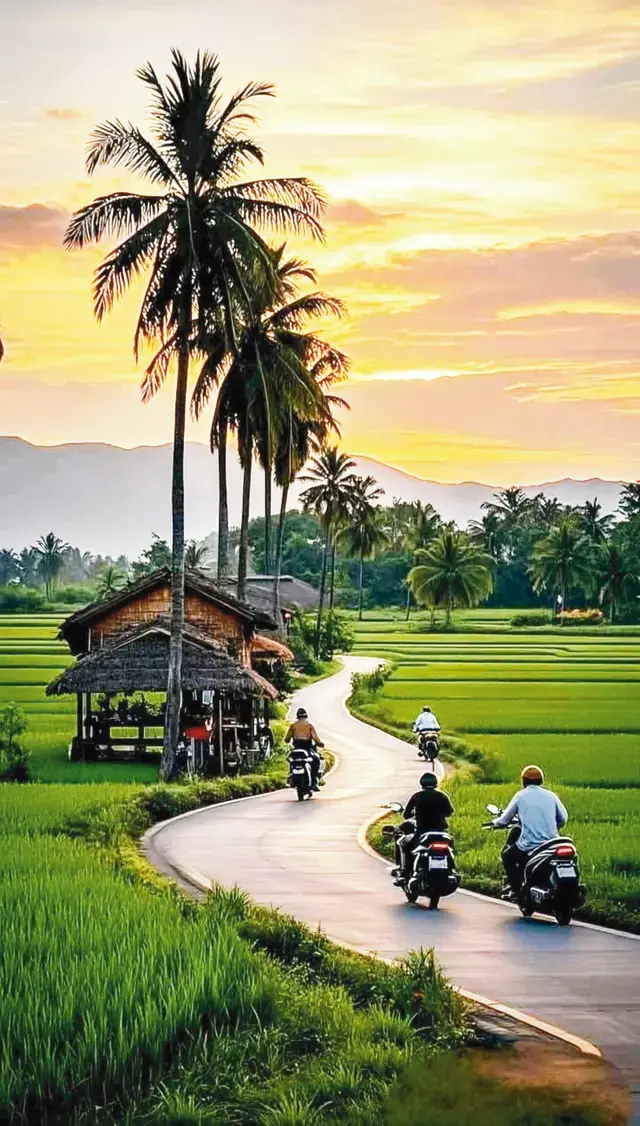
Konaseema promoted as 'Andhra Kerala' for backwaters, temples
Dr. B.R. Ambedkar Konaseema district, set among the Godavari's distributaries, is known in tourism as 'Andhra Kerala' for its coconut groves, paddy fields and houseboat rides on canals. Key draws include Dindi Resorts eco-tourism, the Antarvedi sea-river confluence, the Adurru Buddhist stupa dated to Ashoka's period, and Lolla locks. Ainavilli, Ryali and Draksharamam are pilgrim centres. Local foods include Atreyapuram putharekulu, Tapeswaram kaja, pulasa fish curry and pottikkalu. Prabhala Theertham is held at Sankranti.
Source
Konaseema — వార్తలు · read the original report ↗
Desk check · compared with the source
What the desk checked (5)
- Konaseema is called 'Andhra Kerala' in tourism circles because its scenery resembles Kerala's backwaters — Presented in source as a popular description; no official body or source cited.
- The Adurru Buddhist stupa dates to the period of Emperor Ashoka and is visited annually by hundreds of Buddhist monks — Figure and dating appear in source without attribution to any archaeological authority.
- Atreyapuram Putharekulu has geographical (GI) recognition — Source states worldwide geographical recognition; no issuing authority or date given.
- The Jaganmohini Kesavaswamy idol at Ryali has a male form (Vishnu) in front and a female form (Jaganmohini) at the rear, described as the only such sculpture in the country — Claim of uniqueness is unattributed in the source.
- Prabhala Theertham is held every year on Sankranti and draws thousands of visitors from across the country — Attendance described in general terms; no data source cited.
Analysts’ view opinion
On the surface this is a tourism feature, but politically it reads as an exercise in regional identity-building. The 'Andhra Kerala' branding, the geographical-indication status for Atreyapuram poothareku, and marquee cultural assets like the Prabhala Teertham give Konaseema's leadership a ready-made case for funds and projects. That the district carries Dr B R Ambedkar's name also ties local identity politics to questions of social representation. The story itself, though, names no policy, allocation or political actor — so expectations should be kept modest.
- The combination of eco-tourism, temple circuits and branded foods hands local representatives a ready argument for roads, infrastructure and tourism spending.
- In a district with Draksharamam, Ainavilli and Ryali, temple development is an issue that touches voters directly — no party willingly cedes that ground.
- GI-tagged and branded products like poothareku and Tapeswaram kaja are tied to small-producer livelihoods, making them politically sensitive and rewarding.
- The inclusion of Ambedkar's name in the district's title is a reminder that Konaseema's identity questions run beyond tourism into social arithmetic.
- Tourism built on Godavari distributaries and canals also pulls water management and flood control into the political conversation.
What to watch — Watch for announcements on tourism circuits, houseboat and eco-tourism investment, and temple development allocations — and how ruling and opposition figures position themselves on them.
The story establishes no party, policy, funding decision or political statement; the political implications drawn here are analytical inference, not reported fact.
Deep dive
Research brief · 8 facts · 4 dates · exam-readyThe brief
Context
Dr. B.R. Ambedkar Konaseema district in Andhra Pradesh lies between the distributaries of the Godavari river, a deltaic belt of coconut groves, paddy fields and irrigation canals. Because its canal and backwater landscape resembles Kerala's backwaters, tourism promotion labels it 'Andhra Kerala'. The district combines eco-tourism (Dindi houseboats), the Vasishta river–Bay of Bengal confluence at Antarvedi, Buddhist heritage at Adurru, centuries-old temples, and a distinctive food culture ranging from Atreyapuram putharekulu to Godavari pulasa fish curry.
Key facts
- Konaseema's canal-and-coconut landscape, resembling Kerala's backwaters, has earned it the tourism tag 'Andhra Kerala'.
- Dindi village on the Godavari bank is the district's main eco-tourism centre, where Haritha Coconut Country Resorts offers houseboat rides, boating and stays.
- At Antarvedi, the Vasishta — a distributary of the Godavari — meets the Bay of Bengal; the spot, locally called 'Annachellali Gattu', shows changing water colours where river and sea merge.
- The Adurru Buddhist Mahastupa, with chaityas and ancient remains, dates to the period of Emperor Ashoka and draws hundreds of Buddhist monks from around the world every year.
- Prabhala Theertham, held on Sankranti day, sees huge colourful 'prabhas' carried across canals and fields, drawing thousands of visitors from across the country.
- Lolla locks in Atreyapuram mandal release Godavari water into irrigation canals and have been the shooting location of several Telugu hit films.
- Atreyapuram putharekulu, made of thin rice-flour layers with ghee, sugar or jaggery, cashew and almond, has geographical recognition worldwide.
- Draksharamam, one of the Pancharama Kshetras, is renowned as 'Dakshina Kashi' (Southern Kashi).
Timeline
- Period of Emperor AshokaThe Adurru Buddhist Mahastupa and chaityas belong to this era, per the source.
- Annually, on Sankranti dayPrabhala Theertham festival is celebrated across Konaseema's canals and fields.
- Annually, in the monsoonPulasa fish enter the Godavari; the clay-pot pulasa pulusu is cooked only in this season.
- Recent yearsPilgrim numbers at the Venkateswara Swamy temple at Vadapalli, Atreyapuram mandal, have risen sharply.
Who has a stake
- Dr. B.R. Ambedkar Konaseema district administration/tourism promoters — Positioning the district as 'Andhra Kerala' to draw visitors to backwaters, temples and heritage sites.
- Dindi eco-tourism operators (Haritha Coconut Country Resorts) — Revenue from houseboat rides, boating and stays along the Godavari canals.
- Pilgrims and temple towns — Ainavilli, Ryali, Draksharamam, Muramulla, Vadapalli, Antarvedi — Daily footfall of thousands sustains pilgrim economy and upkeep of centuries-old temples.
- Buddhist monks, historians and research students — Adurru stupa is a living record of ancient Buddhist culture, visited by hundreds of monks yearly.
- Local food producers — Atreyapuram putharekulu and Tapeswaram kaja makers, Godavari fisherfolk — Global recognition and tourist purchases support these traditional livelihoods.
- Telugu film industry — Lolla locks and the green delta serve as popular shooting locations.
Why it matters
Konaseema shows how a deltaic agricultural region can be repackaged as a tourism product by bundling landscape (canals, coconut groves), faith (Pancharama and unique temple sculpture), heritage (Ashoka-era Buddhist stupa) and cuisine with geographical recognition. Such place-branding spreads tourist spending to rural mandals rather than only big cities, and links farm, fisheries and sweet-making livelihoods to visitor demand.
UPSC angle
Prelims pointers
- Dr. B.R. Ambedkar Konaseema district lies between Godavari distributaries and is promoted as 'Andhra Kerala'.
- Vasishta, a Godavari distributary, meets the Bay of Bengal at Antarvedi — the 'Sagara Sangamam'.
- Adurru: Buddhist Mahastupa and chaityas of Ashoka's period.
- Draksharamam is one of the Pancharama Kshetras, known as 'Dakshina Kashi'.
- Ryali's Jaganmohini Kesava Swamy idol has Vishnu carved in front and Jaganmohini behind — described as the country's only such sculpture.
- Prabhala Theertham is celebrated on Sankranti day in Konaseema.
Mains framing
Konaseema's emergence as 'Andhra Kerala' illustrates the potential of heritage- and nature-based rural tourism in India's river deltas. The district's assets are diverse and complementary: eco-tourism and houseboats at Dindi, the river-sea confluence at Antarvedi, the Ashoka-era Buddhist stupa at Adurru that attracts monks and research students, the architecturally unique temples of Ainavilli, Ryali, Draksharamam, Muramulla and Vadapalli, the Lolla locks favoured by Telugu cinema, and a cuisine — putharekulu with geographical recognition, Tapeswaram kaja, monsoon-only pulasa pulusu, jackfruit-leaf pottikkalu — that is itself an attraction. The drivers are natural endowment (Godavari alluvial soil, canal network, fresh river fish) and living festival culture such as the Sankranti Prabhala Theertham that already draws visitors nationwide. The implications are livelihood diversification for farmers, fisherfolk and sweet-makers, and a stake in conserving canals, beaches and ancient monuments. A way forward consistent with the source lies in strengthening seasonal and circuit-based promotion — linking Buddhist heritage, Pancharama pilgrimage and backwater eco-tourism — while protecting the green village character and traditional food identity that give the region its appeal.
Key terms
- Backwaters
- Calm canal and lagoon waterways; Konaseema's coconut-lined canals evoke Kerala's, hence the 'Andhra Kerala' tag.
- Sagara Sangamam (Antarvedi)
- The point where the Vasishta distributary of the Godavari merges into the Bay of Bengal, locally called Annachellali Gattu.
- Mahastupa / Chaitya
- Large Buddhist relic mound and prayer hall; both survive at Adurru from Ashoka's period.
- Pancharama Kshetras
- A set of five revered Shiva shrines; Draksharamam is one, called Dakshina Kashi.
- Prabhala Theertham
- Konaseema's Sankranti festival in which huge decorated prabhas are carried through canals and fields.
- Putharekulu / Pottikkalu
- Atreyapuram's paper-thin rice-flour sweet with global geographical recognition; pottikkalu is idli batter steamed in jackfruit-leaf cups.
Practice questions
- How can river-delta regions like Konaseema build sustainable tourism without eroding their agrarian and ecological base? Discuss with examples from the district.
- Examine the role of geographical recognition for traditional foods such as Atreyapuram putharekulu in supporting rural livelihoods and tourism.
- Discuss the significance of sites like the Adurru Mahastupa in understanding the spread of Buddhism in the Godavari delta.
Grounded only in the source report — figures and dates are the source's, not inferred.