
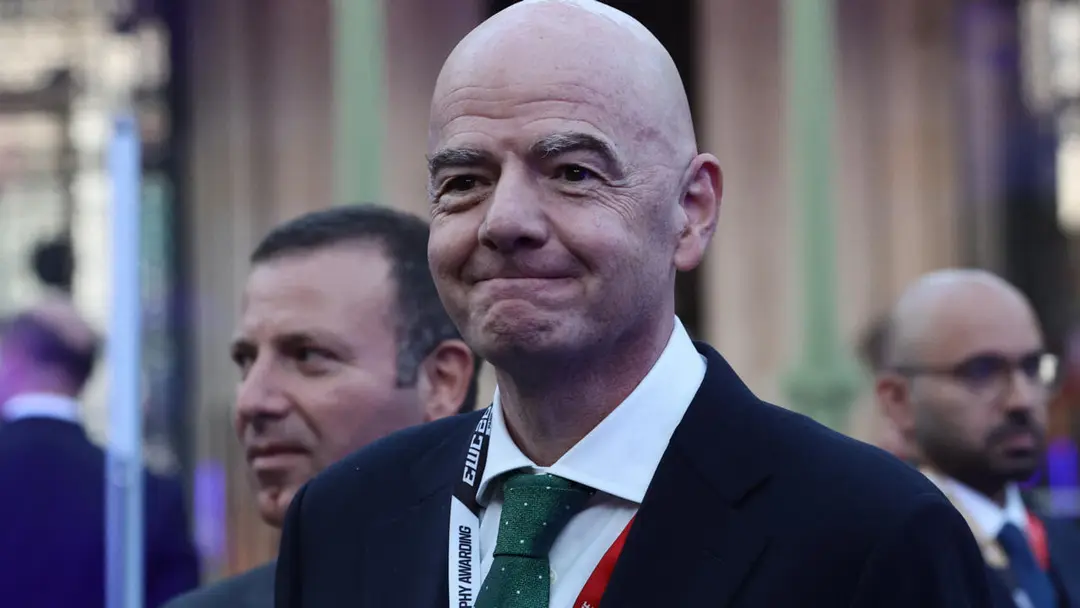
UEFA, CONCACAF ask FIFA to release $2.1 billion to member associations
UEFA and CONCACAF on Friday urged FIFA President Gianni Infantino to release around $2.1 billion from the body's reserves for its 211 member associations. A letter from Aleksander Ceferin and Victor Montagliani said each association should receive $10 million between 2027 and 2030. The demand follows a dispute over Infantino's proposal to sell a World Cup stake to private investors. FIFA's reserves are estimated at about $6 billion.
Source
France 24 · read the original report ↗
Desk check · compared with the source
What the desk checked (5)
- UEFA and CONCACAF asked FIFA to release about $2.1 billion from reserves for its 211 member associations. — Attributed to a letter from Aleksander Ceferin and Victor Montagliani obtained by AFP; figure appears in source.
- Each member association should get $10 million over the 2027-30 cycle. — Quoted directly from the letter in the source.
- FIFA's cash reserves are around $6 billion. — Described in the source as an estimate; no independent audit figure cited.
- Annual development funding under Infantino has risen to $8 million per country per four-year cycle. — Stated in the source as context from the letter; no separate source given.
- A ban on US striker Folarin Balogun was suspended after a phone call from Donald Trump to Infantino. — Reported in the source in connection with the FA chair's document request; no direct confirmation quoted.
Analysts’ view opinion
This is not a contest on the pitch, but it will shape what happens on it. UEFA and CONCACAF have switched tactics in the row over selling a World Cup stake to private investors: instead of simply opposing it, they are arguing FIFA's own balance sheet makes outside money unnecessary. Demanding $2.1 billion from reserves estimated at around $6 billion directly challenges the fundraising logic underpinning Infantino's proposal.
- Member associations already receive $8 million per four-year cycle, so an extra one-off $10 million each would mean a meaningful jump in infrastructure and development resources for smaller federations.
- Spreading the money equally across all 211 associations is politically potent — in FIFA elections every member has one vote, so the offer speaks directly to smaller nations.
- With UEFA having already threatened to boycott FIFA competitions, a joint letter with CONCACAF puts two continental confederations on the same side and raises the pressure on FIFA's leadership.
- Infantino's side of the argument exists too: he has said the venture was meant to raise capital for football globally, and development funding has risen under him, while how much of the $6 billion reserve is genuinely spendable is a separate question.
- Read alongside the English FA's demand for disclosure and the French federation withdrawing support, this looks less like a single funding request and more like a broader governance fight.
What to watch — UEFA and CONCACAF say they will table disbursement recommendations at the next FIFA Council meeting — watch which of the other confederations line up behind them.
The story does not establish how FIFA or Infantino will respond, how much of the estimated $6 billion reserve can prudently be released, or whether the private investment plan is permanently off the table.
Deep dive
Research brief · 8 facts · 6 dates · exam-readyThe brief
Context
World football is in the middle of a governance dispute after it emerged that FIFA President Gianni Infantino had sought to sell a stake in the World Cup to private investors. The proposal was shelved after a backlash, with UEFA threatening to boycott all FIFA competitions. Now UEFA and CONCACAF, two of the continental confederations, have written to Infantino arguing that FIFA's own cash reserves — estimated at about $6 billion — can fund football development without any outside investment, and asking for roughly $2.1 billion to be distributed to FIFA's 211 member associations.
Key facts
- UEFA and CONCACAF wrote to FIFA President Gianni Infantino on Friday seeking release of around $2.1 billion from FIFA's reserves.
- The letter asks that each of FIFA's 211 member associations receive $10 million over the 2027-30 cycle for infrastructure and football development.
- The letter was signed by UEFA chief Aleksander Ceferin and CONCACAF president Victor Montagliani, and was obtained by AFP.
- FIFA's cash reserves are estimated at around $6 billion, according to the letter.
- The requested sum would be a 'one-off' release, in addition to annual development funding that under Infantino has risen to $8 million per country per four-year cycle.
- UEFA had threatened to boycott all FIFA competitions until the private investor plan was shelved.
- UEFA and CONCACAF said they would issue recommendations for disbursements at the next FIFA Council meeting.
- England's FA chair Debbie Hewitt wrote to Infantino a day earlier seeking full disclosure on the private equity plan and on the suspension of a ban given to US striker Folarin Balogun.
Timeline
- Before the letter (date not stated in the source)It emerged that Infantino sought to sell a stake in the World Cup to private investors; the plan was short-lived after a fierce backlash, with UEFA threatening a boycott.
- Also earlier (date not stated in the source)The French Football Federation pulled support from Infantino's re-election bid.
- Thursday (a day before the letter)England FA chair Debbie Hewitt wrote to Infantino seeking full disclosure on the private equity plan and documents on the Balogun ban suspension.
- FridayCeferin and Montagliani sent their letter demanding about $2.1 billion be released to the 211 member associations.
- Next FIFA Council meeting (date not stated in the source)UEFA and CONCACAF say they will issue recommendations for disbursements.
- 2027-2030The four-year cycle over which the proposed $10 million per member association would be made available.
Who has a stake
- FIFA and President Gianni Infantino — Faces demands to open up reserves and disclose details of the shelved private equity plan; Infantino's re-election bid is under pressure.
- UEFA (Aleksander Ceferin) — Led the revolt against the World Cup stake sale, threatened to boycott FIFA competitions, and is now pushing for direct distribution from FIFA's balance sheet.
- CONCACAF (Victor Montagliani) — Co-signatory seeking greater funding for North, Central American and Caribbean members without ceding stakes in FIFA competitions.
- FIFA's 211 member associations — Stand to receive $10 million each over 2027-30 for infrastructure and football development, on top of existing $8 million per cycle.
- England's Football Association (Debbie Hewitt) — Demanding transparency on the private equity proposal and on the suspended ban of Folarin Balogun.
- Private investors and the French Football Federation — Investors' potential World Cup stake was shelved; the FFF has withdrawn support for Infantino's re-election bid.
Why it matters
The dispute pits the world game's richest confederations against FIFA's leadership over who controls billions in football money and whether commercial rights in the World Cup can be sold to private capital. The outcome will shape how development funds reach smaller associations and test the transparency and accountability of a global sports body with about $6 billion in reserves.
UPSC angle
Prelims pointers
- FIFA has 211 member associations; UEFA (Europe) and CONCACAF (North/Central America and Caribbean) are two of its continental confederations.
- FIFA President: Gianni Infantino; UEFA President: Aleksander Ceferin; CONCACAF President: Victor Montagliani.
- Demand: $10 million per member association over 2027-30, totalling about $2.1 billion.
- FIFA's estimated cash reserves: around $6 billion; existing development funding is $8 million per country per four-year cycle.
- The trigger was a proposal to sell a stake in the FIFA World Cup to private investors, later shelved after UEFA's boycott threat.
- England FA chair Debbie Hewitt sought disclosure on the plan and on the suspended ban of US striker Folarin Balogun.
Mains framing
The UEFA-CONCACAF demand for a $2.1 billion release from FIFA's reserves reflects a deeper governance contest in global football: whether development finance should come from a governing body's accumulated surpluses or from selling commercial interests in its flagship competition to private capital. Infantino defended the stake-sale venture as a way to raise capital for football worldwide, but the backlash — a UEFA boycott threat, the French federation's withdrawal of support for his re-election, and the English FA's demand for full disclosure — shows that confederations view such financialisation as a loss of collective ownership and a transparency risk. The counter-proposal is significant because it argues FIFA can deliver more from its own balance sheet 'without asking anything of the MAs in return', reframing the debate as one of distribution rather than monetisation. Implications include the bargaining power of smaller associations that depend on FIFA's per-cycle grants (raised to $8 million), the credibility of FIFA's leadership ahead of an election, and precedents for private equity in sport. A way forward suggested by the source itself is procedural: disbursement recommendations to be tabled at the next FIFA Council meeting, coupled with full disclosure of documents on the private equity plan and on contested disciplinary decisions.
Key terms
- FIFA
- World football's global governing body, with 211 member associations, headed by President Gianni Infantino.
- UEFA
- European football's governing body, led by Aleksander Ceferin; it threatened to boycott FIFA competitions over the stake-sale plan.
- CONCACAF
- The confederation for North and Central America and the Caribbean, led by Victor Montagliani.
- Member associations (MAs)
- FIFA's 211 national football federations, the recipients of its development funding.
- FIFA Council
- FIFA body where UEFA and CONCACAF say they will table recommendations on disbursing the funds.
- Private equity stake sale
- Infantino's shelved proposal to sell a stake in the World Cup to private investors to raise capital for football.
Practice questions
- Should global sports governing bodies fund development from accumulated reserves rather than selling stakes in their flagship competitions to private investors? Discuss with reference to the FIFA dispute.
- Examine the governance and transparency issues raised by the UEFA-CONCACAF letter and the English FA's disclosure demands to FIFA.
- How does the distribution of development funding among 211 member associations affect equity and competitive balance in world football?
Grounded only in the source report — figures and dates are the source's, not inferred.