
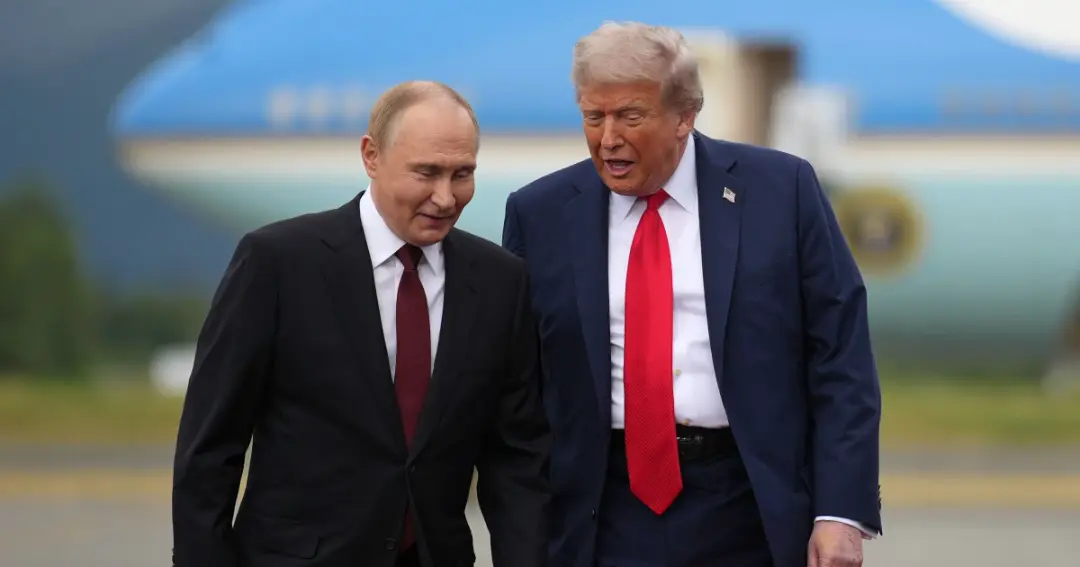
Trump-Putin summit plans on hold as Kremlin holds position
Planning for President Donald Trump's proposed summit with Russian President Vladimir Putin in Budapest is on hold, a senior White House official told NBC News. After a call on Monday between Secretary of State Marco Rubio and Russian Foreign Minister Sergey Lavrov, officials said an in-person meeting was not necessary. The Kremlin said nothing agreed upon could be postponed. European leaders backed Trump's call for fighting to stop immediately.
Source
Russia — Kremlin / MFA · read the original report ↗
Desk check · compared with the source
What the desk checked (5)
- Planning talks for a Trump-Putin summit in Budapest are 'on hold'. — Attributed to a senior White House official speaking to NBC News; official is unnamed.
- Rubio and Lavrov held a 'productive' call on Monday and no in-person meeting is now needed. — Quoted from a second, unnamed White House official; Lavrov confirmed the call took place.
- Russian officials say no date was agreed for either meeting. — Attributed on the record to Deputy FM Sergei Ryabkov via TASS and spokesman Dmitry Peskov.
- European leaders and the EU backed an immediate halt to fighting in a joint statement. — Attributed to a joint statement published by the British government; text quoted in source.
- Zelenskyy said he was ready to join the Budapest summit. — Attributed to an NBC News 'Meet the Press' interview taped Friday.
Analysts’ view opinion
The stalling of the Budapest summit looks less like a diplomatic breakdown than an exposure of the basic gap over the preconditions for talks. Washington is now aligning with Europe and Kyiv around an immediate ceasefire with the current line of contact as the starting point, while Moscow clings to the "long-term, sustainable peace" framing it says was agreed at Anchorage — which in practice means rejecting an immediate truce. By saying you cannot postpone what was never agreed, the Kremlin deflects blame for the collapse while making clear it has not softened its demands.
- A leader-level summit is itself a strategic asset for Russia, so withholding it appears to be Washington's way of using access as leverage rather than a concession.
- The distinction between an immediate ceasefire and a comprehensive settlement is not semantics: accepting the line of contact as a starting point would freeze Russian expectations of further territorial gain.
- Public backing from Britain, France, Germany and the EU — coupled with calls to tighten pressure on Russia's economy and defence industry — signals unusual transatlantic alignment on sequencing.
- The surviving Rubio–Lavrov phone channel, and both men's expected presence at the ASEAN summit, suggests de-escalated but continuing diplomacy rather than a rupture.
- The choice of Budapest as venue, and Hungary's foreign minister being in Washington, is a reminder that intra-EU divisions are also a variable in this process.
What to watch — Watch the next expected Rubio–Lavrov call, any informal contact on the margins of the ASEAN summit, and whether Europe's talk of economic and defence-industry pressure translates into concrete new measures.
The story describes a summit on hold rather than cancelled, and it does not establish what Russia's specific demands are, what exactly was understood at Anchorage, or what concrete pressure steps Washington and Europe might take.
Deep dive
Research brief · 8 facts · 7 dates · exam-readyThe brief
Context
US President Donald Trump had floated a fresh summit with Russian President Vladimir Putin in Budapest, Hungary, to be preceded by a meeting between Secretary of State Marco Rubio and Russian Foreign Minister Sergey Lavrov, as part of efforts to end the Russia-Ukraine war. That follows the Trump-Putin meeting in Anchorage, Alaska, in August, where both sides claimed "broad understanding" on a peace framework. After a Rubio-Lavrov phone call on Monday, a senior White House official told NBC News that planning for the Budapest summit is "on hold," with Trump concluding neither side was ready to talk peace seriously. The Kremlin insists it has not changed its demands and that nothing agreed upon can be postponed.
Key facts
- A senior White House official told NBC News that talks toward planning a Trump-Putin summit in Budapest are now "on hold."</n>
- A second White House official said the Rubio-Lavrov call on Monday was "productive" and therefore an additional in-person meeting between the secretary and foreign minister "is not necessary," with no plans for a Trump-Putin meeting in the immediate future.
- Russian Deputy Foreign Minister Sergei Ryabkov told TASS early Tuesday: "We cannot postpone what has not been agreed upon," saying no clear agreement existed on when or where a meeting would occur.
- Kremlin spokesman Dmitry Peskov said in his daily briefing that "You can't postpone something that hasn't been agreed upon" and that no precise time frame was initially set.
- Lavrov said the Rubio call discussed preparing a "framework for the next meeting" and that Russia's position remains consistent with the Anchorage understandings — a long-term, sustainable peace rather than an immediate ceasefire.
- Trump and Putin met in Anchorage, Alaska, in August; Lavrov and Rubio were also present there on Aug. 15.
- On Sunday, aboard Air Force One, Trump said both sides should "stop at the battle line — go home, stop fighting, stop killing people," and negotiate later.
- A joint statement published by the British government on Tuesday, from leaders of Britain, France, Germany, Ukraine and the EU, backed Trump's position that fighting should stop immediately and the current line of contact be the starting point for negotiations.
Timeline
- August (Aug. 15 for Lavrov-Rubio)Trump and Putin meet in Anchorage, Alaska; Lavrov and Rubio also meet there.
- Last weekTrump holds a call with Putin and then meets Ukrainian President Volodymyr Zelenskyy in Washington.
- FridayZelenskyy tapes an interview with NBC News' "Meet the Press," urging Trump to get tougher with Putin and saying he is ready to join the Budapest summit.
- SundayTrump tells reporters on Air Force One he supports an immediate halt to fighting at the current battle line.
- MondayRubio and Lavrov hold a phone call described by a White House official as "productive"; a Russian Geran-2 drone strikes a residential building in Sloviansk, Ukraine.
- Early TuesdayRyabkov tells TASS nothing agreed can be postponed; Peskov echoes him; Lavrov confirms the call; European leaders issue a joint statement; Hungary's Foreign Minister Péter Szijjártó is in Washington.
- This weekendRubio and Lavrov are both expected to attend the ASEAN summit; another phone call between them is expected as soon as this week.
Who has a stake
- US President Donald Trump — His push to broker an end to the Russia-Ukraine war; he pressed pause on the summit believing neither side was ready for serious peace talks.
- Russian President Vladimir Putin and the Kremlin (Peskov, Ryabkov, Lavrov) — Maintaining unchanged demands and the Anchorage framework of a "long-term, sustainable peace" rather than an immediate ceasefire.
- Ukrainian President Volodymyr Zelenskyy — Seeks an immediate halt to fighting, tougher US pressure on Putin, and a seat at any Budapest summit.
- European leaders (Britain, France, Germany) and the European Union — Back an immediate ceasefire at the current line of contact and want more pressure on Russia's economy and defence industry.
- Hungary — Proposed host of the Budapest summit; Foreign Minister Péter Szijjártó was in Washington Tuesday, posting "We have some serious days ahead."
- US Secretary of State Marco Rubio and Russian FM Sergey Lavrov — Channel for preparing any summit framework; further phone contact expected, with both due at the ASEAN summit.
Why it matters
The stalling of the Budapest summit shows how far apart Washington, Moscow and Kyiv remain on the basic sequencing of peace — whether to freeze the front line first or negotiate a final settlement first. For India and other non-aligned economies, the trajectory of the war shapes energy prices, sanctions exposure and great-power diplomacy. It also illustrates how summit diplomacy can collapse over preconditions even when leaders publicly claim progress.
UPSC angle
Prelims pointers
- Anchorage, Alaska hosted the Trump-Putin meeting in August; Rubio and Lavrov were there on Aug. 15.
- Budapest is Hungary's capital and the proposed venue for the next Trump-Putin summit, now on hold.
- TASS is Russia's state news agency; Dmitry Peskov is the Kremlin spokesman and Sergei Ryabkov a Deputy Foreign Minister.
- The joint European statement (Britain, France, Germany, Ukraine, EU) was published by the British government on Tuesday.
- Rubio and Lavrov are both expected at the ASEAN (Association of Southeast Asian Nations) summit this weekend.
- "Line of contact" — the current battle line — is the starting point for negotiations proposed by Trump and European leaders.
Mains framing
The collapse in momentum toward a Trump-Putin summit in Budapest exposes a structural disagreement rather than a scheduling problem: Trump, Ukraine and European capitals now want fighting to stop immediately at the current line of contact, with negotiations to follow, while Moscow — citing the Anchorage understandings — insists on a "long-term, sustainable peace, not an immediate ceasefire that would lead nowhere," which in effect makes substantive concessions a precondition for any truce. The Kremlin's line that "you can't postpone something that hasn't been agreed upon" allows it to avoid blame for the impasse while keeping demands unchanged; the White House, by declaring the Rubio-Lavrov call "productive" and therefore an in-person meeting "unnecessary," similarly avoids the optics of a failed summit. Continued drone strikes such as the Geran-2 attack on Sloviansk underline that the war continues while diplomacy idles. The way forward suggested in the source is incremental: continued Rubio-Lavrov telephone contacts, possible informal contact around the ASEAN summit, and — per the European joint statement — ramped-up pressure on Russia's economy and defence industry until Putin is ready to make peace. The episode is a case study in why leader-level summits require pre-negotiated deliverables, and in the risk that publicly announced summits become bargaining chips.
Key terms
- Anchorage talks
- The August meeting in Alaska between Trump and Putin, which both sides cite as the basis of "broad understanding" on a peace framework.
- Line of contact
- The current front line between Russian and Ukrainian forces, which Trump and European leaders want as the starting point for negotiations.
- TASS
- Russia's state news agency, to which Deputy Foreign Minister Ryabkov gave his remarks denying any postponement.
- ASEAN summit
- Association of Southeast Asian Nations summit, to be attended this weekend by both Rubio and Lavrov.
- Geran-2 drone
- The type of Russian drone that struck a residential building in Sloviansk, Ukraine, on Monday.
- Joint statement (Tuesday)
- Declaration by Britain, France, Germany, Ukraine and the EU, published by the British government, supporting an immediate halt to fighting.
Practice questions
- Summit diplomacy succeeds only when outcomes are negotiated in advance. Examine this proposition in light of the stalled Trump-Putin Budapest summit.
- Discuss the difference between an immediate ceasefire and a "long-term, sustainable peace" as competing approaches to ending the Russia-Ukraine war, and the interests each serves.
- How do prolonged great-power conflicts and associated sanctions pressure affect the strategic and economic choices of non-aligned states such as India?
Grounded only in the source report — figures and dates are the source's, not inferred.