
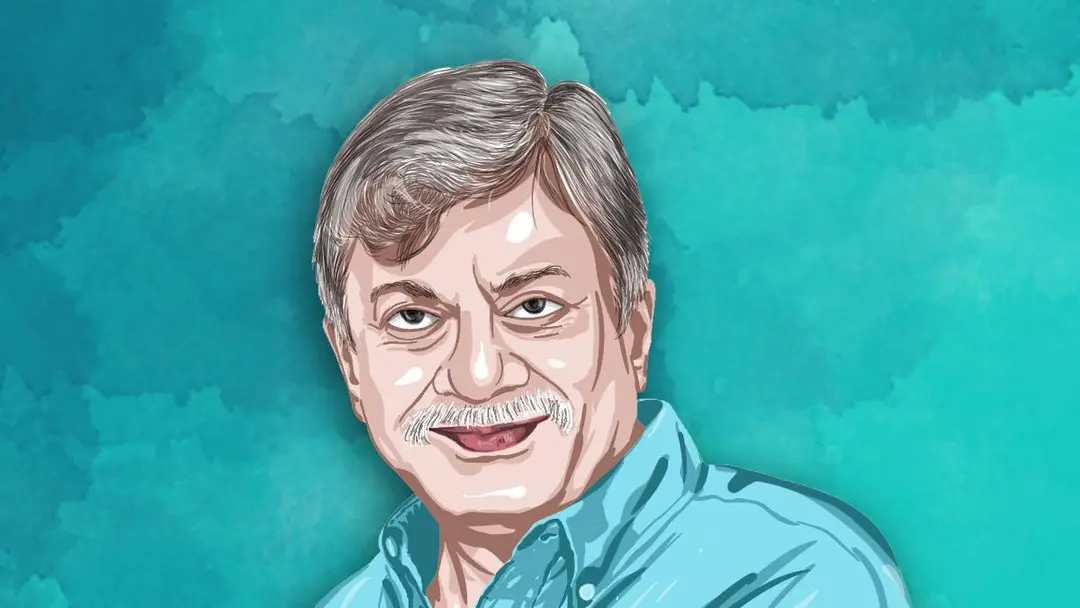
Anant Nag to receive 2024 Dadasaheb Phalke Award on September 22
Veteran Kannada actor Anant Nag will receive the Dadasaheb Phalke Award for 2024 at the 72nd National Film Awards ceremony in Gujarat on September 22, for five decades in Indian cinema. He was awarded the Padma Bhushan last year and is the second Kannada actor to win the Phalke after Dr. Rajkumar. Born in 1948 in Uttara Kannada district, Nag entered films with Sankalpa in 1973 and did six films with Shyam Benegal. He was Bangalore Development Minister in the J.H. Patel government in 1996.
Source
The Hindu — National · read the original report ↗
Desk check · compared with the source
What the desk checked (5)
- Anant Nag will receive the Dadasaheb Phalke Award for 2024 on September 22 at the 72nd National Film Awards ceremony in Gujarat. — Date, award year and venue appear in the source; no external verification possible.
- Nag is the second Kannada actor to win the Phalke award after Dr. Rajkumar, and received the Padma Bhushan last year. — Stated in source without separate attribution.
- He worked in six films with Shyam Benegal, beginning with Ankur, followed by Nishant, Manthan, Bhumika, Kondura and Kalyug. — Film titles and count appear in source and are internally consistent.
- Nag was nominated to the Karnataka Legislative Council in 1988, later elected to the Assembly, and became Bangalore Development Minister in the J.H. Patel government in 1996. — Figures and posts appear in source; no document cited.
- Nag said the Prime Minister's congratulatory post on X 'felt as good as getting two Phalke awards'. — Direct quote attributed to Nag in the source.
Analysts’ view opinion
Anant Nag's Dadasaheb Phalke Award is recognition not just of a career but of a style — proof that an actor can last five decades without an action-hero image or a competing fan-club machine. The arc is unusually wide: parallel cinema with Shyam Benegal across six films, then a run as a commercial romantic lead, then a late-career second innings with roles like the Alzheimer's patient in Godhi Banna Sadharana Maikattu. Being only the second Kannada actor after Dr. Rajkumar to receive the honour makes this a notable national moment for the industry too.
- Nag's stardom without the action-hero mould or fan-club culture of his era offers the industry an alternative model of longevity.
- His own admission that he moved to commercial cinema because a full-time career in parallel cinema was hard is a candid window into the economics actors face.
- His work with brother Shankar Nag, especially the Malgudi Days series, gave him a national audience in television's early years.
- After a lean late-1990s, rebuilding through supporting parts and then returning to substantial lead roles is a template many senior actors watch closely.
- The Padma Bhushan last year and the Phalke now cap a run of honours, though the story notes his openly stated political leanings have drawn criticism in Karnataka, so public reception may not be uniform.
What to watch — Watch whether the award translates into fresh substantial roles in Kannada cinema and renewed audience interest in his older films through streaming or re-releases.
The story does not establish how the award was decided, what Nag's upcoming projects are, or whether the honour will have any measurable box-office effect.
Deep dive
Research brief · 8 facts · 10 dates · exam-readyThe brief
Context
Veteran Kannada actor Anant Nag has been named the recipient of the Dadasaheb Phalke Award for 2024, India's highest recognition for lifetime contribution to cinema, to be presented at the 72nd National Film Awards ceremony in Gujarat on September 22. Nag, who began in Mumbai's theatre world of the 1960s and 70s rather than film school, moved fluidly between parallel and commercial cinema over five decades. He describes his method as "behaving, not acting". He is the second Kannada actor to receive the Phalke after Dr. Rajkumar, and was awarded the Padma Bhushan last year.
Key facts
- Anant Nag will receive the Dadasaheb Phalke Award for 2024 on September 22 at the 72nd National Film Awards ceremony in Gujarat.
- He is the second Kannada actor to win the Phalke, after Dr. Rajkumar; he received the Padma Bhushan last year.
- Born in 1948 in Uttara Kannada district in coastal Karnataka; spent childhood in a religious math and an ashram where his parents worked.
- Entered cinema in 1973 with Sankalpa by P.V. Nanjaraje Urs, playing a rationalist pitted against religious faith.
- Worked in six Shyam Benegal films: Ankur, Nishant, Manthan, Bhumika, Kondura and Kalyug.
- Bayalu Daari (1977) was his first major commercial hit as a romantic lead; later hits included Chandanada Gombe, Benkiya Bale and Naa Ninna Bidalare.
- Collaborated with brother Shankar Nag, who died in an accident in 1990; their series Malgudi Days, based on R.K. Narayan's works, won national recognition.
- Nominated to the Karnataka Legislative Council in 1988, later elected to the Legislative Assembly, and became Bangalore Development Minister in the J.H. Patel government in 1996.
Timeline
- 1948Anant Nag born in Uttara Kannada district, coastal Karnataka.
- 1960s-70sFinds his feet in Mumbai theatre, acting in Konkani, Kannada and Hindi plays after moving there in his early teens.
- 1973Film debut in Sankalpa, directed by P.V. Nanjaraje Urs.
- 1974Introduced to Shyam Benegal; begins six-film association with Ankur.
- 1977Bayalu Daari becomes his first major commercial hit as a romantic lead.
- 1988Nominated to the Karnataka Legislative Council.
- 1990Brother and collaborator Shankar Nag dies in an accident.
- 1996Becomes Bangalore Development Minister in the J.H. Patel government.
- Late 1990s onwardsAfter a lean phase, continues acting in the 2000s, mostly in supporting roles such as in Mungaru Male.
- Last yearAwarded the Padma Bhushan.
Who has a stake
- Anant Nag — Receives the Phalke Award for five decades of work spanning parallel and commercial cinema, theatre, television and politics.
- Kannada film industry — Gains only its second Phalke Award after Dr. Rajkumar, a national recognition for the industry's body of work.
- Indian new wave cinema (Shyam Benegal's circle) — The award highlights the enduring value of 1970s-80s parallel cinema milestones like Ankur, Nishant and Manthan.
- Karnataka's political establishment — Nag's trajectory, from Ramakrishna Hegde's persuasion to the J.H. Patel cabinet, illustrates the cinema-politics interface in the state.
- Liberal circles in Karnataka — Have criticised Nag's admiration for Prime Minister Narendra Modi and his endorsement of Hindutva politics.
Why it matters
The Phalke to Anant Nag recognises an actor who bridged India's parallel and commercial film traditions, and is only the second such honour for a Kannada actor. His career, from Shyam Benegal's new wave films to Malgudi Days and later roles in Godhi Banna Sadharana Maikattu and Kavalu Daari, maps five decades of change in Indian cinema and television. The award also draws attention to his political journey and his openly stated political positions, which have attracted criticism.
UPSC angle
Prelims pointers
- Dadasaheb Phalke Award for 2024 goes to Kannada actor Anant Nag, to be conferred at the 72nd National Film Awards in Gujarat on September 22.
- Dr. Rajkumar was the first Kannada actor to receive the Dadasaheb Phalke Award; Anant Nag is the second.
- Anant Nag received the Padma Bhushan last year (year of conferment as stated: last year).
- Anant Nag's six films with Shyam Benegal: Ankur, Nishant, Manthan, Bhumika, Kondura, Kalyug.
- Malgudi Days, the TV series made with brother Shankar Nag, was based on R.K. Narayan's works.
- Anant Nag was nominated to the Karnataka Legislative Council in 1988 and was Bangalore Development Minister in 1996 under CM J.H. Patel.
Mains framing
Anant Nag's Phalke recognition is a useful lens on the twin tracks of post-1970s Indian cinema. Trained on the Mumbai stage rather than in a film school, he practised what he called \"behavioural\" acting, which allowed him to move between the new wave of Shyam Benegal's Ankur, Nishant, Manthan, Bhumika, Kondura and Kalyug, and Kannada commercial hits such as Bayalu Daari and Chandanada Gombe. His own explanation for the shift, that a full-time career was hard in parallel cinema, points to the structural economics of art-house filmmaking in India, where critical acclaim rarely translated into sustainable livelihoods. His refusal to be cast in a mould also meant he stayed outside the fan-club culture built around action superstars like Rajkumar, Vishnuvardhan and Ambarish. The Malgudi Days years, made with his brother Shankar Nag, show how early television expanded the reach of regional talent and of literary adaptation. Finally, his trajectory from the JP Movement and Ramakrishna Hegde's persuasion to the Legislative Council in 1988 and the Bangalore Development portfolio in 1996, and his later open endorsement of Hindutva politics, raises the perennial question of how artists negotiate public political positions and the criticism they invite.
Key terms
- Dadasaheb Phalke Award
- India's recognition for contribution to Indian cinema; awarded for 2024 to Anant Nag at the 72nd National Film Awards.
- Padma Bhushan
- Civilian honour conferred on Anant Nag last year, as stated in the source.
- Parallel cinema / Indian new wave
- The 1970s-early 80s art cinema movement; Nag's six Benegal films are described as its milestones.
- Malgudi Days
- Television series based on R.K. Narayan's works, made by Anant Nag with his brother Shankar Nag, which won them national recognition.
- JP Movement
- The 1970s political movement that the source says influenced Anant Nag before he entered mainstream politics.
- Nanna Thamma Shankara
- Anant Nag's memoir in which he writes about his association with his late brother Shankar Nag.
Practice questions
- Discuss how the careers of actors like Anant Nag illustrate the tension between parallel and commercial cinema in India since the 1970s.
- Regional cinema and early Indian television played a key role in popularising literary works. Examine with reference to Malgudi Days and R.K. Narayan.
- Should artists in public life declare political affiliations? Discuss with reference to the debate around Anant Nag's political positions.
Grounded only in the source report — figures and dates are the source's, not inferred.